The Installation
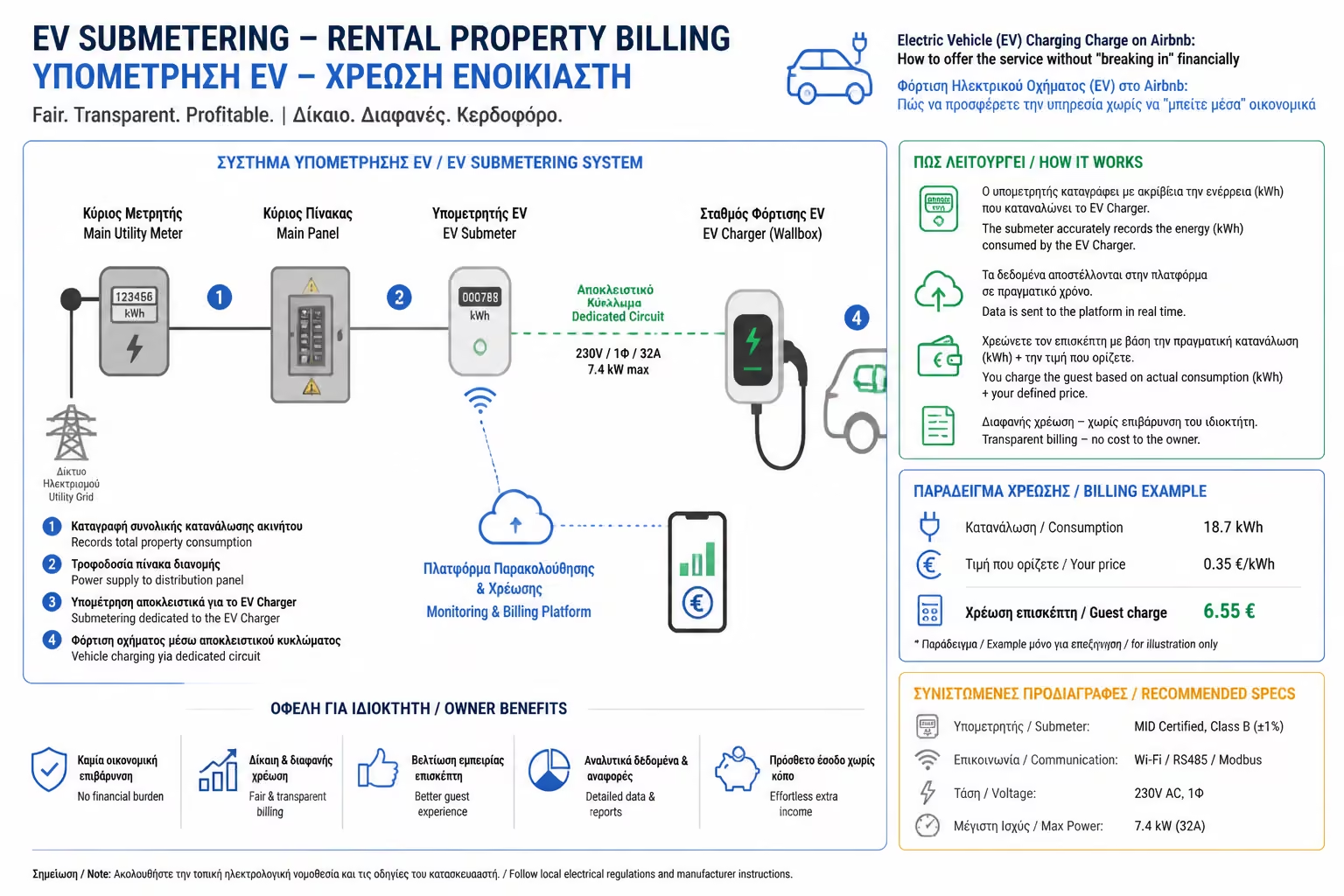
The electrician installs a simple (non-smart) Wallbox or an industrial socket. In your electrical panel, on the line that goes to the charger, it places a Wi-Fi Smart Meter (eg Shelly EM).
The tourism landscape is changing rapidly. Entering 2026, one of the most popular "smart" filter switches that tourists click on booking platforms (like Airbnb and Booking) is: "Provide Electric Vehicle Charging".
If you have a garage or valet, offering charging makes your property more desirable, attracting higher-income travelers. But there's a huge problem: A modern electric car's (EV) battery holds anywhere from 50 kWh to as much as 80 kWh. A single "full" charge can cost you from 8 to 15 euros in electricity. If the customer recharges for free every day, your overnight profit has skyrocketed.
So how do we offer this premium service without funding other people's holidays? As engineers, let's look at the 3 control strategies and the number one risk you must avoid at all costs.
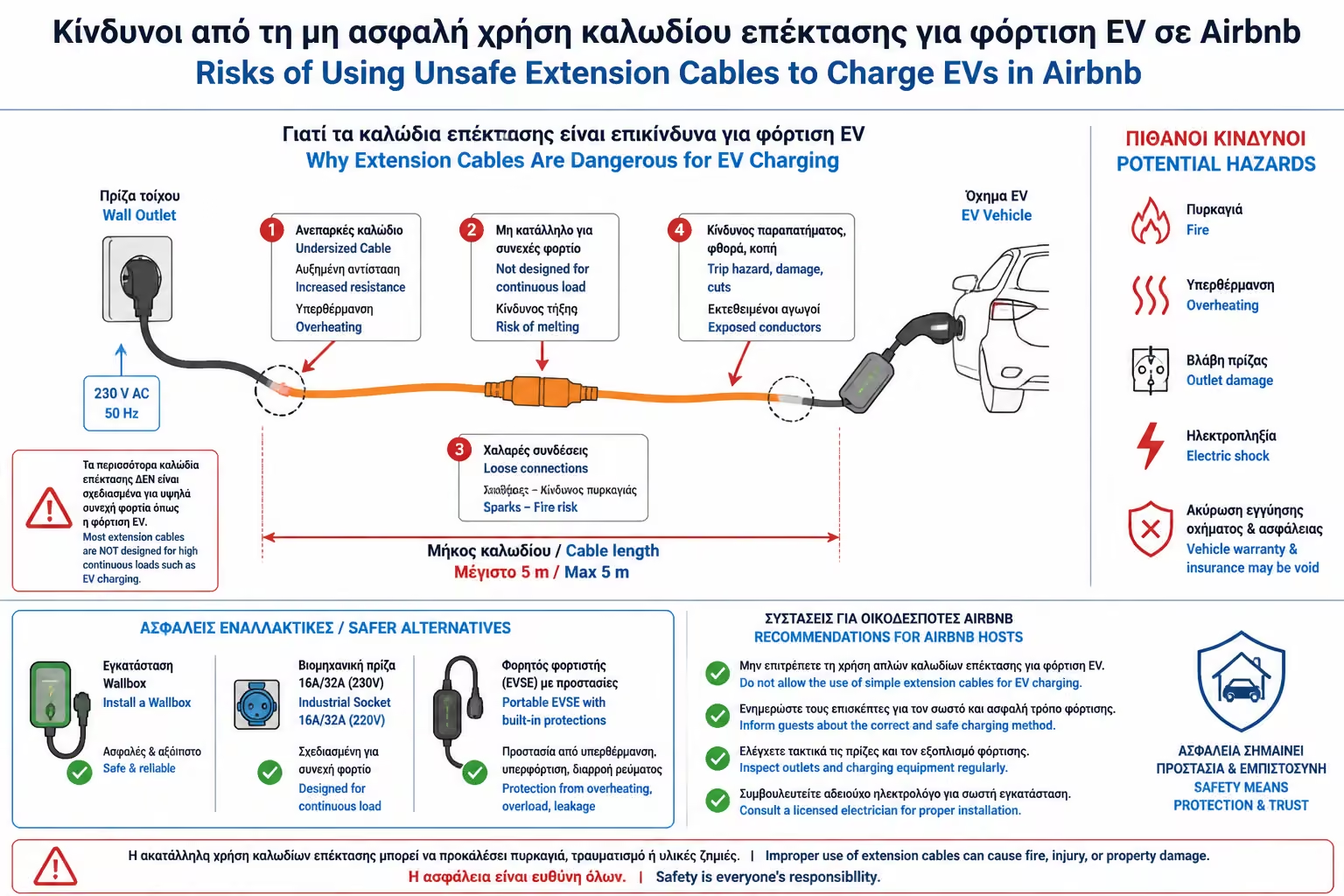
Before we talk about fees, we need to talk about security. Many guests, if they can't find a charger, pull a common wall socket from the living room socket and put the portable charger ("granny charger") in the car.
This is strictly prohibited. Ordinary household sockets (Schuko) and wall cables are not designed to withstand the absolute, maximum load (10A - 16A) continuously for 12 or 15 hours without interruption. Plugs melt, cables overheat and the risk of fire is huge. The Solution: Explicitly forbid charging from ordinary sockets in your house rules and install an official Wallbox, with its own, dedicated, reinforced power line straight from the panel.
If you don't want to mess with complex software and you have a good trusting relationship with visitors, you can set up a manual control method.
The electrician installs a simple (non-smart) Wallbox or an industrial socket. In your electrical panel, on the line that goes to the charger, it places a Wi-Fi Smart Meter (eg Shelly EM).
The customer tells you that they want to charge. You (from your mobile) activate Shelly's relay to supply power to the charger. When the stay is over, you open the app, you see that the car has consumed e.g. 120 kWh in total, and you send him a "Payment Request" through Airbnb's Resolution Center with the graph proof.
It requires manual engagement from you and the customer must agree on the kilowatt hour price in advance.
This is the most common solution for small Boutique Hotels and villa complexes.
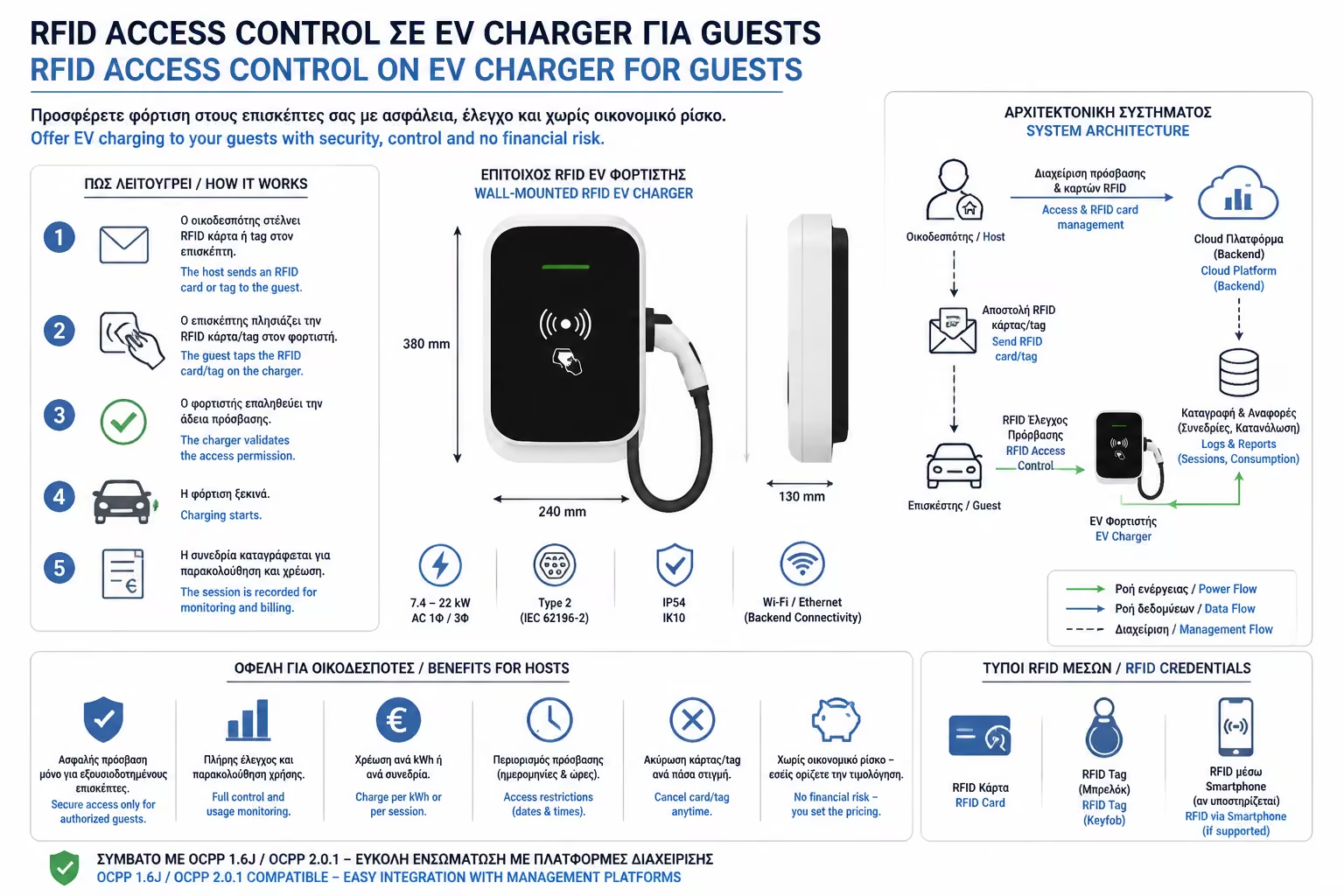
You are purchasing a Wallbox that has a built-in RFID reader. The charger has power, but won't start charging unless someone taps the correct card onto it.
The customer asks to charge. You give him the RFID card (along with the room keys). The charger, which must have a built-in MID certification meter, records with absolute legal accuracy the kilowatt-hours (kWh) it has delivered. At check-out, you read the charger's screen and charge it the amount.
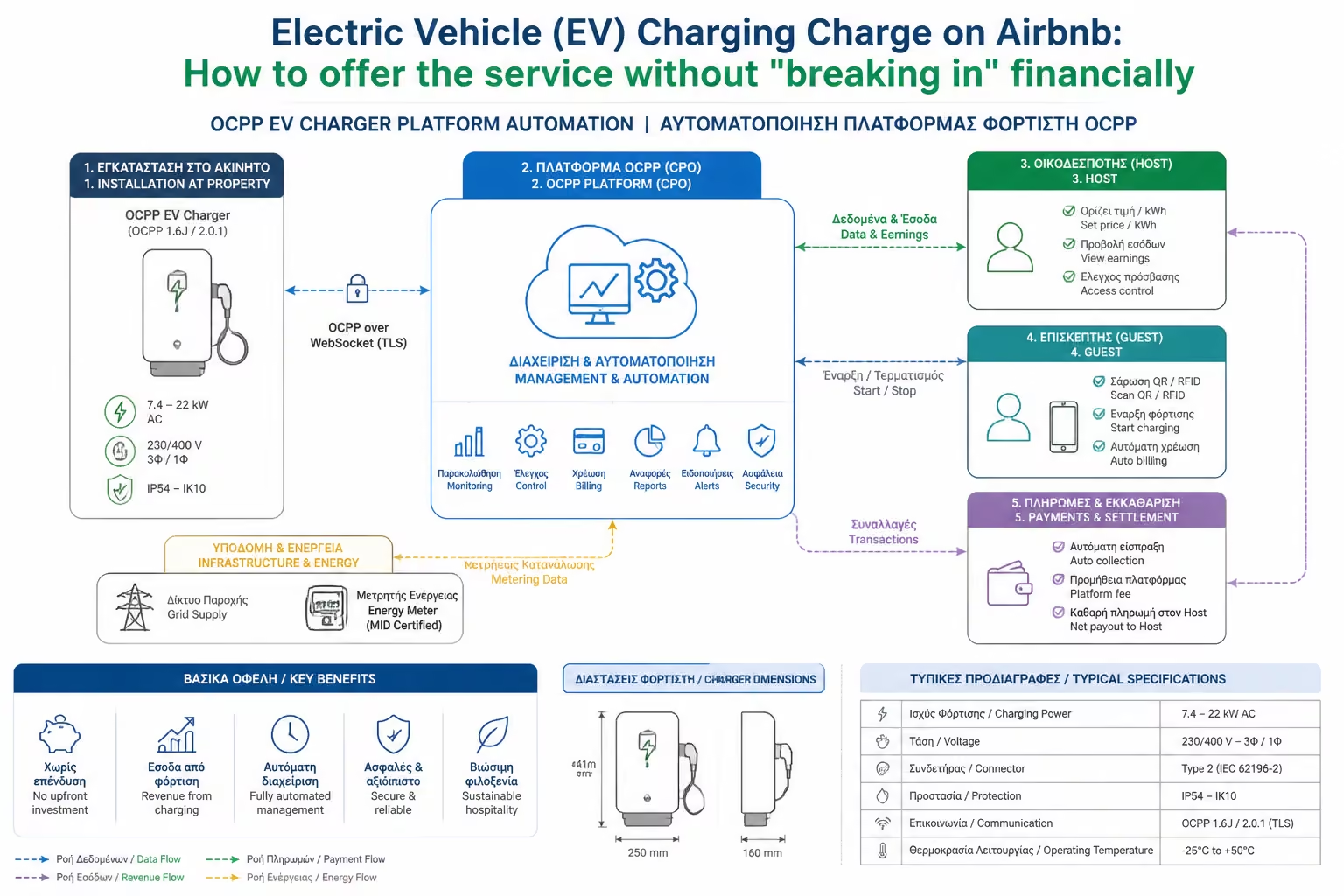
If you want the system to work on "autopilot" and earn even while you sleep, you need to turn your charger into a "Public Station" (even for private use).
You buy a smart charger that supports OCPP (Open Charge Point Protocol) and has a SIM card or Wi-Fi.
You connect your charger to a CPO (Charge Point Operator) network such as EV Loader, Blink or inCharge. There is a QR Code on the charger. The customer downloads the corresponding App of the company, inserts his credit card and charges. The company collects the money, keeps a small commission for their software, and deposits the rest into your bank account every month!
Zero engagement from you. Everything is done legally, automatically and with receipts issued directly to the customer. Plus, your charger shows up on charging maps (like PlugShare), potentially attracting passing drivers too, if you let it.
Beware of fees (especially if you follow strategies A or B). As we analyzed in a previous article, in order to bill the energy directly (ie to say "I charge you €0.25 for each kWh"), the charger meter must be certified (MID).
If your charger is not a MID, the only legal way to claim money is to charge the "Parking and Charging Service" by the time. For example: "Flat fee 10€ per night for connecting to the charger". This covers you legally, but it can leave you at a loss if the customer charges a huge electric SUV from scratch.
Placing a Wallbox on Airbnb is no longer a luxury, but a booking "magnet". Do not allow peepholes through windows for security reasons, and choose strategically how you control access. Integrating your charger into a management platform (OCPP) is often the "cleanest" solution as it takes the stress of billing, negotiation and accounting off of you.
Next Step: We have mentioned the "legality" of the charge and the relationship with the tenants many times in this category. It's time to put everything in order, clearing up the myths.
Moving on to the crucial guide: Legal Framework & Tenants: What you can (and can't) do with reselling or sub-metering electricity to tenants.
Return to category.
Go to categoryReturn to the central guide.
Go to guide