
Legal Framework & Tenants: What you can (and can't) do with reselling or sub-metering electricity to tenants

You've built a great apartment on the ground floor of your single-family home, which you rent out either long-term or through Airbnb. Because the issuance of a new meter by grid operator is time-consuming and expensive, you chose the Sub-metering solution: You put a secondary meter (sub-meter) in your electrical panel to record the tenant's current.

At the end of the month, it's time to pay. This is exactly where electrical engineering ends and legal science begins.

Many owners, trying to cover their expenses or even make a small profit, make mistakes that leave them completely exposed legally. If the tenant denounces you, the fines are heavy. As engineers and plant consultants, we are going to clarify the landscape: What is expressly prohibited by European and Greek legislation and how to secure your money legally.

1. The Golden Rule: You are NOT an Energy Provider

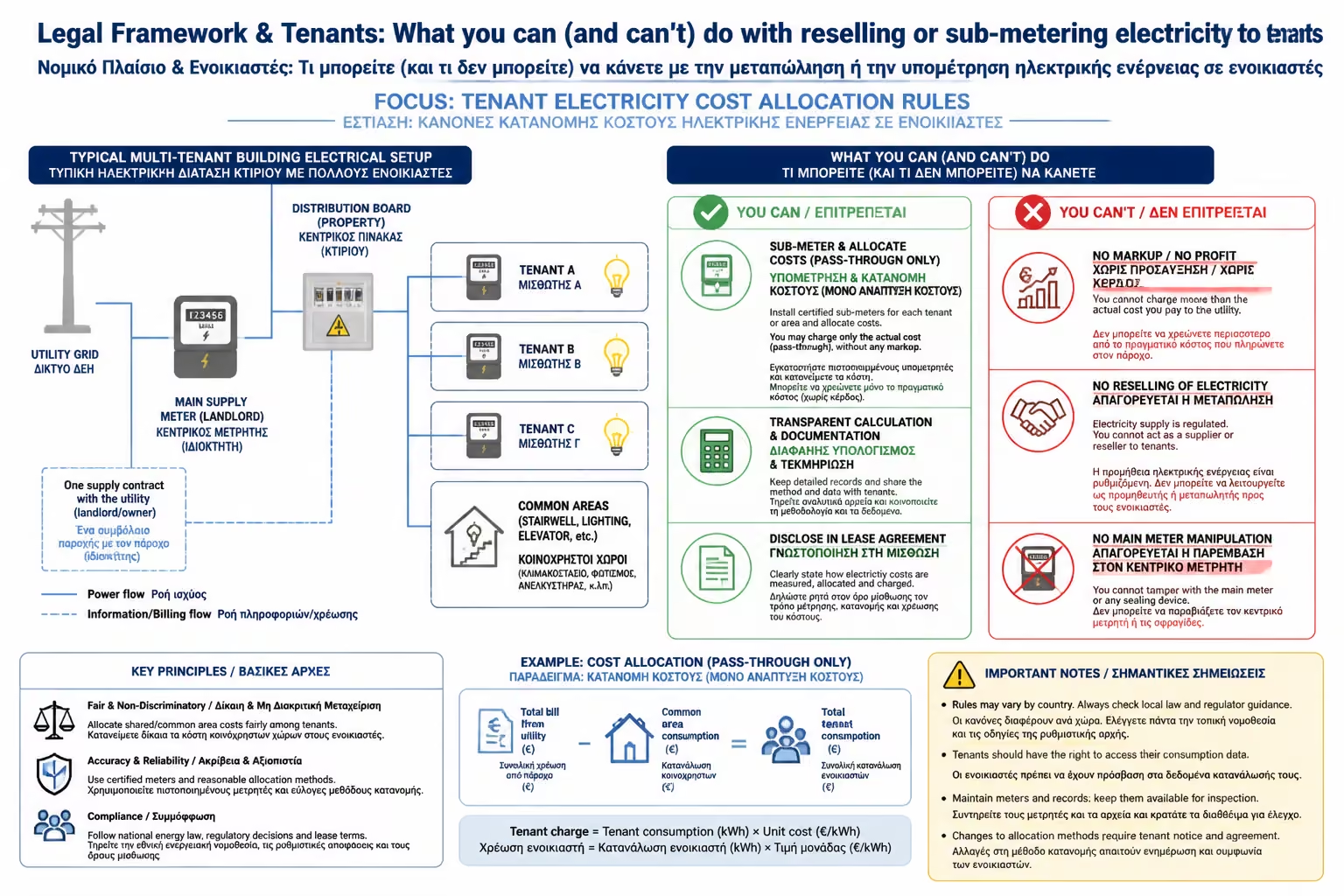
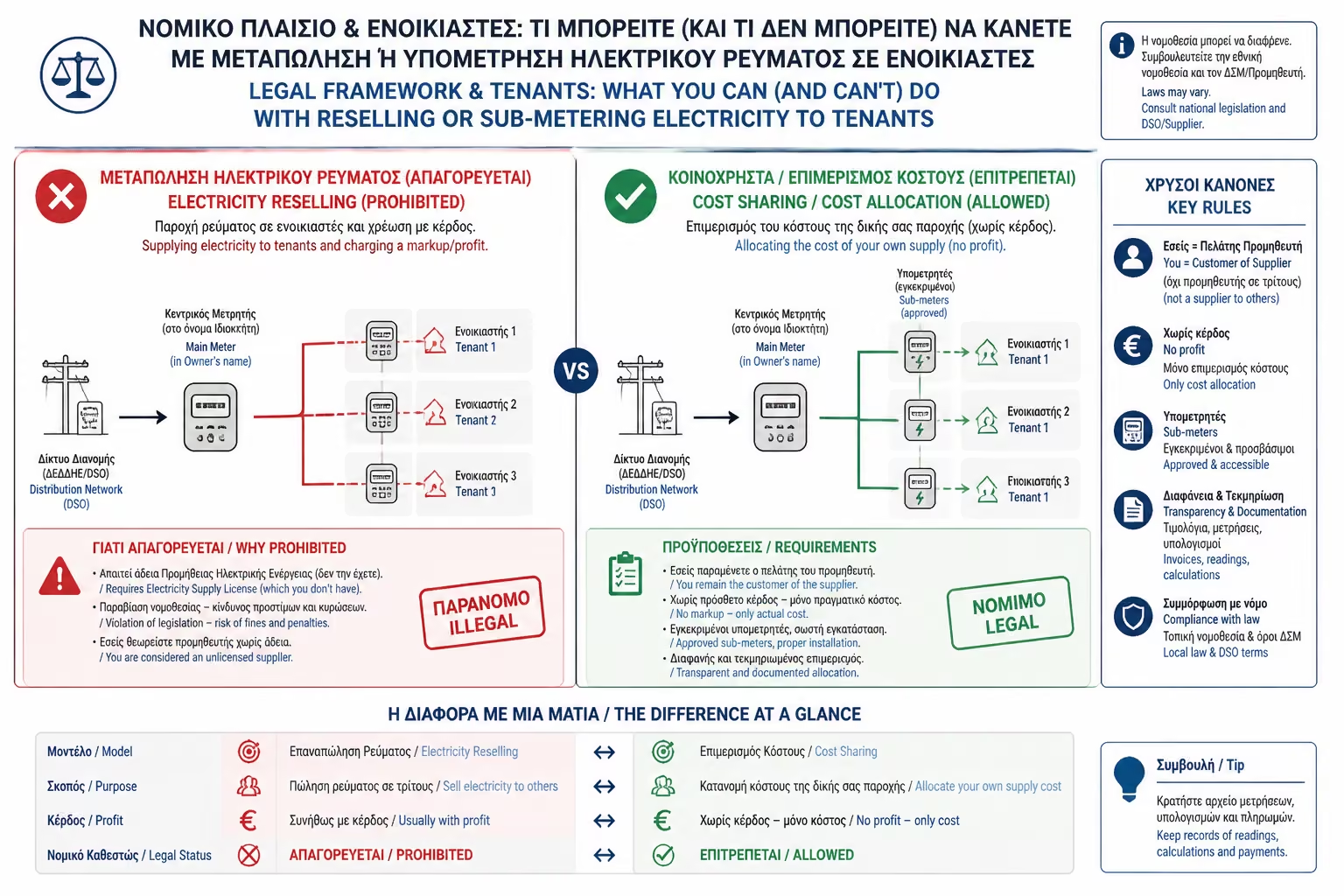
The basis of the law is simple: The resale of electricity for profit is strictly allowed and only to licensed providers (eg PPC, Heron, Protergia, etc.) that are subject to the control of the RAAEF (Regulatory Authority for Waste, Energy and Water).

As a private property owner, you do not have an electricity trading license. This practically means that you are forbidden to buy electricity from your provider at 0.15€/kWh and "sell" it to your tenant at 0.25€/kWh to make a profit. If you do and the tenant refuses to pay (or sues you), the court will vindicate them.

Illustration for 1. The Golden Rule: You are NOT an Energy Provider

2. What is ALLOWED: Cost Allocation

Illustration for 2. What is ALLOWED: Cost Allocation

Since you can't sell power, how are you going to get your money back? The legally acceptable procedure is called Cost Sharing.

You are allowed to ask the tenant for exactly the amount the provider charged you for the energy they used. Not a cent of the euro more.

In order to do this correctly and reliably, follow the following 3 steps:

  1. The Final Price: When the bill comes, you are not only looking at the "net" value of the electricity. The tenant must also bear the regulated charges (Transmission Network, YKO, ETMEAR) corresponding to his kilowatt hours, as well as the VAT.
  2. The Mathematical Formula: The fairest way is to divide the Total Bill Amount (in Euros) by the Total Kilowatt Hours (kWh) recorded by the main utility meter. This is how you find the "Actual Cost per kWh" for that month.
  3. The Multiply: You multiply this Actual Cost by the kilowatt hours your own submeter showed for the tenant's apartment. This is the exact amount it should pay you.

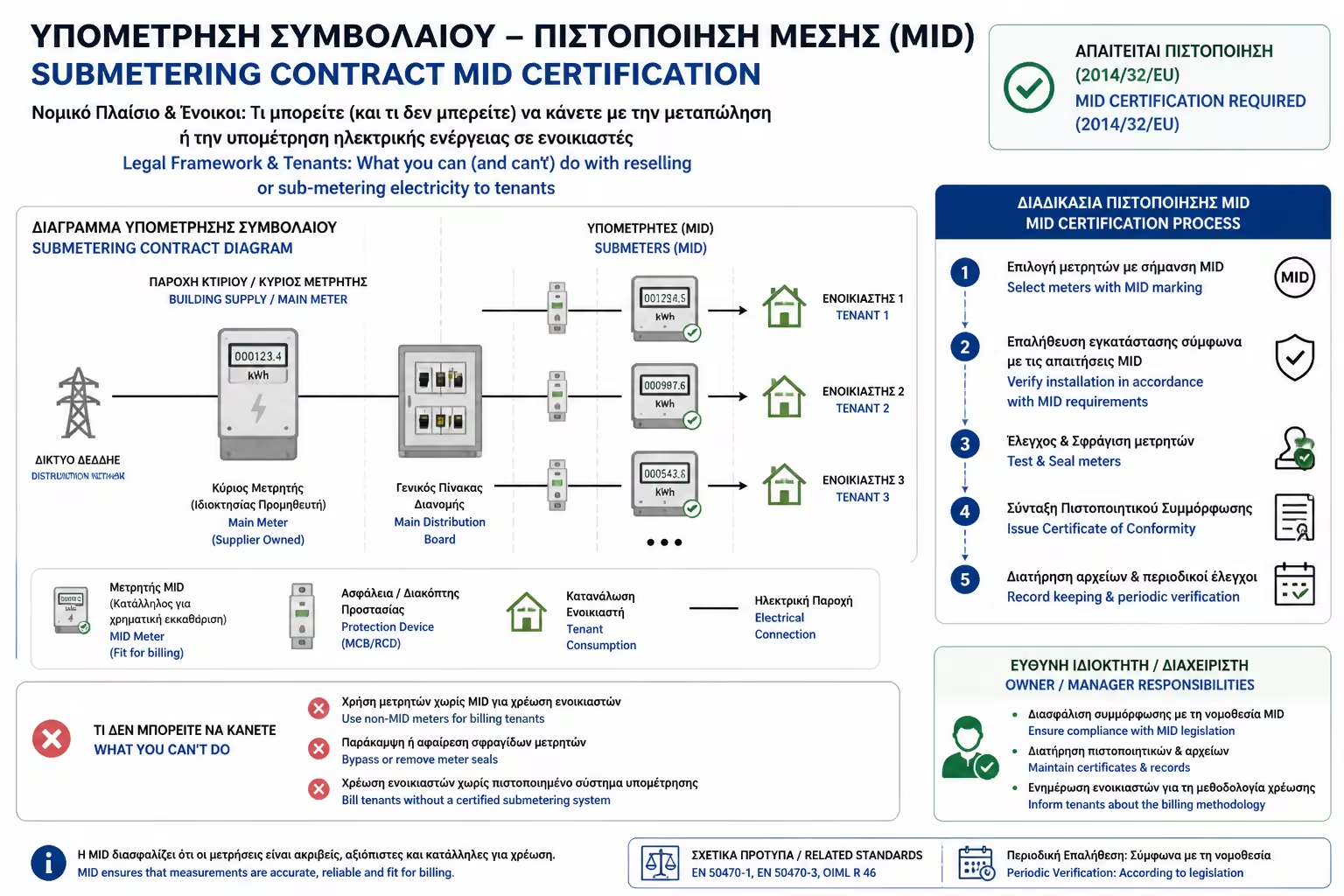
3. Your Shield: Contract & MID Certification

Even if you do the cost sharing with complete honesty, the tenant may dispute your meter number. To be 100% legally covered:

Illustration for 3. Your Shield: Contract & MID Certification

Term in the Lease

The apportionment procedure must be clearly stated in the rental contract (which is submitted to AADE/Taxisnet). It must be expressly stated that: "The tenancy is supplied by the central supply No. [Supply Number] and the electricity consumption is recorded by the private sub-meter type [Model]. The tenant is obliged to pay the lessor the exact corresponding cost...".
MID certification

As we analyzed in a previous guide, the submeter that reads the tenant's kilowatt hours must have a European MID certification. If you use a simple smart plug or an uncertified Wi-Fi meter, the data is not considered legally valid evidence in the event of a legal dispute.

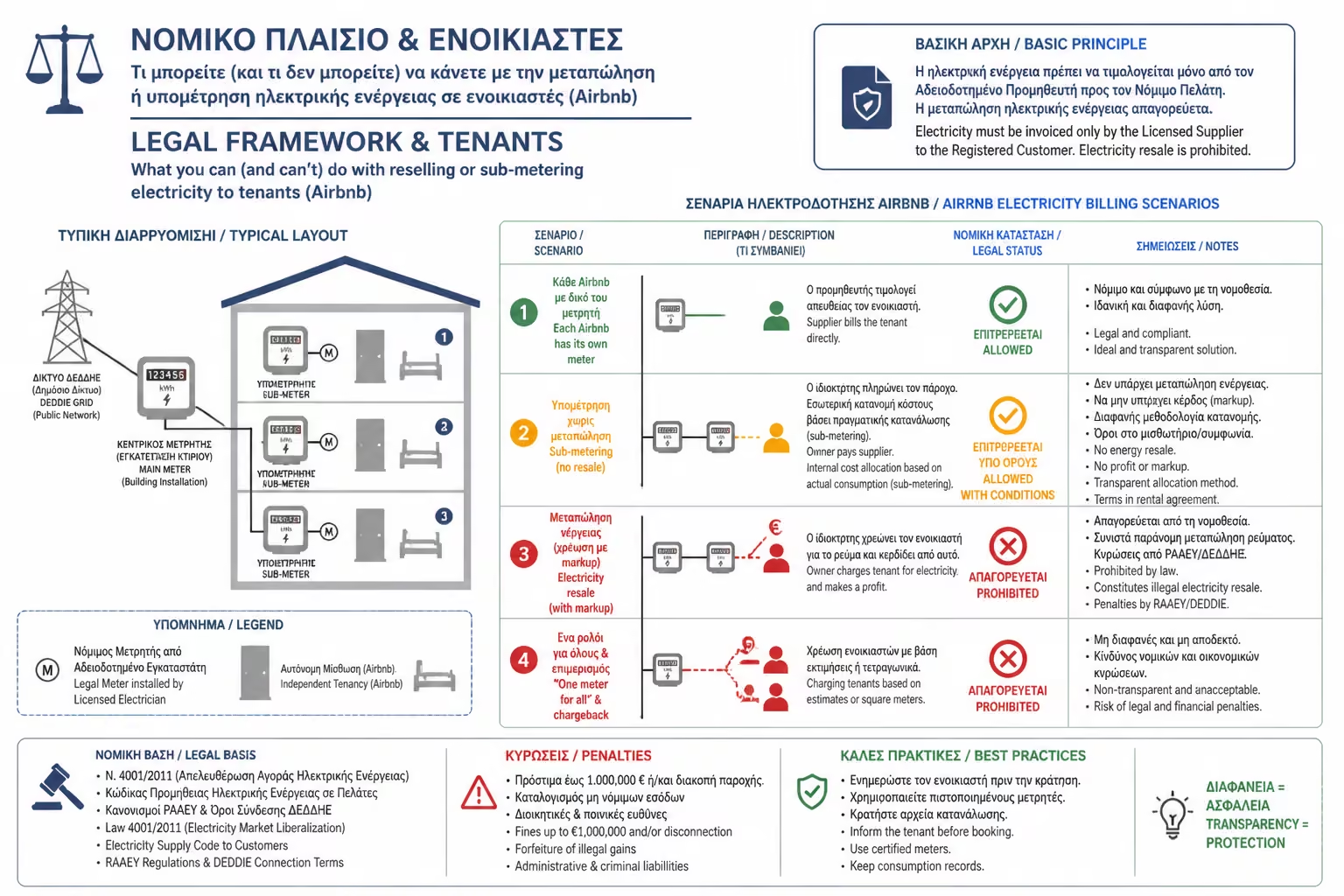
4. Special Cases: Short Term Rental (Airbnb)

Illustration for 4. Special Cases: Short Term Rental (Airbnb)

In tourist accommodation, things are a little different. You do not sign a classic lease for 2 days of stay, and the customer pays through a platform.

If you want to check electricity costs on Airbnb, avoid charging per kWh (it's a nightmare in practice and often violates the platforms hosting terms if not declared in the first place). Safe strategies are:

Flat Fee (Built-in Cost)

Raise the nightly rate slightly to absorb the cost.

Smart Home Restrictions

As we've seen, use automation (smart relays, presence sensors) to turn off power when customers are away, solving the problem at its root.

Charge Extra Benefits over time

At EV chargers or shared laundromats, charge for "time of use" (eg €5 for 2 hours), not kilowatt hours.

Summarizing

Sharing the same electricity supply as your tenant is perfectly legitimate and legal, as long as it is done transparently. Electricity is not a commodity to make a profit. Get a certified MID meter, include the relevant term in the lease agreement, and implement strict cost sharing. Thus, neither you will "walk in", nor the tenant will have the slightest legal pressure to accuse you of profiteering.

Next Step: We complete Class B by returning to one of the "smartest" and cheapest implementations for any home or hotel. We saw how we turn off the A/C when guests are away. But what about when they are inside the house but have the windows wide open?

We continue to the next guide in the category: Window Open Based Heating Control: How Magnetic Contacts (Door/Window Sensors) Cut Power to the A/C.

Related Articles

Preview