How it works
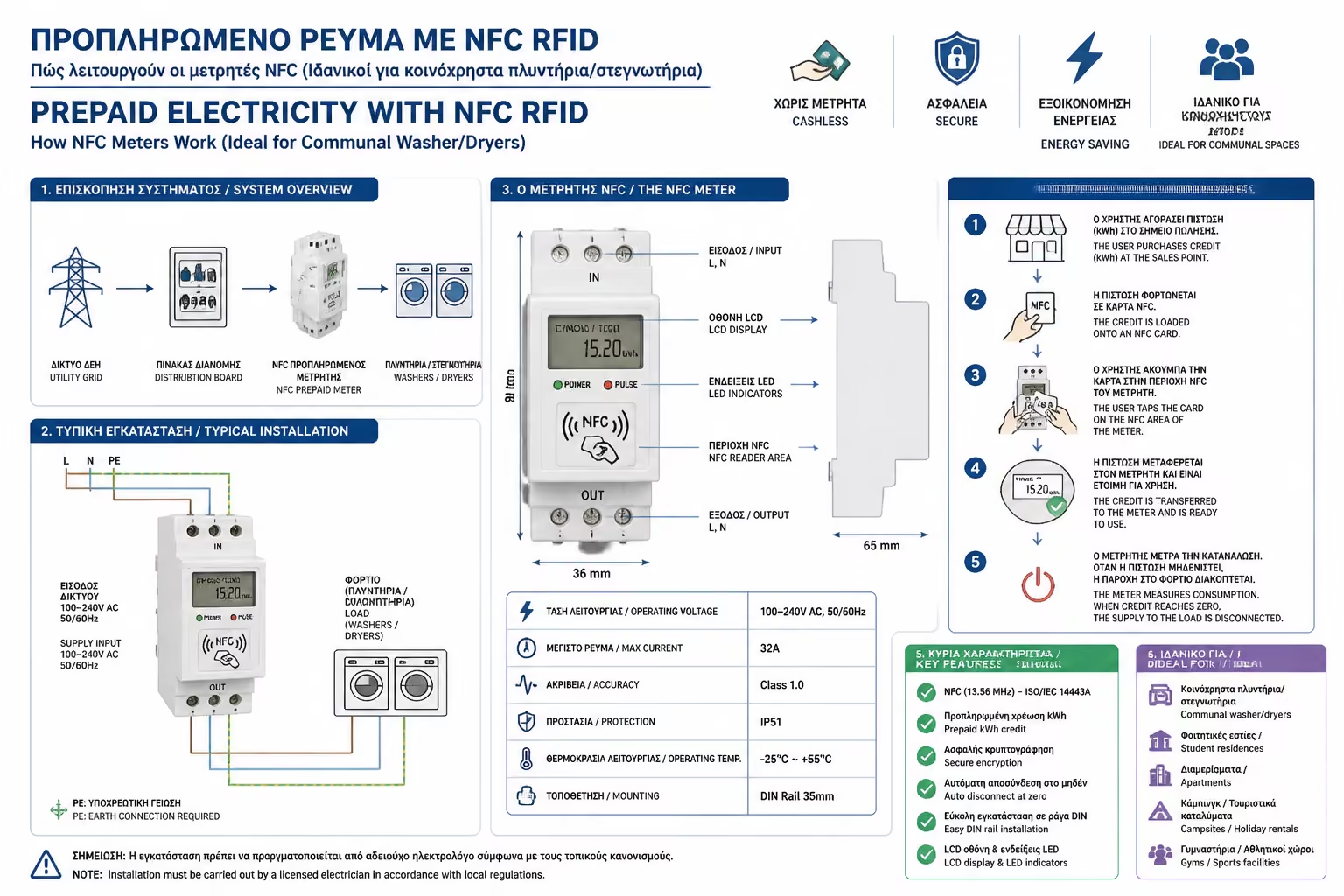
The customer puts on the clothes, drops the coin (eg €2), and the machine releases the power to the socket for a predetermined time (eg 90 minutes), capable of completing a wash. Once the time is up, the socket "dies".
If you manage a rental complex, student housing, or a large building with Airbnb, you've probably set up a shared laundry area. It's a great feature that "boosts" your reviews.
But the reality often turns out to be harsh: Guests, not having to worry about the bill, run the washing machine on a 2-hour schedule to wash... a towel and a swimsuit. Even worse, they make the dryer (which consumes huge amounts of electricity) run non-stop. Your electricity and water bills skyrocket, while your machinery wears out quickly.
The solution to this "financial bleeding" is to move to the Pay-per-Use Model through prepaid electricity systems. As engineers, let's look at the two main technologies on the market and how they are implemented electrically safely.
It is the well-known metal (or hard plastic) box that we see in self-service laundromats. It is placed on the wall, right next to the washing machine socket.
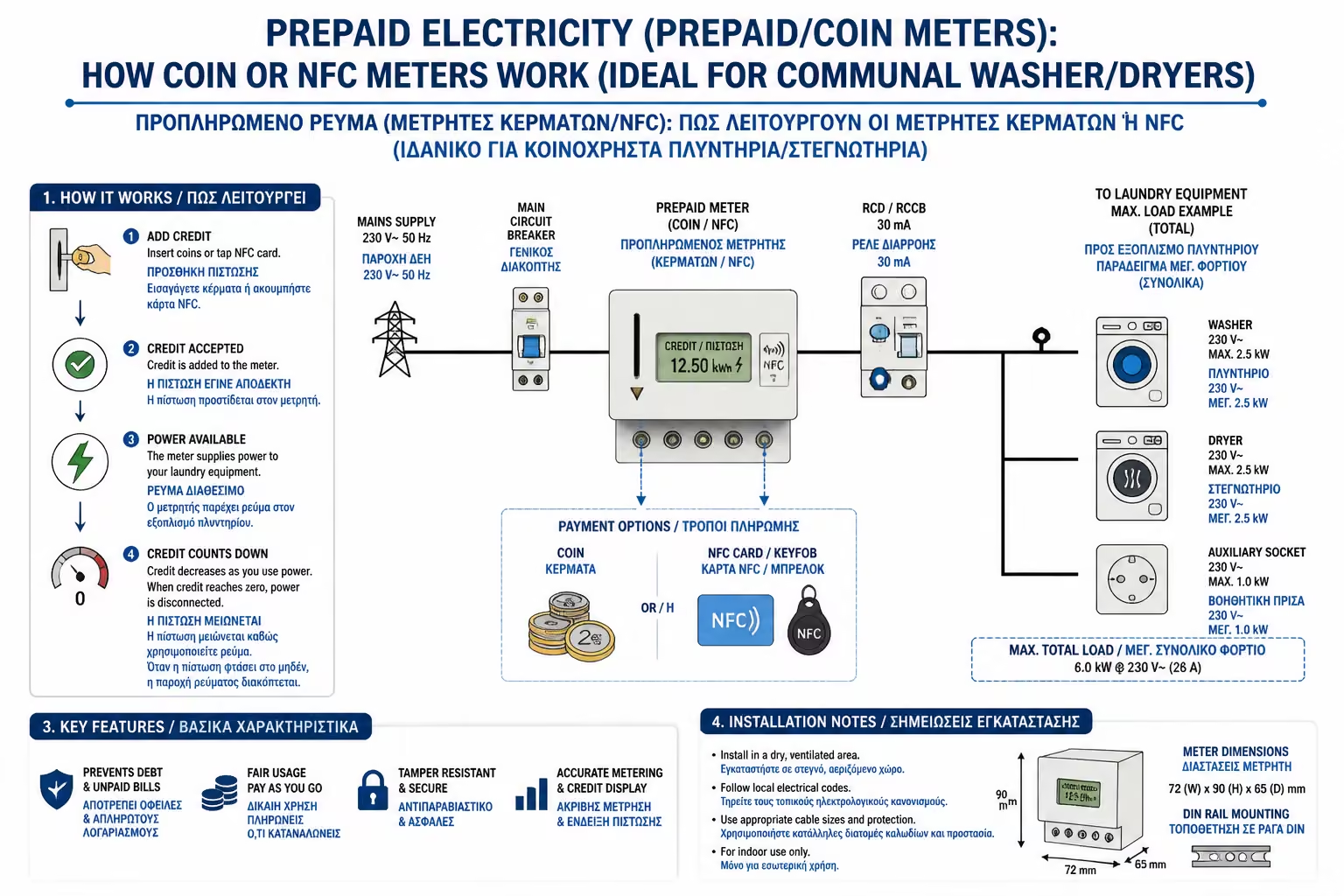
The customer puts on the clothes, drops the coin (eg €2), and the machine releases the power to the socket for a predetermined time (eg 90 minutes), capable of completing a wash. Once the time is up, the socket "dies".
It is completely understandable by everyone. It does not require the customer to have a smartphone, nor does it need to look for you or the front desk. It is 100% autonomous.
Requires physical presence to collect coins. There is a risk of the box being broken by sharpshooters, as well as mechanical damage (coins "jamming" into the slot).
In 2026, cash starts to disappear. The modern alternative to the coin acceptor is prepayment systems with smart cards (NFC/RFID) or "key fobs".
(Note: There are now state-of-the-art systems that work with QR Codes. The customer scans the QR Code on the washing machine with their mobile phone, pays with Apple Pay/Google Pay, and a smart Wi-Fi relay activates the outlet automatically!)
When the customer checks in, you give them a plastic card which you "load" into your system with, say, 5 "wash units". When it goes to the laundromat, it simply taps the card against the wall reader. The machine removes a unit and supplies power to the outlet.
Zero risk of theft (no money in the laundry room). Absolute digital control (you see exactly how many washes have been done). In addition, many times the system can be "unified", so that the same card that opens the room (Smart Lock) also opens the electricity to the washing machine!
It requires management (charging) of the cards by an administrator or by a digital reservation system.
Herein lies the biggest trap for those who buy cheap coin acceptors from the internet.
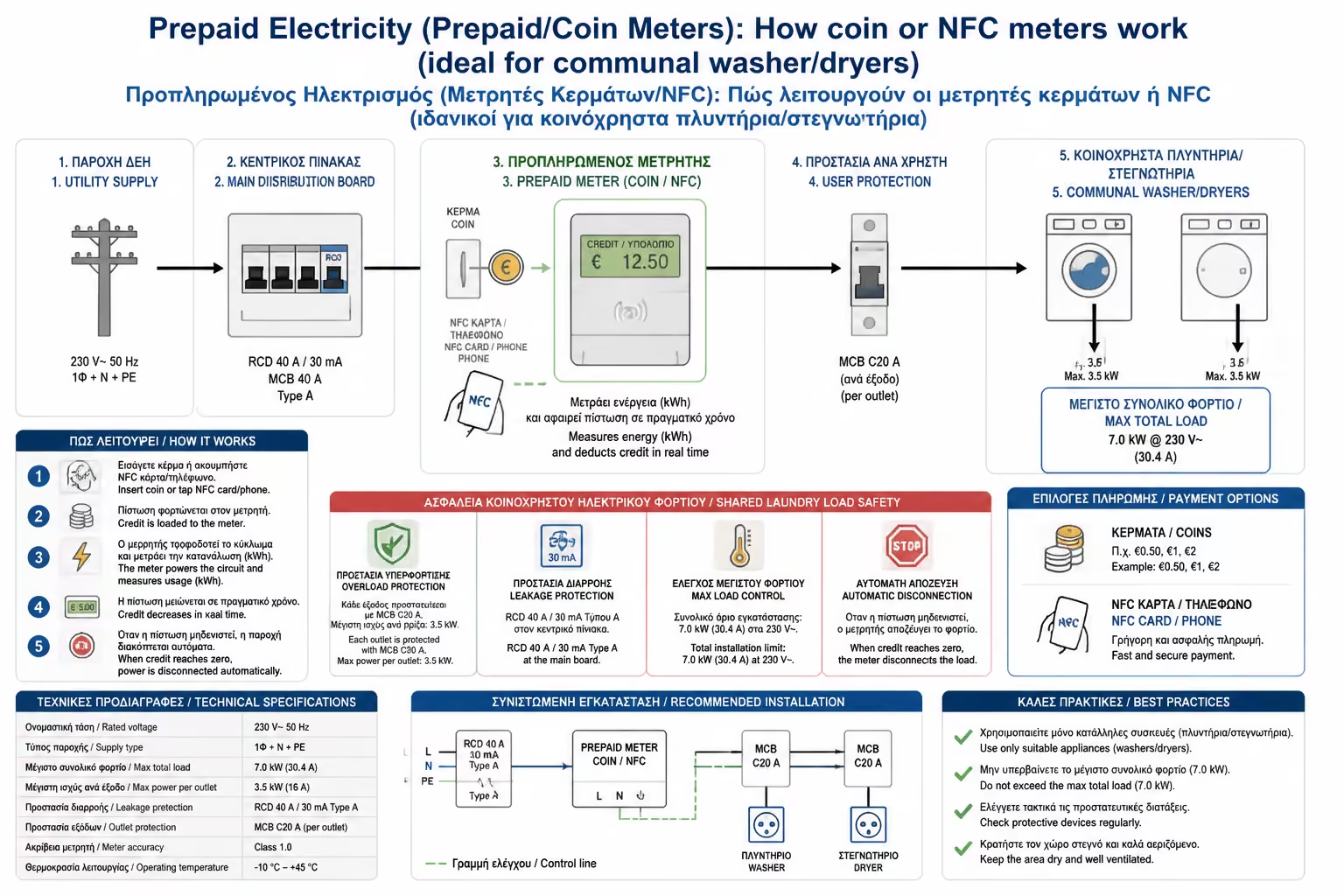
The washing machine and (mainly) the dryer are among the most energy-consuming appliances in a building. The dryer, in particular, can draw over 2500 watts continuously for more than an hour. If you connect a heavy duty dryer directly to the wires of a cheap, plastic coin acceptor, the internals of the relay will quickly melt and there is a serious fire hazard.
The Right Topology: Just like we did with the water heater in the previous article, the "mind" must be separated from the "muscles". The coin acceptor (the mind) reads the coin, but does not directly power the washing machine. Instead, it gives a small command to a 25A Power Relay (the muscle), which is safely housed in a small electrical panel next door. The Power Relay is the one that carries the "weight" of the current and feeds the industrial socket (Schuko) of the dryer.
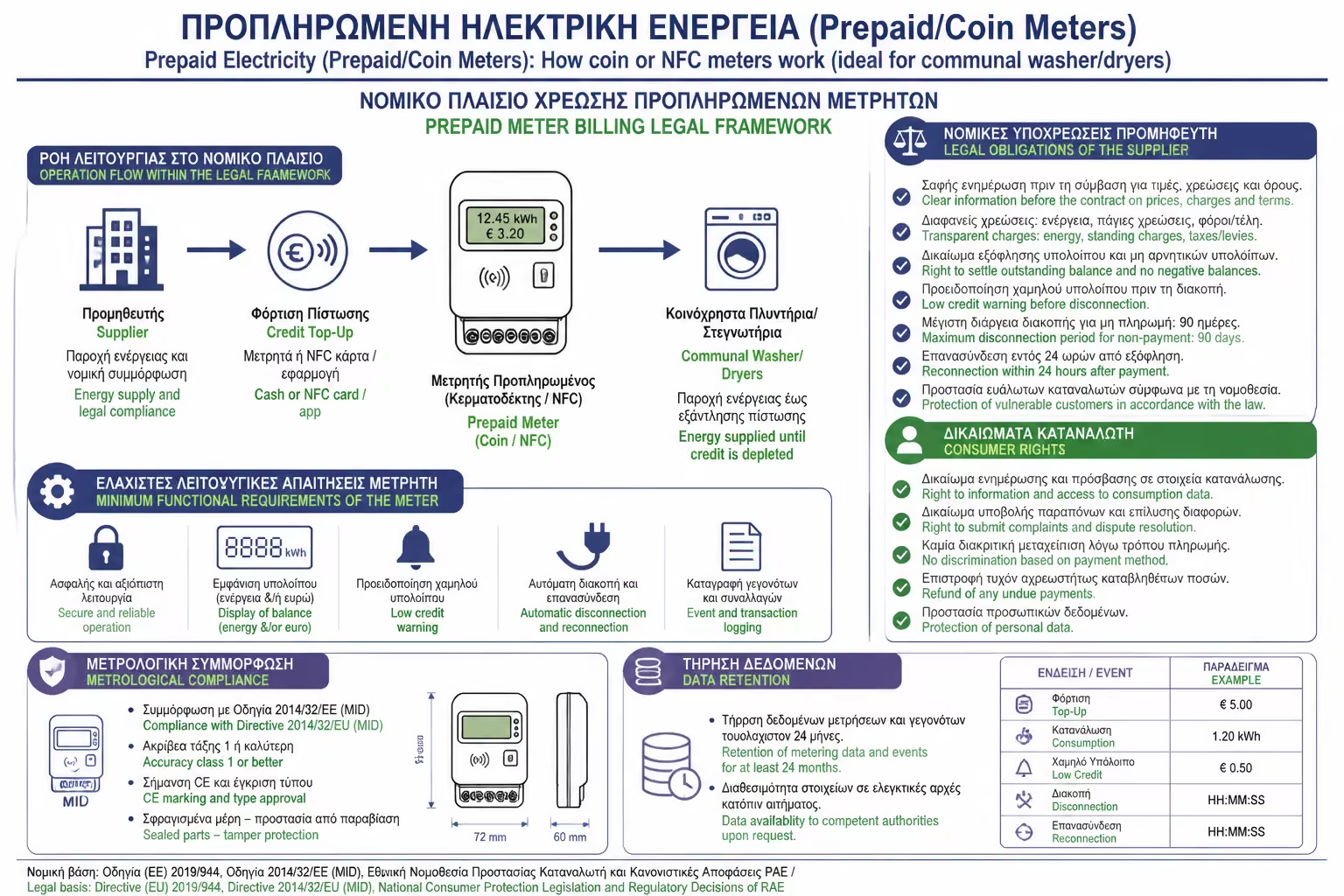
If you remember our guide to MID certification, there is one basic rule: You are not allowed to resell electricity by the kilowatt (kWh) unless you are an official provider.
If your coin acceptor has a screen that reads "€1 = 5 kWh", you are moving in legal "grey" waters. To be 100% legal and covered, you must be selling TIME, not electricity. The customer does not pay for the kilowatt hours, they pay for the machine rental service. Your system should be set clearly: "€2 to use the washing machine for 90 minutes". In this way, you completely legally cover the costs of electricity, water, drainage and wear and tear of the device.
An uncontrolled shared laundry area is a "black hole" in your business finances. Installing a coin acceptor or card reader (at a cost of around €150 - €300 per machine) automatically turns a source of huge expense into a service that not only pays for itself, but often yields a small, steady profit.
Next Step: We've talked about washing machines and water heaters, but the new, huge trend in accommodation is about electrification. More and more tourists arrive with electric cars and ask to charge them. How do you manage it?
We're continuing on to the super timely guide: Electric Vehicle (EV) Charging on Airbnb: How to offer the service without "breaking in" financially.
Return to category.
Go to categoryReturn to the central guide.
Go to guide