Rental of Annexes
Renting a ground floor, basement or studio apartment powered by the central panel of the detached house.
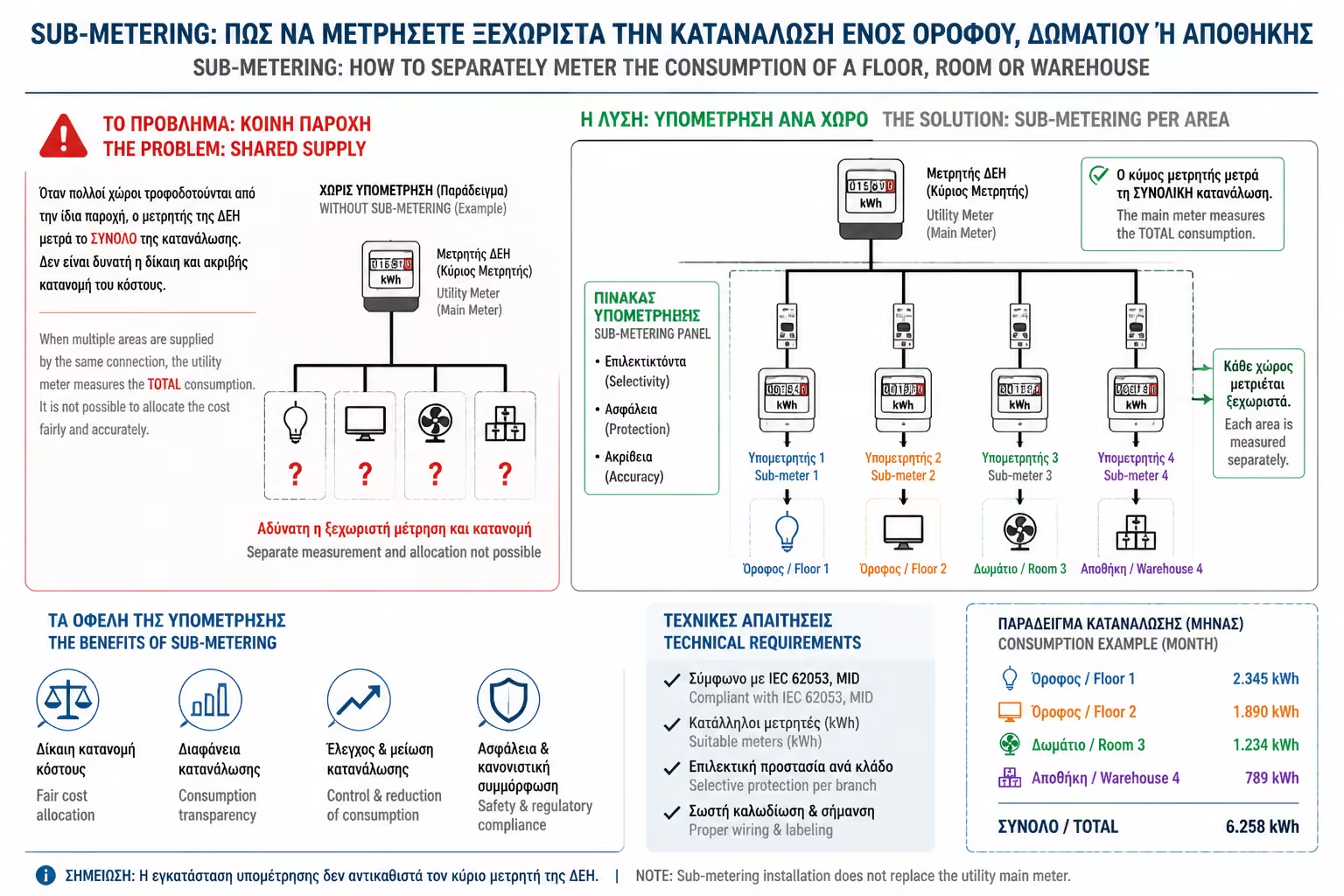
One of the most common, and often most frustrating, problems in Greek buildings is a shared electricity supply. Imagine the scenario: you have a duplex, you live on the first floor and you have rented the ground floor to a student or turned it into an Airbnb. However, both units receive electricity from a single shared utility meter.
When the bill arrives at the end of the month, the argument starts: "Who used the 800 euros of electricity? Me, who was out all day, or the downstairs tenant who left the air conditioner running 24/7?" Splitting the bill in half is unfair and eventually creates friction.
The solution is not necessarily to pay the utility thousands of euros for a completely new supply connection, which may also require new engineering drawings and approvals. The practical solution is sub-metering. Let's look at how this simple and effective arrangement works.
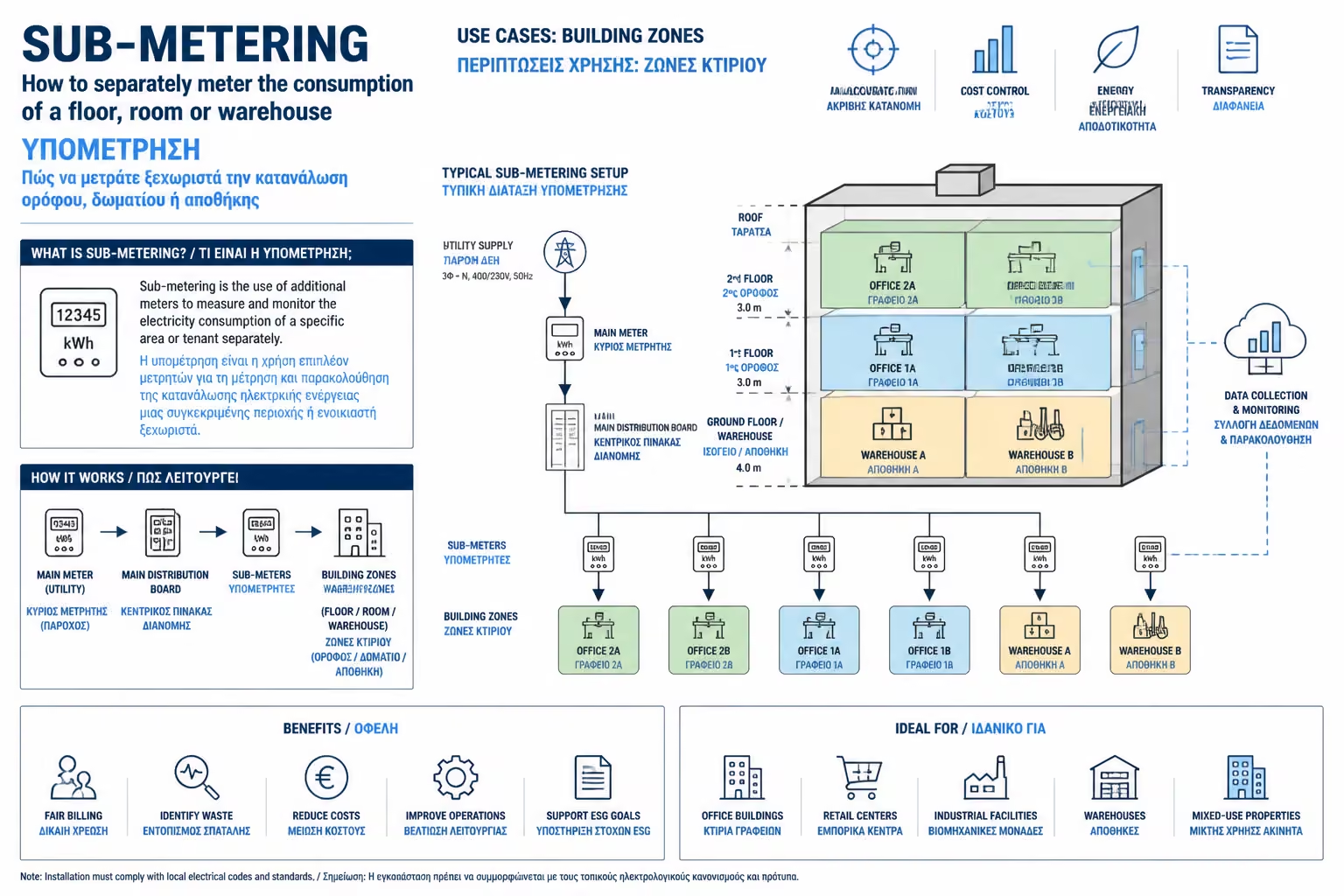
Sub-metering is the installation of private (your own) electricity meters after the provider's central meter.
The electricity provider does not know, and does not need to know, what happens inside your building. It reads the central utility meter, sees a total consumption, for example 1000 kWh, and sends the bill. With sub-metering, you create your own internal measurement system so you know exactly where that 1000 kWh went.
Sub-metering is particularly useful in the following cases:
Renting a ground floor, basement or studio apartment powered by the central panel of the detached house.
If you live in an apartment building and want to install an electric vehicle (EV) charger in the parking lot, drawing power from the utility panel. With the sub-meter, you pay the manager exactly the electricity you used for your car, without burdening the other tenants.
In a large office building owned by one owner, but the offices are rented to 3 different companies.
If you want to know exactly how much electricity only the heat pump or only the pool costs you.
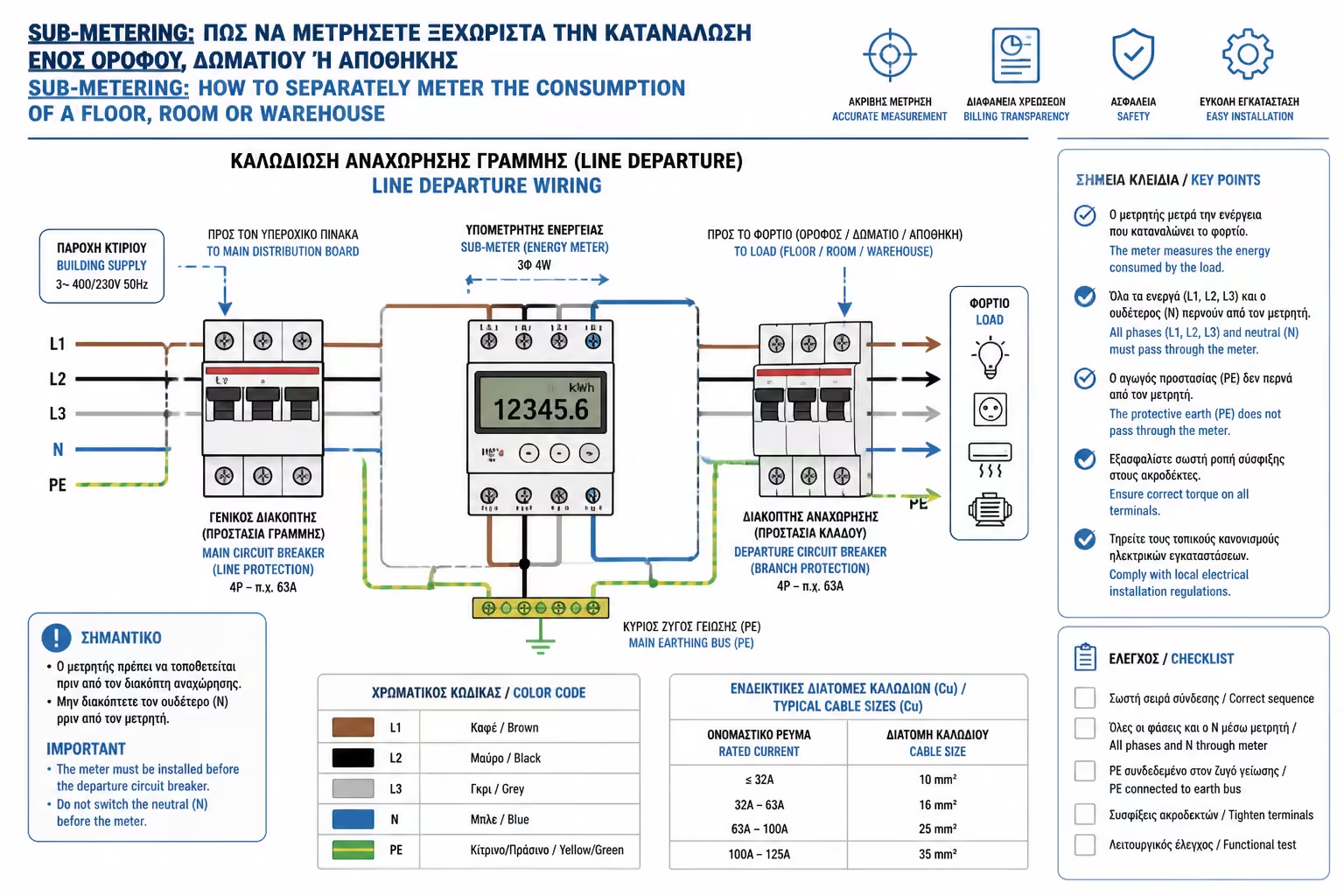
For submetering to work properly, a basic electrical prerequisite is required: The space you want to measure must be powered by a separate, independent line.
Let's take the example of the duplex (1st floor and Ground floor):
That was it! All current that is "drawn" by the ground floor, necessarily first passes through your meter and is recorded.
The calculation at the end of the month is extremely simple and 100% fair.
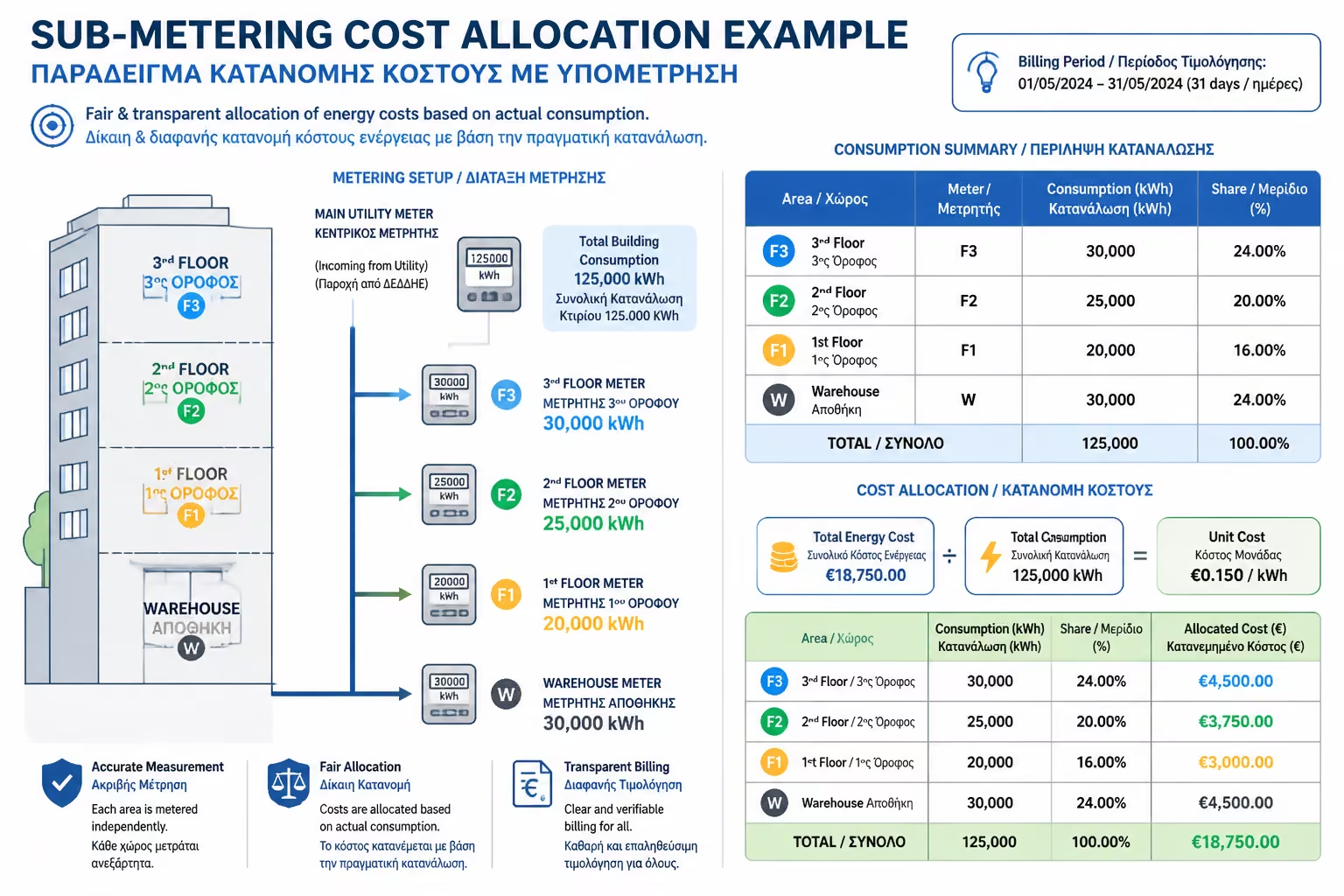
So, your house burned 700 kWh and your tenant burned 300 kWh. All that remains is to multiply the 300 kWh by the current price of the kilowatt hour (e.g. €0.15/kWh) to find the amount the tenant must pay you for their electricity.
(Note: If you want to be completely fair, you should also prorate the "Regulatory Charges" of the account that depend on consumption, i.e. the transmission network and the ICOs).
You read the total consumption from the provider's settlement account (eg Total: 1000 kWh).
Go to your panel and read the submeter screen (eg ground floor burned 300 kWh).
Do the subtraction (1000 - 300 = 700 kWh).
Great care is needed here. By law, you are not an electricity supplier and you are not allowed to resell electricity at a profit. You cannot charge a tenant 0.30€/kWh if you buy it from the supplier at 0.15€/kWh. Sub-metering is legally acceptable for cost allocation only. In simple terms, you may recover exactly the cost of the electricity consumed and not a cent more. For that measurement to have legal and commercial validity in a dispute, the meter must carry the appropriate MID certification, which we discuss in the next article.
Installing a rail meter for sub-metering costs from €30 to €100 (plus the electrician's labor), but it is an investment that pays for itself from the very first bill. It protects you from injustices, eliminates misunderstandings with neighbors or tenants and puts an end to "guesswork" about who burns the electricity.
Next Step: You now understand how sub-metering works. But what if the electrical panel is in the basement and you do not want to go downstairs every month just to read the display? Technology has solved that too. Continue with the guide: Wi-Fi Smart Meters (e.g. Shelly EM, Sonoff): Buying Guide, Features and Installation.
Return to category.
Go to categoryReturn to the central guide.
Go to guide