Absolute Accuracy
Its deviation (Class 1 or Class B) is less than 1%.
In the previous articles, we saw how you can put submeters on the panel and see the consumption on your mobile, even with 20 or 30 euro devices. If your goal is to simply monitor your own home to save money, these meters are fantastic.
But the scene changes dramatically when money and third parties come into play.
Imagine renting out the ground floor of your house and installing a cheap smart meter bought online. At the end of the month, you tell the tenant: "My phone shows you used 800 kWh, so you owe me 150 euros." The tenant refuses to pay and asks a fair question: how can they know that the meter is accurate and untampered with? If the case ends up in court, that objection is valid. For a meter reading to be used as the basis for billing, the meter must carry the appropriate European certification. That is where MID certification becomes critical.
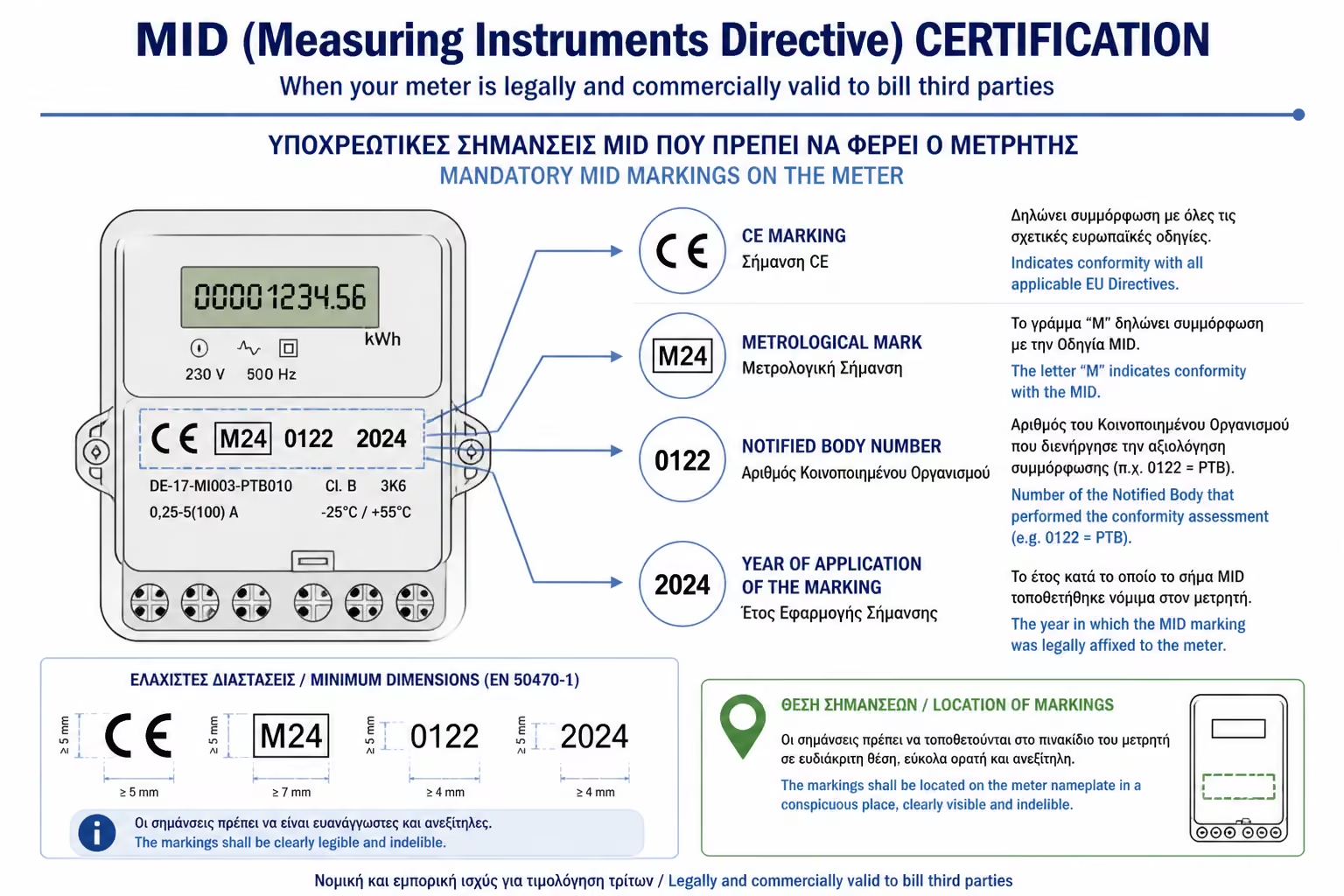
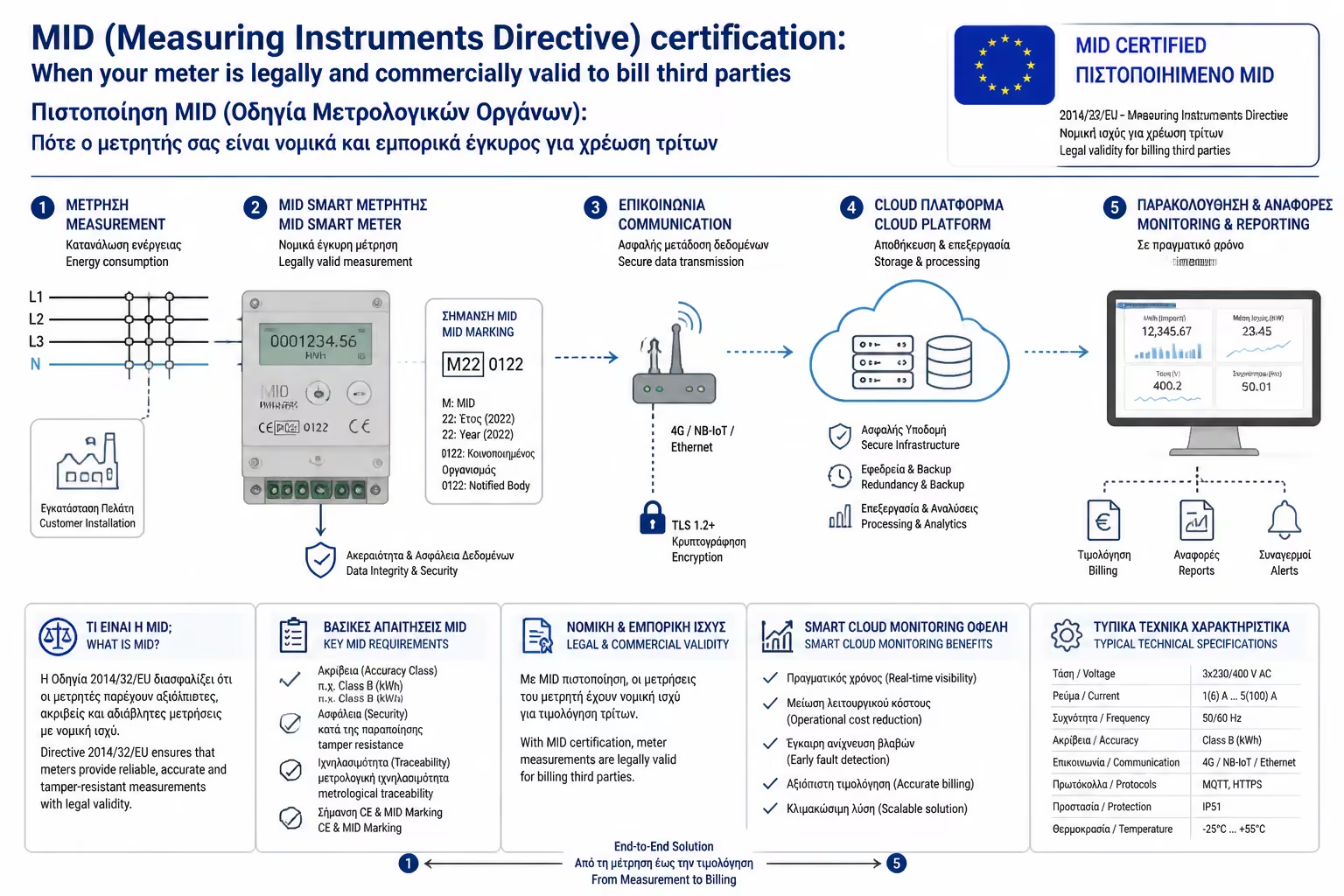
MID stands for Measuring Instruments Directive 2014/32/EU.
It is a strict European legislation that sets the standards for instruments used in commercial transactions. Just as a butcher's scale must be certified by the state to not rip you off at the weigh-in (he can't use his kitchen scale), so an electricity meter must be certified to correctly "weigh" kilowatt-hours.
A MID meter has passed exhaustive tests in independent laboratories, which guarantee:
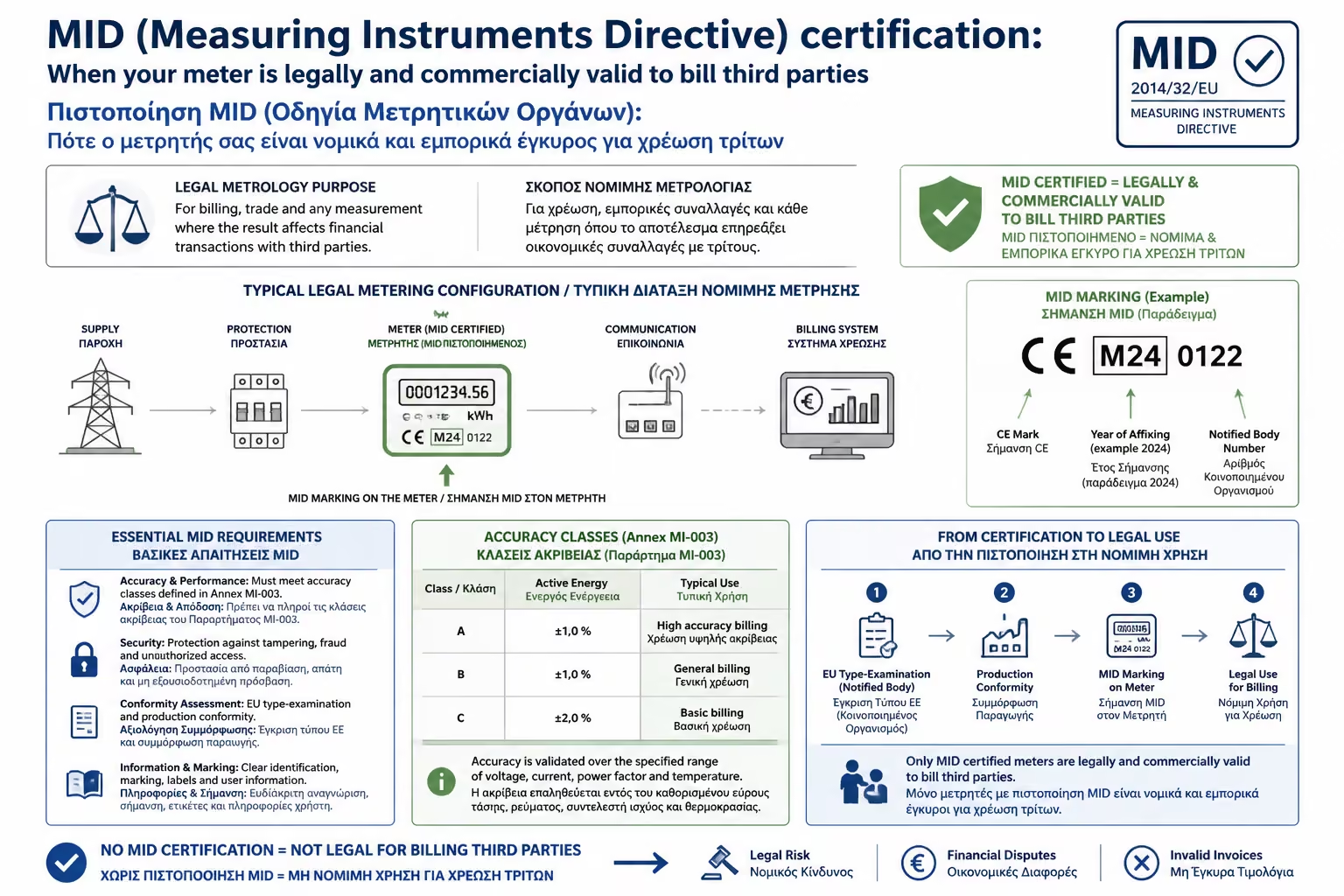
Its deviation (Class 1 or Class B) is less than 1%.
No one can get into their software and "tamper" with the numbers, nor reset the total kilowatt-hour counter (just like the mileage on a car's dial doesn't reset).
It is not enough for a seller to say that a meter is "good". If you inspect a genuine MID-certified DIN rail meter, you should find the following three mandatory markings printed on the device:
If even one of these is missing, your meter is only good for informational (private) purposes, not billing.
The use of certified meters is legally required when you bill based on the energy consumed (per kWh). Typical examples:
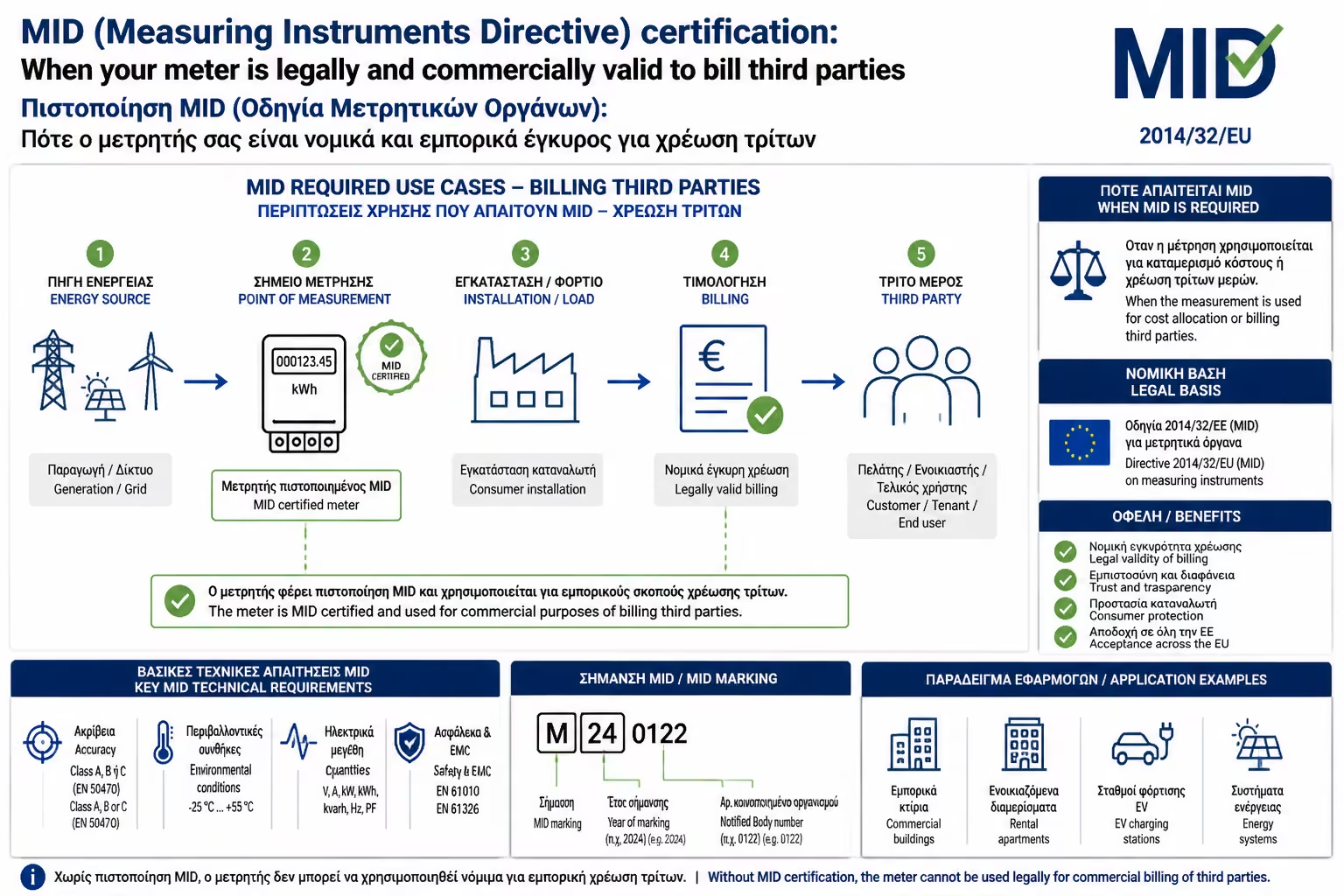
If you have a hotel or a parking lot and want to charge your customers for the electricity they put in their car, the meter inside the charger must be MID. (Otherwise, you can only charge by "parking time", not electricity).
If your contract says "The tenant pays for the electricity they consume based on the sub-meter", the sub-meter must be MID.
When boats or caravans are connected to the electricity supply "pillars" and charged at the end of their stay.
Where the administrator divides the PPC central account into dozens of smaller shops or offices.
Until recently, MID meters were classic, boring devices with a simple LCD screen. If you wanted Wi-Fi and mobile apps, you had to sacrifice certification.
That has now changed. Leading smart-home manufacturers have recognized this need and offer models such as the Shelly Pro 3EM-400 MID. These devices combine certified, tamper-controlled hardware for legal billing use with modern connectivity such as Wi-Fi or LAN for live monitoring and reporting.
If you are a private person who wants to check their water heater, buy any (safe) meter you want. But if you're a property owner, Airbnb host, or business owner, the word "MID" is your shield against the law. An MID-certified meter is obviously more expensive than a regular one, but it ensures that no one will ever be able to legally challenge the validity of your charges.
Next Step: We saw how to measure the "thick" wires of the panel. But what about individual objects? Want to know exactly how much power your old fridge or computer stole this month? We continue with the practical guide: Socket Consumption Meters (Smart Plugs with Energy Monitoring): Are they worth it for home use and how accurate are they?
Return to category.
Go to categoryReturn to the central guide.
Go to guide