Active Power (kW) - The Liquid
It is the "clean" beer in the glass. It is the energy that produces real, useful work. The one that heats the resistors, that makes the motors turn and the lights turn on.
If you own a home or a small office, your electricity bill is relatively simple: You pay for the kilowatt hours you burn. But if you run a factory, a large hotel, a woodshop or a supermarket with an industrial/professional tariff, things change.
On your billing statement there is often a "hidden" charge line with obscure terms such as "Idle Power Charge" or "Low Cosf Surcharge". For many businesses, this one line alone adds hundreds or even thousands of euros to their expenses every month!
What is this fine? Why is grid operator punishing you for electricity that... doesn't even produce work? As engineers, we're going to demystify the concept of "Reactive Power" and see how a metal panel with capacitors can erase this cost for good, offering perhaps the fastest return on investment in the tech industry.
The best way to understand electrical power in alternating current (AC) is the beer glass analogy:
The well-known power factor, or cosφ, is simply the ratio of "liquid" to the total contents of the glass. If the foam is minimal, cosφ is close to a perfect 1.00. If the foam is excessive, meaning there is a lot of reactive power, cosφ drops to 0.70 or 0.60.
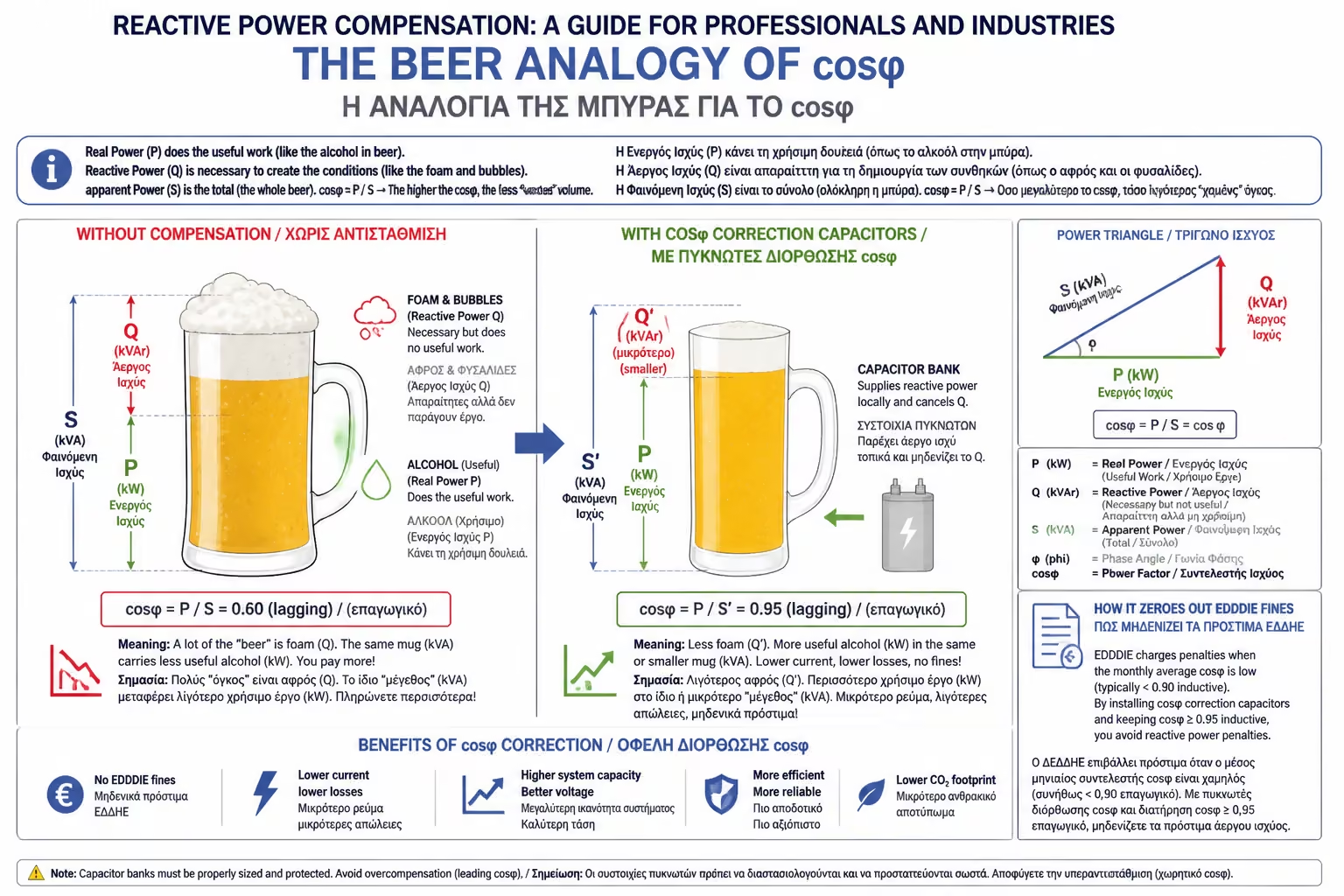
It is the "clean" beer in the glass. It is the energy that produces real, useful work. The one that heats the resistors, that makes the motors turn and the lights turn on.
It's the foam at the top of the glass. It doesn't quench thirst, it doesn't do "work", but it must be there for magnetic fields in inductive devices (such as large electric motors, pumps, transformers and old fluorescent lamps) to work.
It is the total space occupied by the liquid together with the foam. In electrical terms, it is the total burden the supply network must carry.
The grid operator does not care about the analogy itself. It cares about having to build larger networks, thicker cables and heavier transformers just to transport non-productive current.
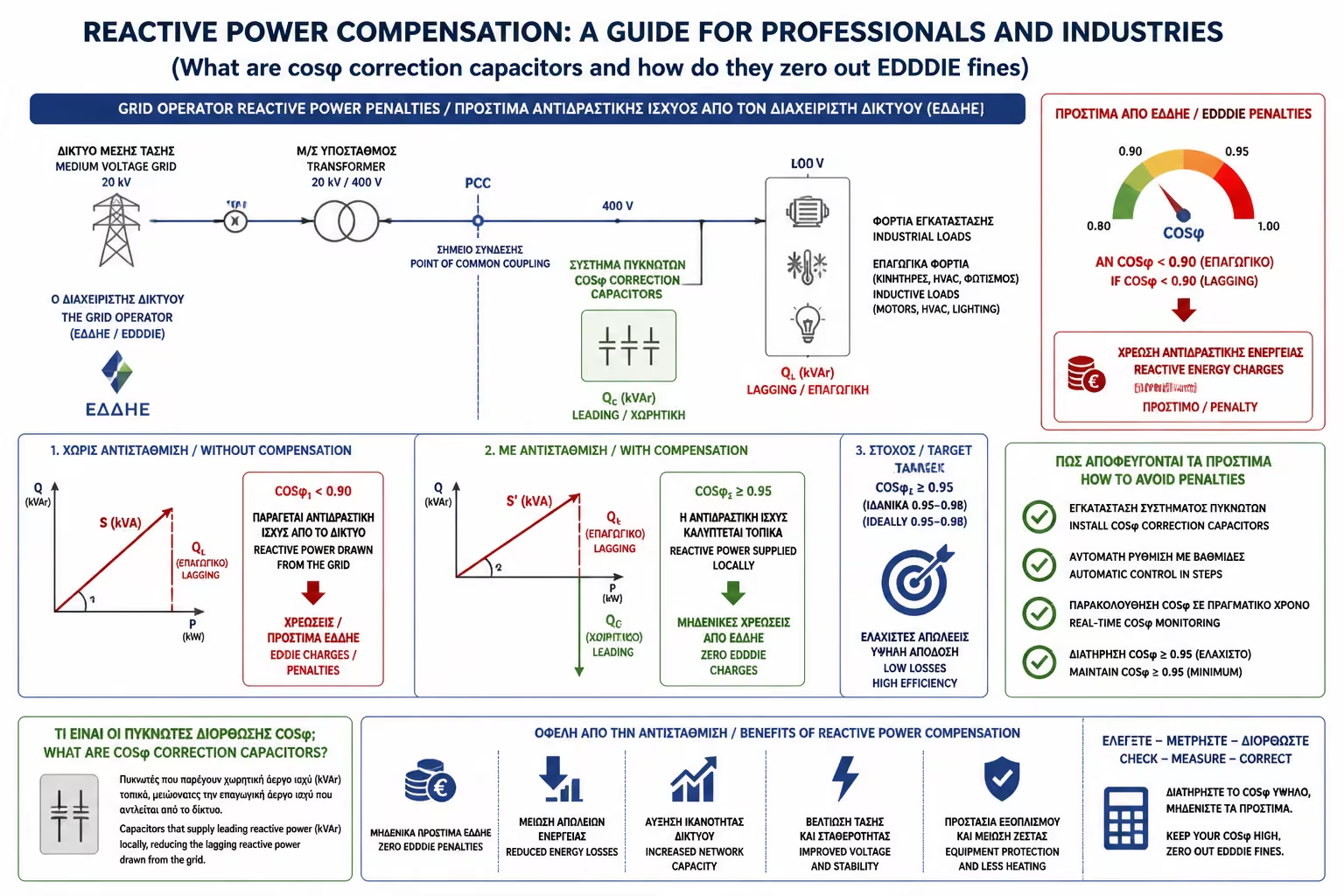
When a plant has a very low cosφ, it draws large amounts of reactive power from the grid. This non-productive current circulates through the network without doing useful work, but it still occupies capacity, heats conductors and contributes to voltage drop.
To prevent you, the legislation says the following: The Power Factor (cosφ) of your installation must be above 0.95. If your machines drop this number (e.g. to 0.80), your provider imposes heavy penalty charges (fines) on the clearing account to cover the damage you are doing to their network.
You cannot remove your motors, because they need reactive power to function. What you can do is generate that reactive power locally, so the installation no longer has to pull it from the grid.
This is where compensation capacitors, usually arranged in a capacitor bank, come in. It is a separate metal panel installed next to the main electrical board and it provides a local source of reactive power.
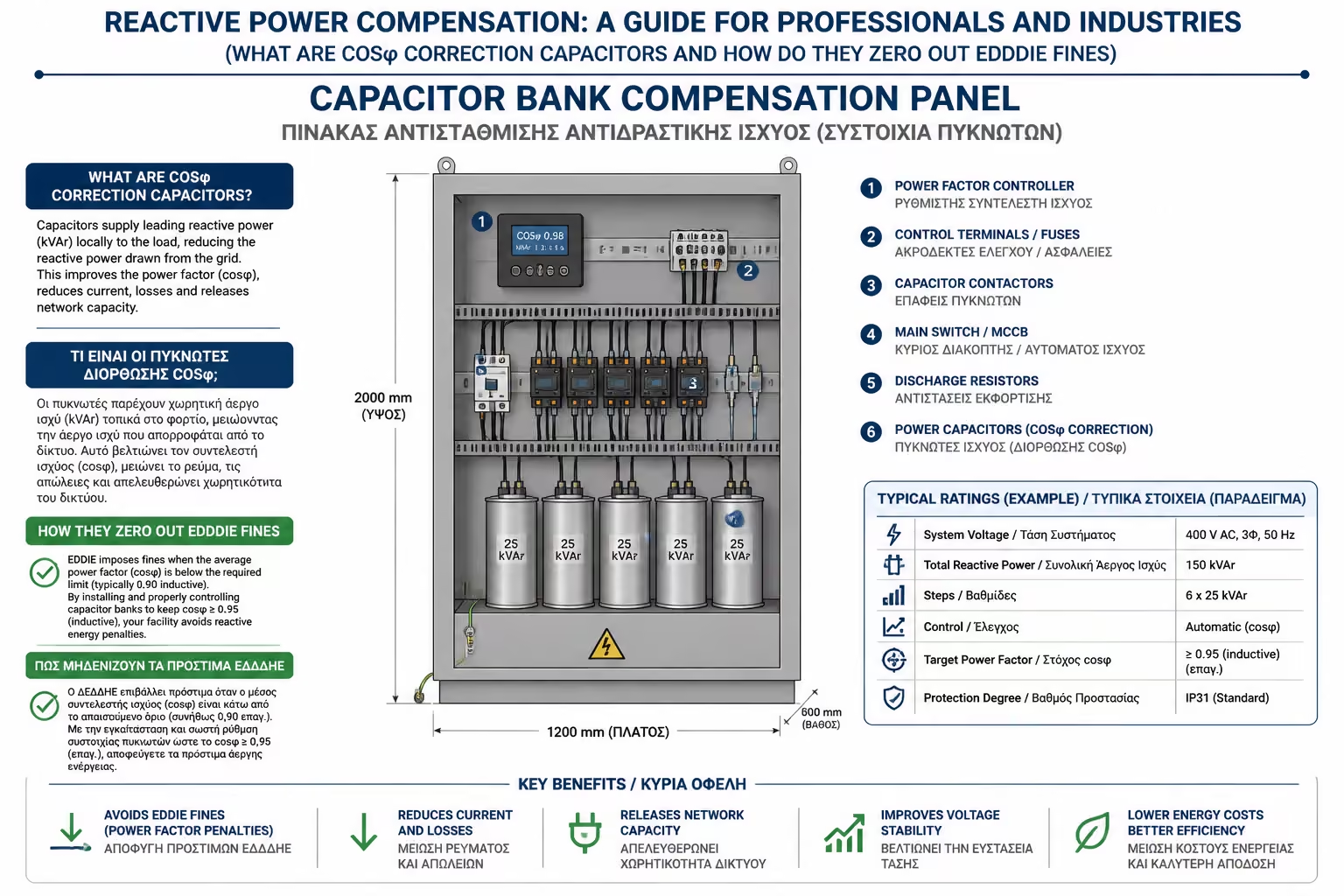
Inside the board is a microprocessor. It continuously measures the factory current.
When you turn on a large lathe or a large cold-room installation, the building's cosφ drops. The controller detects this and commands capacitor stages in and out through contactors or relays, providing reactive power locally to the load.
From the grid side, the installation now appears electrically healthier, with a corrected power factor close to 0.99. As a result, the reactive-power penalty disappears.
Homes do not usually need this kind of compensation, because reactive-power penalties are not applied to ordinary household supplies. Compensation matters mainly for businesses with three-phase supplies where inductive loads such as motors dominate.
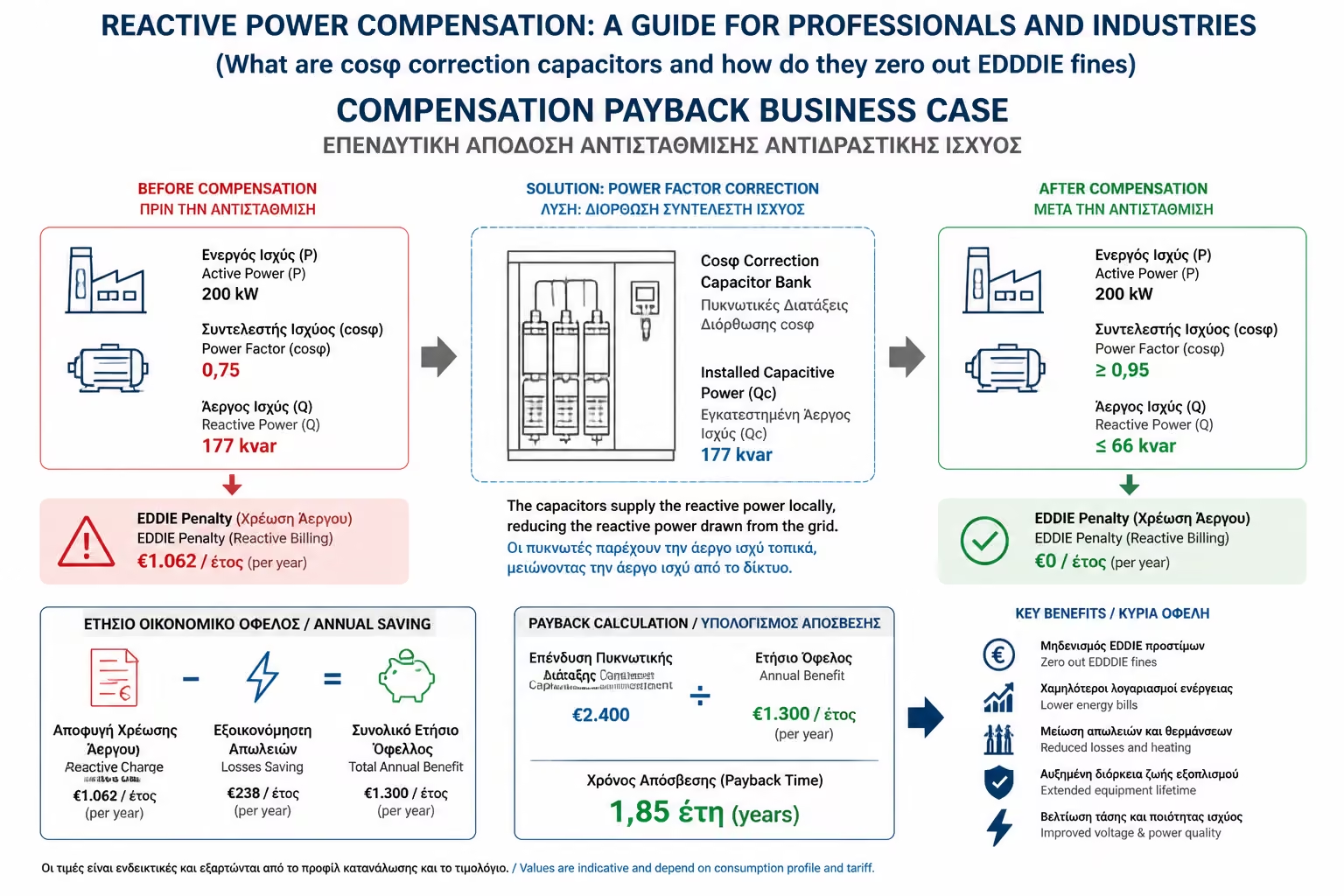
The Calculation of Payback (ROI): This is the "sweetest" moment for an engineer. Let's look at a real example of a medium craft space:
With the board installed, the fine is zeroed out the very next month. The cost of €1,800 is divided by the benefit of €250/month. The business makes a full payback of the investment in just 7 months! From the 8th month and for the following years, this money goes straight into the company's coffers.
If you are a professional user, pick up your electricity bill now, especially the page with detailed charges, and look for references to cosφ or reactive-power charges. If you see amounts there, you are losing money unnecessarily. A correctly engineered capacitor bank is not an expense without purpose; it is a financial correction with an extremely fast payback.
Next Step: We continue the guide of energy strategies (Category D) with solutions that concern every home or small office. How do we improve our electrical panel with little money?
The answer to the next article in our feature: Electrical Add-ons for Immediate ROI: 5 Inexpensive Panel Upgrades That Pay Back in Less than a Year.
Return to category.
Go to categoryReturn to the central guide.
Go to guide