Live Charts & History
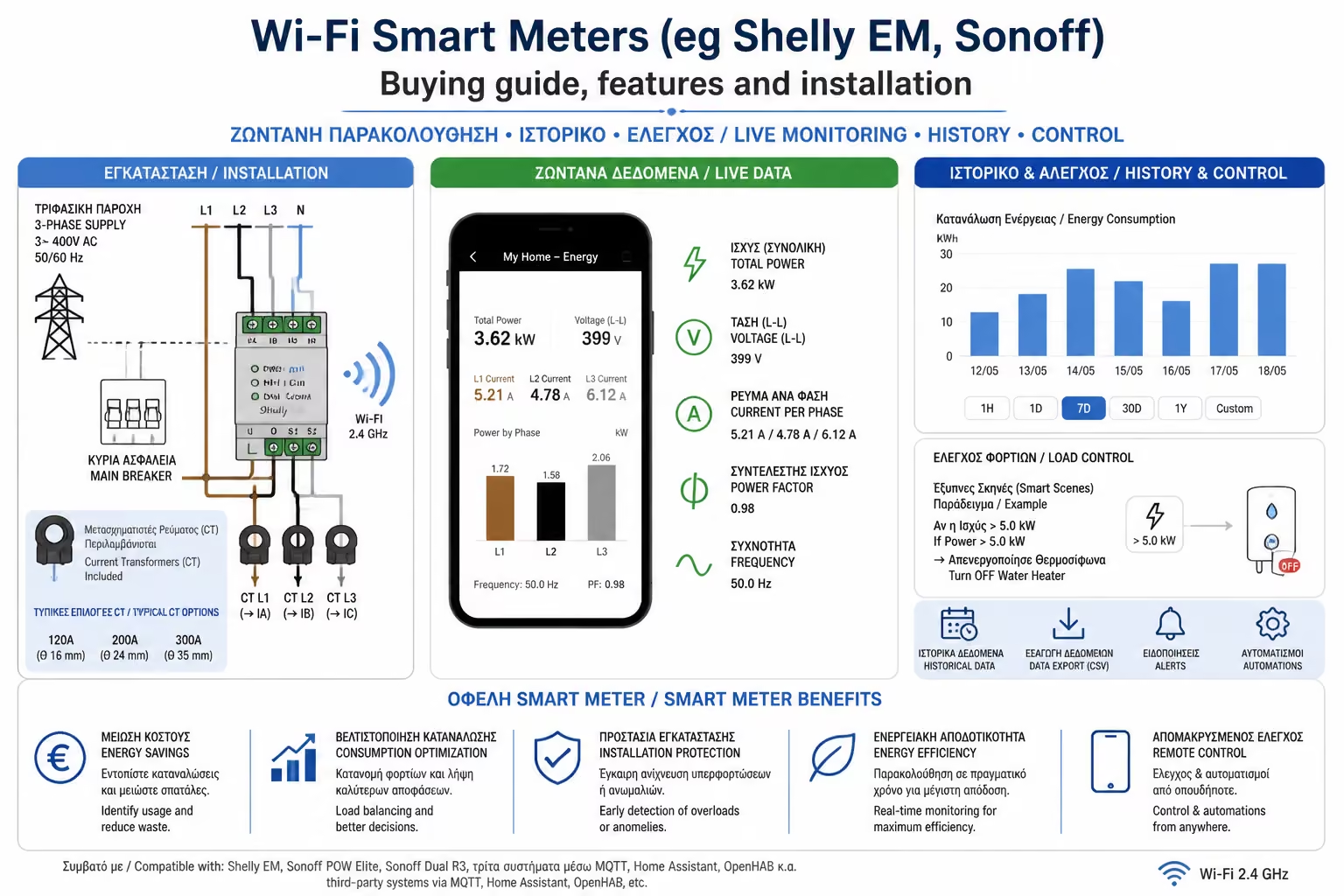
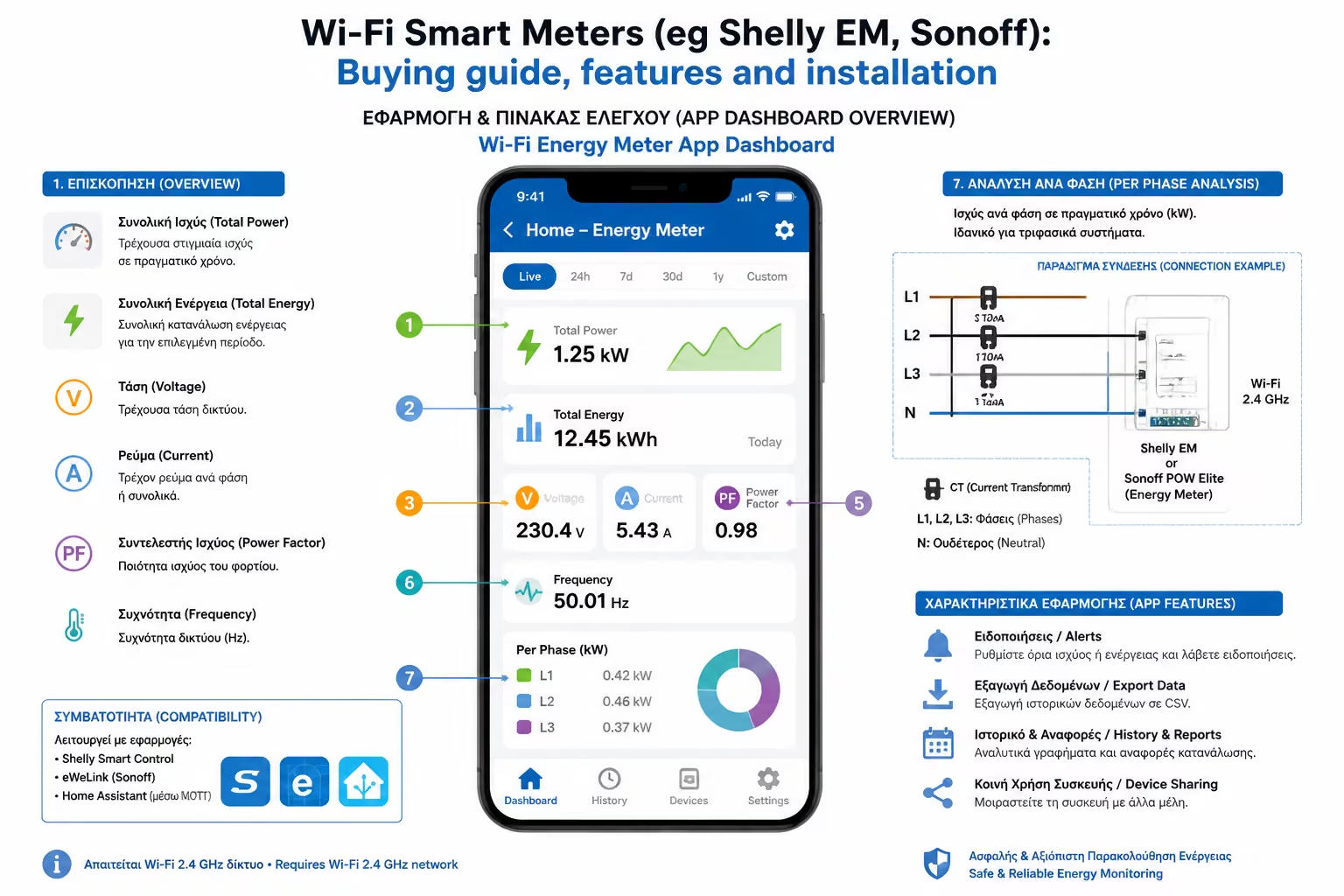
The app stores your data (often for over a year). You can see detailed graphs (bars) of what you burned today, yesterday, or last August. Some Apps automatically calculate the cost in euros.
In the previous article we saw how a DIN rail meter can record the consumption of a tenant or a specific load. But opening the electrical panel, writing numbers in a notebook and doing the math by hand is a workflow that belongs in the 1990s.
Today, information should come to you, not seek it.
This is where Wi-Fi smart energy monitors come in. These devices bring IoT-style visibility directly into the electrical panel. In practice, they have become one of the core tools of the modern electrical installation. Let's look at how they work, which brands dominate the market and what you should check before buying.
Visually, they look like classic DIN rail meters or small plastic modules hidden behind the breakers. Their defining difference is the built-in Wi-Fi antenna.
Once the electrician powers them up, these meters connect to your home router just like any other networked device. From that moment on, they continuously send consumption data to the manufacturer’s cloud platform. You simply open the app on your phone and see everything live from anywhere in the world.
Why pay more for a Wi-Fi meter instead of a simple one with an LCD screen?
The app stores your data (often for over a year). You can see detailed graphs (bars) of what you burned today, yesterday, or last August. Some Apps automatically calculate the cost in euros.
Most smart meters don't just "watch" power, they can actually cut it! They have internal relays (switches). If you see from your office that the water heater at home has been left on, you press a button on your mobile phone and turn it off.
You can set rules. For example: "If the total consumption of the house exceeds 6000W, send me a notification on the mobile (Push Notification) so that I can close something before the general fuse goes down".
If you search the market, two names dominate affordable energy monitoring solutions:
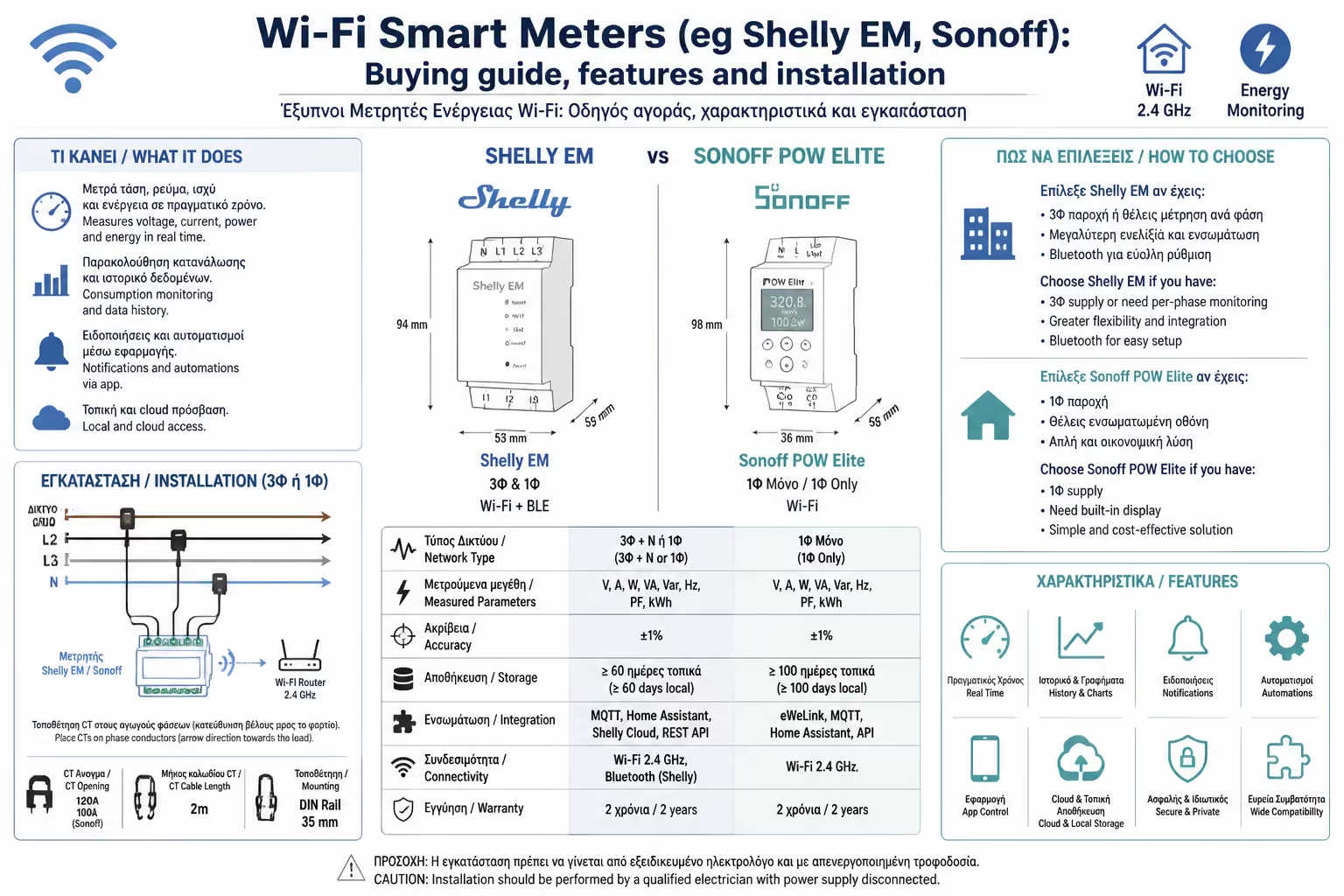
It is probably the most beloved brand of electricians and tech enthusiasts. Their products (like the popular Shelly EM or Shelly Pro 3EM) are tiny, highly reliable and (most importantly) offer open software (Local API, MQTT). This means they can work locally without depending on the Cloud if they connect to systems like Home Assistant.
They use the eWeLink ecosystem. They are a little bulkier (they go directly into the DIN rail) and focus on ease of use and a very low price. Models like the Sonoff POW Origin/Elite are ideal for those who want a quick, economical solution (eg for an Airbnb).
Don't buy the first meter you see in front of you. Check these three factors:
Some meters (such as the Shelly EM) have two "channels". They can take two different ammeters (CT Clamps). Thus, with one device, you simultaneously measure the current coming from the PPC, but also the current produced by your photovoltaic system on the balcony!
If you buy a "Direct Connect" meter (where the current runs through it), look at the limit. If the water heater is drawing 16A, a Sonoff POW meter rated for 16A will be working at its limit and may melt. Choose devices that withstand 20A or 25A for small loads.
For whole-house metering, you need a device that accepts external current transformers, such as 50A or 120A CT clamps. Main household current is too high to route through a small plastic module directly.
Installation by an electrician is a simple matter. The real problem (which owners discover later) is connectivity.
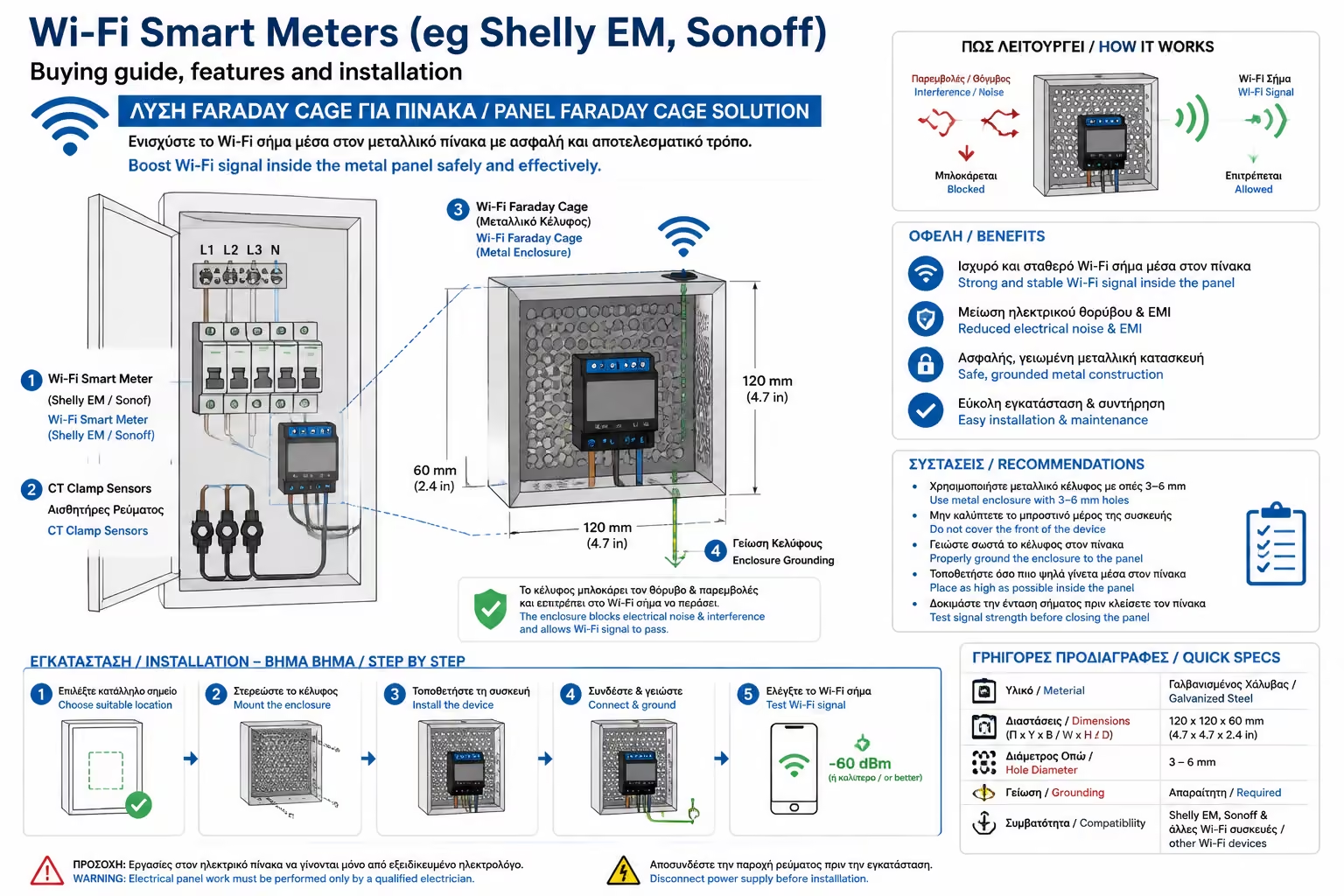
The electrical panel in most homes is a heavy metal box. In physics, a closed metal box acts as a "Faraday Cage". That is, it almost completely blocks radio waves and Wi-Fi! If your router is in the living room and the panel is in the basement, your smart meter will just... have no signal. It will keep disconnecting and you will lose your data.
The solution is simple: before buying a Wi-Fi meter, check signal strength near the panel with your phone. If reception is poor, install a Wi-Fi extender or a powerline adapter in an outlet right next to, or just outside, the panel so the signal is strong and stable.
Wi-Fi smart meters are the ultimate energy saving investment. Their cost ranges from €20 to €60, an amount that is often amortized in the very first month, since they allow you to identify and deactivate devices that were "burning" electricity without you knowing.
Next Step: We have referred several times to CT clamps, the devices that allow safe measurement of large loads. How does this technology read current without cutting the conductor or touching bare copper? Continue with the technical guide: Current Transformers (CT Clamps): How to Measure Current Safely Without Cutting or Disconnecting the Main Conductors.
Return to category.
Go to categoryReturn to the central guide.
Go to guide