Communication Protocols for Large Buildings: How Industrial Meters
"Talk" (Modbus, M-Bus, Zigbee)
In the previous articles we saw how easy it is to connect a smart meter
to your home Wi-Fi and see the consumption on your mobile. But what if
you don't have a house, but a shopping mall, a factory or a hospital?
Imagine trying to connect 500 different electricity meters, 200 water
meters and 50 chillers to the... office router. The Wi-Fi network would
crash in seconds from the interference, IP address conflicts, and
massive amount of data. In addition, Wi-Fi is considered extremely
vulnerable to cyber-attacks, which is unacceptable for industrial
infrastructure.
To manage power on a massive scale, engineers are rejecting Wi-Fi and
turning to rigorous, specialized Communication Protocols. These
protocols feed data to the building's central BMS (Building Management
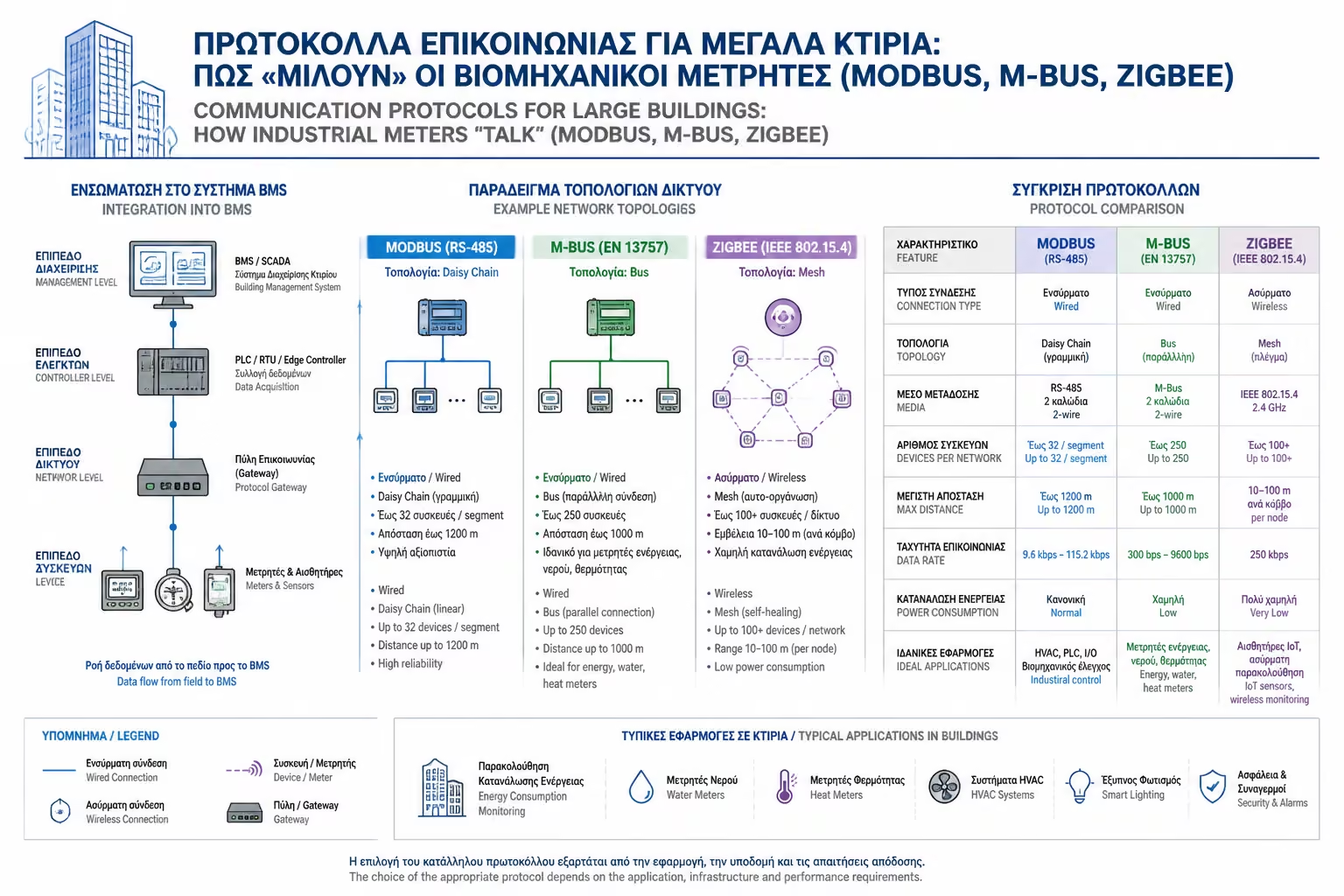
System). Let's take a look at the 3 most popular "languages"
that machines speak to each other.
1. Modbus: The "Patriarch" of Industry
If there is one communication language that almost every industrial
device can understand, it is Modbus. Developed in 1979, it may be old,
but it remains one of the foundational standards of industrial
automation.
The Architecture (Master / Slave)
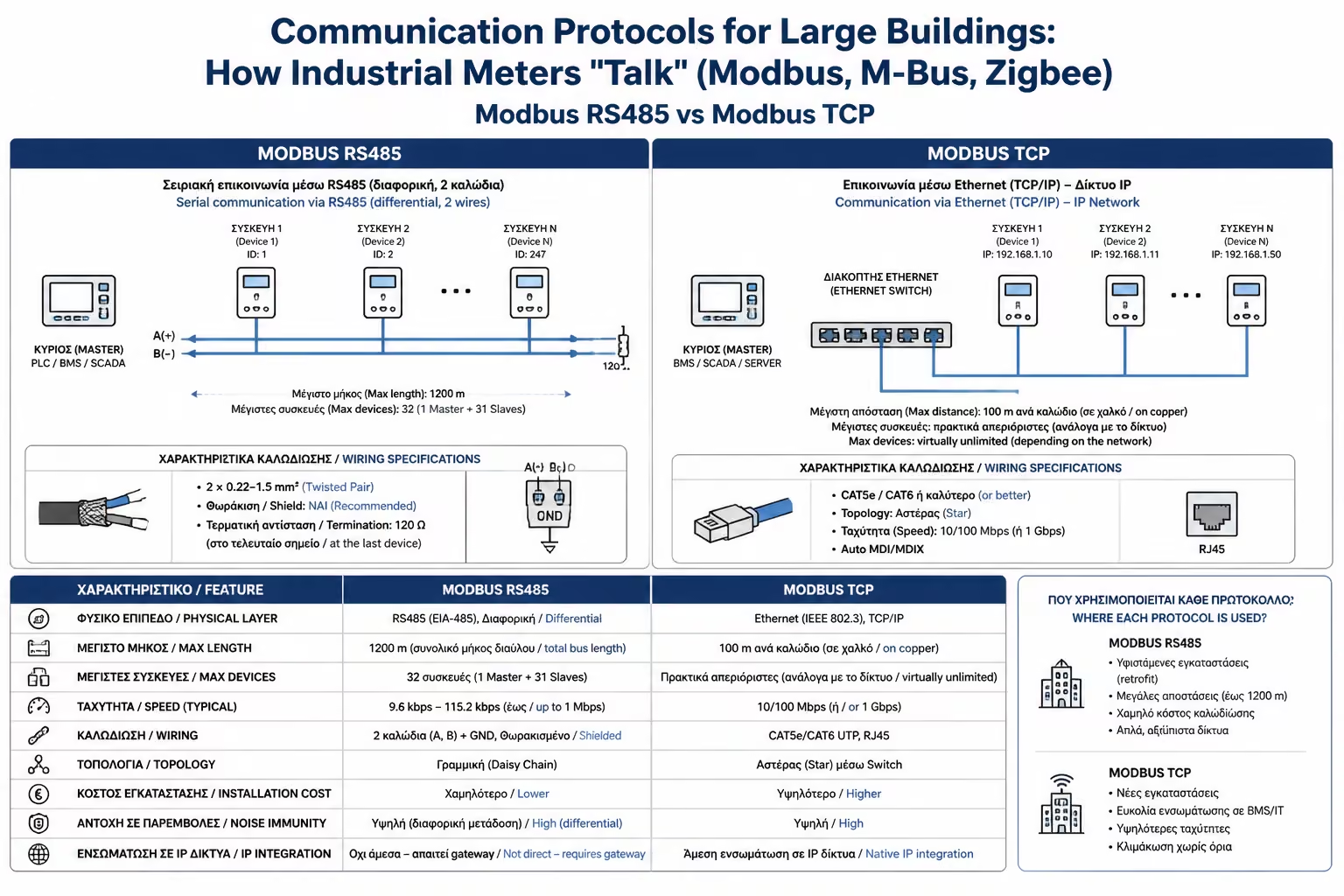
Classic Modbus follows a master-slave architecture. The central
controller, such as a PLC or supervisory computer, polls each field
device in turn. The meters do not transmit freely on their own; they
reply when asked. That strict hierarchy prevents communication
collisions and keeps the network predictable.
Modbus RTU (Wired)
The most classic form. It uses a simple twisted pair of cables
(RS485 network). The cable starts from the computer and goes
(daisy-chain) through all the meters like a chain. Such a network
can reach 1.2 kilometers in length without any amplifier! It is the
ultimate choice for stability (immune to noise).
Modbus TCP (Network)
The modern version, where the Modbus signal travels through classic
network cables (Ethernet/LAN). It's much faster, ideal for huge
office buildings that already have structured cabling installed.
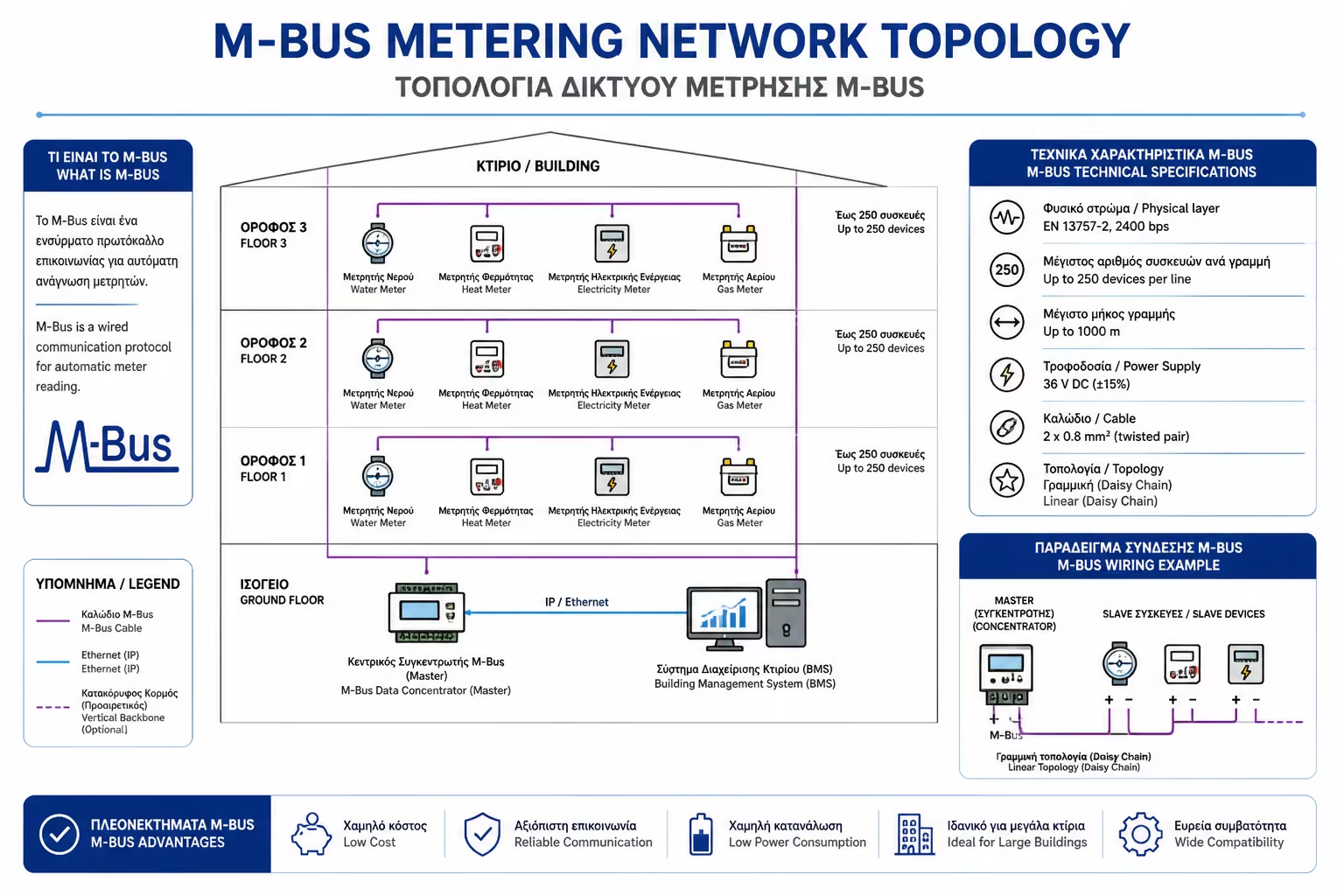
2. M-Bus (Meter-Bus): Expertise in Measurements
Modbus is general purpose (can control anything from power to robots).
M-Bus, on the contrary, was designed in Europe with a single, very
specific purpose: To read consumption meters (Electricity, Water,
Natural Gas and Heat).
It is the absolute standard (usually its wireless version, Wireless
M-Bus) for water and gas companies that sweep entire neighborhoods to
take measurements (Smart Metering Rollouts).
The Advantages
Unlike Modbus which requires twisted wires and strict termination
rules, M-Bus is incredibly "tolerant" to wiring errors.
You can connect the wires in a "star", "tree" or
chain shape, and it will work.
Power over the Bus
The most impressive feature of the M-Bus is that the 2 communication
wires themselves ALSO provide power to the meter to run its board!
This relieves the hands of installers when installing water meters
in basements where there is no power outlet.
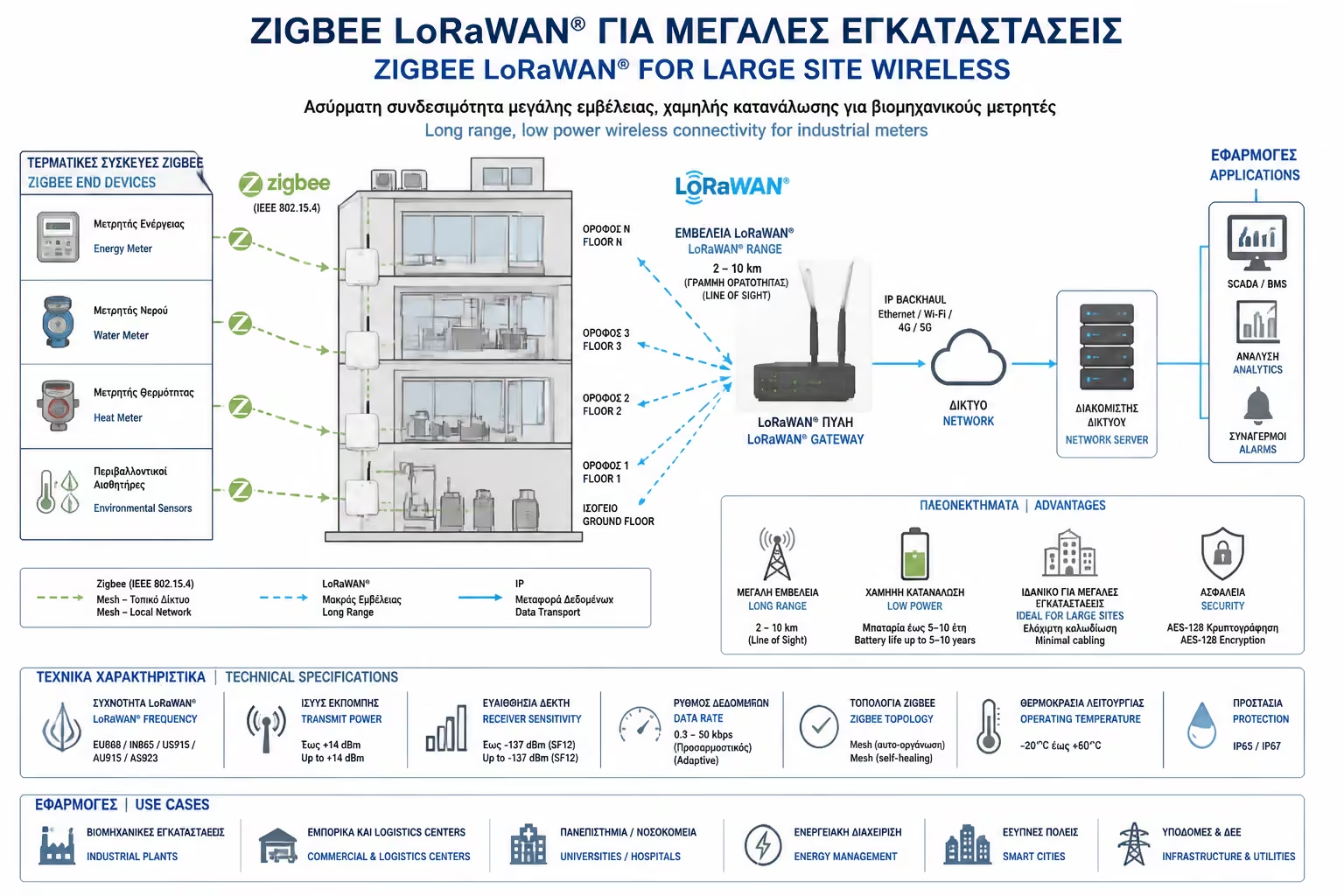
3. Zigbee (and LoRaWAN): The Wireless Allies
What if you have a listed building or a huge factory where running new
RS485 cables is practically impossible or prohibitively expensive?
This is where professional wireless protocols come in.
Zigbee (Mesh Networking)
Unlike Wi-Fi, where every device must connect directly to the main
router, Zigbee creates a mesh network. Each compatible node can help
relay data onward. If a meter on the third floor cannot reach the
gateway directly, it can pass its data through intermediate nodes.
The more well-placed nodes you have, the more resilient the network
becomes. It is also very low power, which makes it useful in hotels
and larger buildings.
LoRaWAN (Long Range)
If your meters are spread across a large industrial site rather than
concentrated in one building, LoRaWAN becomes attractive. It carries
relatively small amounts of data, but over very long distances and
with good wall penetration, which is why it is widely used in
smart-city and distributed utility applications.
4. The Role of BMS (Building Management System)
All these protocols end up in the "Brain" of the building,
the BMS. The BMS computer is equipped with special gateways that act
as "interpreters".
They take the power data (from Modbus), the water data (from M-Bus)
and the status of the lights (from KNX or DALI), translate it all into
a common language, and present it to the Facility Manager in a
beautiful, single screen with graphs.
Summarizing
For an ordinary home, Wi-Fi with a solid device ecosystem such as Shelly
is usually enough. But in professional and industrial installations,
wired protocols still dominate because reliability comes first. Modbus
and M-Bus remain core standards precisely because they keep measurement
networks stable even at large scale.
Next Step: What happens when guests leave the air conditioners at 18
degrees and the windows open? We're kicking off the new category with
the ultimate survival guide for hosts: Airbnb Guide 2026: How to Control
Unnecessary Guest Power Consumption.