The Result
When the first rain falls, the water finds its way through these invisible micro-cracks. It goes straight to the bare wire terminals, causing a momentary short or leakage to earth.
September and October are the months of great contrasts. The hot summer sun gives way to the first heavy autumn showers. For your home's electrical installation, this change in weather is the ultimate "crash test".
Water and electricity are obvious enemies. One of the most common reasons an RCD keeps tripping during a storm is not an indoor fault at all, but an outdoor problem: a forgotten garden luminaire, a balcony outlet, or equipment near the pool.
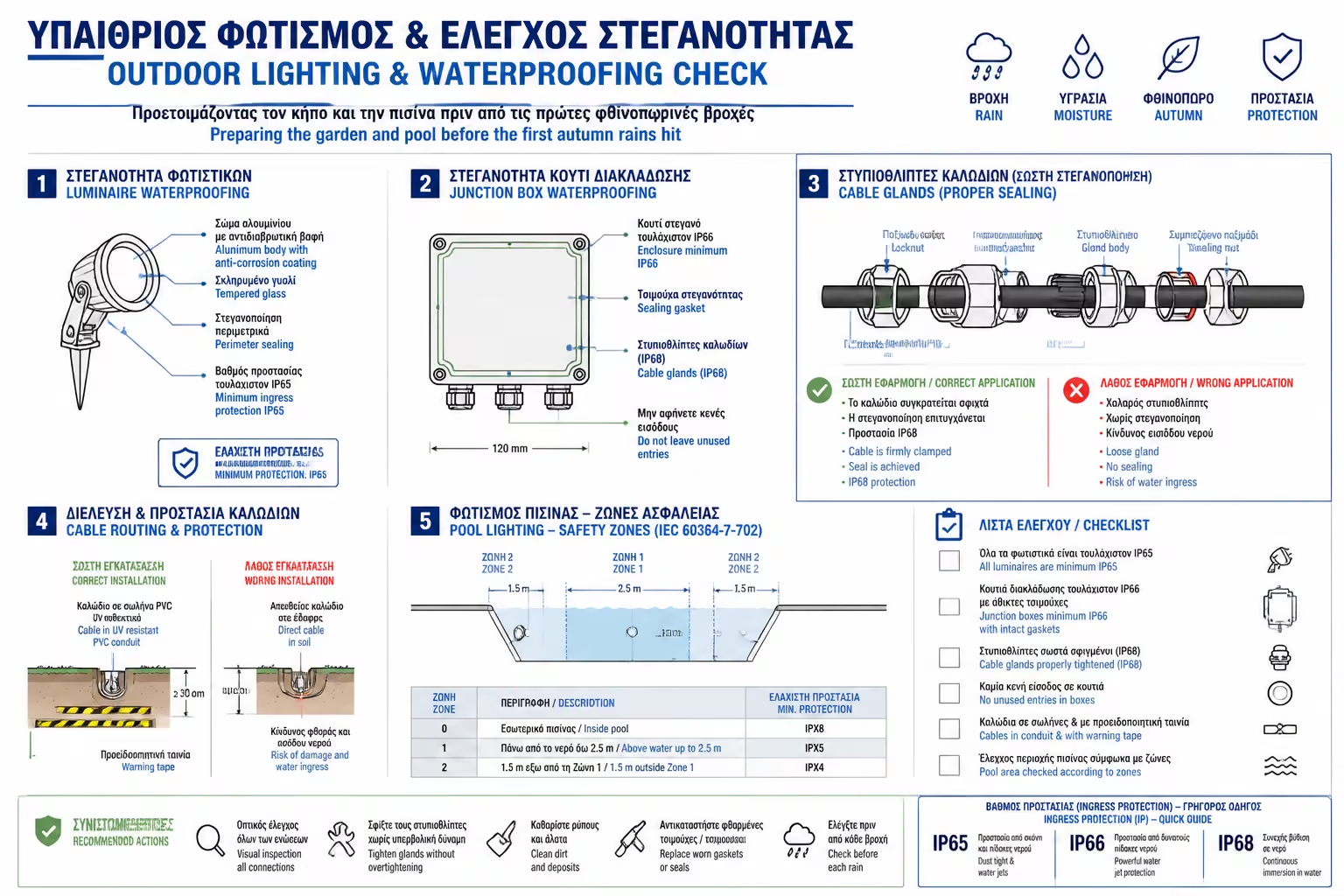
Preventive maintenance of outdoor electrical equipment is not just about convenience; it is mainly about safety. Let's see how sunlight destroys seals, what IP ratings really mean, and how electricians achieve reliable waterproofing.
Most people think winter spoils outdoor lights. In fact, the damage is done in the summer.
The sun's relentless ultraviolet (UV) radiation "bakes" the plastic parts. The rubber seals (O-rings) that are between the glass and the metal of the lamps dry out, lose their elasticity and "pop". Plastic electrical junction boxes become brittle.
What to check: Walk around the garden and examine the light fixtures. If you see yellowed/faded plastics or rubbers that crumble to the touch, this fixture is an "open wound" and needs replacement or a new gasket.
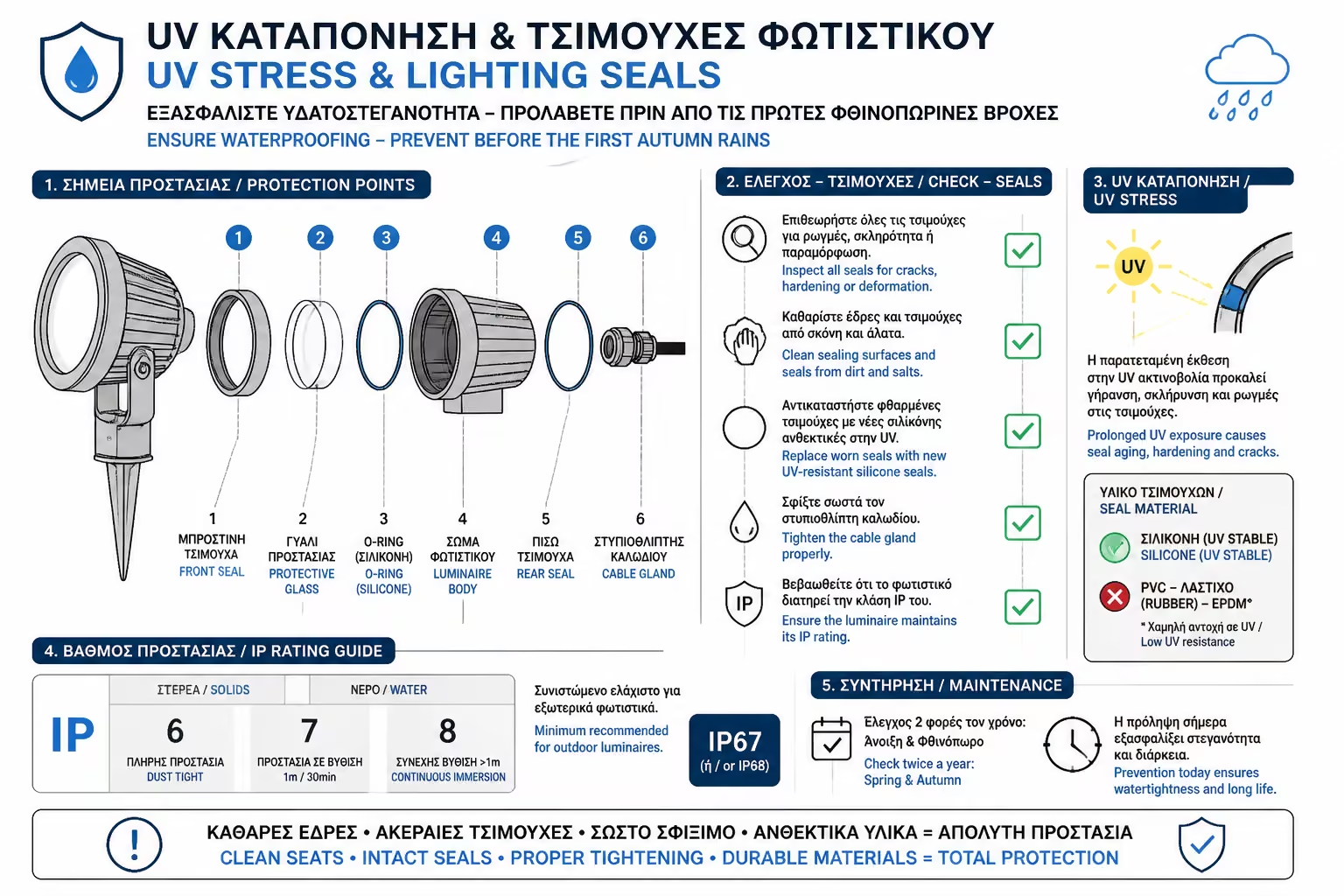
When the first rain falls, the water finds its way through these invisible micro-cracks. It goes straight to the bare wire terminals, causing a momentary short or leakage to earth.
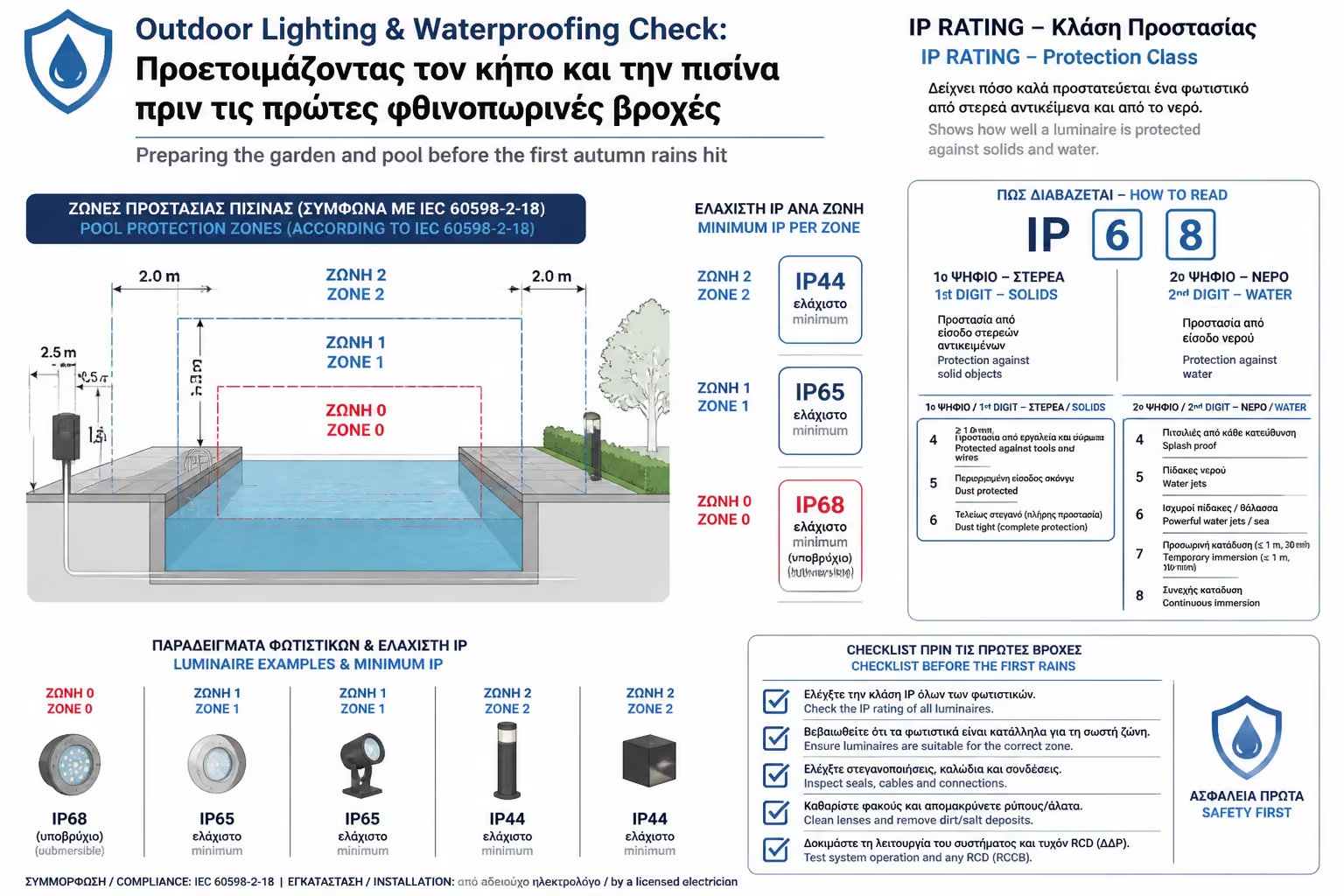
Not all lamps are made to fit everywhere. Their resistance to water and dust is measured by the IP index, which is followed by two numbers. The first number is for dust (from 0 to 6) and the second is for water (from 0 to 8).
The golden rules for outdoor spaces:
Caution: If you bought a cheap, beautiful lamp (eg IP20) that was intended for the living room and put it on the pergola, you are playing with fire.
ONLY suitable for covered balconies, where the rain does not hit them directly.
The absolute minimum for garden lights, bollards and spotlights exposed to rain or sprinklers.
Mandatory for lights that go inside the pool, in fountains or buried in the ground, where water can pool.
Even if you have a perfect IP65 light fixture, power must reach it via cables. Cable connections are made in Junction Boxes. That's where 90% of the problems lie.
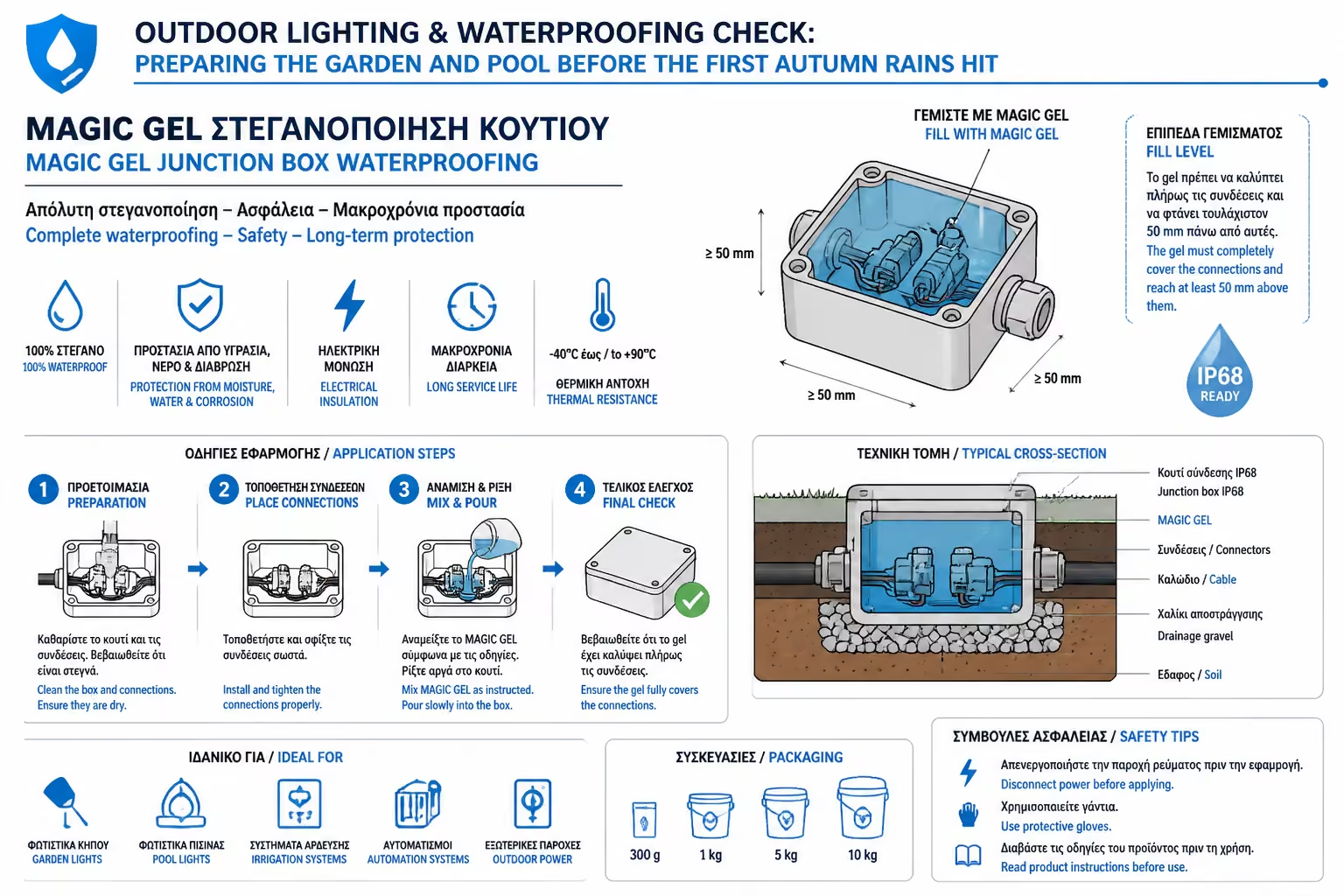
What if the cables need to be joined in the ground (eg for the underground lighting of a tree)? Even the best IP68 box may get wet after a few years.
Here professional electricians use a "magic" material: Dielectric Gel (Potting Gel).
The pool is the most dangerous electrical zone in a home. No discounts here.
It is strictly forbidden to reach 230 Volt cable (the voltage of the house) near the water. All underwater lights must be supplied with Safety Low Voltage (SELV). The transformers that step down the voltage from 230V to 12V must be located in a sealed, locked panel, away from the pool.
Before the rains start, make sure the pool pump's watertight lid closes tightly. Additionally, the pool panel leak relay should be tested (with the "Test" button we learned) to be sure it is working perfectly.
There is a case where your fixture is perfectly sealed, but you find water in it! How did this happen? It is Condensation. When the lamp is turned on, the air inside the closed lamp heats up. When the lamp is turned off on a cold autumn evening, the warm air cools abruptly and its normal moisture turns into water droplets on the glass, which drip into the wires.
Many good outdoor lights have a tiny "weep hole" at the bottom. This allows the lamp to "breathe" and the condensation to drip out. Make sure this hole is not clogged with dirt or mud.
A few hours of visual inspection and proper preparation in your garden during the fall will save you the trouble of going out with your flashlight in the storm to find why the power went out. Check the seals, make sure the IP rating of your new fixtures, and if you have joints exposed to mud, have your electrician seal them permanently with special Gel.
Next Step: We complete the Maintenance Class, returning indoors. There's an everyday component that we brutally abuse, and when it starts to break down, it becomes the number one cause of electronic device destruction.
We continue with the routine check: Preventive Replacement of Sockets: When the loosening of the "ears" of the socket becomes dangerous for your devices.
Return to category.
Go to categoryReturn to the central guide.
Go to guide