Construction-Site Power: How the Initial Connection Works and How It Is
Converted to a Permanent Supply
The construction of a new building or the radical renovation of an old
property is an exciting, but also bureaucratically exhausting journey.
Before the first concrete is even dropped or digging begins, your
craftsmen (builders, blacksmiths, electricians) need electricity to
operate their tools.
But how do you get electricity for a house that... doesn't exist yet?
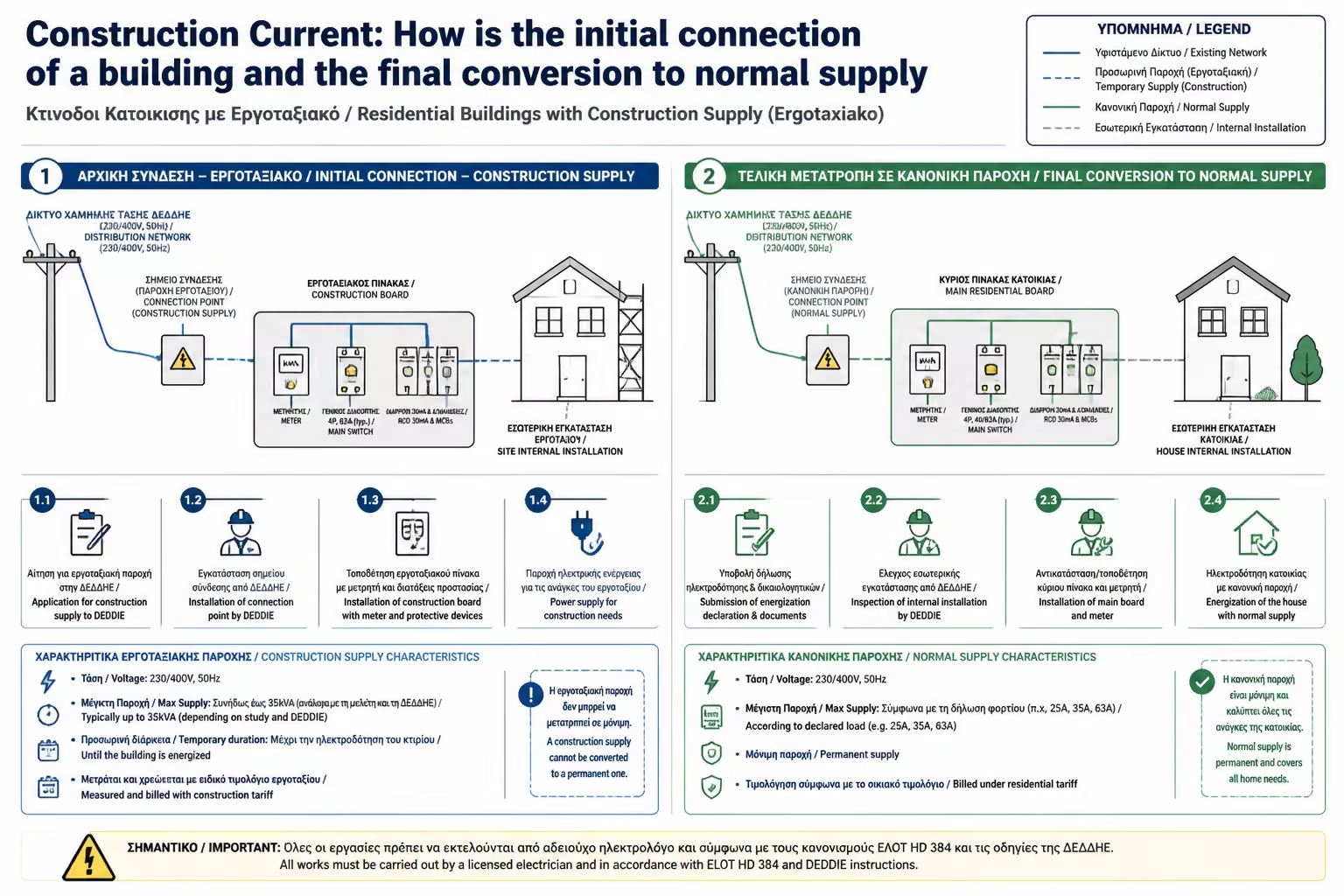
This is where construction-site power comes in. It is a temporary supply
that HEDNO provides exclusively for building works. The process has two
distinct phases: the initial temporary connection at the start of the
project, and the final conversion to a permanent supply once the
property is ready.
1. What Construction-Site Power Is and What the "Pillar"
Means
Unlike a finished domestic installation, construction-site power is
temporary, exposed, and designed to serve works in progress.
The Installation
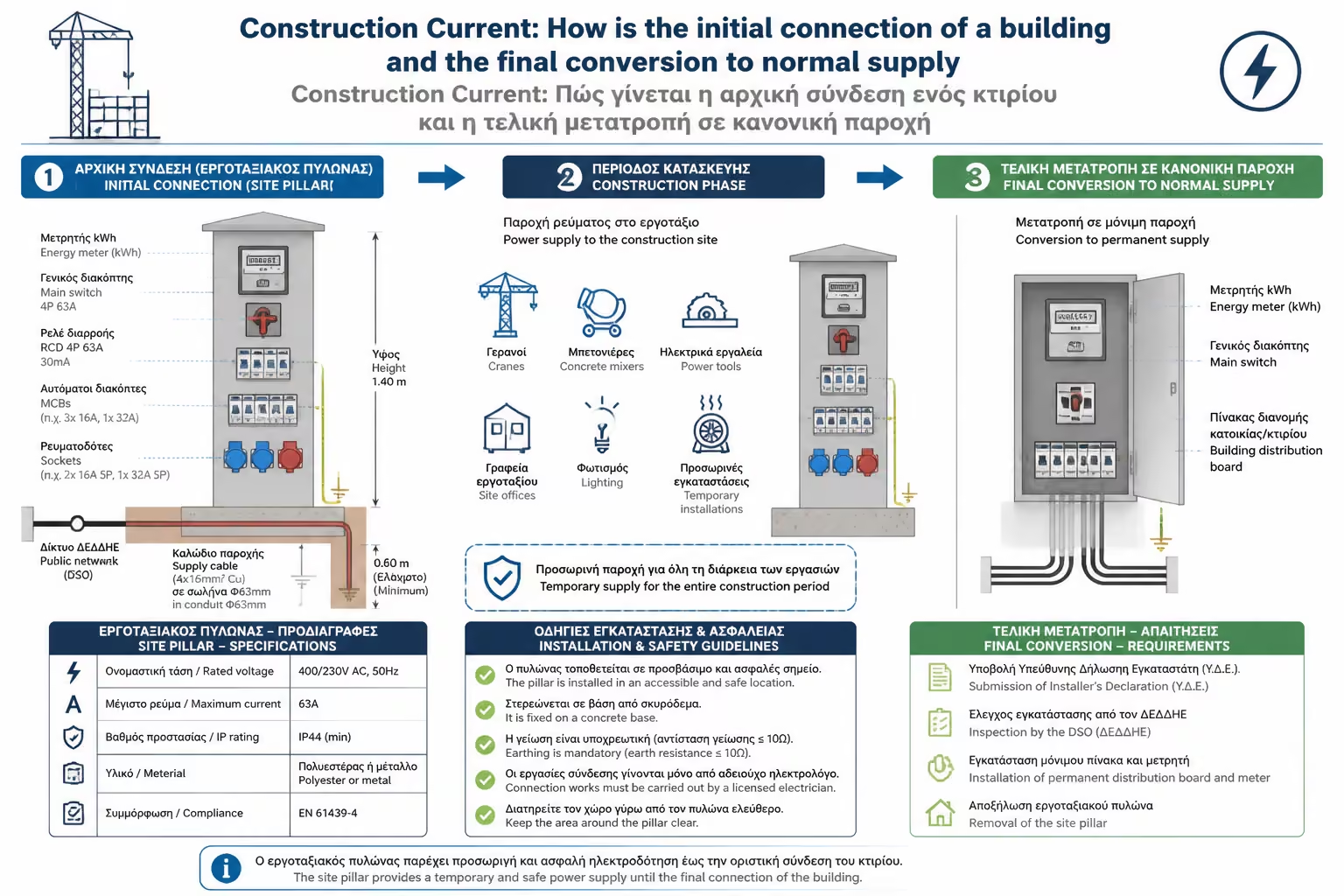
Your electrician places a special, waterproof metal box, called a
Pillar, at the edge of the plot. This box contains the HEDNO meter,
the main switch, the leakage relay (absolutely necessary for
construction accidents) and some industrial sockets that contractors
plug machines into (eg concrete mixers, electric welders).
The Charge
Construction-site power does not use a low domestic tariff. It is
usually billed under a professional tariff because it is treated as
a working supply, so it is not economical to keep it any longer than
necessary.
2. Phase 1: The Initial Connection (Starting the Tasks)
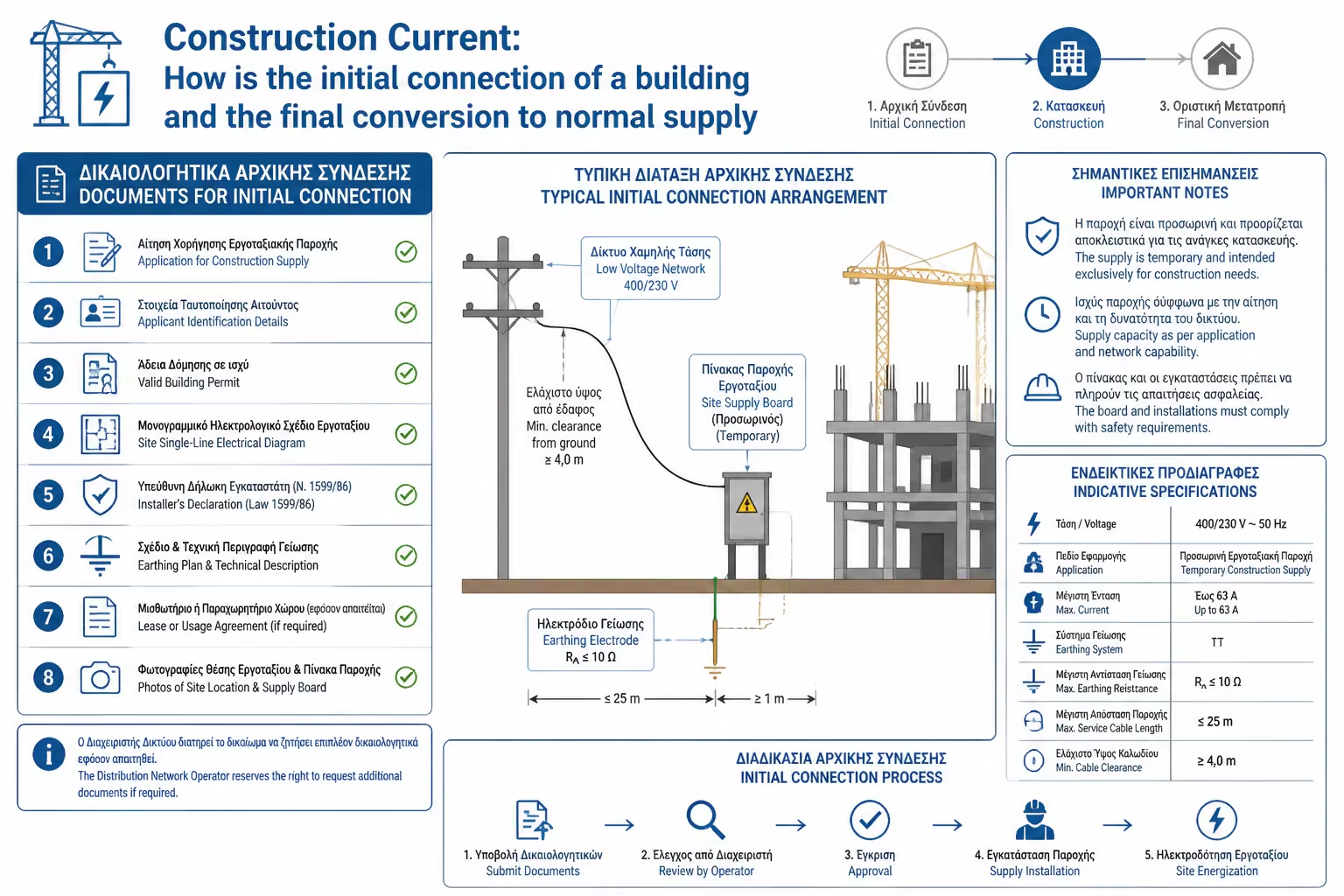
In order for HEDNO to give you this temporary provision, you must
prove that you have the legal right to build. The process is now
mainly done through the digital portal of HEDNO, and the supporting
documents are strict:
The Building Permit (The Most Important): You must have the Building
Permit from the e-Permits system, which has a special "Stamp
for Site Power Supply" from the competent Building Service
(YDOM/Urban Planning).
YDE (Electrician's Plan) for the Site: Your licensed electrician
must issue a Certificate (YDE) which does not concern the future
house, but exclusively the safety of the temporary Pillar he set up
on the plot.
Title Deeds: Contract of the plot or building.
Proof of VAT number & Identity of the owner or legal
representative.
The duration of the construction-site supply is tied to the validity
of the building permit. If the permit expires, HEDNO can disconnect
the supply unless your engineer has already secured an extension.
3. The Risk: Can You Live with Construction-Site Power?
This is the most common mistake (and often a violation) in Greece. The
house is being finished internally, the furniture is in, the owners
are moving in, but they have not yet received the Final Seal from the
Town Planning Office. Thus, they connect the house board to the
construction site Pillar.
Why it is strictly prohibited:
Safety issue: the site YDE only covered the temporary pillar
outside, not the finished indoor installation. If something goes
wrong inside the house, you are not properly covered.
High Cost: You pay for electricity very expensively (business
tariff) without the right to Social Tariff (COT) or heating
allowances.
Fines: HEDNO carries out checks. If it is found that
construction-site power is used for domestic use (illegal change of
use), heavy fines and interruption of supply follow.
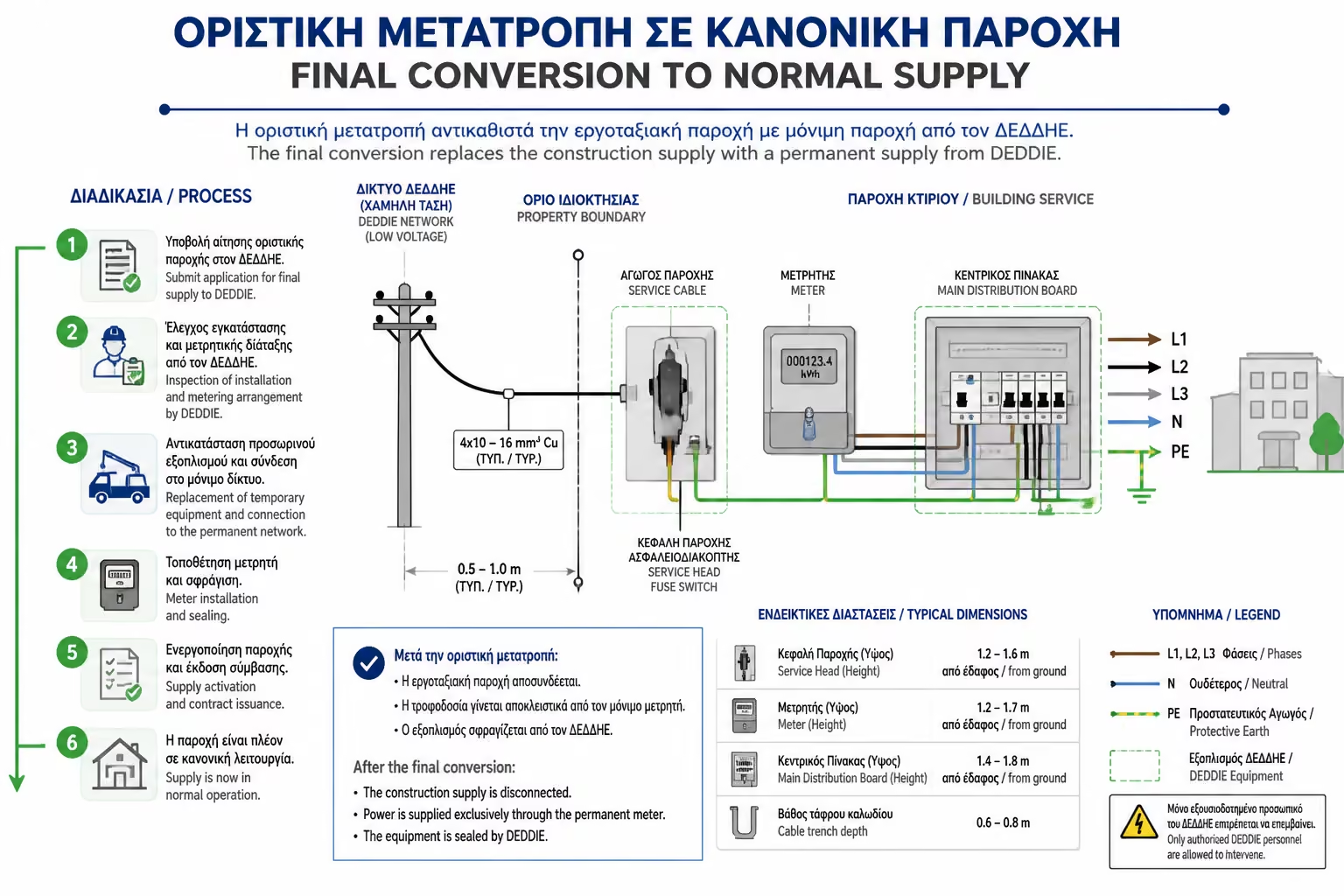
4. Phase 2: The Final Conversion (Normal Current)
Once the house is finished and ready for lawful occupation, the
temporary construction-site supply must be converted into the
permanent residential or commercial connection.
This is the most bureaucratic part, as it requires the involvement of
three different professionals (Civil Engineer, Electrician and
Accountant):
Seal of Final Supply (Urban Planning): Your Civil Engineer must
close the building file. He will call in a Building Inspector, who
will confirm that the building was built exactly as the permit plans
said (no tampering). Then, YDOM issues the Final Connection
document.
New YDE (Electrical Plan) for a Home: Your electrician issues the
final, complete certificate that we analyzed in a previous article,
which now captures the internal panels, sockets and final earthings
of the house.
TAP Certificate (Real Estate Tax): Issued by your Municipality. It
proves that the declared square footage of the building is identical
to that of the license, so that the Municipal Fees can be charged
correctly through the electricity bill.
EFKA Payment Proof (formerly IKA): For new buildings, a certificate
from EFKA is required that all the workers' fees that worked on the
project have been paid. If you owe stamps, you don't get
electricity.
The Necessary Documents for Permanent Connection:
5. The Removal of the Pillar
Once all documents have been submitted to HEDNO and approved, you sign
the final supply contract with your chosen provider. HEDNO then removes
the temporary pillar and installs the permanent utility meter in its
final approved position on the boundary or facade.
Summarizing
Construction-site power is the temporary energy supply that allows a
building project to take shape. Managing it properly requires
coordination between the civil engineer handling the permit side and the
electrician handling the installation and HEDNO requirements. If the
paperwork and inspections are closed on time, the transition to
permanent supply is straightforward.
Next Step: We've seen how a new building is powered. But when the
electrician makes the installation of this new building, he does not
follow the rules of the 90s.
We continue with the guide for the new technical specifications imposed
by the law: The New Standard ELOT 60364 (formerly KEHE & HD384):
What has changed in the legislation of internal electrical installations
(For Engineers & Electricians).