
Buy the right size in the first place
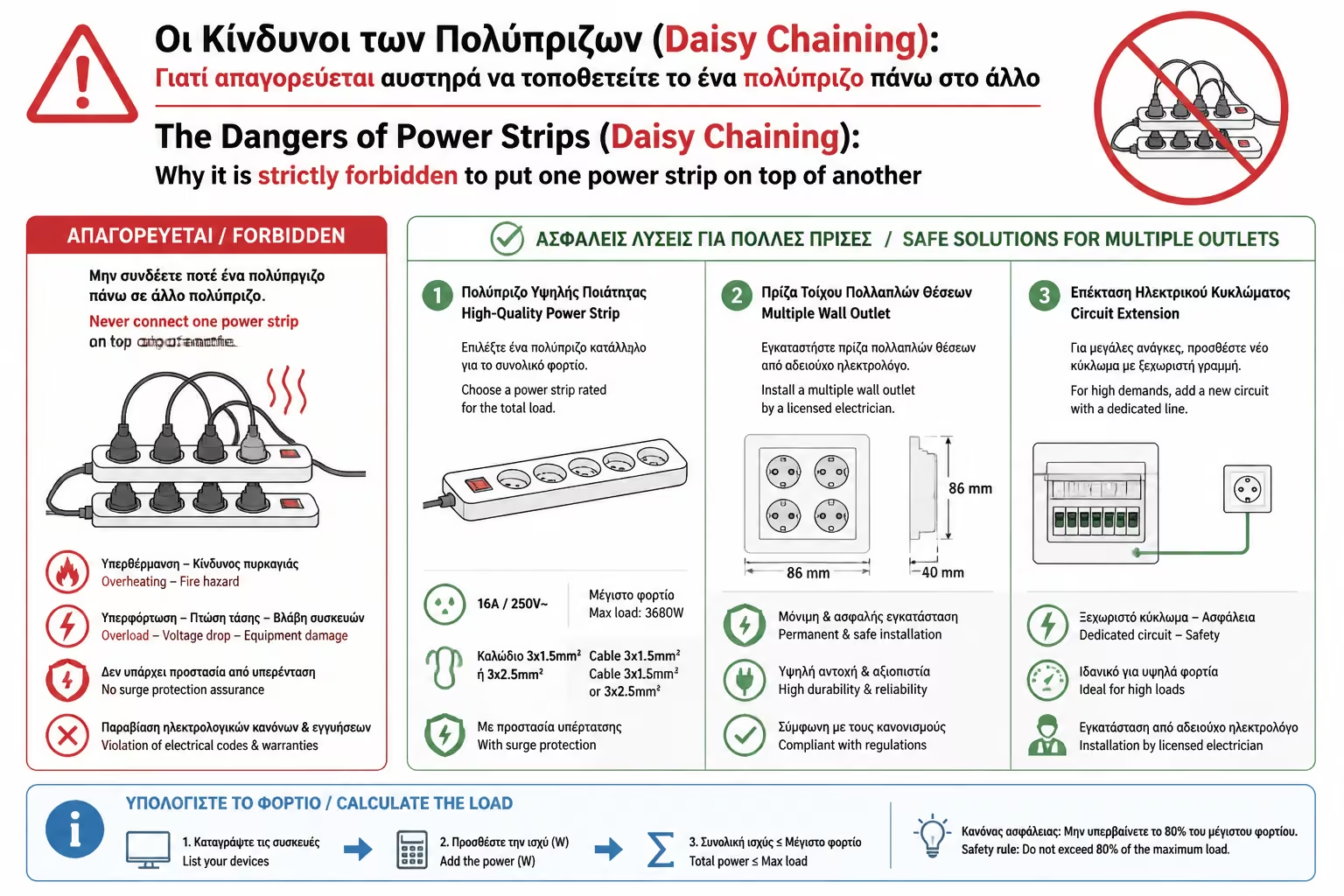
If you need 8 outlets behind your desk, buy a single, industrial-style power strip with 8 or 10 slots. Do not connect two 4's together.
Let's be honest: Modern homes never have enough power outlets. Behind the TV are the router, set-top box, game console and soundbar. Under the desk is the computer, two monitors, the printer and the mobile phone charger.
To solve the problem, we all resort to the living room's best friend: the power strip. But what happens when all 4 power strip slots are full? The most common (and at the same time the most dangerous) move is to take a second power strip and plug it in... on top of the first one.
This practice is known internationally as daisy-chaining. In electrical and fire safety, it is one of the clearest examples of what you should never do. Here is why this seemingly harmless shortcut creates serious risk.
The term daisy-chaining means connecting one device after another in a chain. In household use, it usually means plugging one power strip into another, or stacking multiple plug adaptors together to create more outlets.
This creates an optical "chain" of cables that ultimately terminates in a single wall outlet.
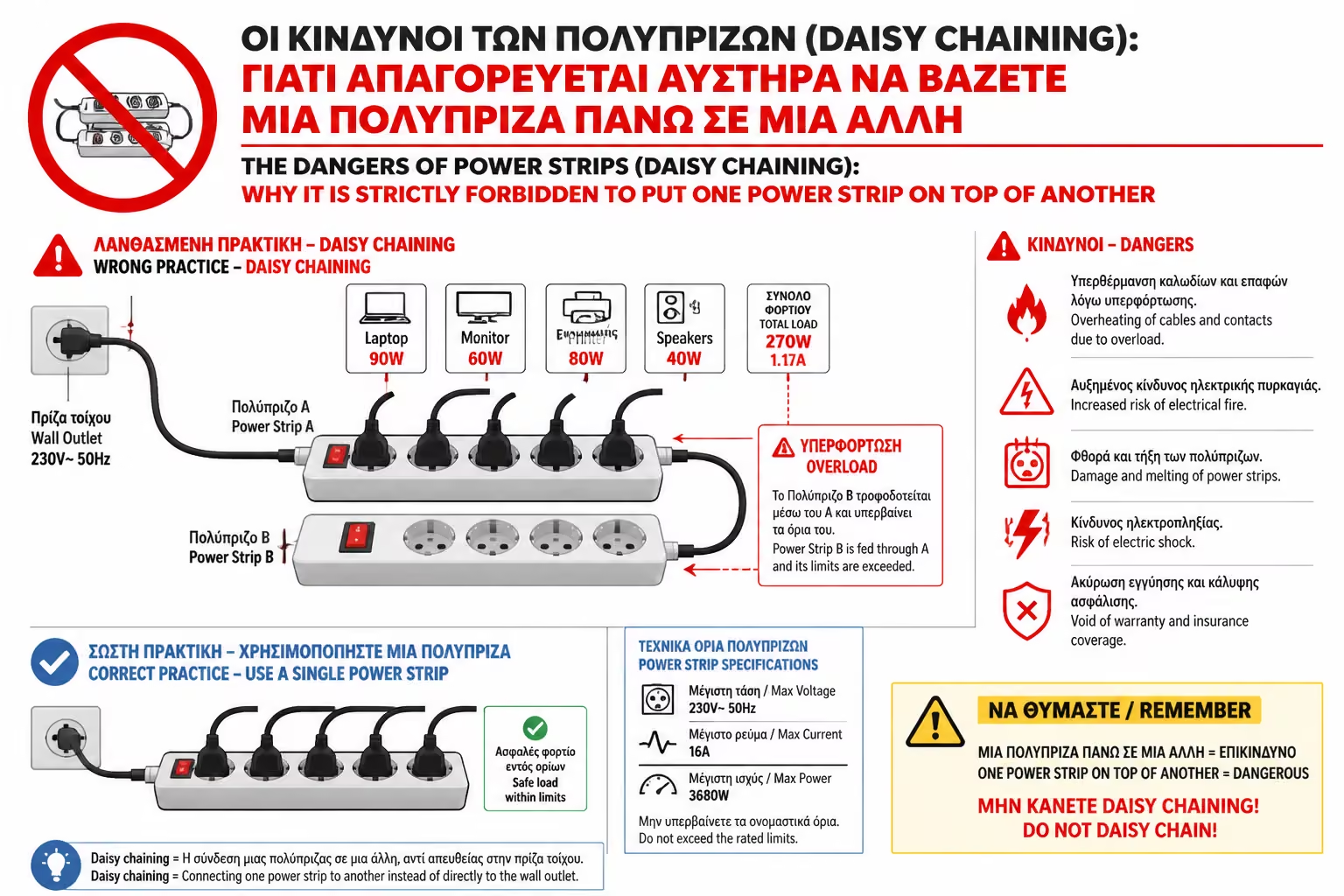
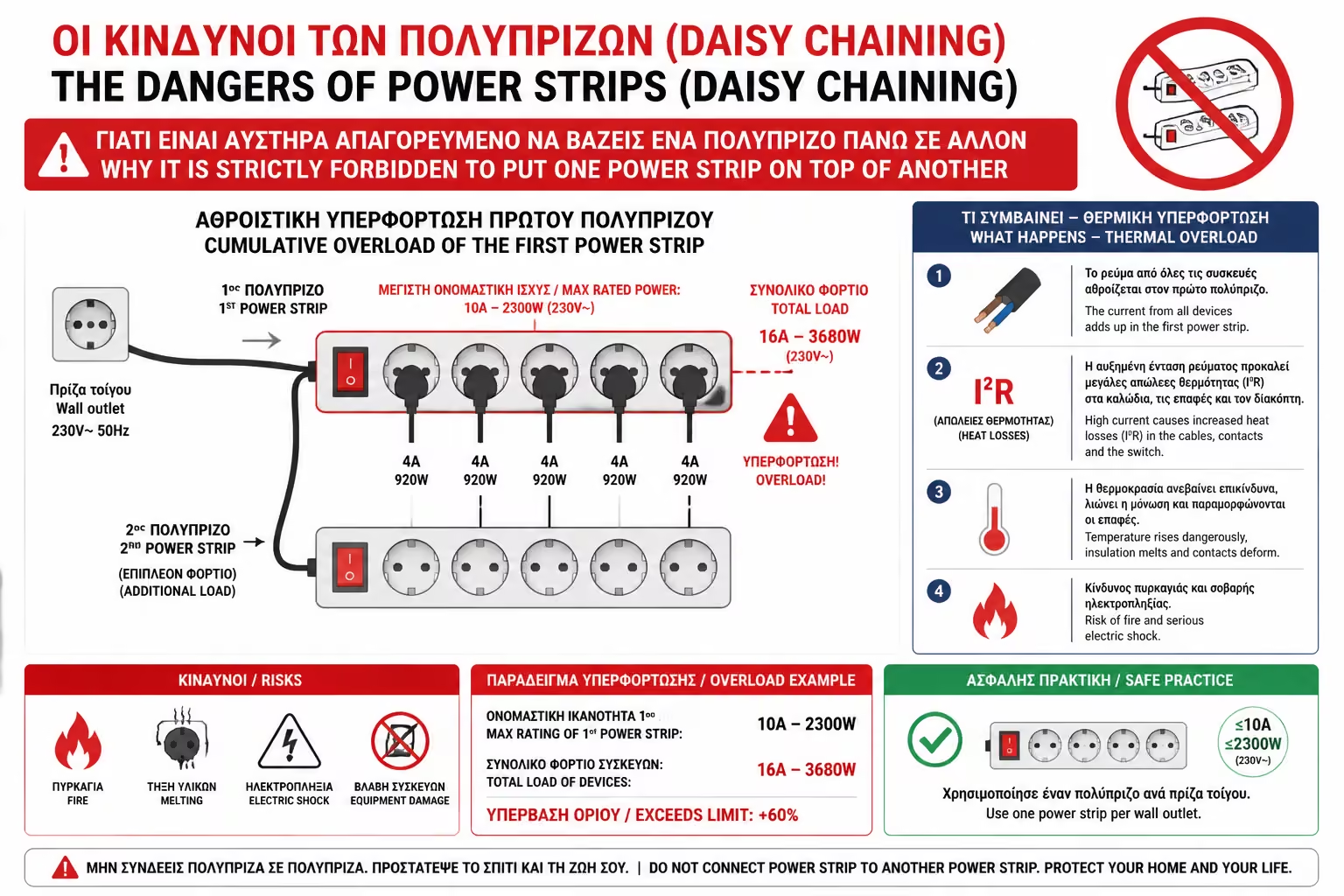
To understand the risk, we need to look at the numbers. A standard wall outlet (Schuko) in Greece, as well as most quality power strips, are designed to withstand a maximum load of 16 Amperes (ie about 3680 Watts).
When you daisy chain, you create a hidden load sharing problem:
If you have connected an air heater (2000W) to the second power strip and a clothes iron (2000W) to the first, the cable of the first power strip suddenly leaks from 4000W. Its internal cables, which are designed for less load, start to get dangerously hot.
Even if your devices burn some power (eg chargers and light bulbs), Daisy Chaining is still dangerous due to electrical resistance.
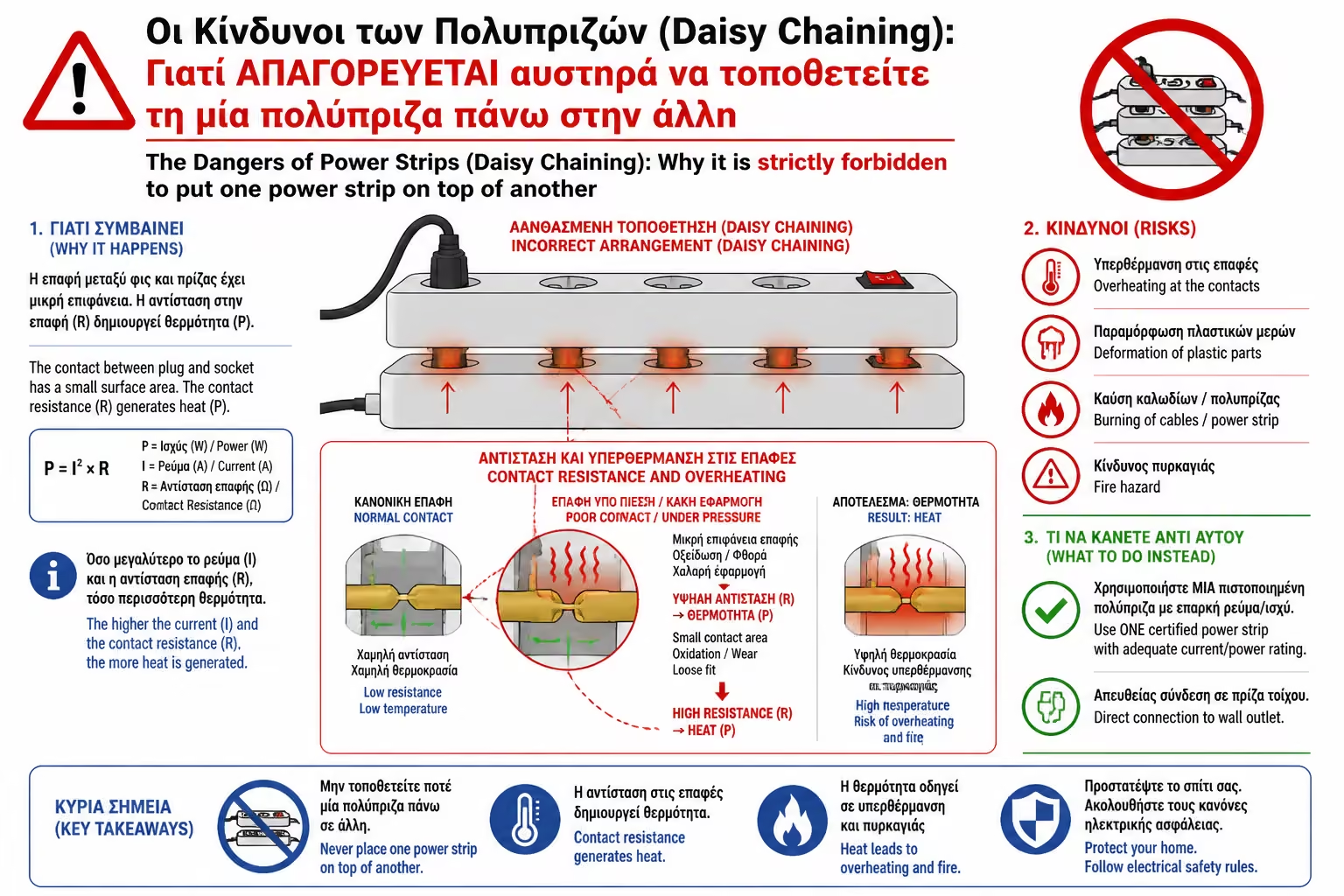
This is the scariest part of Daisy Chaining. The owners think that if there is a problem, the general will "fall". This is a dangerous myth.
The longer the chain of cables, the lower the voltage (Voltage Drop). If you end up having 3 power strips in a row to give power to the other end of the room, the devices at the end of the chain will not get 230V, but may get 210V. This "stresses" computer and TV power supplies, shortening their lifespan.
In addition, if there is a short circuit at the end of the chain, the huge resistance of all these connections can "brake" the short circuit current so much that the panel fuse is slow to react, increasing the risk.
The solution is not to return to the age of candles, but to use the equipment correctly:
If you need 8 outlets behind your desk, buy a single, industrial-style power strip with 8 or 10 slots. Do not connect two 4's together.
If the wall outlet is far away, buy a power strip with a built-in 3 or 5 meter cable. Never connect a power strip to a wall socket just to "gain meters".
Appliances that heat or cool (water heaters, air heaters, irons, microwave ovens, washing machines, refrigerators) are prohibited from being plugged into power sockets. They must plug DIRECTLY into the wall outlet.
If a power strip has been in the same spot for more than 6 months, it has ceased to be a "temporary" extension and has become a permanent installation. Call an electrician to add 2-3 double outlets to the wall. The cost is minimal in front of the security of your home.
Power strips are service tools, not building blocks of your electrical installation. The golden rule is extremely simple and does not allow for exceptions: Every multi-socket or wall outlet must be connected directly to a permanent wall outlet. Daisy Chaining is a "patent" that is severely punished by the laws of physics. Untangle your chains today, before you smell the distinctive aroma of melted plastic.
Return to category.
Go to categoryReturn to the central guide.
Go to guide