Childproofing Electrical Outlets: Built-in Shutters vs Plug-in Caps
The moment when your baby starts to crawl and explore the space is full
of joy, but also huge anxiety. Suddenly, you realize that the house is
full of dangers right at his eye level. Wall sockets, usually located 30
to 40 cm from the floor, look like two mysterious holes that
"invite" small fingers, keys, hairpins and toys.
In an effort to childproof the home, many parents reach for removable
plastic outlet caps. But modern safety guidance increasingly warns
against them. Here is why that older solution has fallen out of favor,
and why built-in shutters are considered the safer long-term answer.
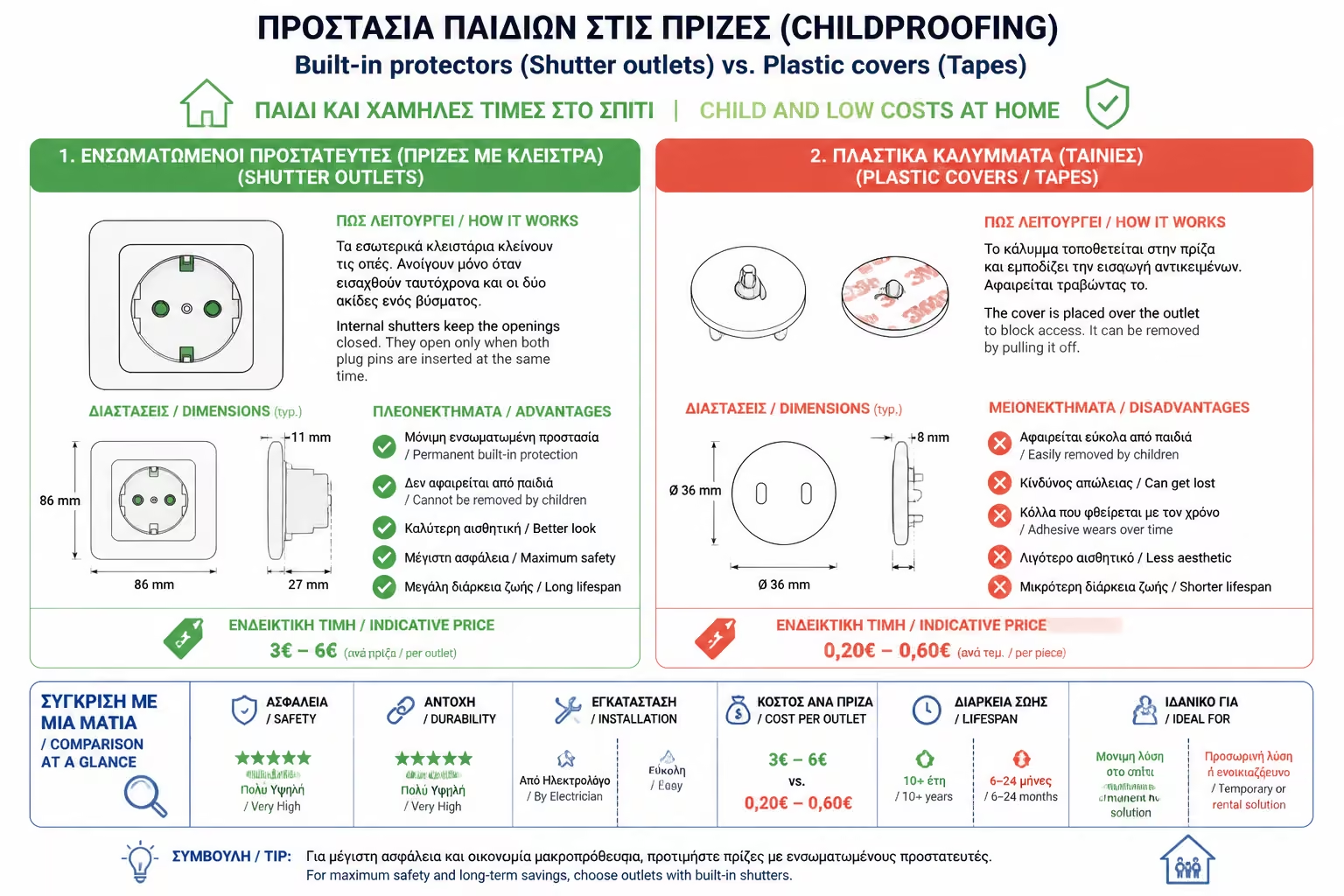
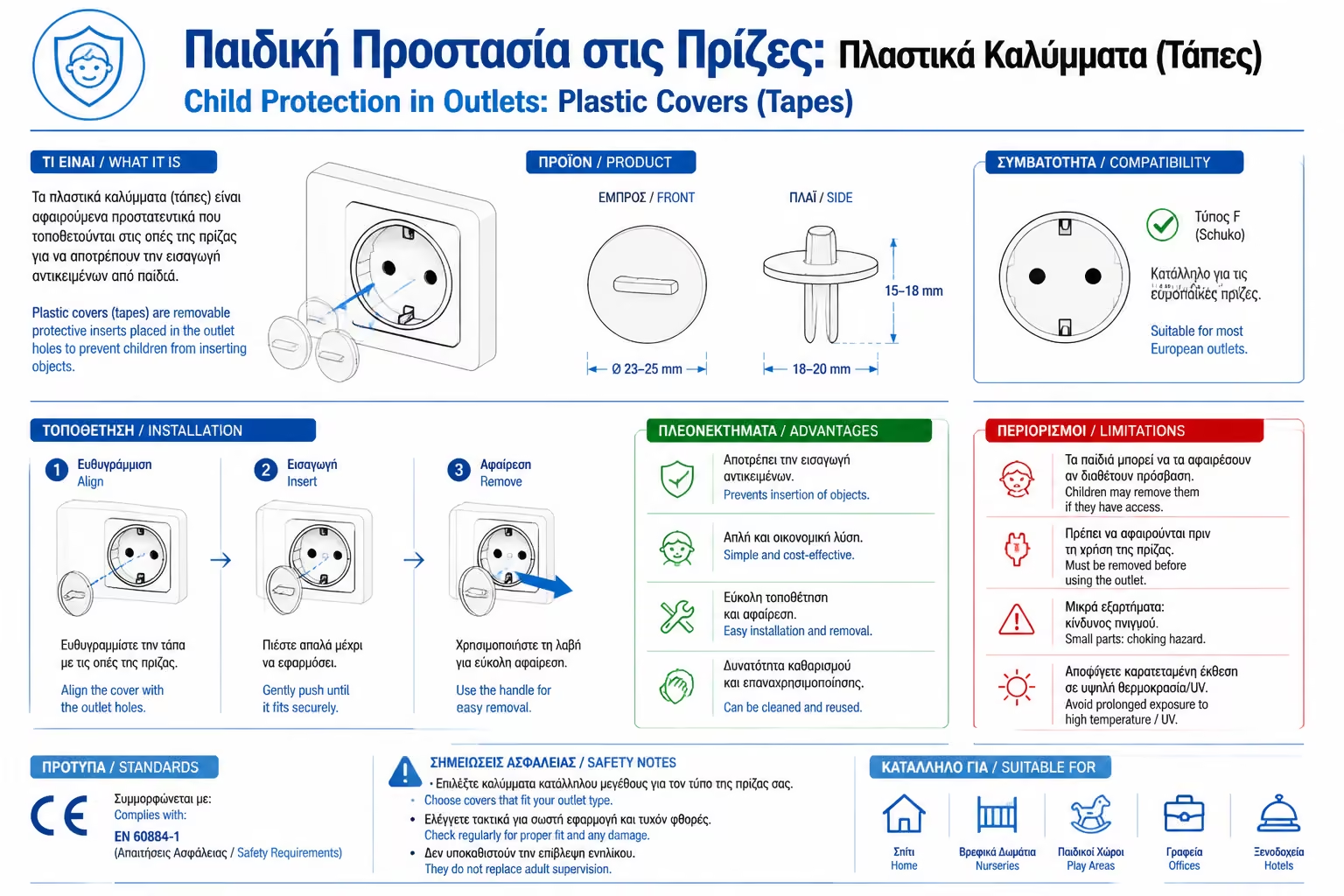
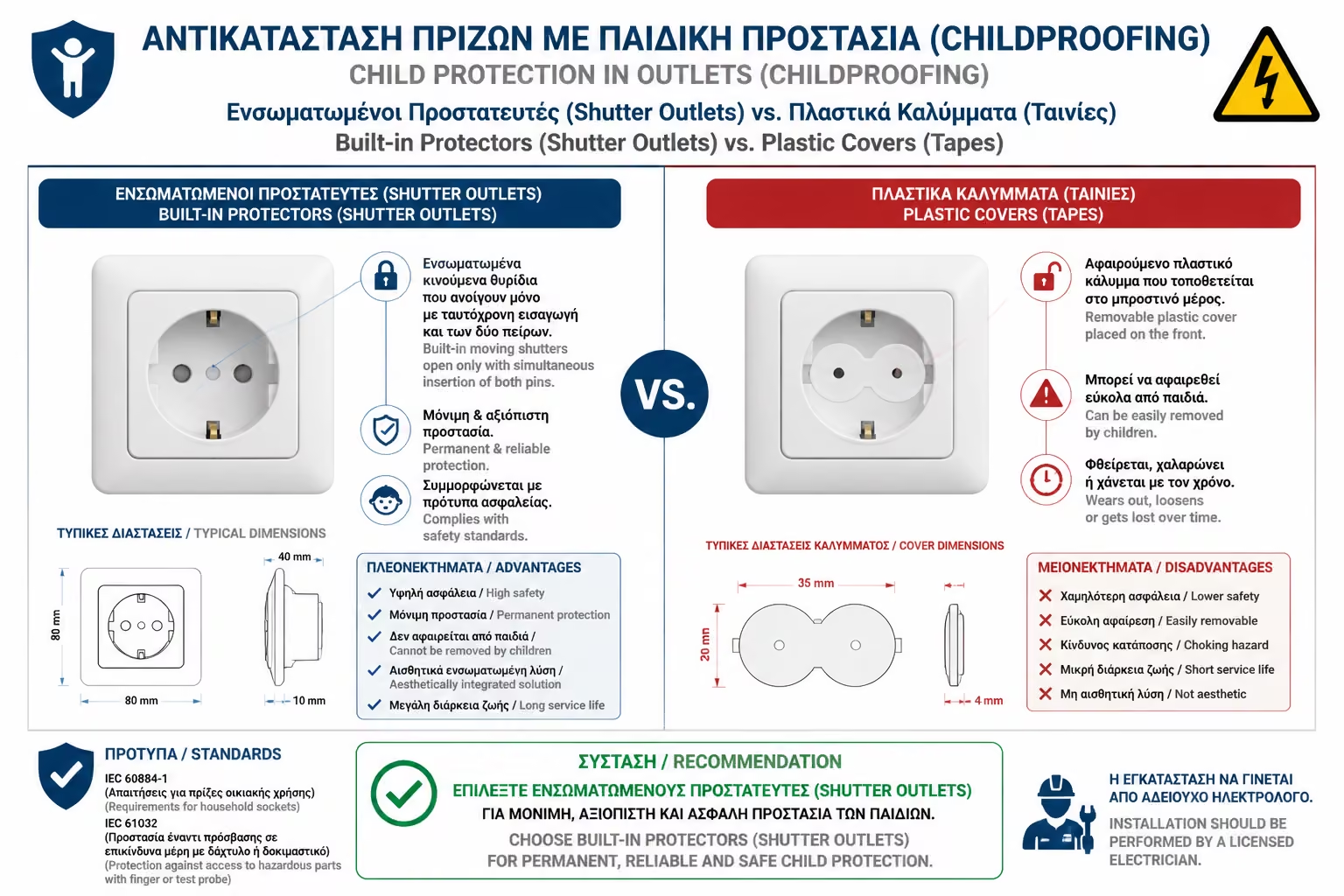
1. The Problem with Plug-in Plastic Caps
Plastic inserts that wedge into an outlet have been around for
decades. They are cheap, easy to find and give an immediate, but often
false, sense of safety. In reality, they introduce three serious
risks:
Choking Hazard
Children are incredibly observant. They see parents removing the cap
to put the vacuum cleaner on, and they learn how to do it. A plug
that comes out easily from the wall ends up in the child's mouth
almost immediately. As it is the perfect size to block the airway,
the risk of electric shock is replaced by the risk of suffocation.
Socket wear
Many cheap plugs have "teeth" that are slightly thicker
than the teeth of a regular plug. When they stay nailed to the
outlet for months, they "overflow" the inner plates of the
outlet (the wear and tear we analyzed in a previous article). When
you finally remove the cap to plug in a device, the plug will be
loose, causing dangerous sparks.
They Break Inside the Socket
If the plastic is of poor quality, the prong of the plug can break
and jam into the hole, rendering the socket useless and dangerous.
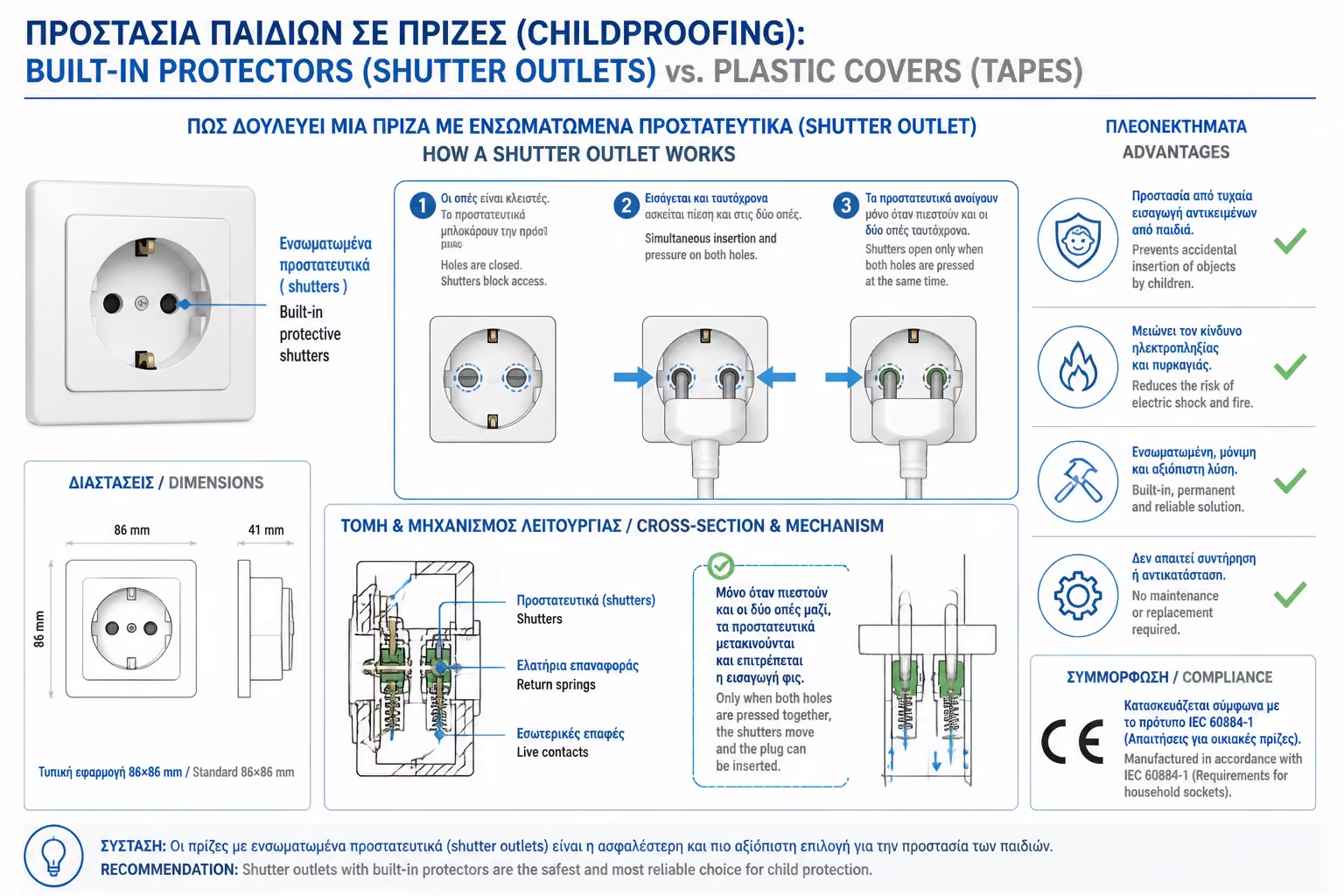
2. The Modern Solution: Sockets with Built-in Protectors (Shutter
Outlets)
The correct and permanent solution to the problem is not found in
external accessories, but in the socket mechanism itself. Modern
security outlets are called Tamper-Resistant (TR) or Shutter Outlets.
If you look into the holes of such an outlet, you will not see
darkness, but two plastic "doors" (shutters) that completely
block access to electricity.
How the "Magic" Works: The mechanism behind these shutters
rests on a spring that requires simultaneous pressure.
If a child takes a screwdriver, pencil or key and presses it hard
into just one of the two holes, the door stubbornly refuses to open.
It is designed to block.
For the shutters to open and the object to pass to the stream, equal
and simultaneous pressure must be applied to both holes.
Because it is impossible for a baby to coordinate its movements by
holding two metal objects and pressing them into the holes at the
same time, it remains completely safe. But when you insert a normal
plug (which has two prongs), the shutters open smoothly and without
any difficulty.
3. Why Professionals Only Recommend Shutters
Zero choking hazard: There is nothing for the child to pull out,
play with or swallow.
It's Always There: You don't have to remember to put the cap back on
after you're done ironing. As soon as you pull the plug from the
wall, the shutters close automatically (with a spring) in a fraction
of a second.
Aesthetics: Plugs protrude and alter the appearance of sockets.
Shutter outlets look just like normal outlets on the outside.
4. The Replacement Process (How to Shield the House)
If your house is relatively new (after 2010), it is very likely that
the electrician has already installed sockets with built-in
protectors, as many European brands (eg Legrand, Hager) now
incorporate them as a standard feature in their ranges.
You can check it easily with your phone's lens. If you see plastic
inside the holes, you're covered.
If your sockets are old (you can see straight through the metal):
You don't need to change the entire electrical installation. You
simply change the socket mechanism.
The cost for a branded Schuko socket mechanism with child protection
starts from around €5 to €8 a piece.
Priority: If the cost of changing all the sockets is prohibitive,
give absolute priority to the sockets that are located low (at 30-40
cm) and those that are easily accessible (e.g. next to the child's
bed or in the living room). Sockets behind heavy furniture (fridge)
or sockets on the kitchen counter (out of reach of the child) can
wait.
Summarizing
When it comes to children's safety, half measures are not forgiven. The
plastic covers just create an extra obstacle that children think of as a
toy or a puzzle to solve. Installing outlets with built-in shutters
(shutter outlets) completely removes the human factor and memory
("I forgot to put the plug"), ensuring that electrocution is
technically impossible, no matter how imaginative the little home
explorer may be.