Violation of Seals
Cutting the lead seal of the HEDNO to open the meter lid.
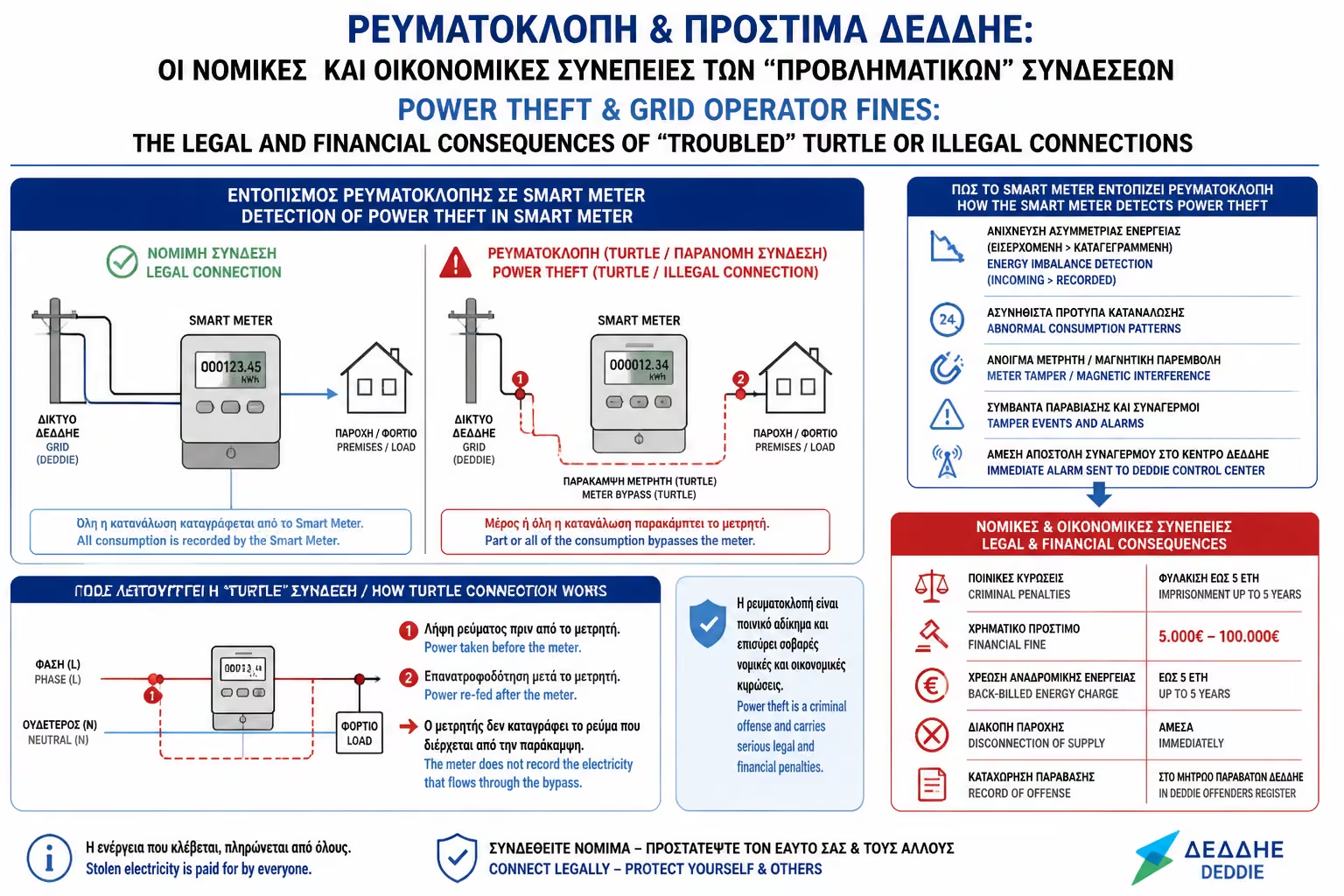
Rising energy costs have pushed many consumers to look for savings. A small minority chooses the illegal path of electricity theft, whether by tampering with a meter or by bypassing it altogether. In practice, both routes carry severe legal, financial, and safety consequences.
However, HEDNO (the network operator) now has advanced digital tools and a very strict legal framework at its disposal. What often starts as a "clever idea" to save someone a few euros, ends up in financial ruin, criminal courts and, worst of all, fatal accidents. Let's see how electricity theft is detected and what are the relentless consequences.
Electricity theft is not limited to illegal tapping from the street network. In practice, it usually involves unlawful interference with the supply or the meter inside or around the property.
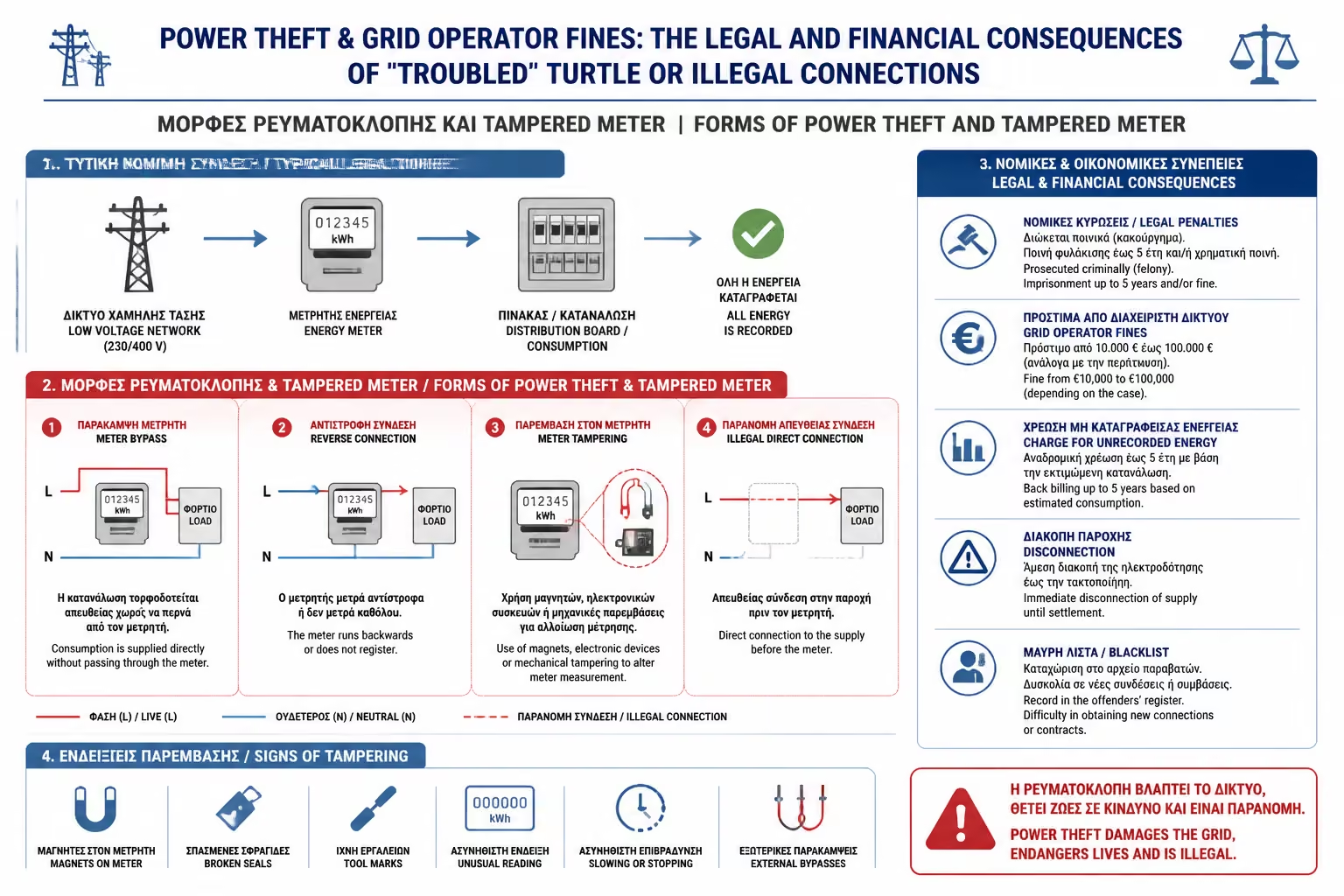
Cutting the lead seal of the HEDNO to open the meter lid.
Connecting the supply wire directly to the house panel so that current flows but the disk (or digital number) does not "write".
Putting strong neodymium magnets on old analog meters to slow down the spin of the disc.
The connection of the water heater or the air conditioner of an apartment to the meter of the common stairwell of the apartment building (extremely common phenomenon).
Gone are the days when consumers scoffed at the meter. HEDNO now uses a network of methods to identify offenders:
When HEDNO detects electricity theft, the incident is formally recorded and the financial consequences begin immediately.
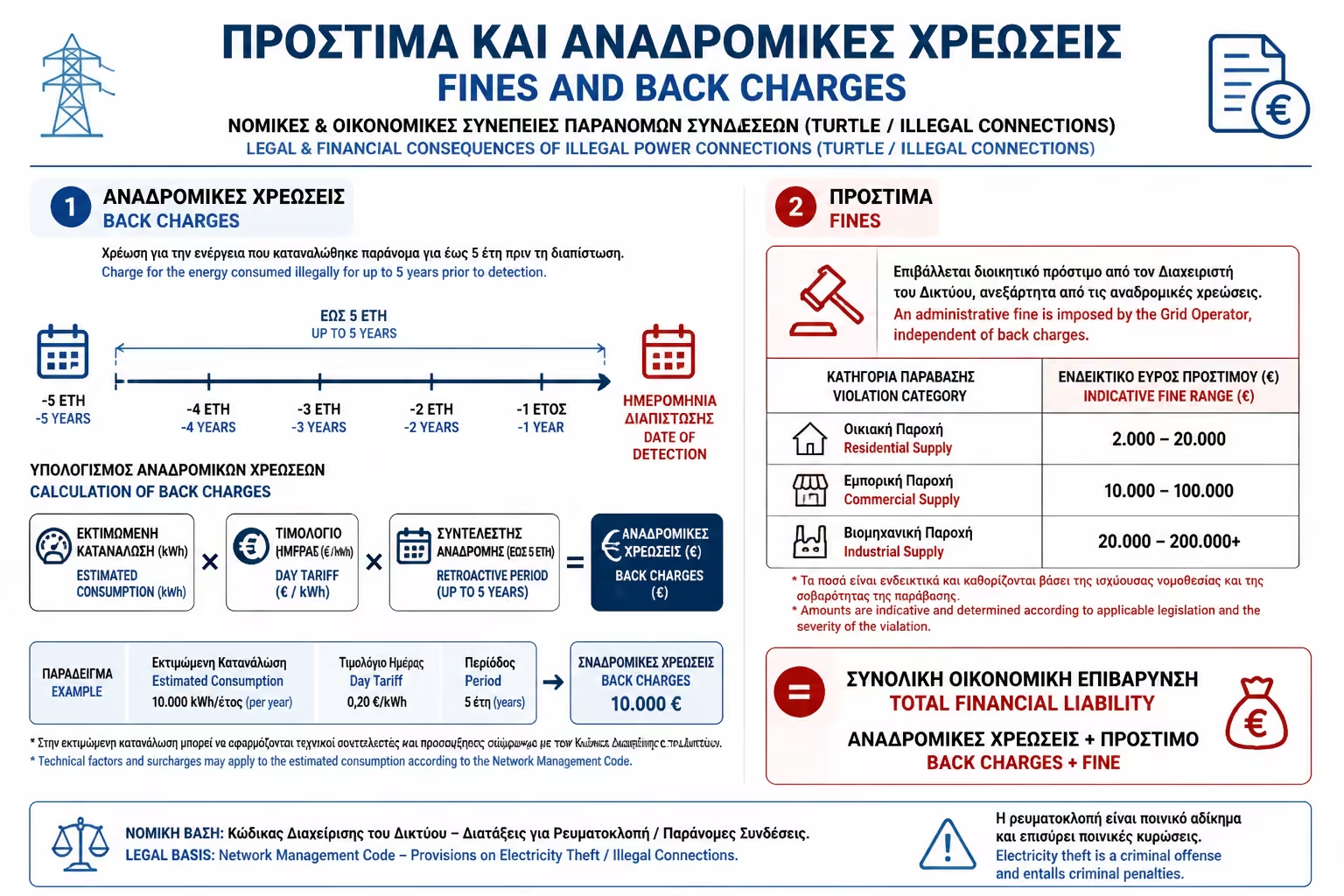
HEDNO recalculates the stolen energy retrospectively, often going back many months or even years. That energy is not billed at the normal tariff but at a penalised rate, which is typically much higher.
If the exact start date cannot be established, HEDNO estimates the stolen consumption from the size of the property, the likely loads, and the installation profile. The resulting charges can become very large.
There is an immediate power cut. In order to get electricity again, you have to pay (or strictly adjust) the fine, pay the costs of replacing the damaged meter, and of course present a new YDE (Electrician's Certificate).
Power theft is not a simple "administrative violation" or calling the traffic police. It is a Criminal Offense (Theft), according to the Criminal Code.
Landlords should pay particular attention here: if the electricity account remains in your name, you may find yourself dealing with the legal consequences of a tenant's tampering.
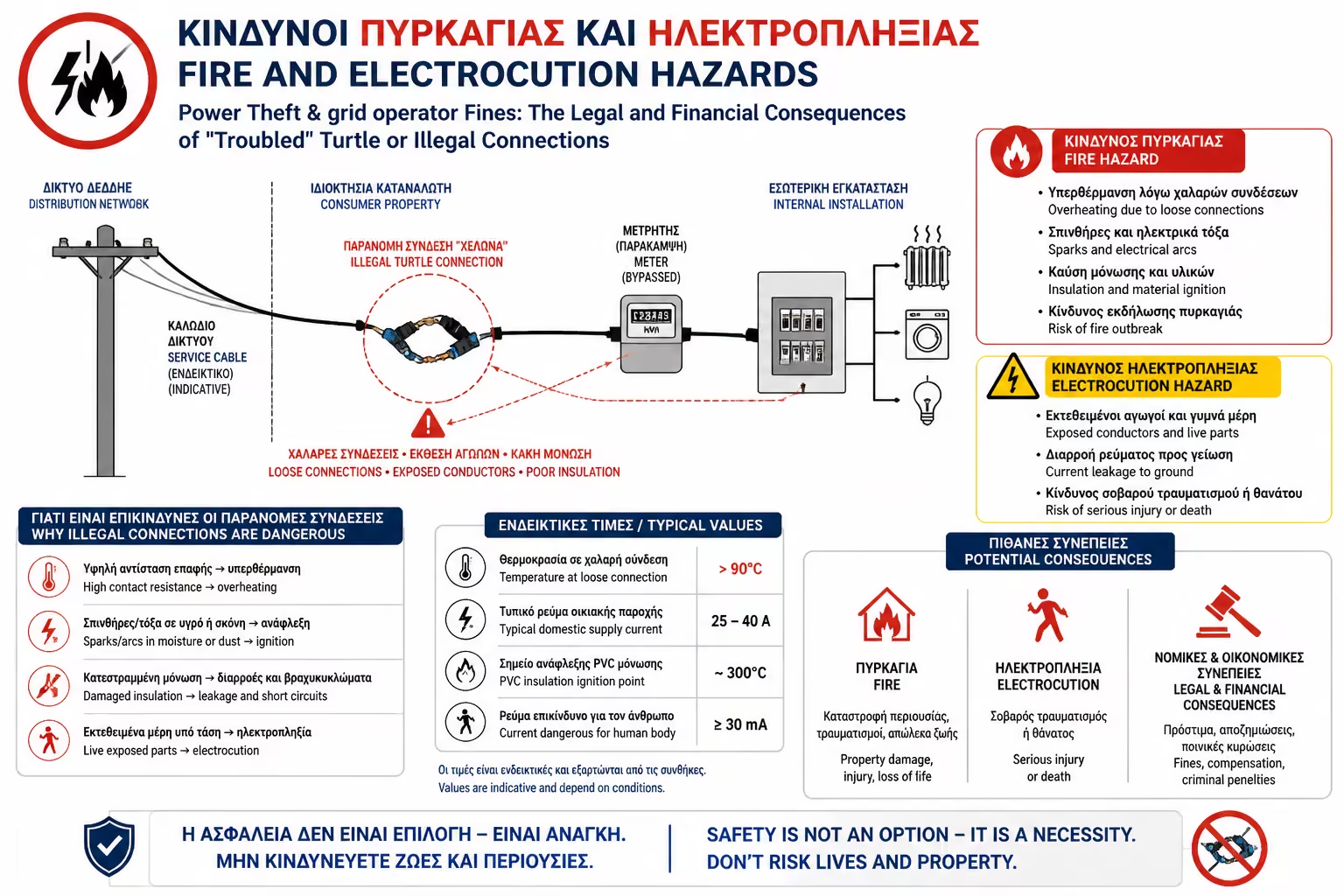
Fines aside, electricity theft is a date with death.
When the meter is Bypassed, the general mains fuses that protect the supply from short circuits are essentially bypassed.
If the illegal's improvised cables overheat (because they don't have the correct cross-section for the house loads), there is no fuse to stop them. They will catch fire, causing a devastating fire in the building.
Often, poor insulation in "tampered" supplies conducts current into the metal boxes of the meters. A small child or a neighbor who touches the nearby meter can get a fatal electric shock.
Electricity theft is simply not worth the risk. Retroactive charges, criminal exposure, immediate disconnection, and the possibility of fire or fatal electric shock make meter tampering a destructive choice. If a household is struggling with bills, the lawful routes are settlements, social tariffs, and proper use of the night / dual-zone tariff.
Next Step: Often, interventions in the electrical are done by previous owners who wanted to do extensions "quickly" without updating the plans. What if you buy such a house?
We continue with the last article of Category A: Legalization of Arbitrary Electrical Extensions: How old conversions (eg adding a room) are included in the new YDE certificate.
Return to category.
Go to categoryReturn to the central guide.
Go to guide