How it works
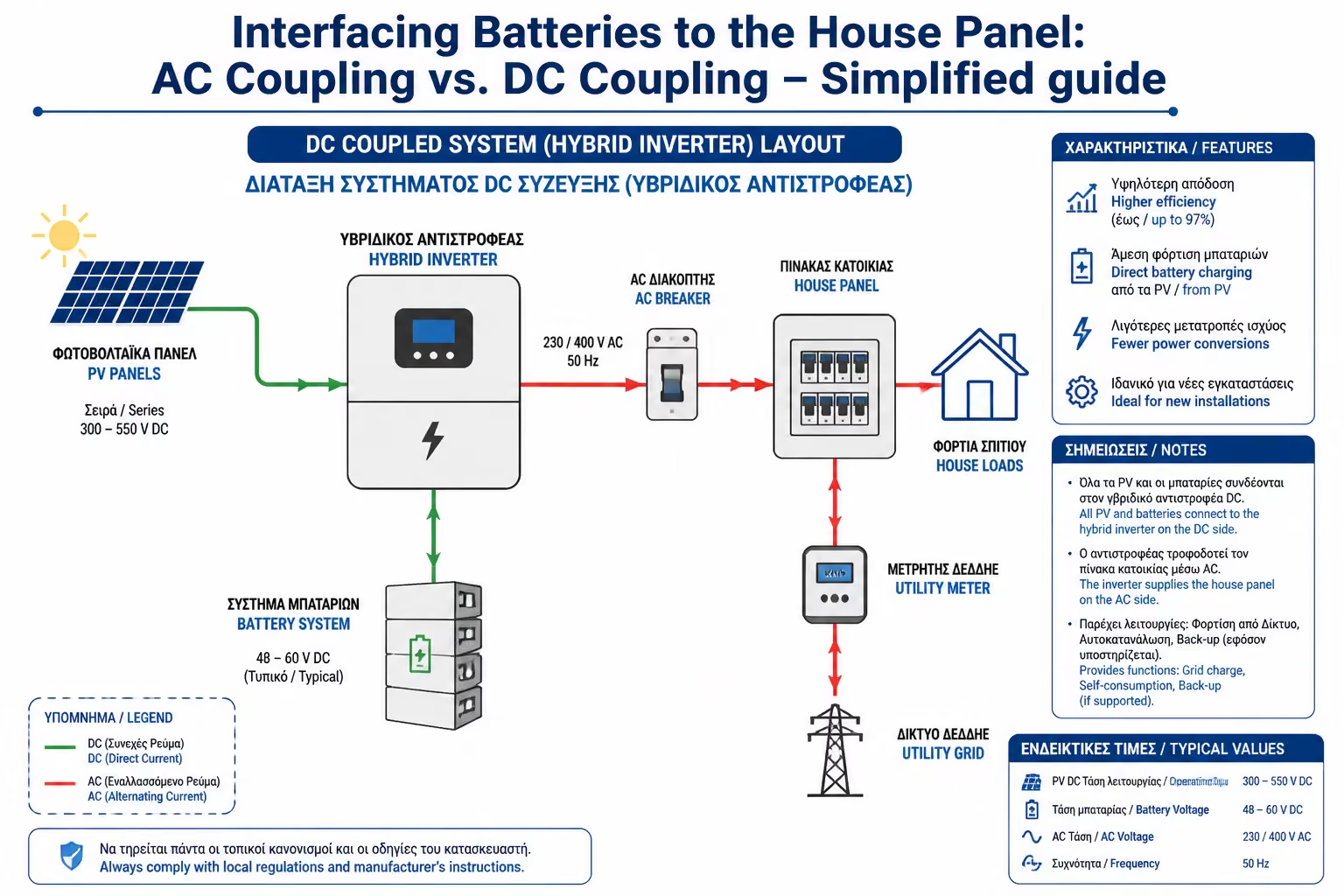
The panels generate direct current (DC). This current goes to the Hybrid Inverter. If the battery needs charging, the Inverter sends the current directly to the battery (which is also DC).
You decided to put a battery in your photovoltaic system to take advantage of Net Billing or to have autonomy during power outages. Your installer mentions two terms that sound like "Chinese": DC Coupling and AC Coupling.
These terms describe "where" and "how" the battery is connected within your home's electrical circuit. Choosing between the two isn't just a technical detail; it affects system performance, installation costs, and how easily you can upgrade an old system.
As engineers, we're going to "radiate" the two connection methods in simple terms so you know exactly what you're buying.
In DC Coupling, the battery is connected directly to the Hybrid Inverter, before the power is converted to AC for the home.
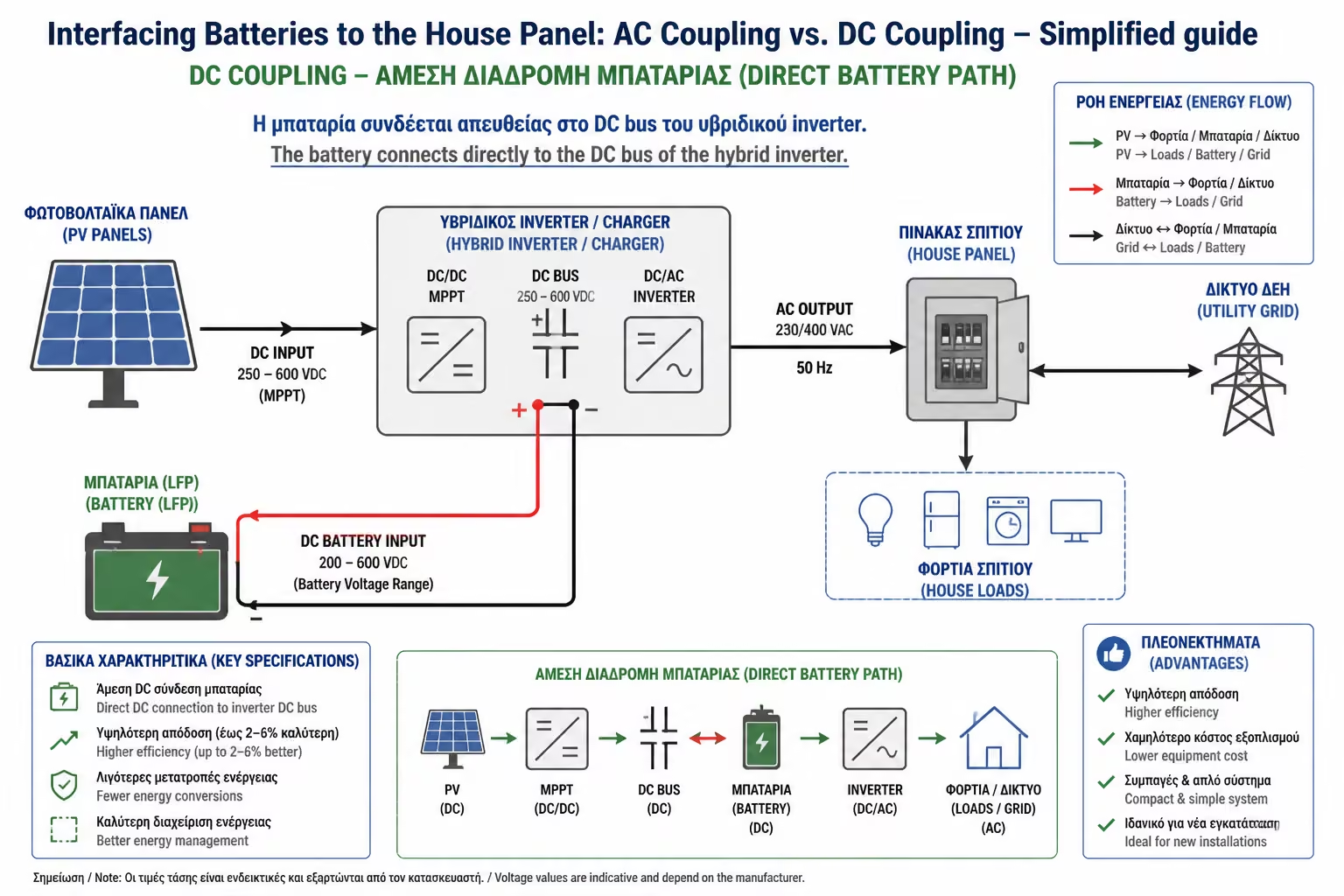
The panels generate direct current (DC). This current goes to the Hybrid Inverter. If the battery needs charging, the Inverter sends the current directly to the battery (which is also DC).
Current does not change form many times. We only have one conversion. This means less energy loss (about 3-5% gain over AC).
You only need one Inverter that does it all. Fewer cables, less wall space.
It is difficult to implement in homes that already have an old, simple PV installed, as it requires replacing the entire Inverter with a new hybrid.
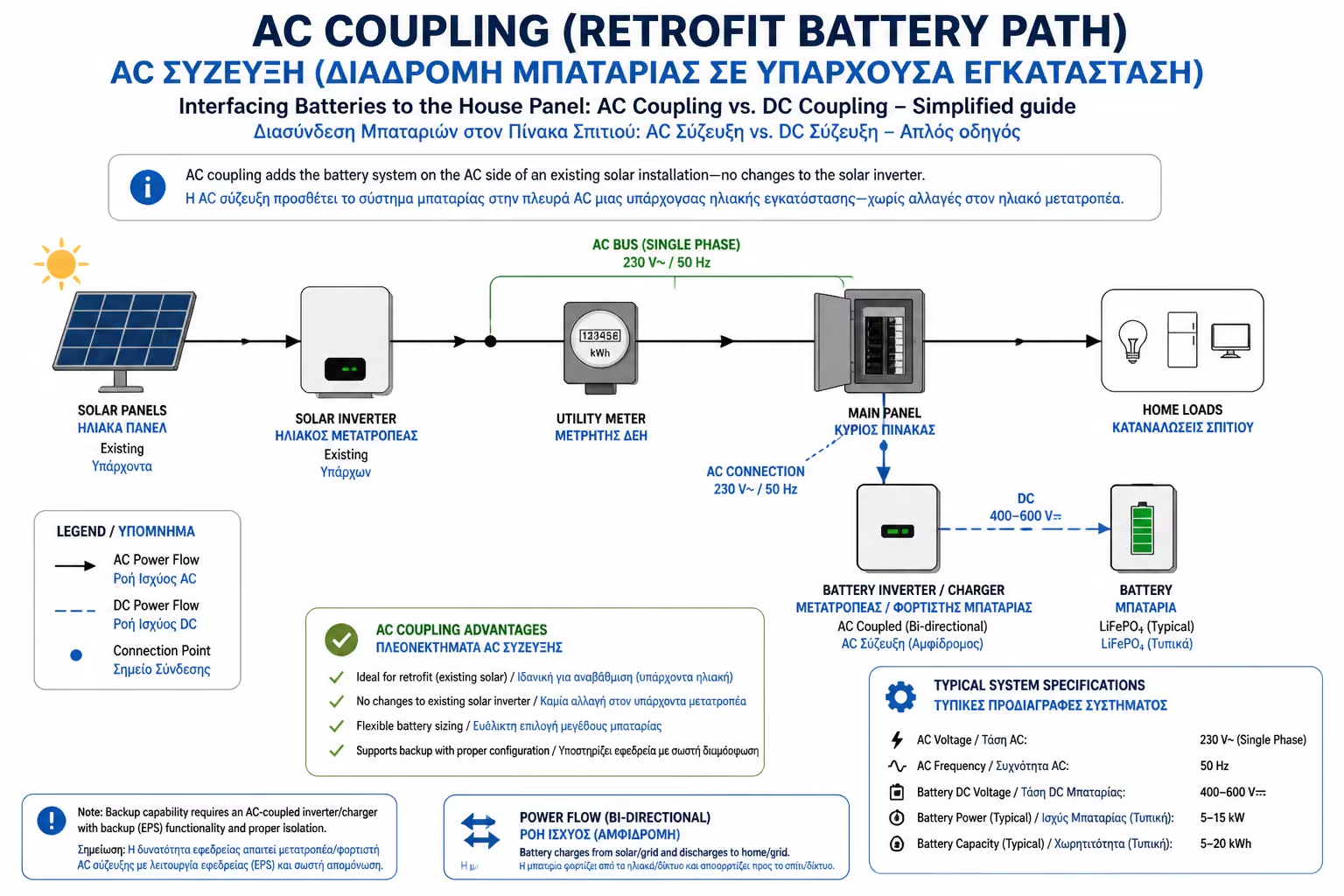
In AC Coupling, the battery has its own separate Inverter and is connected to the electrical panel like any other appliance (eg a furnace).
The current from the panels becomes AC from the solar inverter and goes to the panel. If the battery wants to charge, it takes AC current from the panel, turns it back into DC via its own "Battery Inverter" and stores it.
If you already have PV for 5 years and just want to add a battery without disturbing anything from the existing installation, AC Coupling is the solution.
You can put the battery anywhere in the house that has access to the electrical panel, not necessarily next to the photovoltaic inverter.
It has more losses. Current takes the path DC (Panel) rightarrow AC (Inverter) rightarrow DC (Battery Charger) rightarrow AC (Home Discharge). Each "station" loses some energy to heat.
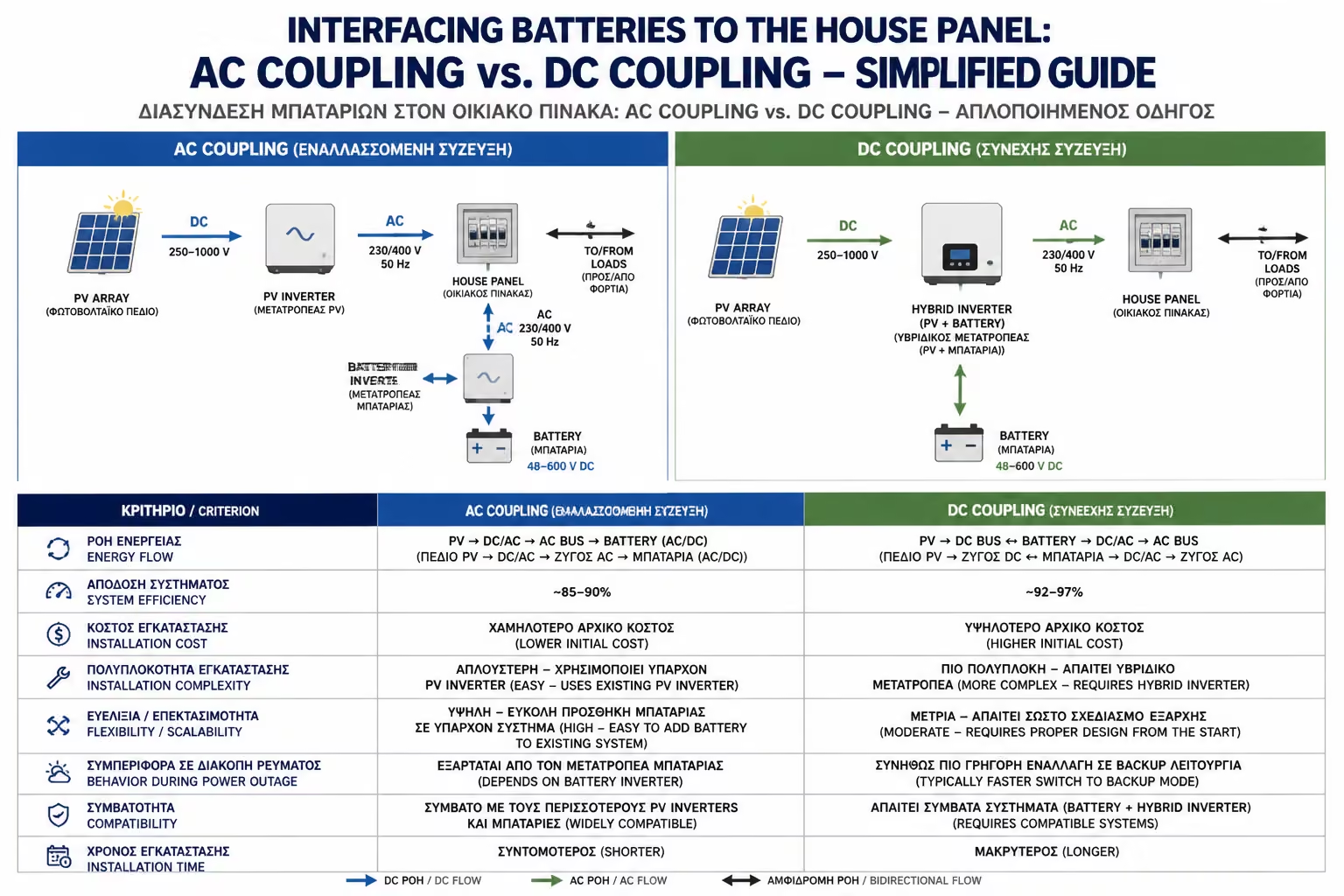
The table below gathers the main decision criteria, making it easier to see which architecture fits each scenario.
| Feature | DC Coupling | AC Coupling |
|---|---|---|
| When do we choose it? | In new installations (from scratch). | In existing facilities (upgrade). |
| Efficiency | Higher (fewer conversions). | Lower (more conversions). |
| Complexity | Simple (a "brain"). | Larger (two Inverters that must "talk"). |
| Cost | Lower for new system. | Lower to add to old system. |
| Autonomy (Backup) | Very efficient. | It requires special design to work. |
With today's data in Greece (Net Billing), the vast majority of new home systems are DC Coupled. Modern Hybrid Inverters (such as Huawei, Fronius or Sungrow) are now so sophisticated and affordable that there is no reason to go to AC Coupling if you are just starting out.
We reserve AC Coupling as a "tool" only for special cases, such as:
If you are building now or doing a radical renovation, ask for a Hybrid Inverter with DC Coupling. It is the cleanest, most efficient and "smart" solution to connect the sun with energy storage in your home.
Next Step: You have decided the type of connection. Now you have to think about the infrastructure. If your house is under construction, how will the cables get from the roof to the switchboard without being seen? Continue to the practical guide: Pre-installation of Photovoltaics in New Construction: How to correctly run pipes from the roof to the basement.
Return to category.
Go to categoryReturn to the central guide.
Go to guide