The "Heart"
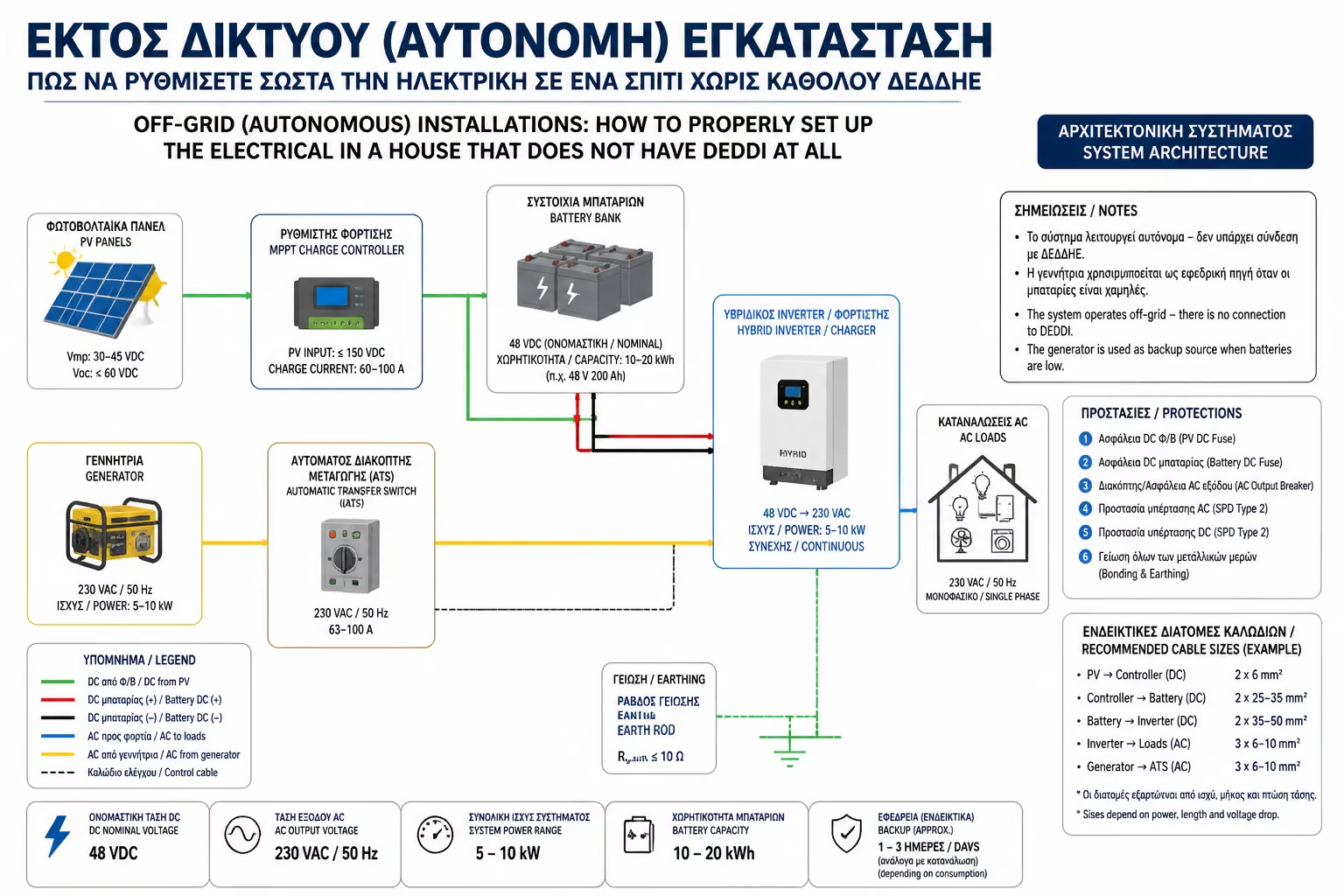
These machines (eg brands like Victron, Studer, etc.) generate 230V and 50Hz (Grid-Forming) by themselves.
In all the previous guides, we assumed that there is a NETWORK cable outside your home. Whether you wanted to reduce the bill or protect yourself from outages, the network was there as an invisible "safety net".
But what happens when you're building a cottage on a remote hillside, or restoring an old stone guesthouse on an island where there's not a single PPC pole in sight? When DEDDIE asks you for €20,000 and a 3-year wait to bring a network to your plot, the solution is Absolute Autonomy (Off-Grid).
Cutting the umbilical cord with the network is the ultimate freedom, but it requires a radically different design philosophy. As engineers, let's see how to set up a system that will generate, store and manage 100% of your energy, 365 days a year, without leaving you in the dark.
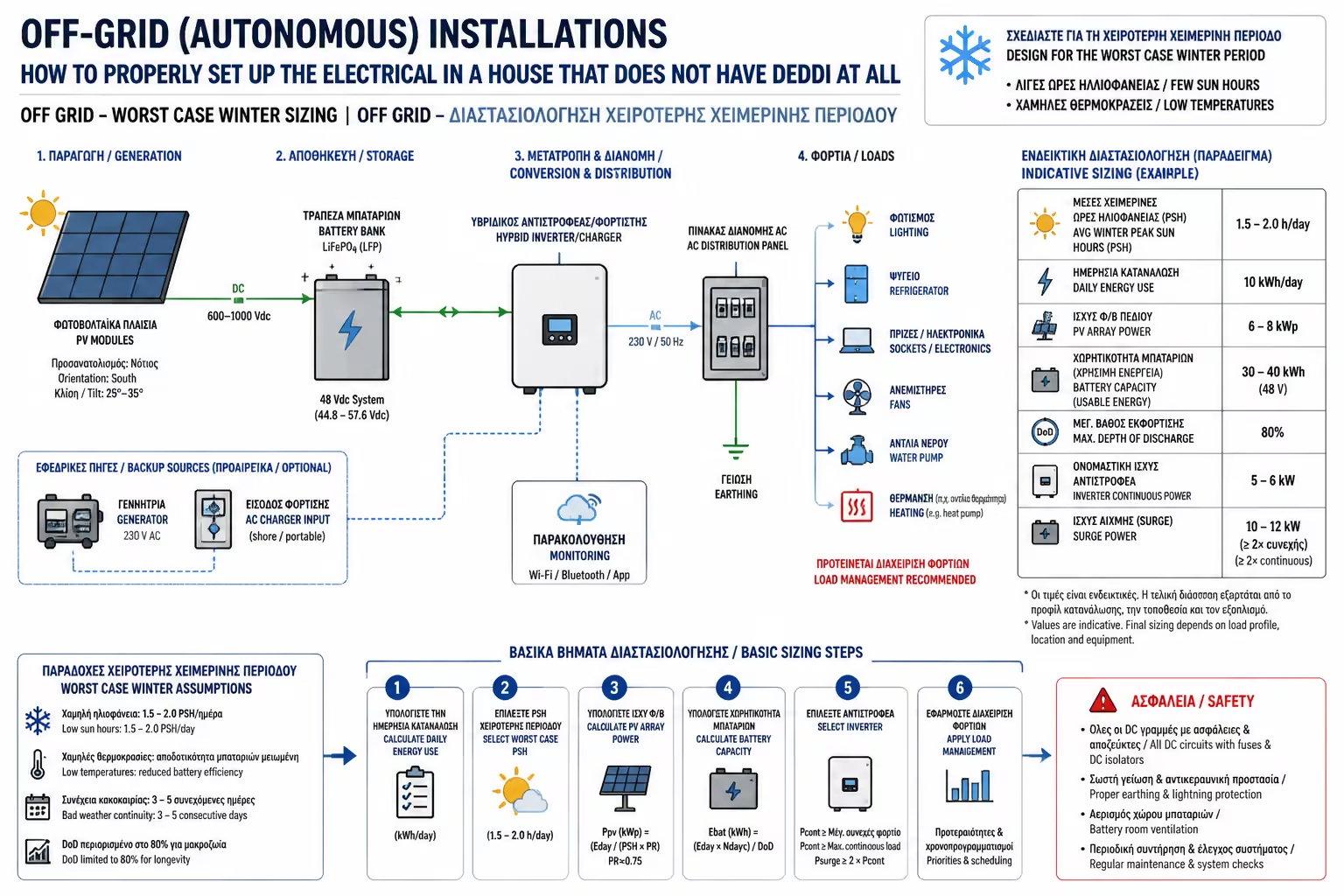
The biggest mistake in autonomous systems is made on paper. In connected homes (Net Billing), we look at the average annual consumption. In Off-Grid, this rule goes a long way.
The Off-Grid rule: The system is designed based on the "Worst Case Scenario". You have to calculate how much electricity you need on the short, dark days of December when it is cloudy for 3 days in a row.
As we have seen, simple inverters turn off when they cannot find a grid. In an Off-Grid home, the Inverter (or Inverter/Charger) has to "build" the grid from scratch.
These machines (eg brands like Victron, Studer, etc.) generate 230V and 50Hz (Grid-Forming) by themselves.
They must withstand huge starting currents. When your refrigerator or water heater turns on, there is no PPC to provide the "boost current". All the power must come from the "guts" of the Inverter. That's why Off-Grid Inverters are usually huge and have heavy copper transformers.
In a connected home, a 5 kWh battery might be enough to get you through the night. In Off-Grid, the battery is not an aid, it is the ultimate survival fuel.
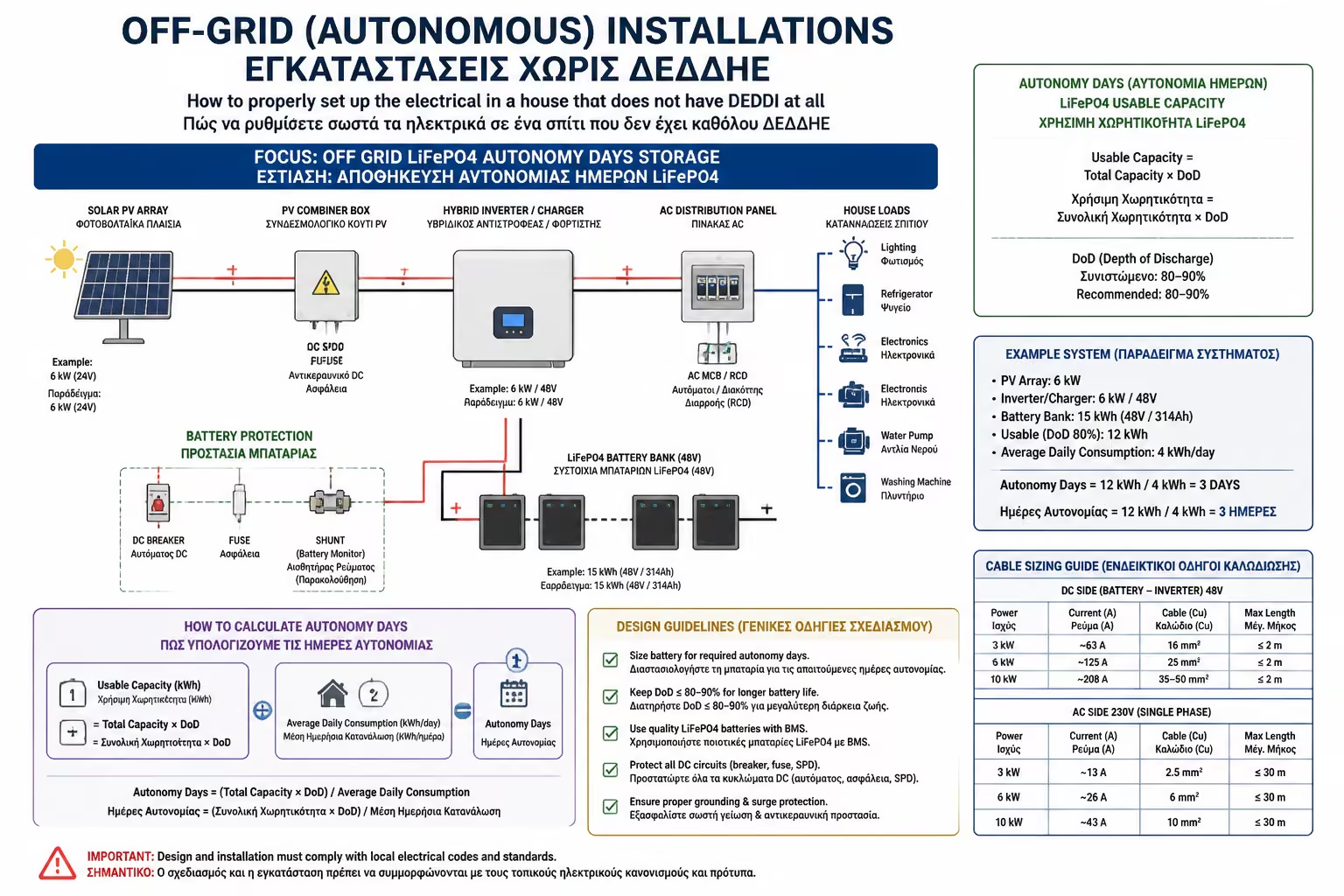
Engineers design the battery capacity to be able to power the house (even the basics) for 2 to 3 twenty-four hours without any sun. If you burn 5 kWh per day, you need a 10 kWh to 15 kWh battery.
Forget the old lead-acid batteries that needed liquid filling and venting. Now only Lithium Batteries (LiFePO4 - LFP) are installed. They are safe, charge quickly when the sun is out and last over 6,000 discharge cycles (15+ year life).
Let's be realistic: There are weeks in winter where it rains non-stop for 6 days. No reasonable battery can cover you for that long.
An Off-Grid system is not complete without an oil or gasoline generator connected to it.
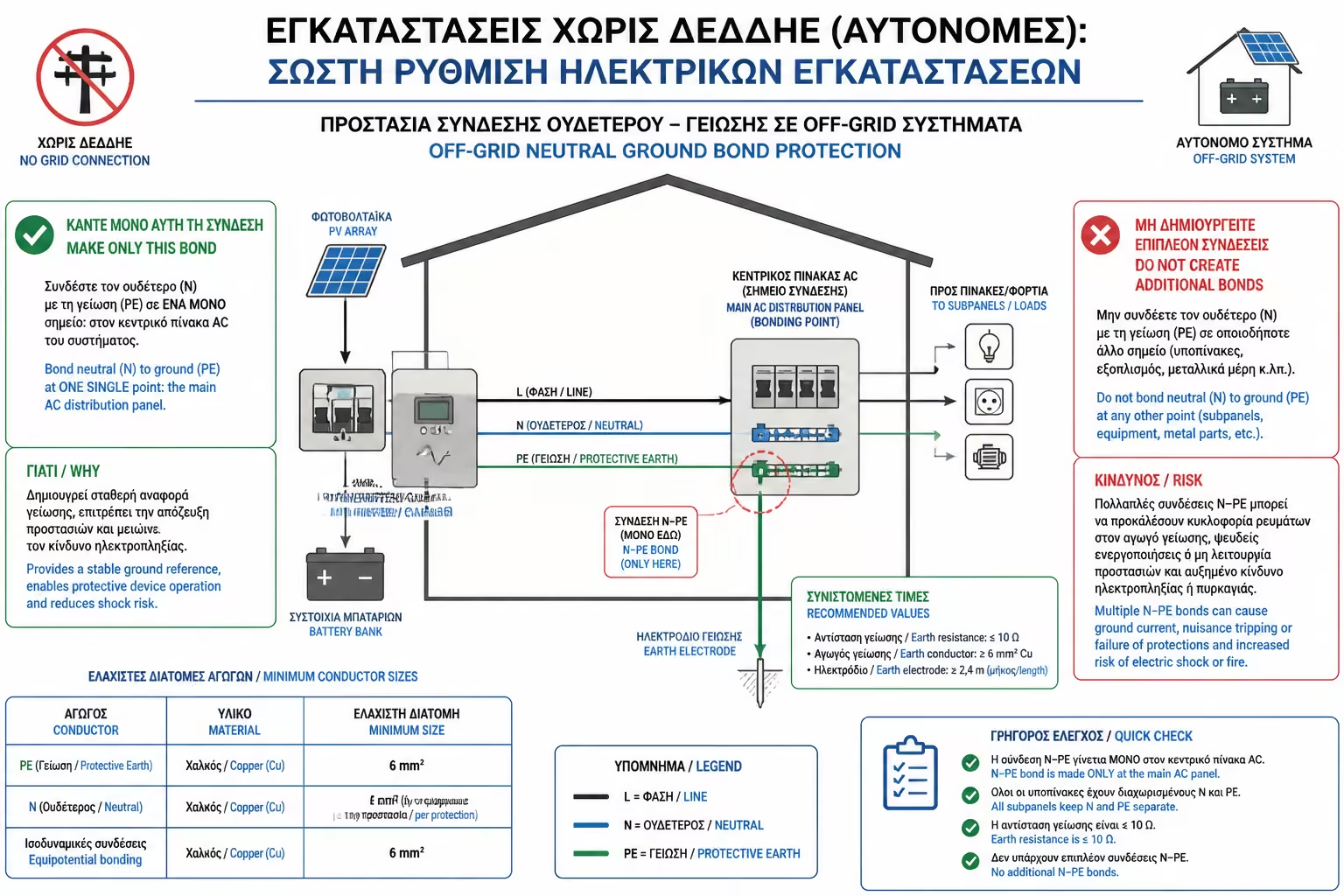
When there is no DEDDIE, your home is an "electrical island". This creates serious security challenges:
In the independent house, you cannot live like in the city. Electricity is precious.
A proper Off-Grid system will definitely cost you more than an interconnected one (the presence of 100% autonomy in batteries and generator often pushes the cost above €10,000 - €15,000). But, it is the ultimate investment of freedom. You can live in the middle of nowhere, enjoying all the modern conveniences (fridge, internet, lights, TV), forever free from fixed charges, power outages and electricity bills.
Next Step: Wrapping up the Photovoltaic category, there is a very common misconception: Many people think that in order to put panels on the roof (even in the interconnected system) they have to change their panel to three-phase. Is it true? Continue to the last article of this section: Do I need Three-Phase Current to install Photovoltaics? Power limits and network limitations.
Return to category.
Go to categoryReturn to the central guide.
Go to guide