
Hybrid Inverters: What they are and why they are the heart of every modern system
When we think of photovoltaics, our minds automatically go to the big, glass panels that glisten on rooftops. In fact, the panels are just the "workers" that collect the raw material. They have no intelligence, nor can they directly power your TV or refrigerator.
The one who takes the raw energy of the sun, converts it, controls it and decides where it will go every second, is the "boss" of the installation: The Inverter.
In recent years, and especially with the advent of Net Billing and batteries, simple inverters have been replaced by modern technological marvels called Hybrid Inverters. As engineers, we often say to our customers: "You can save on panels, but never on the Inverter". Let's see why this suitcase-sized machine is the absolute heart of your home.
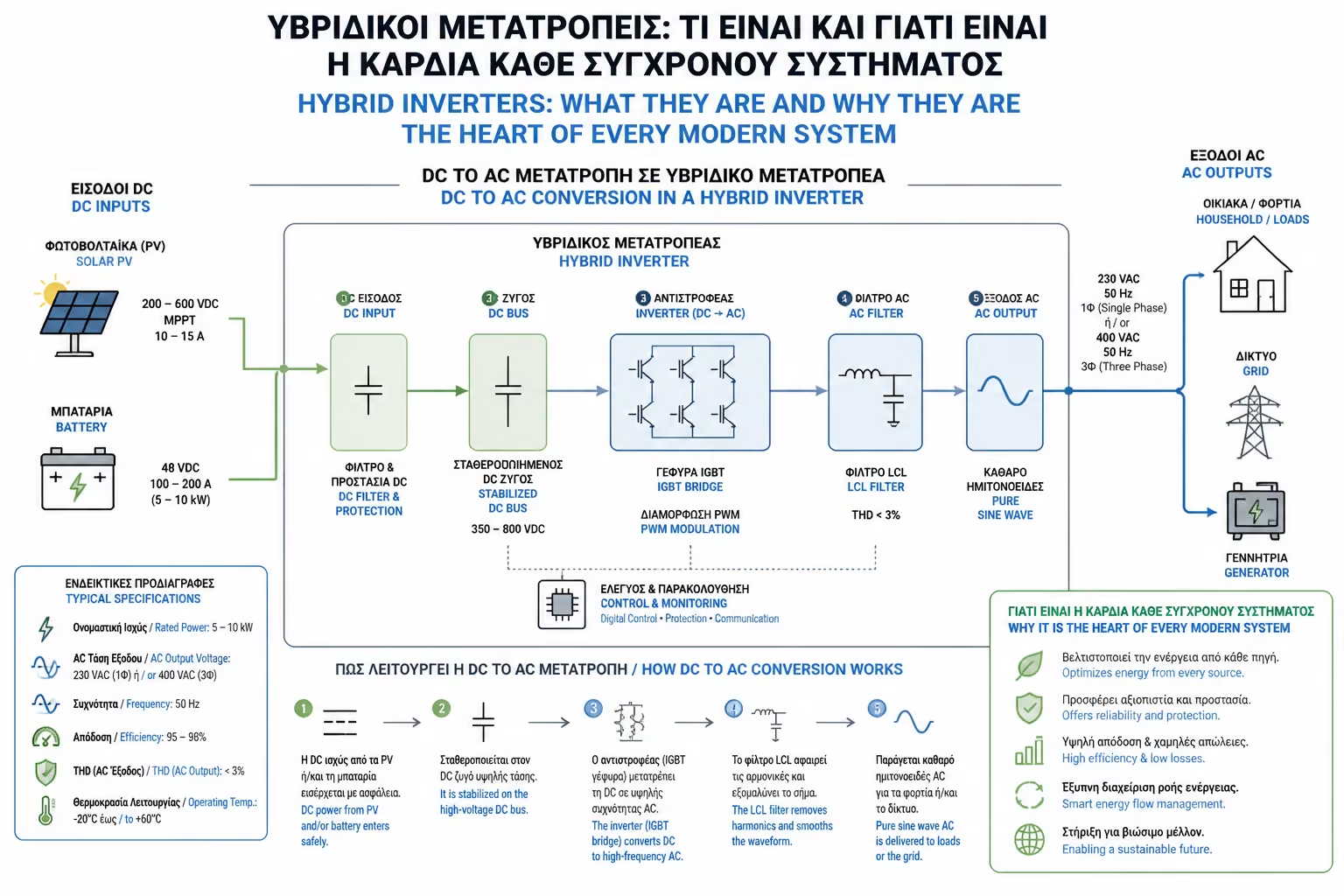
1. The Key Role: The "Translator" (From DC to AC)
Photovoltaic panels produce Direct Current (DC - Direct Current), like car batteries, but at huge voltages (often 400V to 800V). If you plugged this power into your home outlet, all appliances would burn instantly.
The household appliances and the network of DEDDIE operate with Alternating Current (AC - Alternating Current) at 230V. The first, fundamental job of the Inverter is "Inversion". It takes the wild, direct current (DC) from the roof and turns it into "clean", smooth alternating current (AC), ready to power your furnace, computer and air conditioners.
2. What makes an Inverter "Hybrid"? (The Traffic Warden 4 Roads)
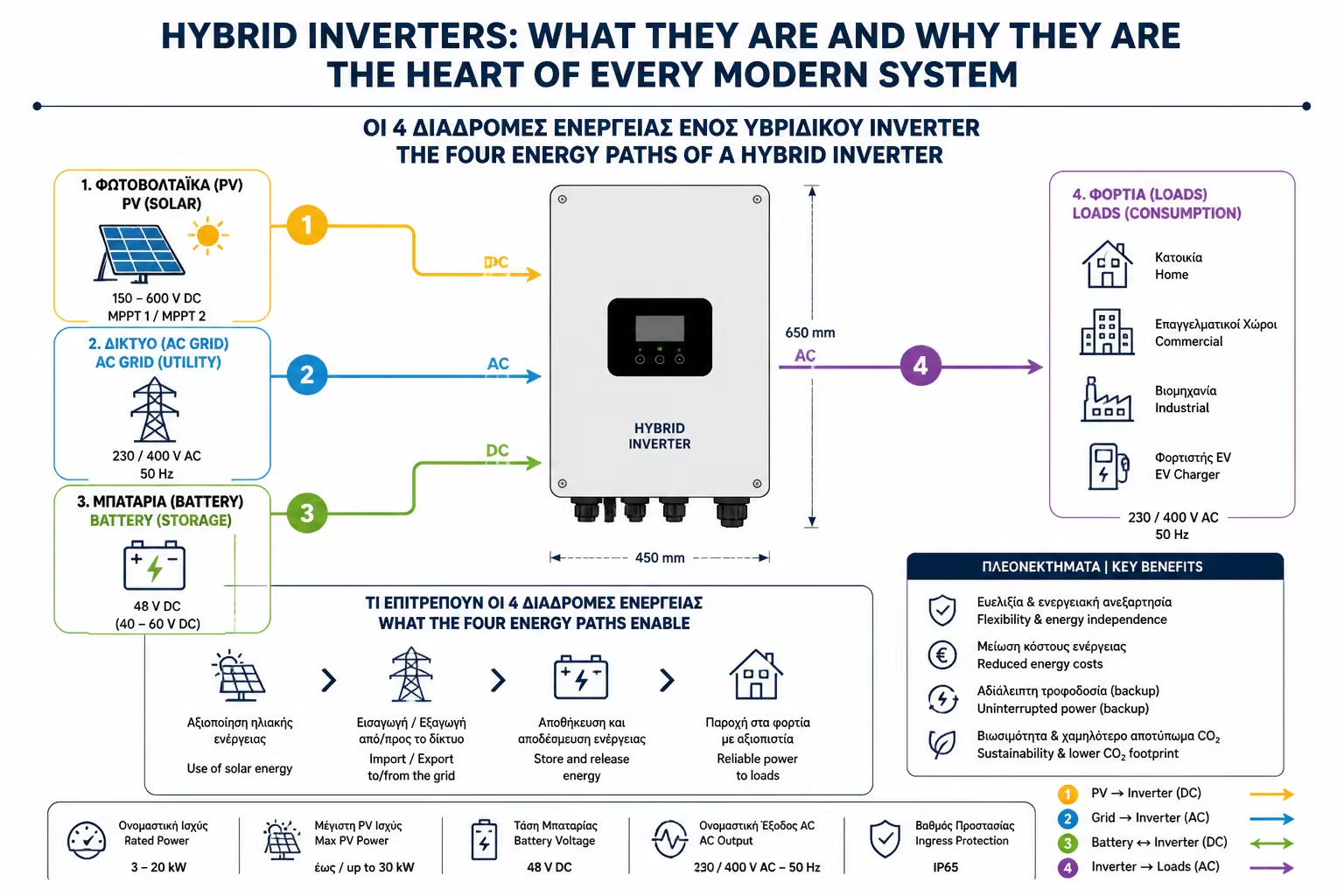
A classic, old Inverter had only two jobs: It took power from the sun and sent it to the house/grid. The Hybrid Inverter (Hybrid) is the versatile "brain" of the system, because it simultaneously manages four (4) different directions of energy.
It has connectors to connect to it:
- Photovoltaic Panels (The source).
- The DEDDIE Network (The reserve and the sale).
- Your Home (Consumption).
- The Lithium Battery (The Storage).
Its software makes thousands of decisions per second (with the help of the Smart Meter we saw in the previous article) to maximize your financial gain.
Morning (08:00)
The sun comes out. Inverter wakes up. It first supplies the small consumptions of the house (e.g. refrigerator).
Noon (13:00)
The panels produce 5,000W. The house only burns 1,000W. The Inverter takes the remaining 4,000W and sends it to charge the battery. He does not give anything to DEDDIE for free!
Afternoon (16:00)
Battery charged to 100%. The panels are still producing. Now, and only now, Inverter decides to "sell" the surplus to DEDDIE.
Evening (21:00)
The sun went down. You turn on lights and televisions. The Inverter stops drawing from the panels and starts drawing current (discharging) from the battery, keeping the DEDDIE meter at absolute zero.
3. The Backup Mode (The "Invisible" UPS)
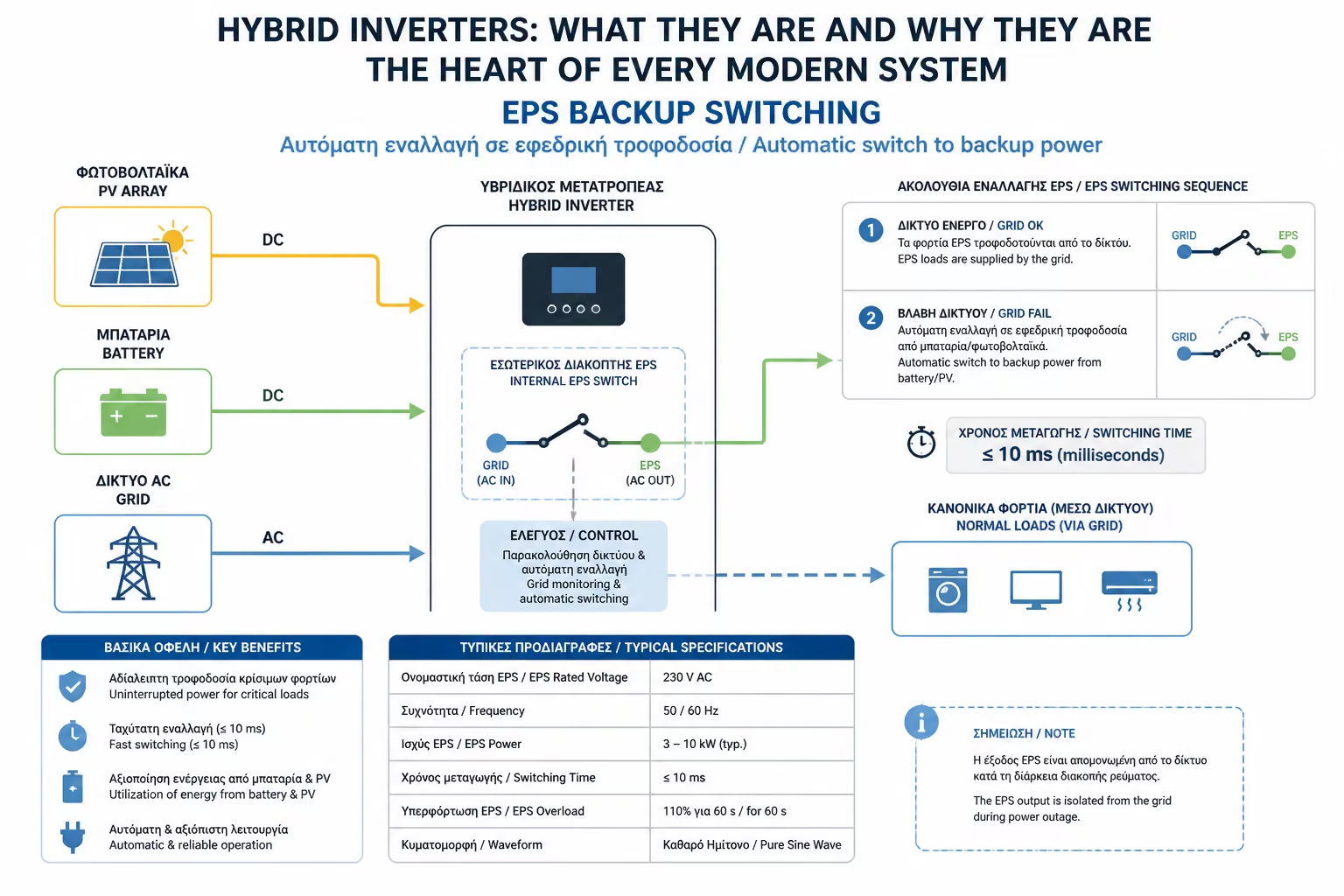
Simple Inverters (String Inverters), for safety reasons, have an inviolable rule: If the DEDDE power goes out in the neighborhood, they turn off immediately. This means that with a simple Inverter, if the power goes out on a sunny afternoon, your house will be left in the dark, even though you have panels on the roof!
Hybrid Inverters, on the other hand, have a special output called Backup (or EPS - Emergency Power Supply). When the grid "falls", the Inverter disconnects the house from DEDDIE within 10-20 milliseconds. It then uses the energy from the panels and battery to power your home, acting as a giant uninterruptible power supply (UPS). You won't even know that the neighborhood has a blackout.
4. The Size (Power) of the Inverter: How not to make a mistake
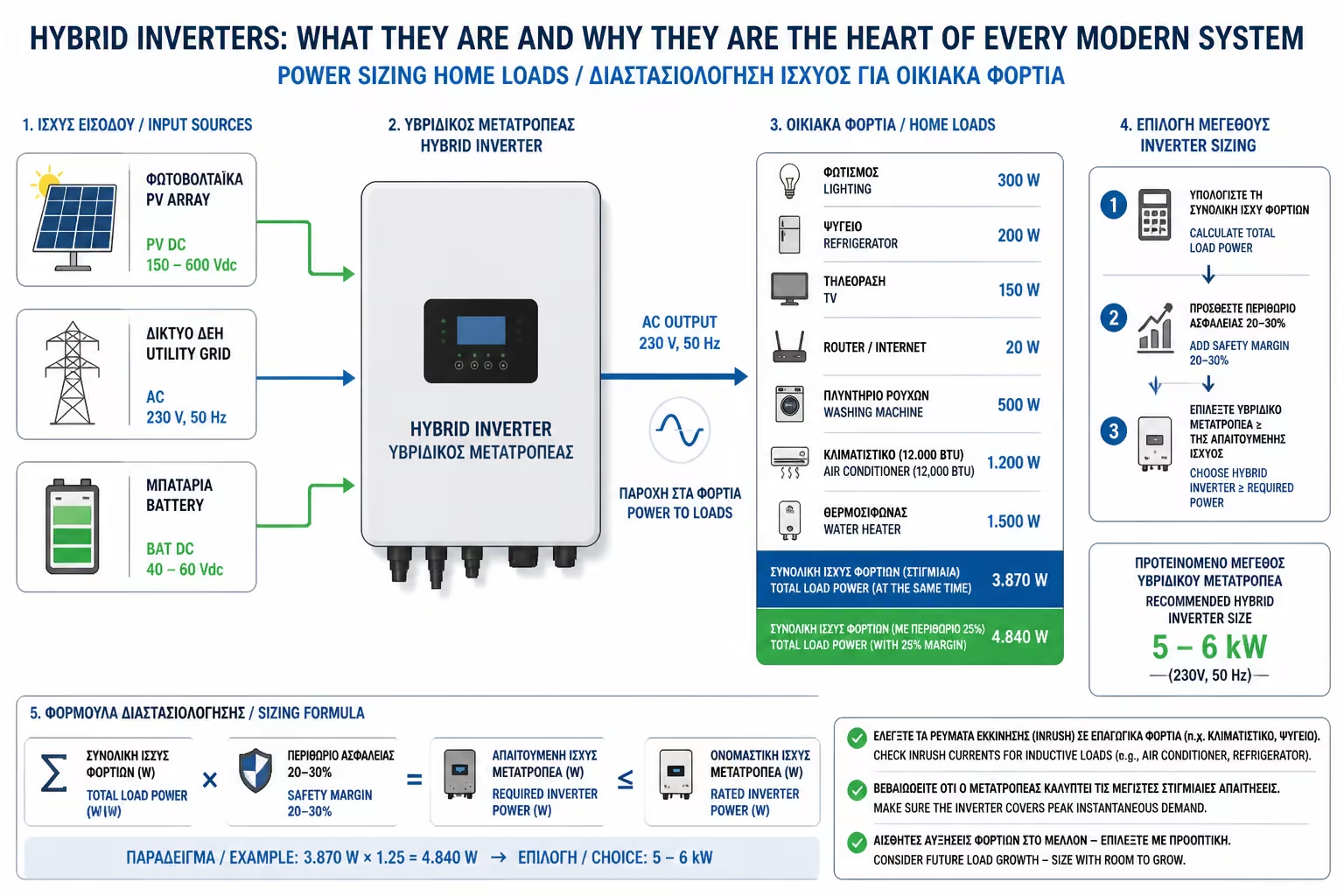
When you buy a Hybrid Inverter, you will see a power listed in kW (eg 5kW, 8kW, 10kW). What does this mean?
It's not just how many panels it holds, but also how much current it can "put out" at the same time! If you have a 5kW (5,000W) Inverter, this is the "ceiling" that the panels and battery can give you at that time.
- If you turn on the water heater (4,000W) and the oven (2,500W), you are asking for a total of 6,500W.
- The 5kW Inverter will give you the 5,000W of power (from the sun or the battery), but for the remaining 1,500W it will "open the door" to DEDDIE to make up the difference, and you will normally charge this 1,500W to your account.
For this reason, in "heavy" houses (with heat pumps and electric cars), engineers choose Inverters of 8kW or 10kW (and respectively three-phase), in order to fully cover large loads (synchronization) without ever asking for "help" from the expensive city network.
Summarizing
The Hybrid Inverter is a high-tech machine, a power computer that works tirelessly on your balcony or basement. When researching the market, choose reputable manufacturers (eg Huawei, Fronius, SMA, Sungrow, Victron) with warranties of at least 10 years, as the stability of this machine determines how quickly you will recoup your investment.
Next Step: We saw that the Hybrid Inverter connects the battery to the house. But how exactly do these two communicate electrically? There are two completely different architectures that judge system performance. Continue to our technical (but simplified) guide: Interfacing Batteries to the House Panel: AC Coupling vs. DC Coupling – Simplified guide.
Related Articles
Net Billing vs. Net Metering: What now applies in Greece and how it affects your installation Electrical Panel Requirements for Rooftop PV: What Your Electrician Should Add Interfacing Batteries to the House Panel: AC Coupling vs. DC Coupling – Simplified guide Off-Grid (Autonomous) Installations: How to properly set up the electrical in a house that does not have DEDDI at all
Electrical Supply, Power & Autonomy
Return to category.
Go to categoryCentral Guide
Return to the central guide.
Go to guide