Where does it come in?
It is installed inside your central panel, right after the DEDDIE General Switch.
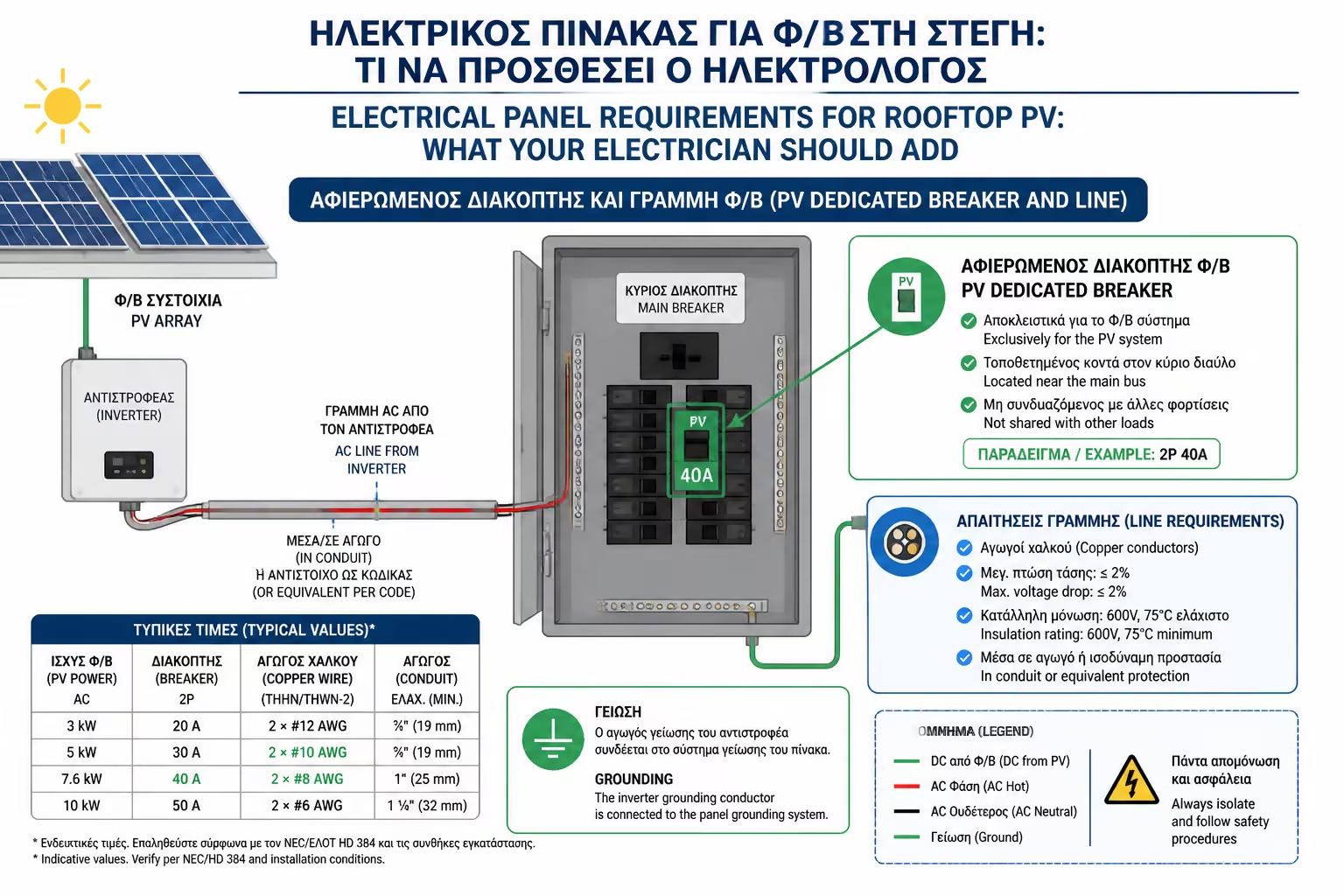
Deciding to install a photovoltaic system on your roof is a huge step towards your energy independence. You see the panels being placed on the tiles and the Inverter being screwed into the wall. But all this free energy from the sun must somehow enter your home in complete safety and "cooperate" with the power of the NETWORK.
Photovoltaics don't just plug into an outlet. Your classic home electrical panel was built with one basic principle in mind: power only flows in one direction (from the street to your appliances). With photovoltaics, the house gets two sources of energy and the current flows both ways.
As engineers, we go to see what are the necessary, mandatory additions the installer must make to your electrical panel to accept the new system, without endangering your property.
In the previous article we talked about the new Net Billing system and the importance of concurrency. In order for the system to know how much power you are using every second and when to send power to the battery or the grid, it needs "eyes".
These eyes are the Smart Meter.
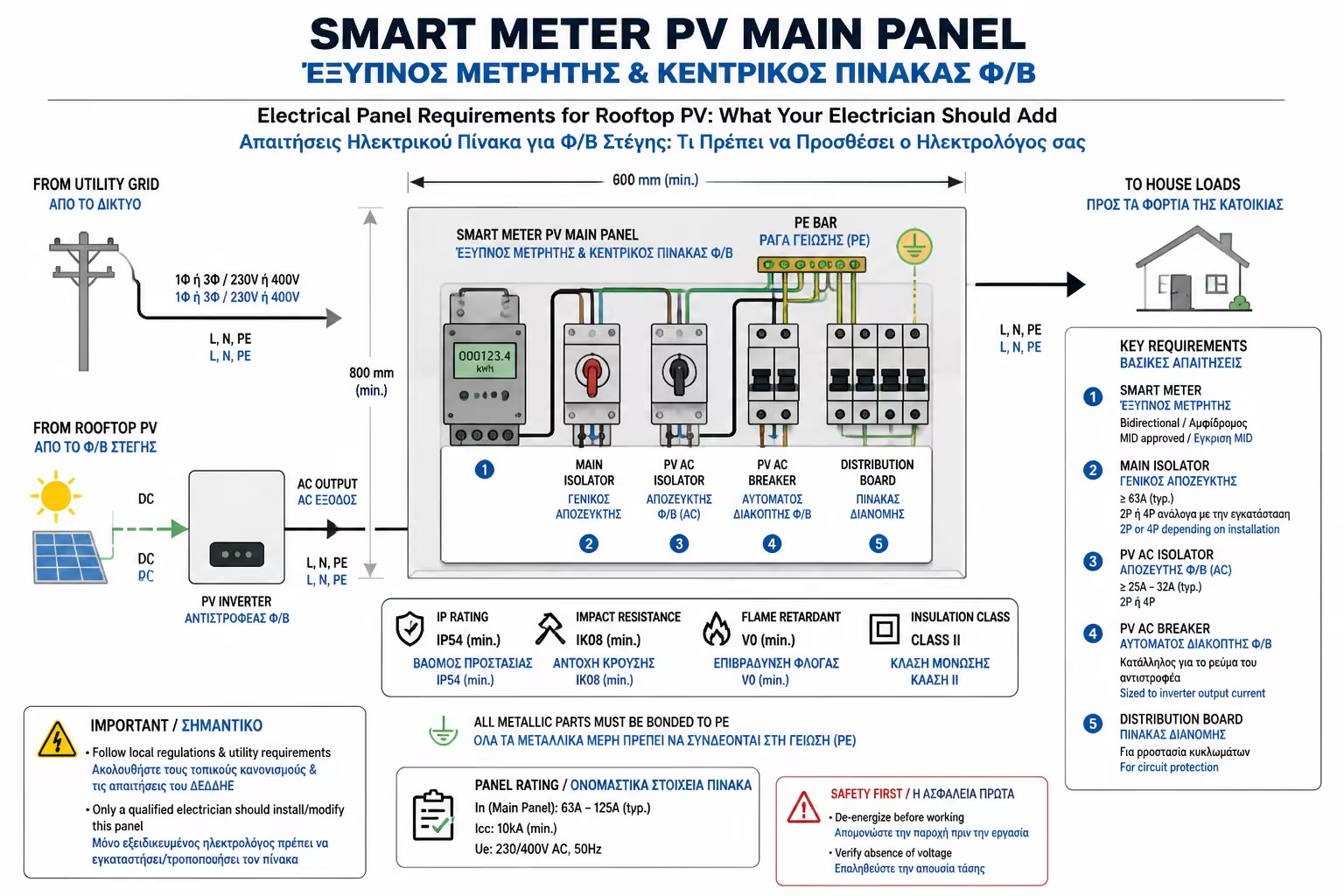
It is installed inside your central panel, right after the DEDDIE General Switch.
It continuously measures whether at that moment you are "drawing" electricity from the street or whether there is "surplus" electricity from the panels and throwing it into the grid. It communicates by cable with the PV Inverter to give it management commands. Without this component, the Inverter is practically "blind".
The inverter that brings the power from the roof, must have its own, dedicated "avenue" to enter the panel.
This is where the most common (and dangerous) technical mistake is made in cheap installations. The classic Leakage (Surge Protection) Relay that you have in your panel is usually "AC Type". It is designed to detect AC leaks.
Photovoltaics, however, produce direct current (DC). In case of inverter failure, direct current can "leak" to the panel. If this happens, your old relay will "blind" (magnetically block) and never trip to save you from electrocution!
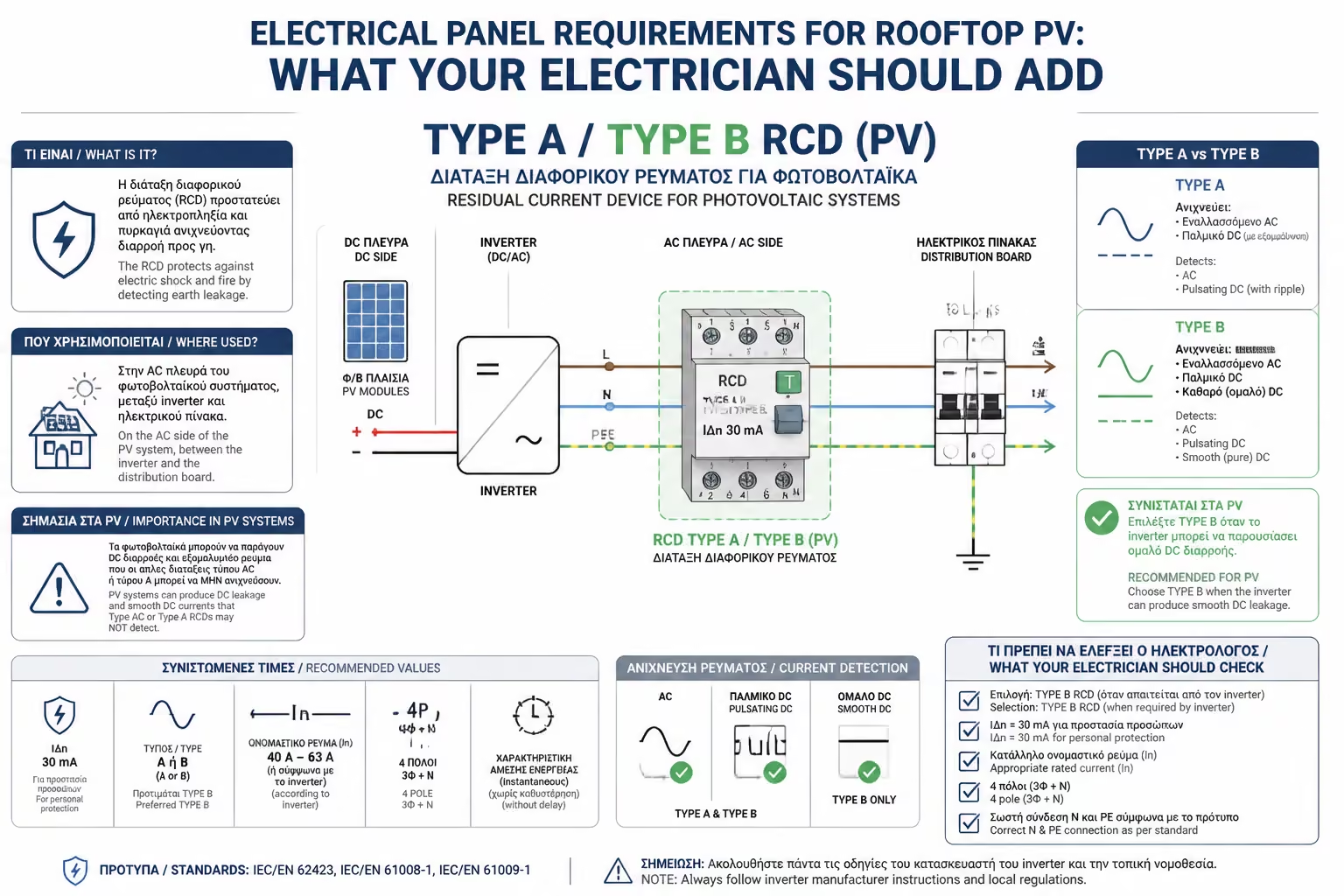
The PV line necessarily requires its own independent Leakage Relay, which must be Type A or in many cases, depending on the Inverter, even Type B, which are specially designed to detect mixed AC and DC leakage.
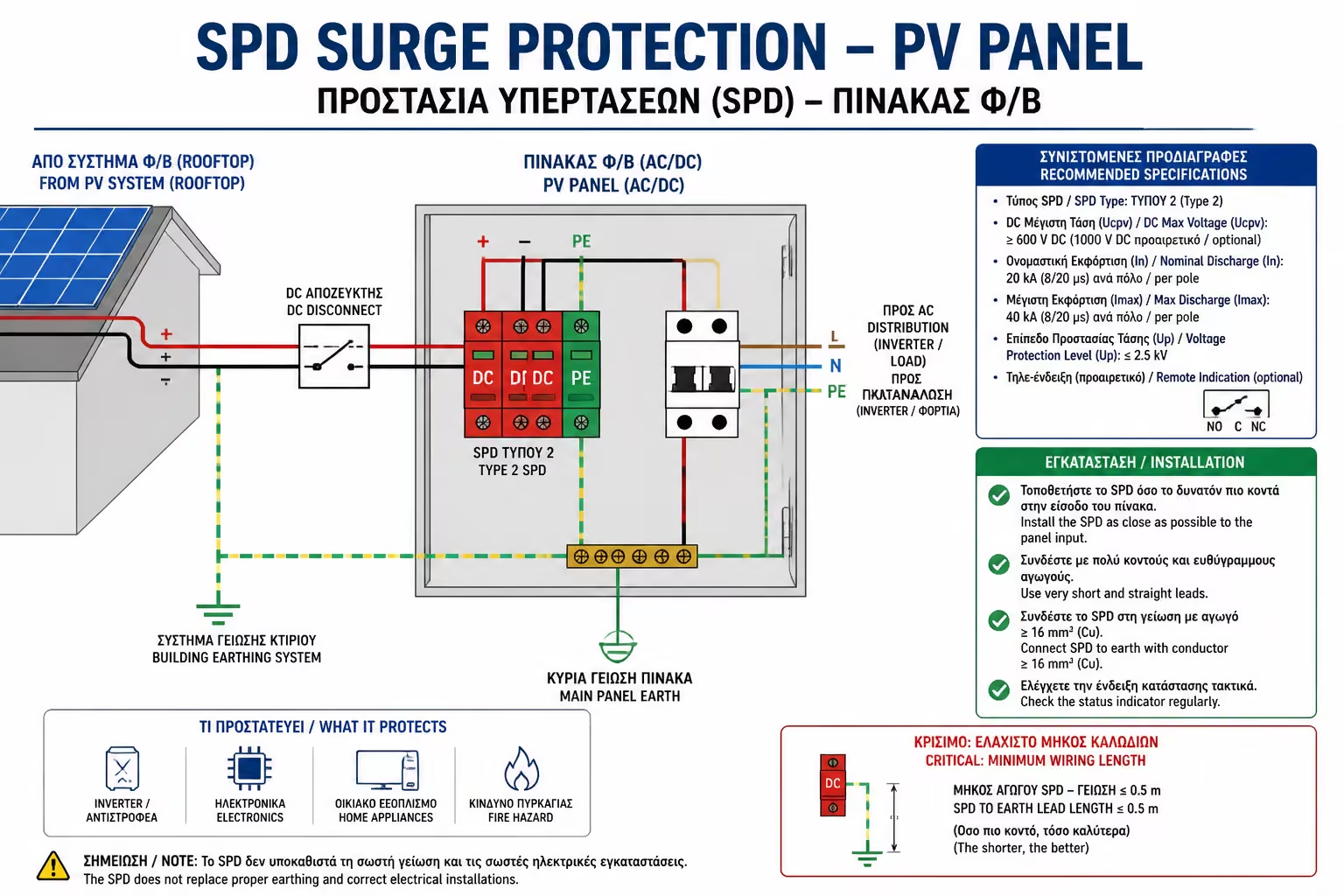
Photovoltaic panels are located at the highest point of your home, exposed to the elements. This makes them a "magnet" for static electricity and inductive surges from nearby lightning.
To prevent a surge from traveling through the roof, through the cables, and "cooking" all the electronic devices in your home, it is mandatory to install Surge Protection Devices (SPD).
They go in next to the inverter fuse to protect the home network.
Corresponding SPDs go into the DC side as well, on a separate small plate right next to the Inverter, before the power even enters the house).
This is not an electrical component, but it is the most critical safety rule. When the electrician has completed the job, he is required by law to affix a yellow warning sign to the outside of the panel that reads: "WARNING! INSTALLATION IS SUPPLIED FROM TWO SOURCES"
Why? Imagine in 10 years a new technician comes to change a light bulb for you. He will pull down the Main Switch (of the DEDDIE) thinking that the house is dead, but the PV (especially if it has batteries) may continue to provide power! The marking reminds him to turn off the PV fuse as well.
Doing the math, for the smart meter, fuse, type A relay, and lightning arresters, we need about 8 to 12 empty "slots" (elements) in your existing electrical panel.
Most of the time, the old boards are already suffocating. The most common and safe solution is for the installer to add a small external PV "Sub-Panel", which screws into the wall right next to (or below) your main panel, keeping the installation clean, professional and fully accessible.
Next Step: All this energy collected by the panel from the sun first goes through a specific machine. It is no exaggeration to say that 90% of the success of your system is judged by it. Continue to our guide: Hybrid Inverters: What they are and why they are at the heart of every modern system.
Return to category.
Go to categoryReturn to the central guide.
Go to guide