The Advantages
The Advantages
UPSs and AVRs are excellent buffers for the first few minutes of an outage and for power quality. But what happens when the power goes out due to a severe snowstorm, fire, or local substation failure and doesn't come back on for 24 or 48 hours?
In these cases, the battery is not enough. We need our own, private power generation "factory": the Generator (H/Z - Power Pair).
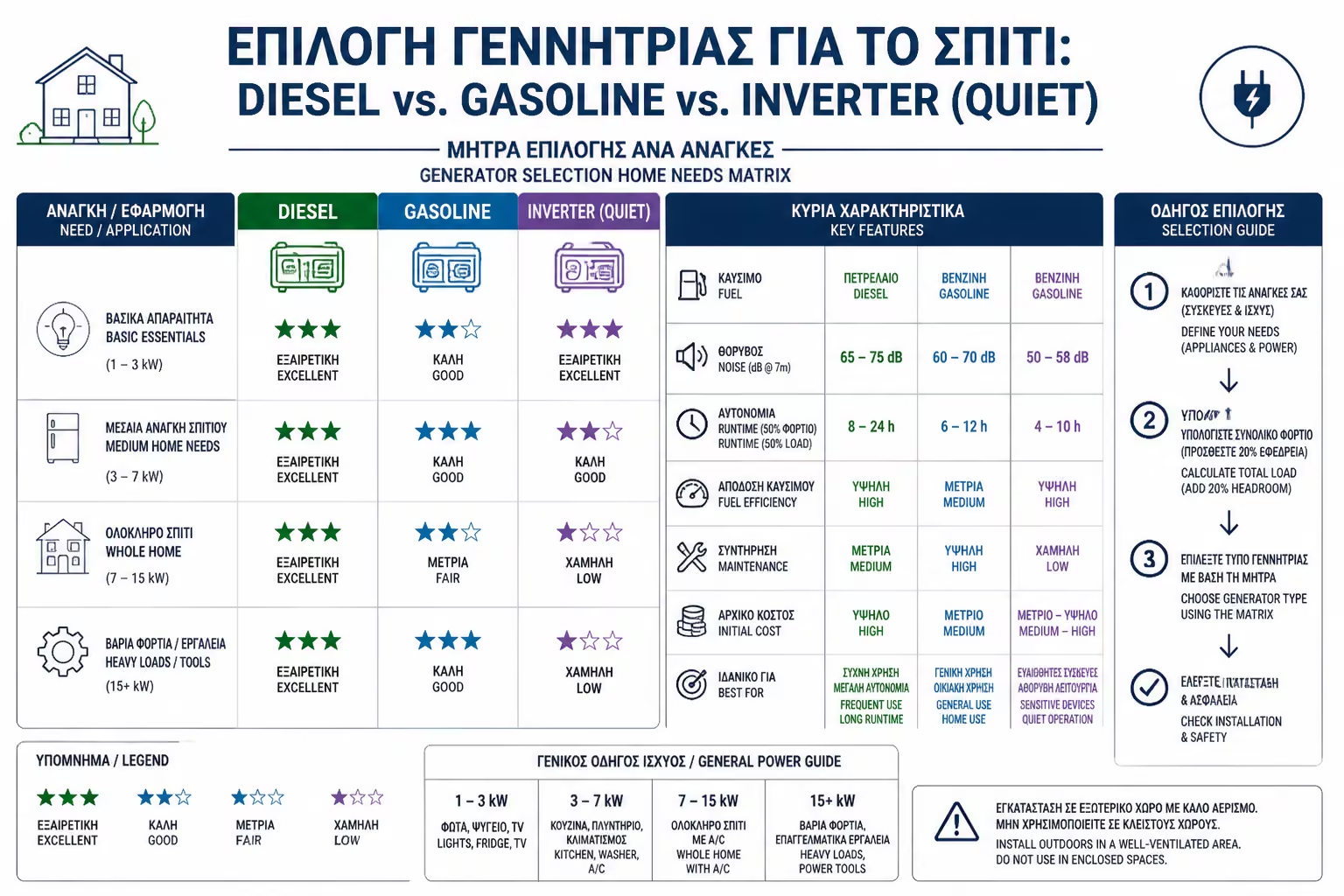
Buying a generator for your home or cottage is a serious investment, but the variety on the market is often confusing. As engineers, we're going to break down the 3 main technologies you'll come across, listing the pros, cons, and most importantly, what kind of power each produces for your sensitive devices.
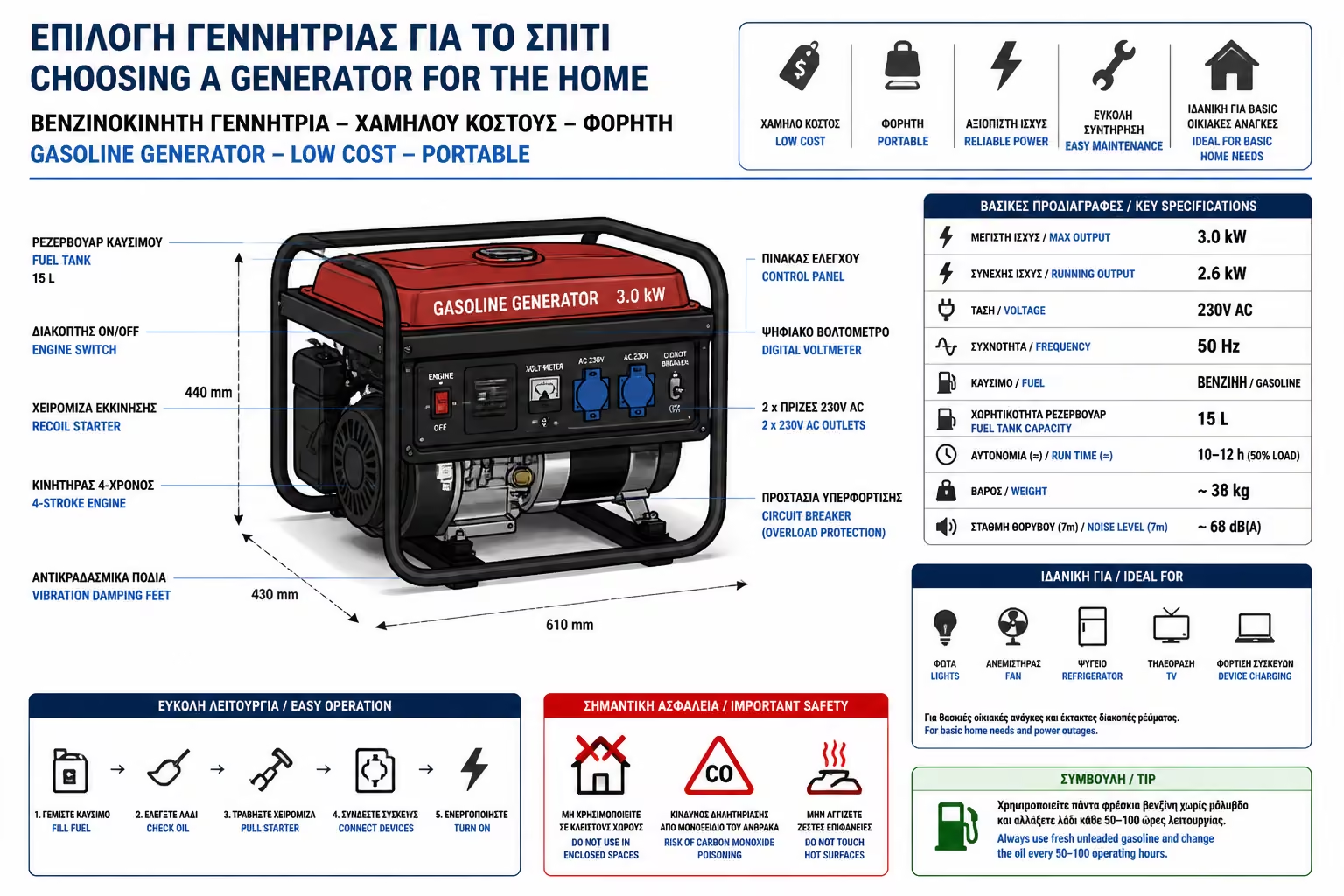
They are the most common and affordable generators you will find on the shelves of department stores. They work with a classic four-stroke gasoline engine (like that of motorcycles or lawnmowers).
The Advantages
It is the cheapest option to get many kW.
They are lighter than their diesel counterparts, making them easier to transport around a property or warehouse.
They get on more easily in winter at low temperatures.
The Disadvantages
They "burn" a lot, which makes long-term use expensive.
Unleaded gasoline "spoils" (loses its octane and forms deposits) if left in the tank for more than 3-4 months. If you leave it unused all summer, it may not start in the winter.
Houses or cottages that have infrequent and brief vacations (eg 3-4 times a year). It is the "emergency tool".
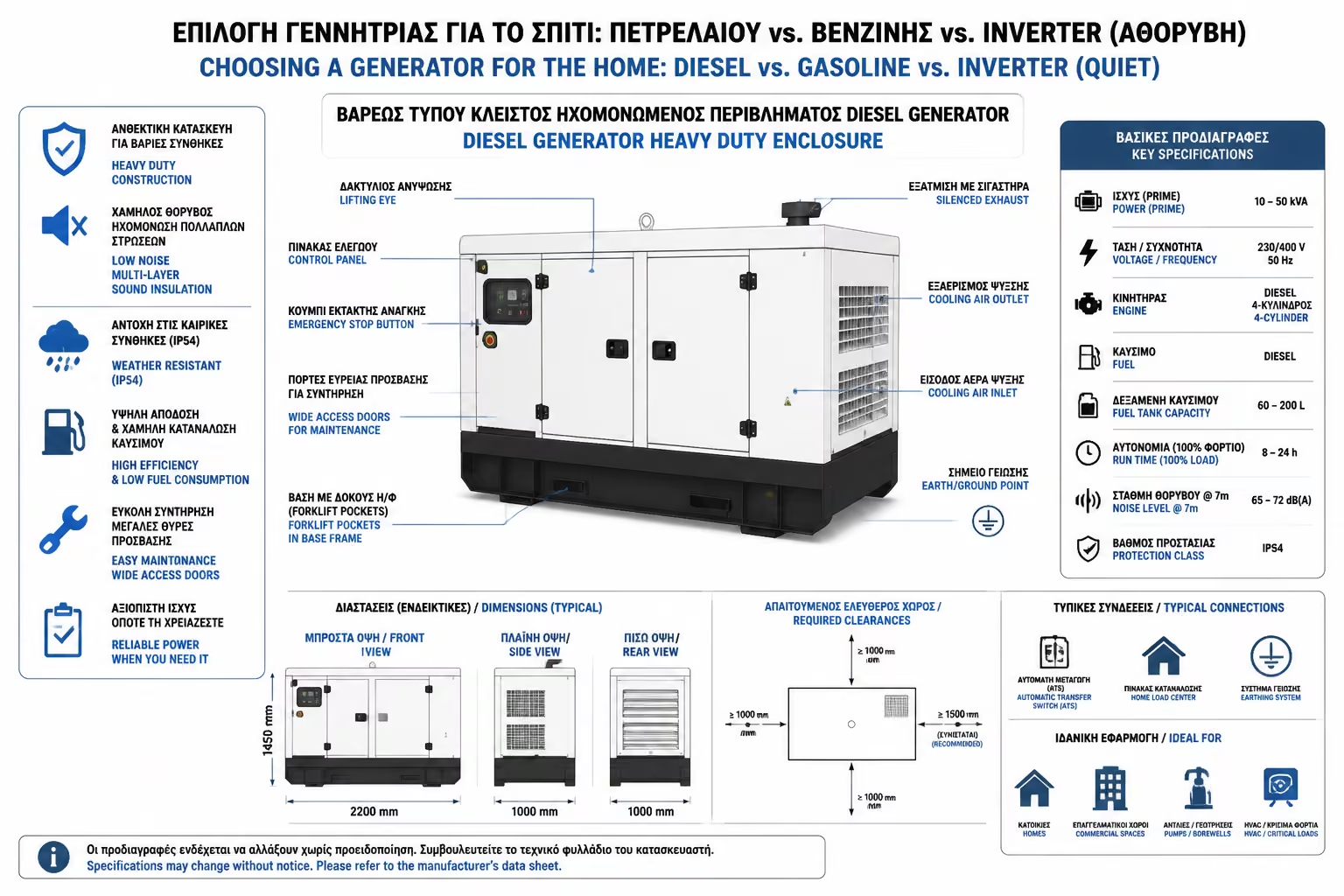
This is where we move into the "heavyweight" category. Diesel engines do not use spark plugs for ignition, but compression.
The Advantages
They are made to work non-stop. They can work 24/7 for days without straining.
Diesel is cheaper than petrol and the engine consumes less (it is more efficient).
Diesel lasts much longer in storage and, importantly, is not as flammable as petrol, making it safer to store in the garage.
The Disadvantages
They are extremely heavy. You don't move them easily. They require a fixed installation point.
They are more expensive in the market and make a deafening noise. That's why the good (and more expensive) diesel generators come "enclosed" (inside a large soundproof metal box).
Apartment buildings, businesses, or homes in remote mountains where a power outage can last for days and the generator must run non-stop.
Here lies the revolution of the decade. Conventional generators (petrol and diesel) always run at constant, high RPM (typically 3,000 rpm) to put out 50 Hz of current, regardless of whether you've connected just a light bulb or an entire oven! This means constant noise and wasted fuel. Also, their current often has "fluctuations" (impurities), which can "burn" your expensive laptop.
Inverter generators (which usually burn gasoline) solve all these problems.
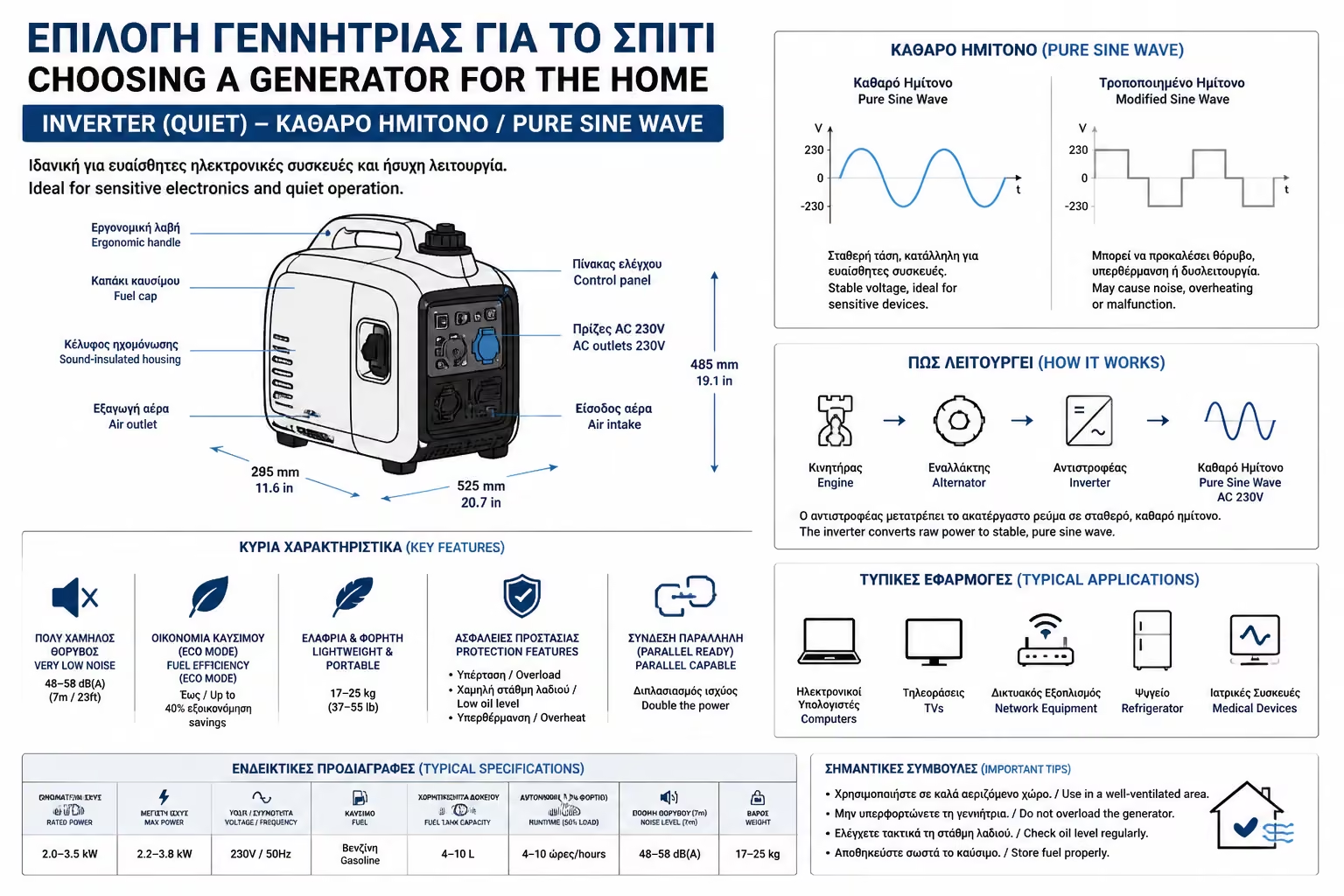
The motor first produces three-phase alternating current, converts it to direct current (DC), and then a microprocessor (inverter) converts it back to alternating current (AC).
The Advantages
The current they produce is "cleaner" even than that of DEDDIE. It is 100% safe for computers, medical machines, televisions and sensitive gas boilers.
The engine adjusts its revs depending on what you ask for. If you turn on only one TV, the generator "drops" the revs to idle. If you turn on a water heater, it "marches".
Thanks to Eco Mode and their closed, suitcase-like plastic enclosures, they are extremely quiet.
The Disadvantages
They are the most expensive per kW.
They usually come in small sizes (2 kW to 4 kW), although there are some larger ones. They can't lift an entire, huge house with 3 air conditioners at once.
Modern homes full of electronics (TV, Router, PC), camping, food trucks, and generally cases where quietness and power quality are an absolute priority.
Next Step: You have decided which type of engine you prefer. But how big should the generator be? If you get a small one, it will "go off" when you turn on the water heater. Continue to our practical guide: How Do I Calculate a Generator's kVA: Sizing Guide to Lift Emergency Loads, to do the maths before you buy.
Return to category.
Go to categoryReturn to the central guide.
Go to guide