Manual Mains/U/Z Switching at the Electrical Panel: Legislation, Safety
and How to Install
In the previous chapter we saw the ultimate comfort offered by the
Automatic Transfer Switch (ATS). But what if you're on a tight budget,
or you've already purchased a simple, portable, jump-start generator
that you want to use to power your entire home?
The first, instinctive thought of many is to make a ballad with two male
plugs. They plug one into the generator, plug the other into any wall
outlet in the living room and... the house has power.
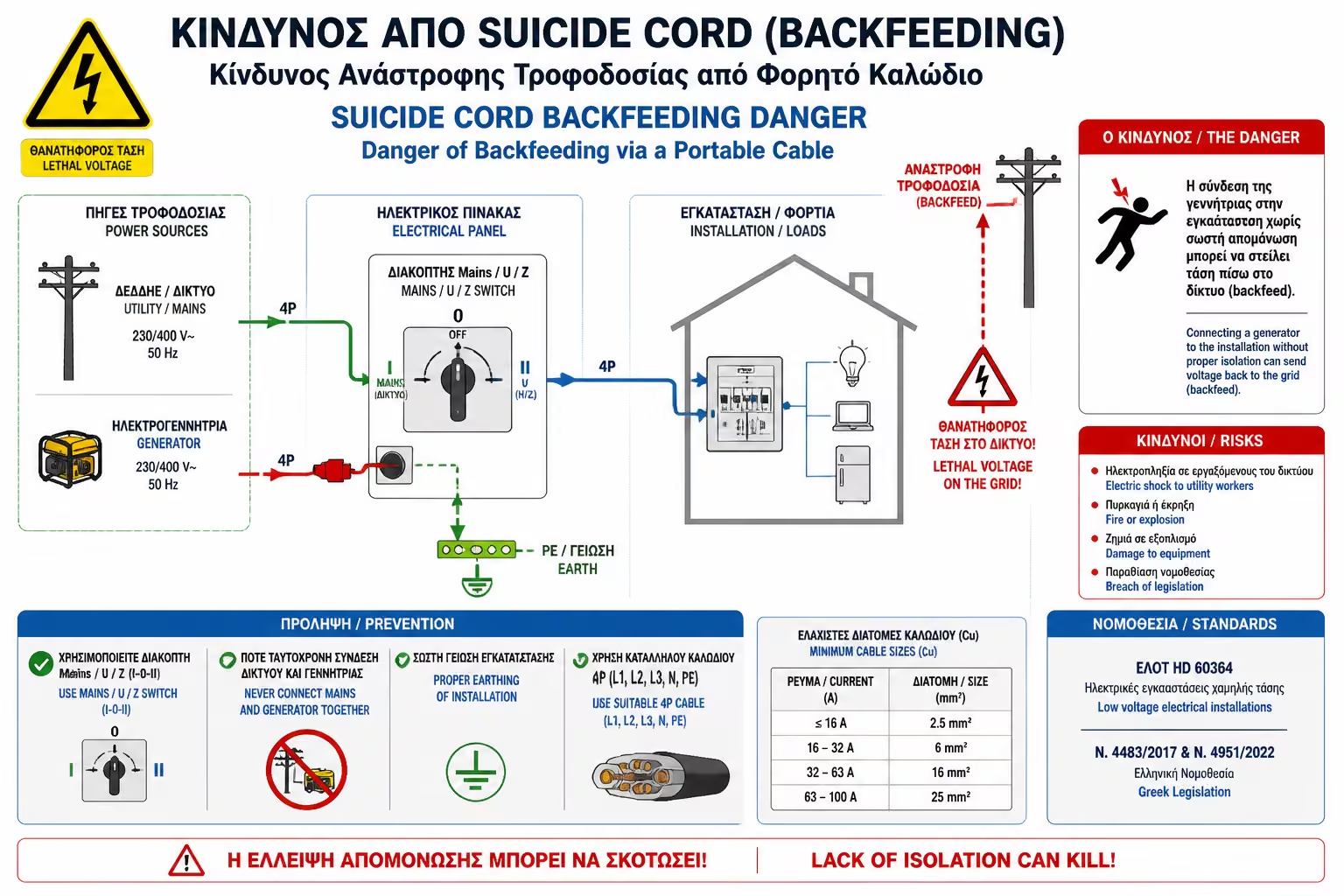
As engineers, we need to sound the alarm: This practice is deadly
dangerous, strictly illegal, and internationally known as "Suicide
Cord". To manually power your home safely, there is only one legal
way: The Manual Transfer Switch (I-0-II) in the electrical panel. Let's
see why it is necessary and how exactly it works.
1. The Deadly Danger of Backfeeding
Let's explain why the "socket plug" patent is criminal.
When the electricity from DEDDIE is cut, the central cable that comes
to your house "dies". If you send power from the generator
to your outlets without isolating the house from the grid, the
generator current will travel backwards (Backfeeding). It will come
out of your meter, go to the neighborhood pole and go through the
transformers.
The Danger to Man
The DEDDIE technician who has climbed the pole to repair the fault,
considers that the cables are dead. Suddenly, the current from your
generator hits him, resulting in serious injury or death. In such a
case, the legal penalties are severe.
The Equipment Risk
If you have not turned off the mains and the DEDDIE current suddenly
comes back on, the 400 Volts of the network will "collide"
with the 230 Volts of the generator. The generator will literally go
up in flames in a split second.
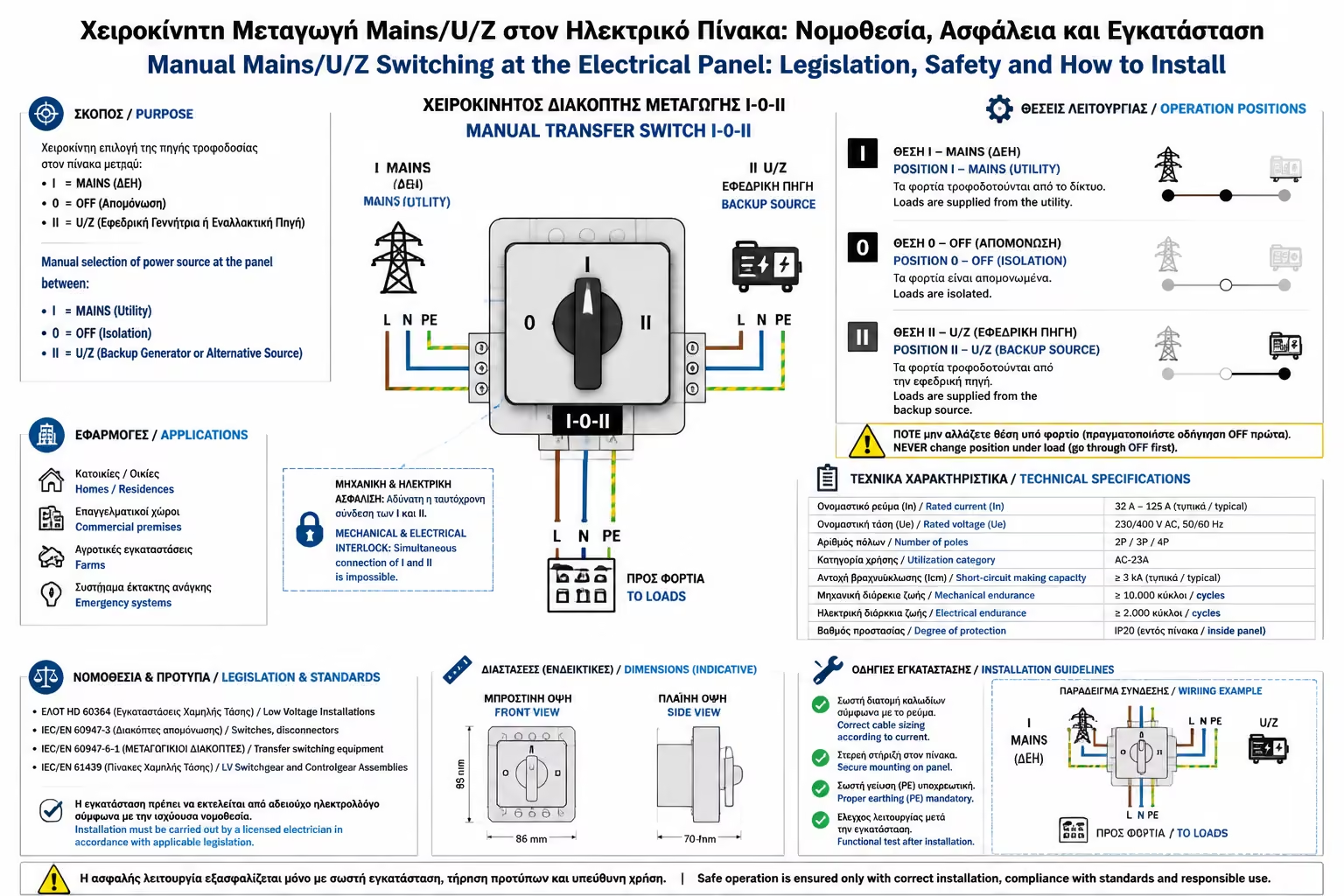
2. The Solution: The Toggle Switch (I - 0 - II)
Legislation requires a physical, mechanical isolation of the two
sources. This is where the manual Changeover Switch comes into play.
This is a switch that is placed inside your electrical panel, right
next to (or instead of) the classic General Switch. It has a lever
with 3 clear positions:
The mechanism of the switch is made in such a way that it prevents (I)
and (II) from being pressed at the same time. You can't go wrong, no
matter how rushed you are.
Position I (Network - DEDDIE)
The house receives electricity normally from the city. The generator
input is mechanically blocked.
Position 0 (Closed / Dead)
The house does not get electricity from anywhere. It is absolute
isolation.
Position II (Generator - H/Z)
The house is completely cut off from DEDDIE and is connected
exclusively to the generator socket.
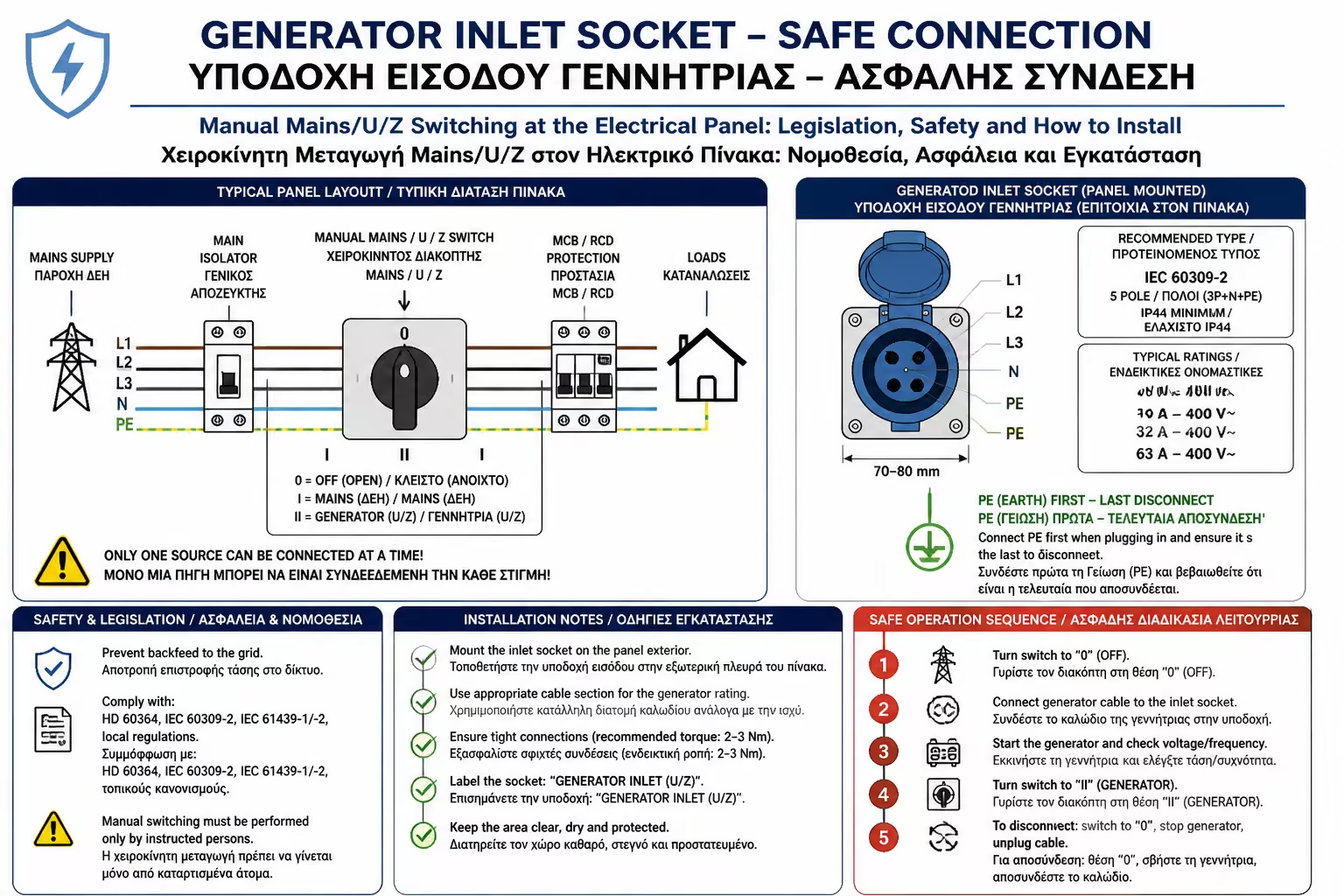
3. The Right Installation (How to set up the system)
The procedure must be done exclusively by a licensed electrician and
involves two steps:
The Change in the Panel: The electrician installs the I-0-II switch
(single-phase or three-phase, depending on your supply).
The Outdoor Outlet (Male Plug / Inlet): To connect the generator,
the electrician will run a cable from the panel to the garden,
balcony or garage (where the generator will be running). A CEE
industrial socket will be nailed to the wall, but be careful: it
must be a male socket (with prongs). So the connection cable you get
will have a female plug on the end, eliminating the risk of electric
shock if you accidentally touch the contacts.
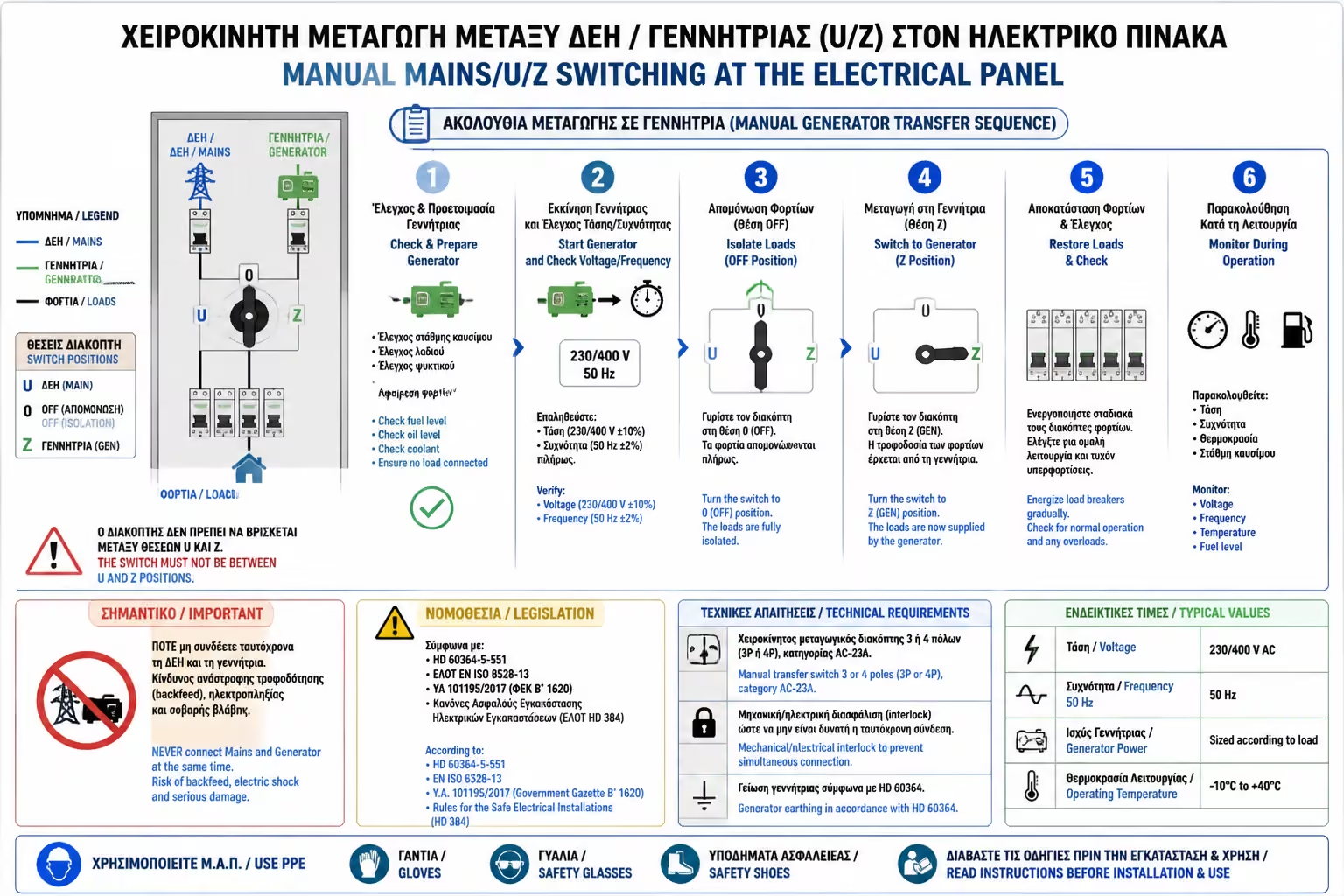
4. Step by Step: What to do when the power goes out
You have the installation ready. It is dark. The correct and safe
sequence of actions is as follows:
Close the "Heavy" Loads: Go to the panel and turn off the
fuses of the water heater, kitchen and air conditioners. Your
generator can't handle all of these, so don't start it with them
connected.
Change the Switching: Turn the switching switch from position (I),
to position (0), and then to position (II).
Put in front: Go outside, pull the cord and put in front of the
generator. Let it work for 1-2 minutes to warm up.
Connect the Cable: Plug the thick cable from the generator into the
special wall outlet. The house (lights, refrigerator, sockets) gets
power immediately.
When PPC Returns: How will you know after you have electricity? The
electrician usually puts a "bulb" (indicator light) in the
panel, which is connected before the toggle switch. When the light
comes on, it means the city power is back on.
The Reset: Turn off the generator. Turn the panel switch back to
position (I). You turn up the water heater. End.
Summarizing
Manual switching does require your own physical presence to start the
system, but it is the safest, legal and most economical way (cost of
parts around €60 - €120) to take advantage of a portable generator. It
is the only practice that protects your equipment, you, and the
technicians working on the poles in bad weather.
Next Step: Generators have exhaust fumes, make noise and need gas. Is
there a greener and quieter way to have autonomy in our home? We close
the Reserve category with the absolute trend of the time: Home Energy
Storage vs. Generators: The future of backup and cost comparison.