How to Calculate a Generator's kVA: Sizing Guide to Lift Emergency Loads
So you've decided to invest in a generator to protect your home or
business from long power outages. You have chosen whether it will be
petrol, diesel or Inverter. Now comes the most critical question:
"How big should it be?"
Many consumers make the following simple (and disastrous) mistake: They
add up the Watts of the devices they want to turn on, find e.g. 2,000W,
they go to the store and buy a 2,000W generator. When the power goes
out, they put in front of the generator, turn on the refrigerator and...
the generator "coughs" and shuts down due to overload.
As engineers, we see this scenario all the time. The mistake lies in
ignorance of starting currents. Let's see how to do the right math so
that the generator you buy will "lift" your equipment without
collapsing.
1. The First Step: The Separation of Needs (What Do You Really Want?)
During a power outage, the goal is not to throw a party by turning on
all the air conditioners, the furnace, and the washing machine. The
goal is survival and basic comfort. You need to make a list of
"Absolutely Must Haves".
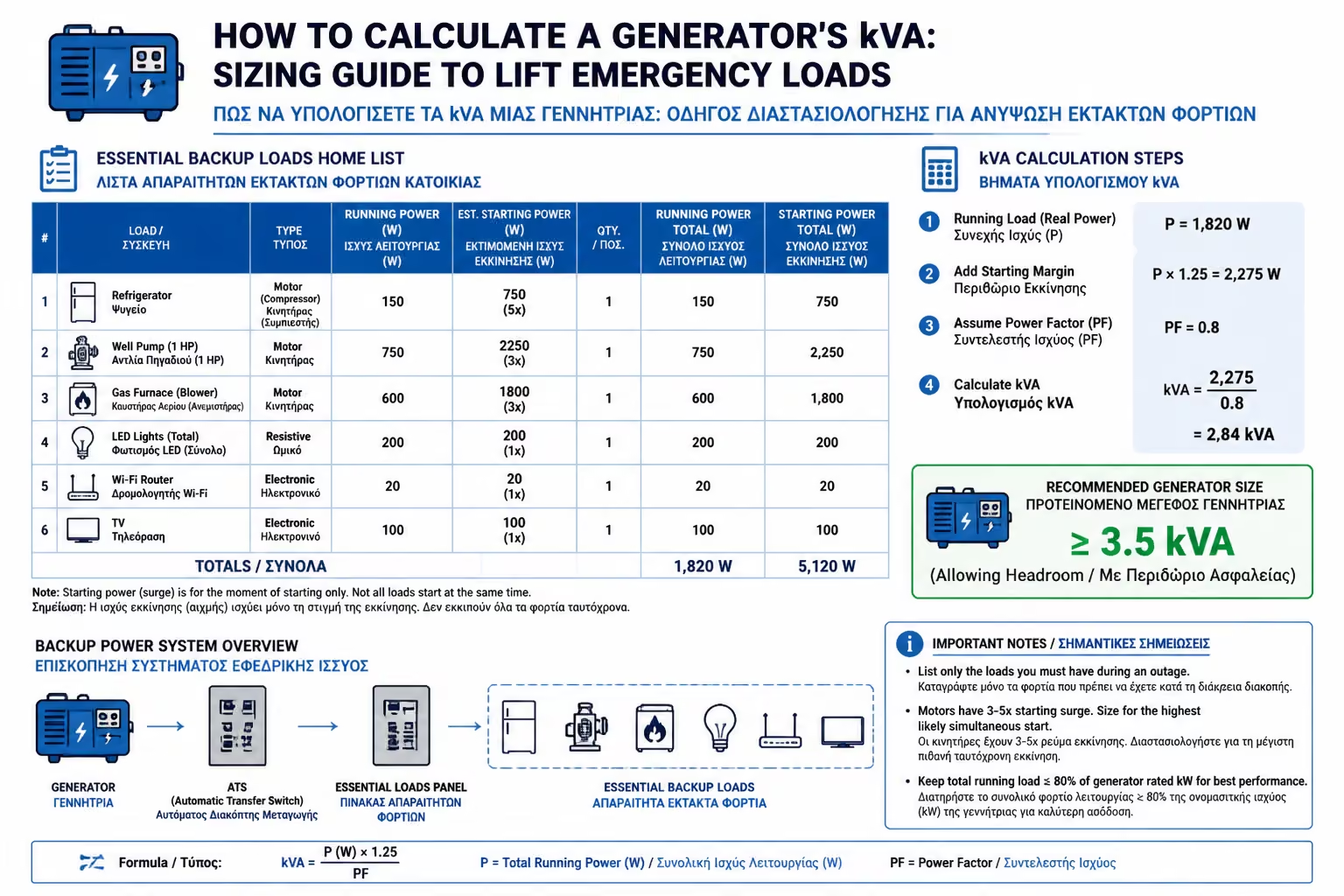
A typical emergency list for a home includes:
The fridge/freezer (to prevent food spoilage).
Some LED bulbs.
The radiator circulator (or gas boiler) to have heating.
The router and a computer.
Maybe the TV for updates.
2. The Big Pitfall: Resistive vs. Inductive Loads
To calculate power, you need to understand the difference between two
types of devices. Here's the secret to keeping your generator from
shutting down:
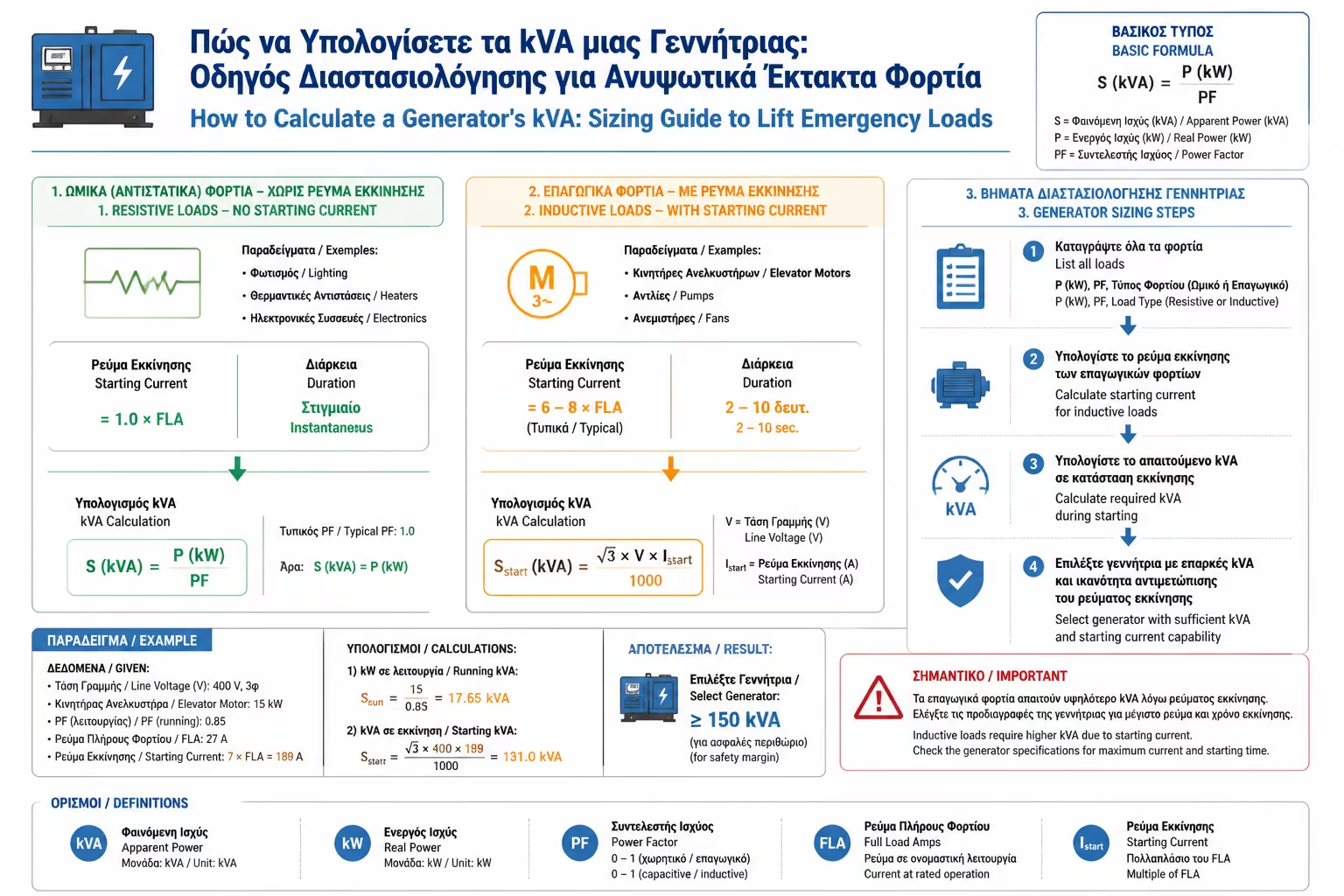
A. Resistive Loads (Those that heat or glow)
These devices are "honest". As many Watts as they write on
their nameplate, that's exactly how much they draw, both when
they're turned on and when they're working. Examples: Lamps,
toasters, electric oven, hair dryer, coffee machine. The Rule:
Starting Power = Running Power. (If a stove is 1,000W, it needs
1,000W from the generator).
B. Inductive Loads (Those with a motor/compressor)
These are the devices that hide the trap. When an electric motor
starts from standstill, it needs a huge, instantaneous
"kick" of energy (Inrush Current) to overcome inertia,
which lasts 1-2 seconds. After taking a break, the consumption drops
to normal. Examples: Refrigerator, freezer, air conditioner (old
type non-inverter), water pump (pressure), washing machine. The
Rule: Starting Power = 2 to 3 times the Operating Power!
3. Example of Calculation in Action
Let's take the list of absolute musts we made in Step 1 and do the
math:
Device
Load Type
Operating Power (Watts)
Starting Power (Watts)
5 LED lamps
Ohmic
50W
50W
55" TV
ohmic (electronic)
150W
150W
Router & Laptop
Ohmic
100W
100W
Refrigerator
Inductive
250W
750W (x3)
Radiator pump
Inductive
150W
450W (x3)
TOTALS
700 Watts
1,500 Watts
How we read the table: If you go to buy an 800W generator because the
"Total Duty" is 700W, by the time the refrigerator compressor
kicks in, the system will momentarily demand over 1,000W. The 800W
generator will not withstand the "kick" and will shut down.
The generator must cover the Starting Total!
Small Engineering Tip: In practice, not all devices will go forward in
the exact same millisecond. The safest formula is to take the Total Sum
of Operating Powers (700W) and add to it ONLY the starting difference of
the largest motor you have (ie the radiator: 750W - 250W = 500W). So,
700W + 500W = 1,200W. This is the absolute minimum number (Instantaneous
Maximum Load).
4. Converting Watts to kVA and the "80% Rule"
Now that you've found that you need about 1,200 Watts (1.2 kW), you
need to translate that into the "language" of generator
manufacturers.
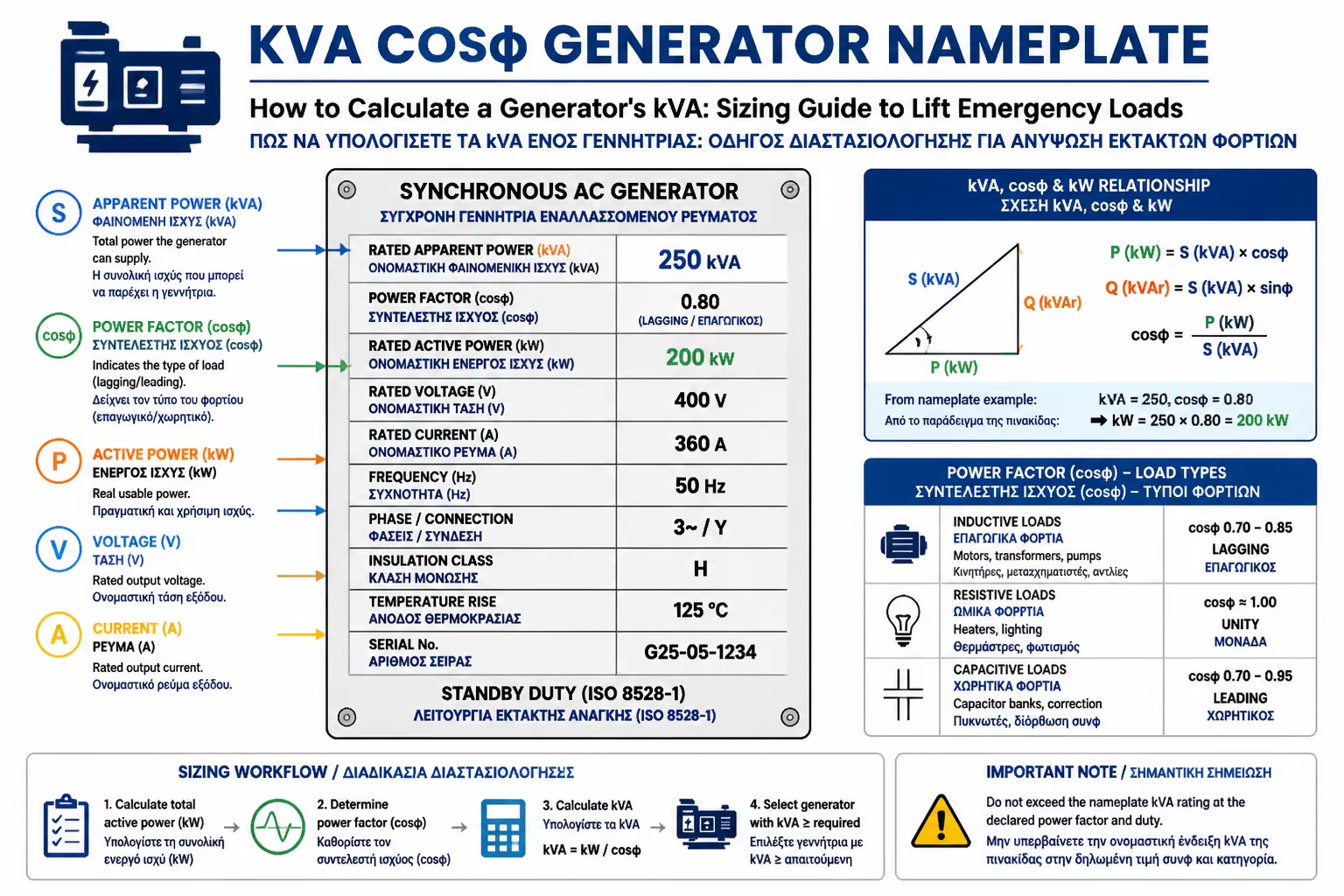
First, generators (as we wrote in a previous article) are measured in
kVA (Apparent Power). The power factor (cosphi) for most single-phase
generators is 1.0 (so 1 kVA = 1 kW), but for three-phase (and larger
diesel) generators the factor is usually 0.8.
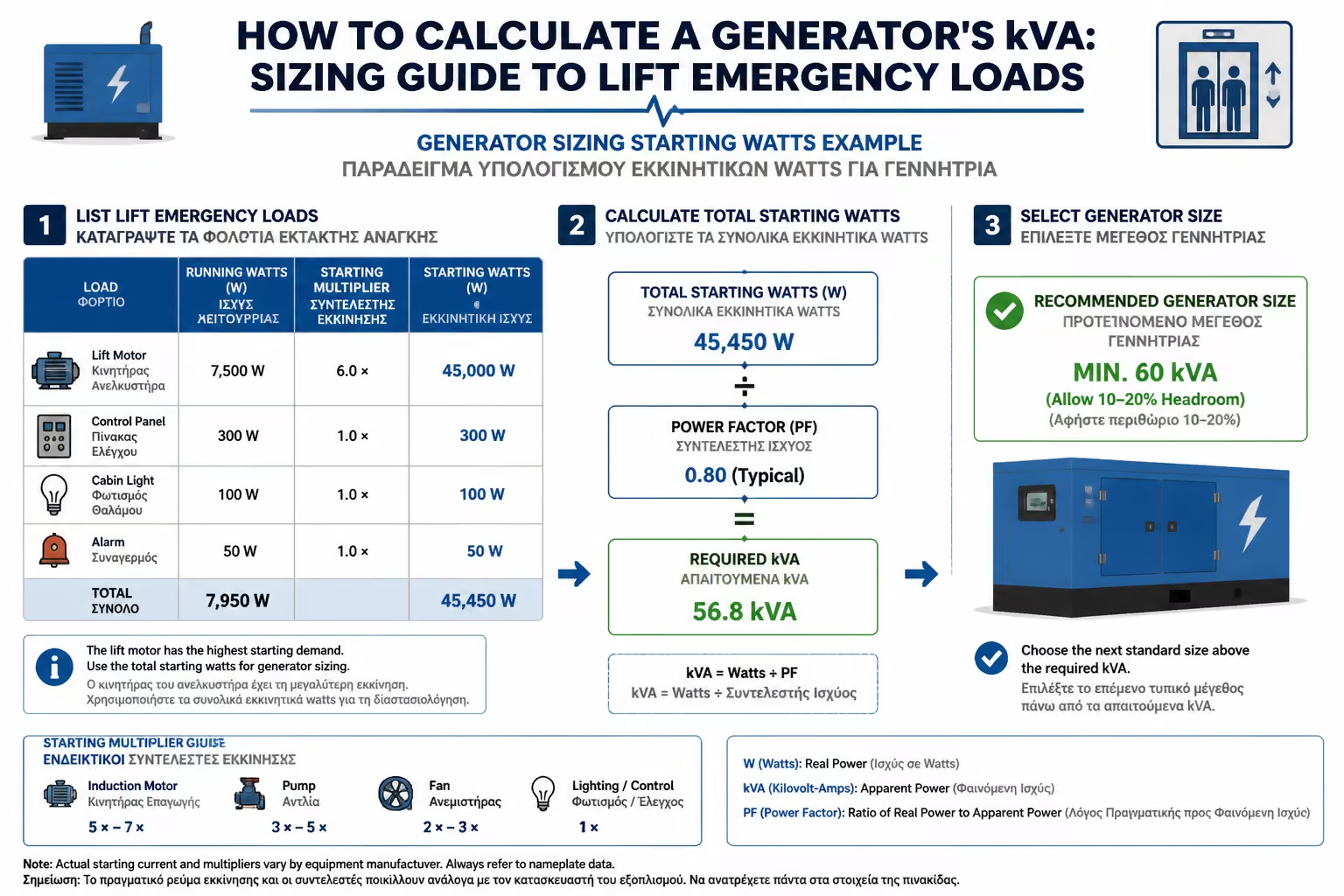
The formal conversion relationship is: S = fracPcosphi Where S is
Apparent Power in kVA and P is Active Power in kW.
Second – and more importantly – no generator should work at 100%
capacity continuously. If you buy a 1200W generator and
"force" it to 1150W all the time, it will overheat, make
terrible noise, burn too much fuel and break down quickly.
The Golden Rule (The Margin of Safety): Multiply the maximum load you
find by 1.2 (or else, add 20% to 25% margin).
So, to meet the very basic needs of a small house with absolute safety
and engine longevity, you should look in the market for a generator
around 1.5 to 2.0 kVA.
In our example
1,200W x 1.2 = 1,440W.
Summarizing
Buying the right generator is a matter of math, not guesswork. Make your
list, find the "sneaky" inductive loads (motors) and multiply
their power by 3 to boot. Add a healthy margin of 20% to keep the engine
from "hustling", and you have a system that will never let you
down at the critical moment.
Next Step: You have purchased the generator. Now the big question: When
the power goes out, will you go outside in the rain with your flashlight
to pull the starter cord, or would you want it to start on its own?
Continue to our technical guide: Automatic Transfer Switch (ATS): How
the generator starts itself when the power goes out.