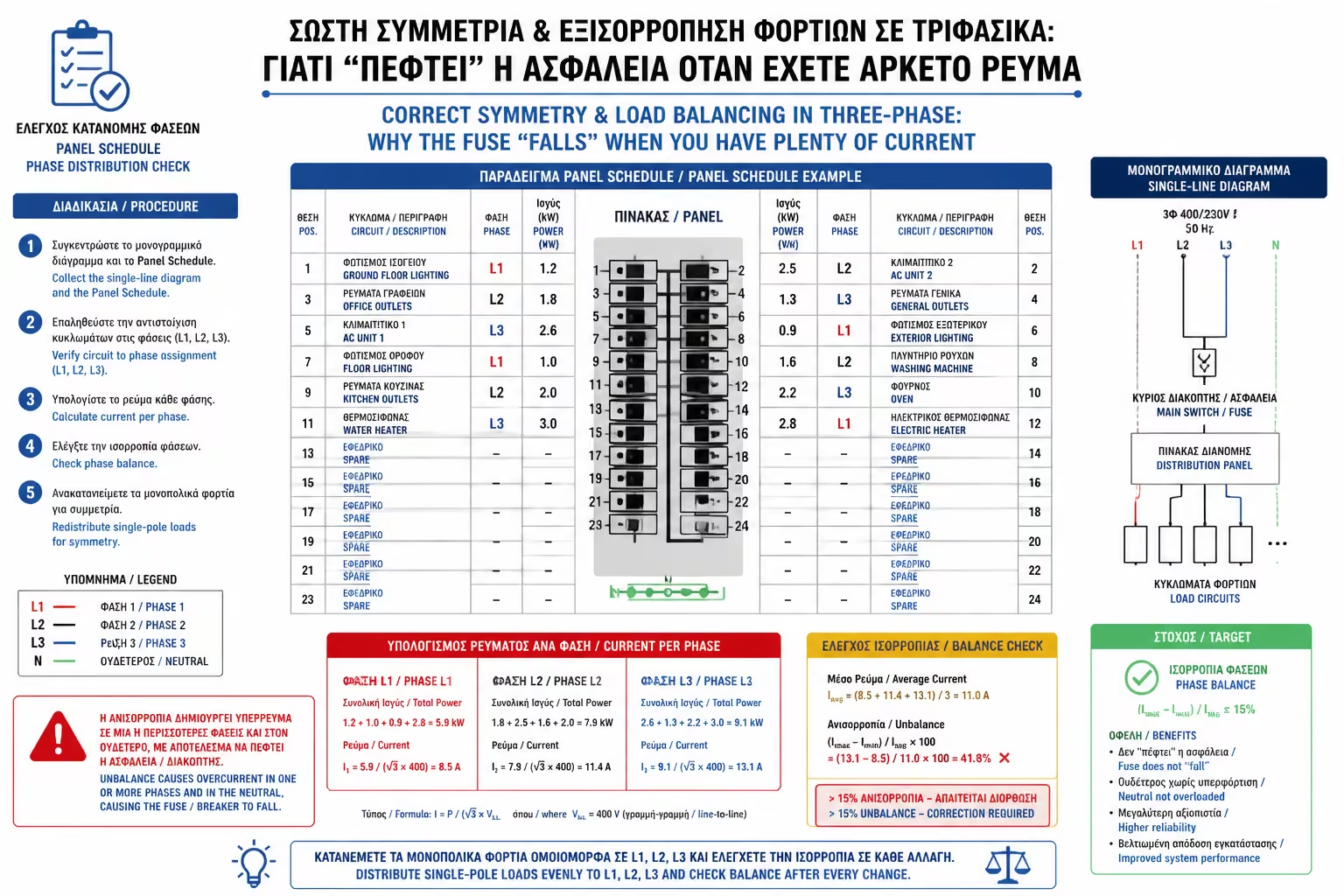
Phase L1
Electric Oven (2.5kW) + Living Room Sockets + Bedroom Lights.
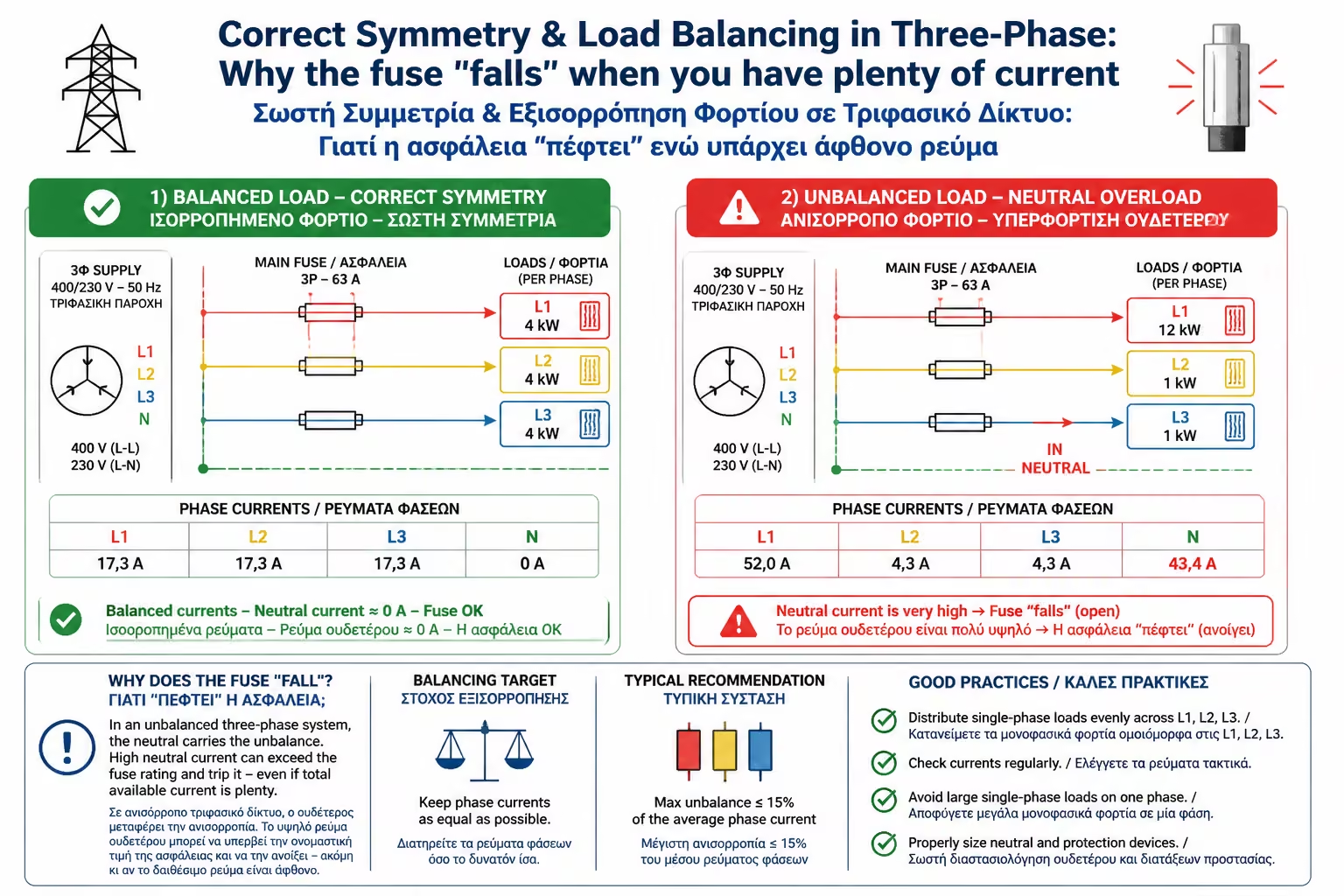
Imagine the following common scenario: You have just paid a significant amount to DEDDIE to upgrade your home to three-phase current. They assured you that you now have a "massive" 25 kVA (25,000 Watts) supply and that the problem with the main switch falling out is a thing of the past.
On a winter's evening, switch on the electric oven (2,500W), the dishwasher (2,000W) and the kettle (2,000W). In total you draw just 6,500 Watts. And yet... CLAAK. The house is plunged into darkness.
How is it possible that you have 25,000 Watts available, only use 6,500, and the fuse goes down? The problem is not the lack of electricity. The problem is called Phase Asymmetry and is due to a bad distribution of loads in your electrical panel. As engineers, let's see why this paradox occurs and how to solve it.
The biggest mistake owners make is to treat the 25kVA three-phase supply as a huge, single "bucket" from which they can draw power as they please.
The reality is different: Three-phase current means that the UPS gives you 3 separate "buckets", each of which holds exactly one-third of the total power.
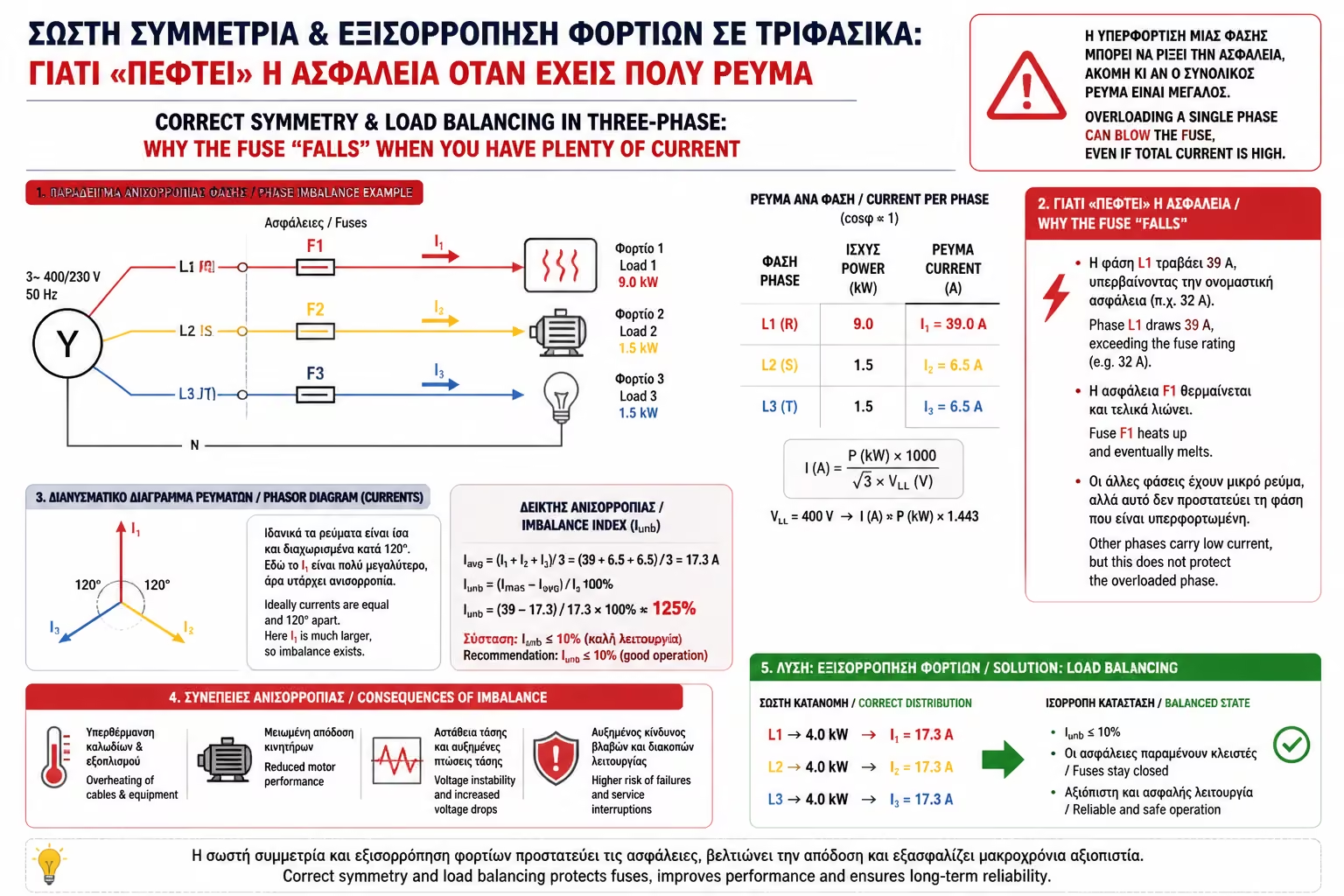
Let's go back to our evening scenario. If the electrician who made your panel did a sloppy job, he might have connected ALL the kitchen sockets on the same phase (eg on L1).
When you turned on the oven, dishwasher and kettle, you asked for 6,500 Watts. But because all three machines are connected to L1, Phase 1 reached its limits (8,000W). If at that moment the refrigerator motor also started, L1 exceeded the limit and its central fuse blew!
The tragedy of the case? At the very moment when Phase 1 "popped" from overload, Phase 2 and Phase 3 were sitting completely empty, at 0%, unable to help!
To take advantage of all 25 kVA, the house loads must be shared in such a way that the three phases work as symmetrically as possible. This is called Load Distribution.
The right electrician takes pencil and paper before connecting the wires to the panel, and makes a "map" (Distribution Booklet). The logic is to isolate the large, power-hungry devices (the "beasts") in different phases.
A typical, proper weighing in a home system looks something like this:
(Note: If you have pure three-phase devices, such as an 11kW car charger or three-phase heat pump, they draw current perfectly symmetrically from all three phases at the same time, so they do not disturb the balance).
Electric Oven (2.5kW) + Living Room Sockets + Bedroom Lights.
Electric Water Heater (4.0kW) + Dishwasher + Kitchen Lights.
Washing Machine / Clothes Dryer (2.5kW) + Air Conditioners + Kitchen Sockets.
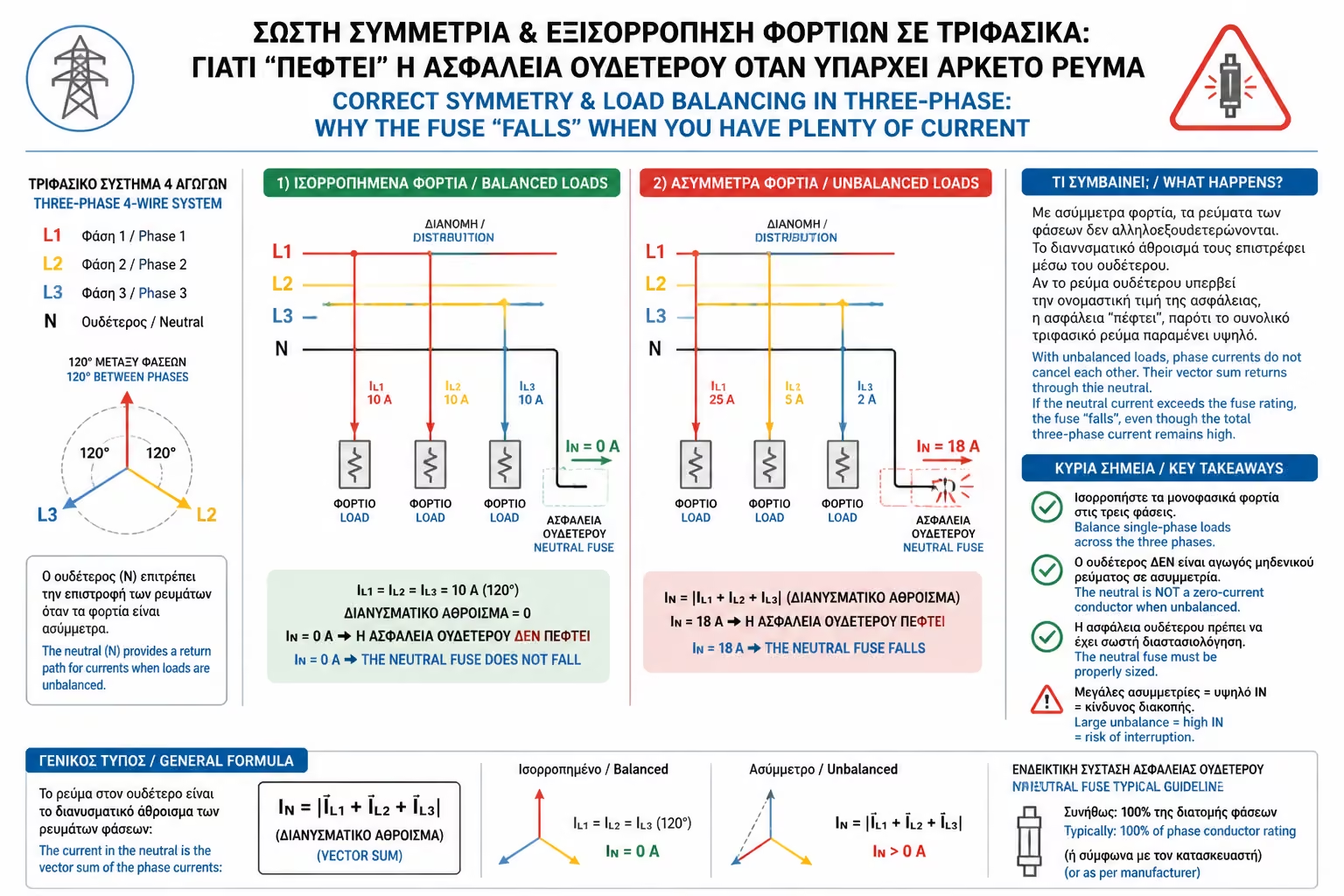
There is also a purely technical, more dangerous reason why symmetry is mandatory. It's about the "invisible" return wire: the Neutral.
In a perfectly symmetrical three-phase system (if you draw 10A from L1, 10A from L2, and 10A from L3, for example), the currents cancel each other out vectorially, and the current coming back through the Neutral wire is... Zero! But if your system is completely unbalanced (eg you draw 35A from L1 and nothing from the others), the Neutral is forced to carry all that huge return load. In extreme cases of bad installations with harmonics (lots of PSUs and LEDs), the neutral can overheat dangerously, even though it has no fuse of its own to trip!
The diagnosis is usually clear:
What to do: Do not attempt to change cables yourself. Bringing a line from L1 to L2 inside the panel requires specialist knowledge, as a mistake can send 400 Volts into single phase devices and destroy them instantly. Have your electrician do a "re-balancing" on the panel using a clamp meter to measure the actual loads.
Three-phase current is a very powerful tool, but it requires orchestration. As in a three-wheeled vehicle we don't load all the weight on one wheel because it will tip over, so in the electric system, the "weighing" of the loads is the secret to uninterruptedly enjoy the energy you pay for.
Next Step: We talked about how we share the loads. But how do engineers calculate the thickness of cables for entire blocks of flats or factories without ending up with cables the size of... tree trunks? Continue to our technical guide: The Coefficient of Synchronization (Heterosynchronization): The secret of engineers to avoid laying huge cables for no reason.
Return to category.
Go to categoryReturn to the central guide.
Go to guide