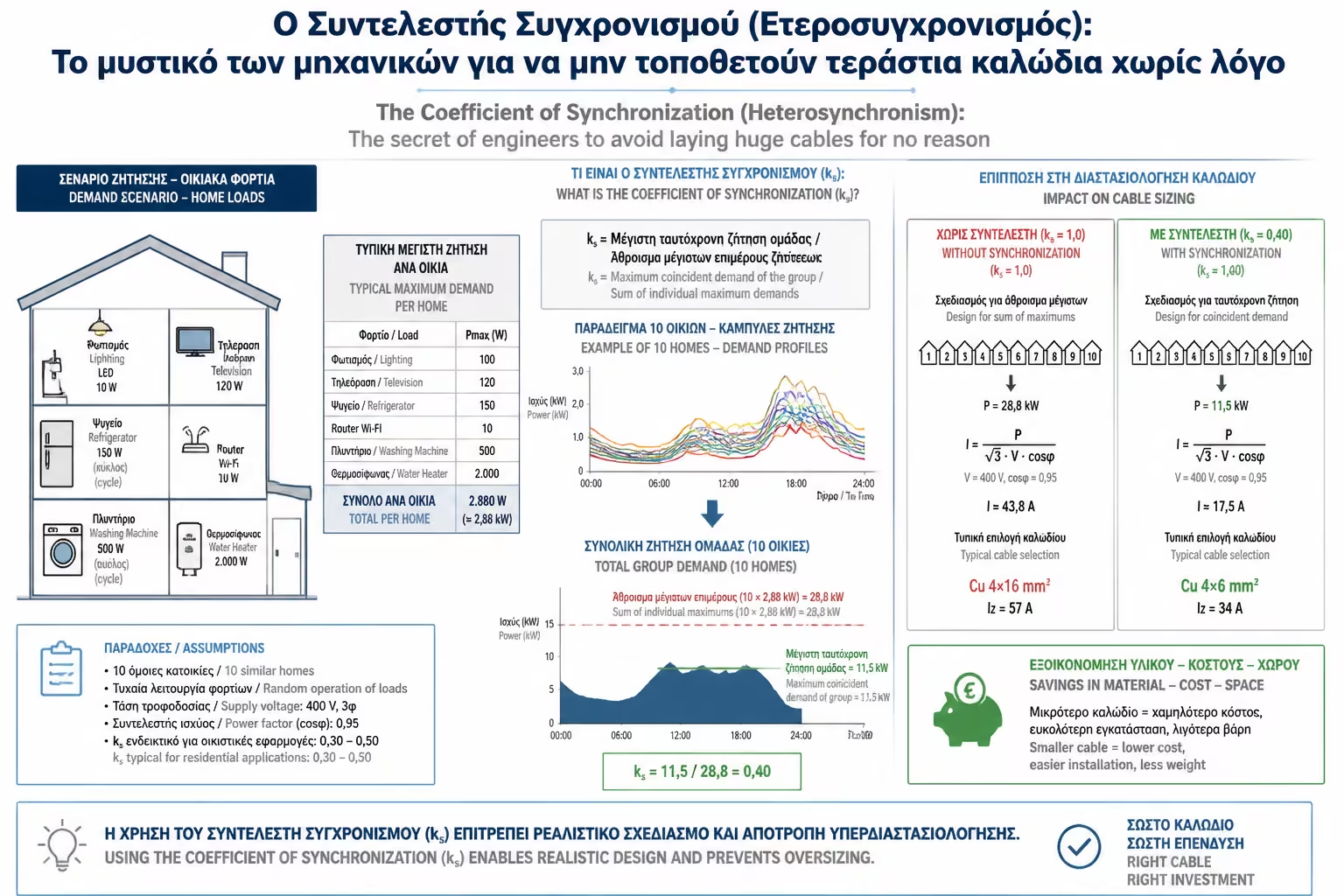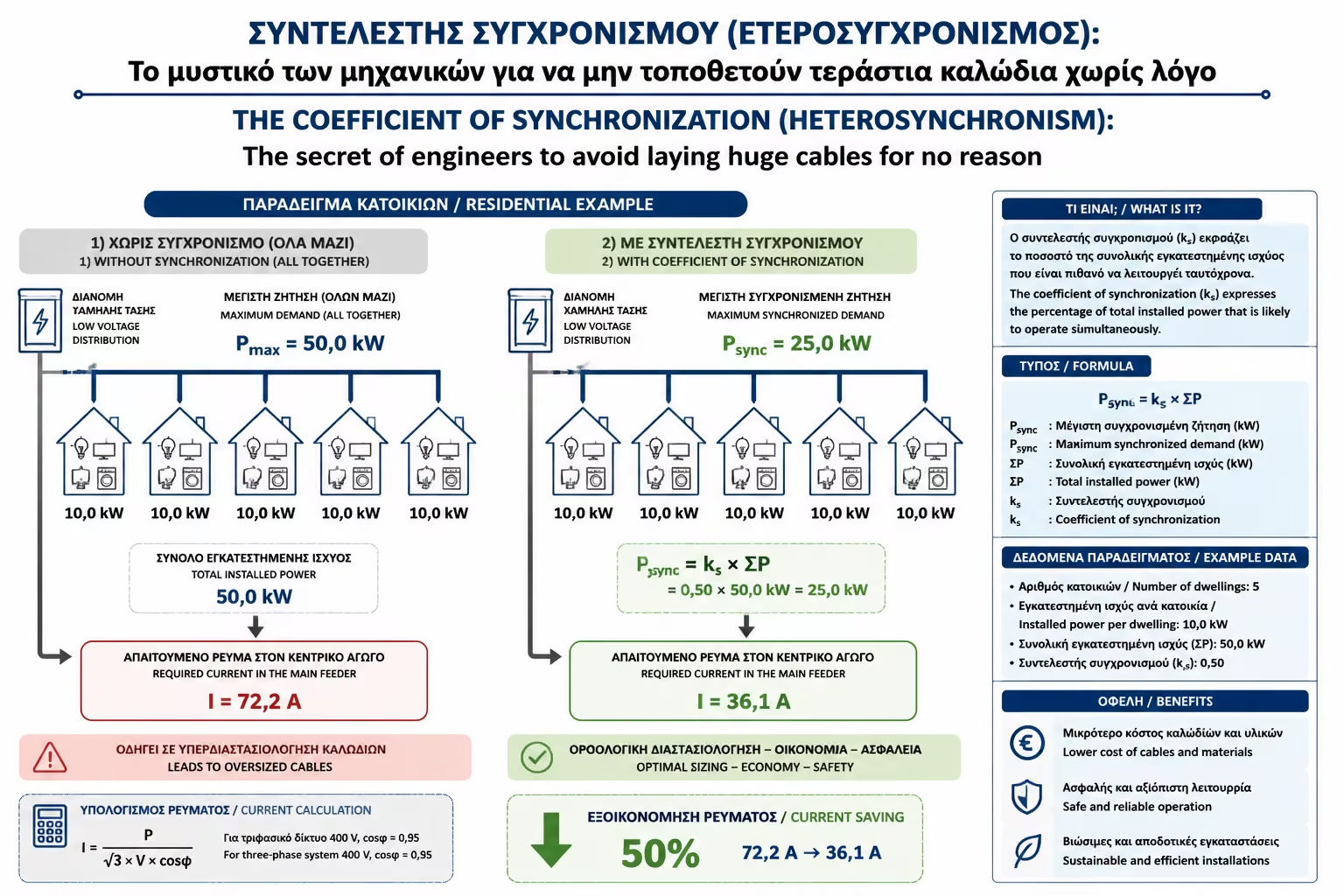
How does the coefficient decrease as the building grows:
The law of probability says that the more users there are, the less likely they will all be doing the same thing at the same time.
Let's do a thought experiment: Imagine a typical apartment building with 20 apartments. As we calculated in a previous chapter, each apartment has electrical appliances (ovens, air conditioners, water heaters) with a total power of approximately 15,000 Watts (15 kW).
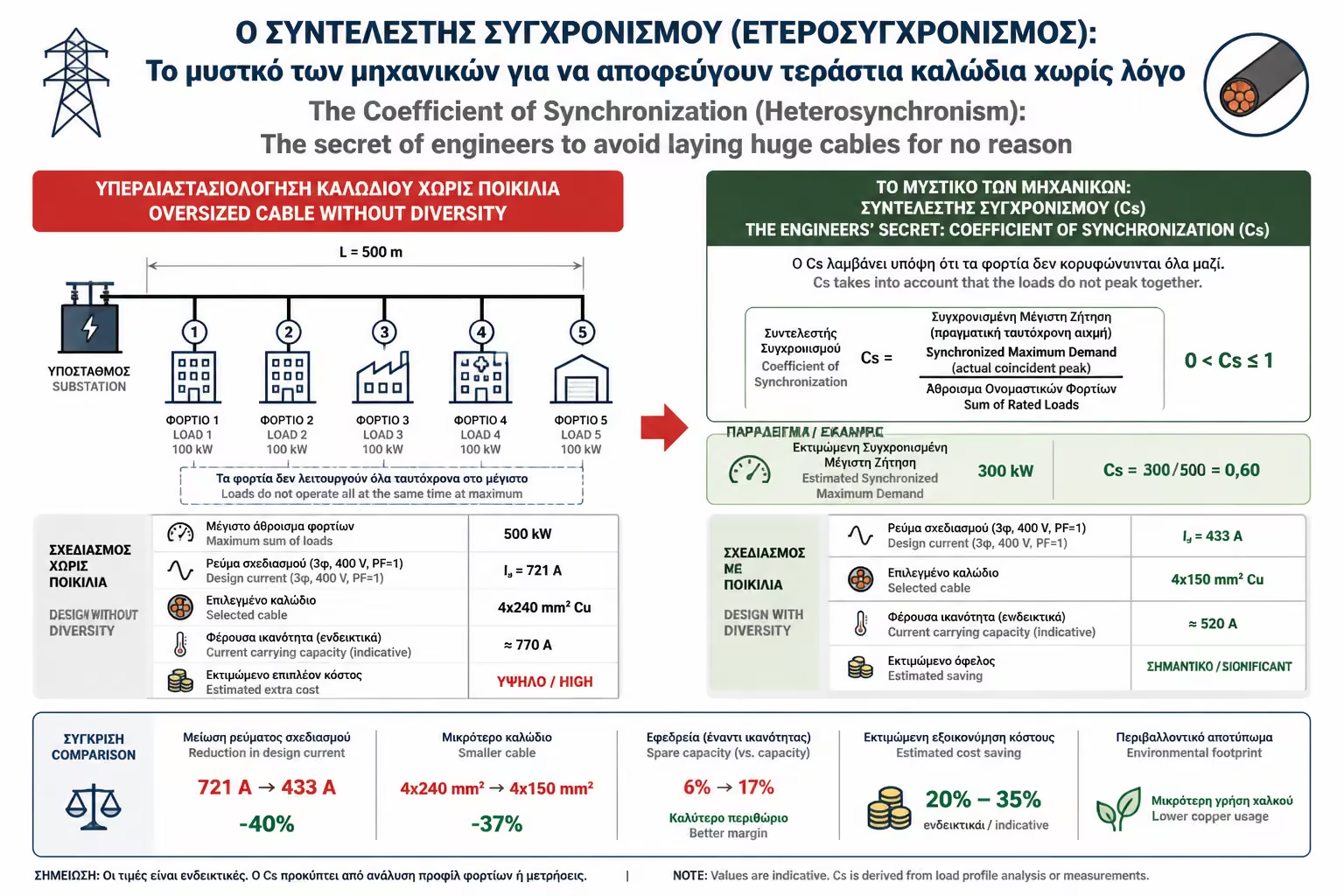
If we do simple Elementary math, the block of flats as a whole has installed power devices: 20 apartments x 15 kW = 300 kW. To carry 300 kW of electricity from the DEDDIE substation to the clock of the apartment building, we would need a copper cable the thickness of... a tree trunk! Such a thing would be technically impossible to pass through the streets and economically unapproachable (it would cost a fortune in pure copper).
And yet, if you look at the cable that powers your apartment building, it's the thickness of a human wrist. How is that possible? Did the contractors "discount" the insurance?
At all. The answer is hidden in the most beautiful application of statistics in the science of mechanics: The Coefficient of Synchronization (or Coefficient of Heterochronism, as it is often referred to in the Greek piatsa).
Electrical engineering is based on an indisputable truth of human behavior: It is statistically impossible for all devices, of all people, to operate at 100% of their power at the exact same time.
Even inside the same apartment, the oven does not draw 2,500W continuously. Once it reaches 200°C, the thermostat closes the resistance and "rests" the network for a few minutes.
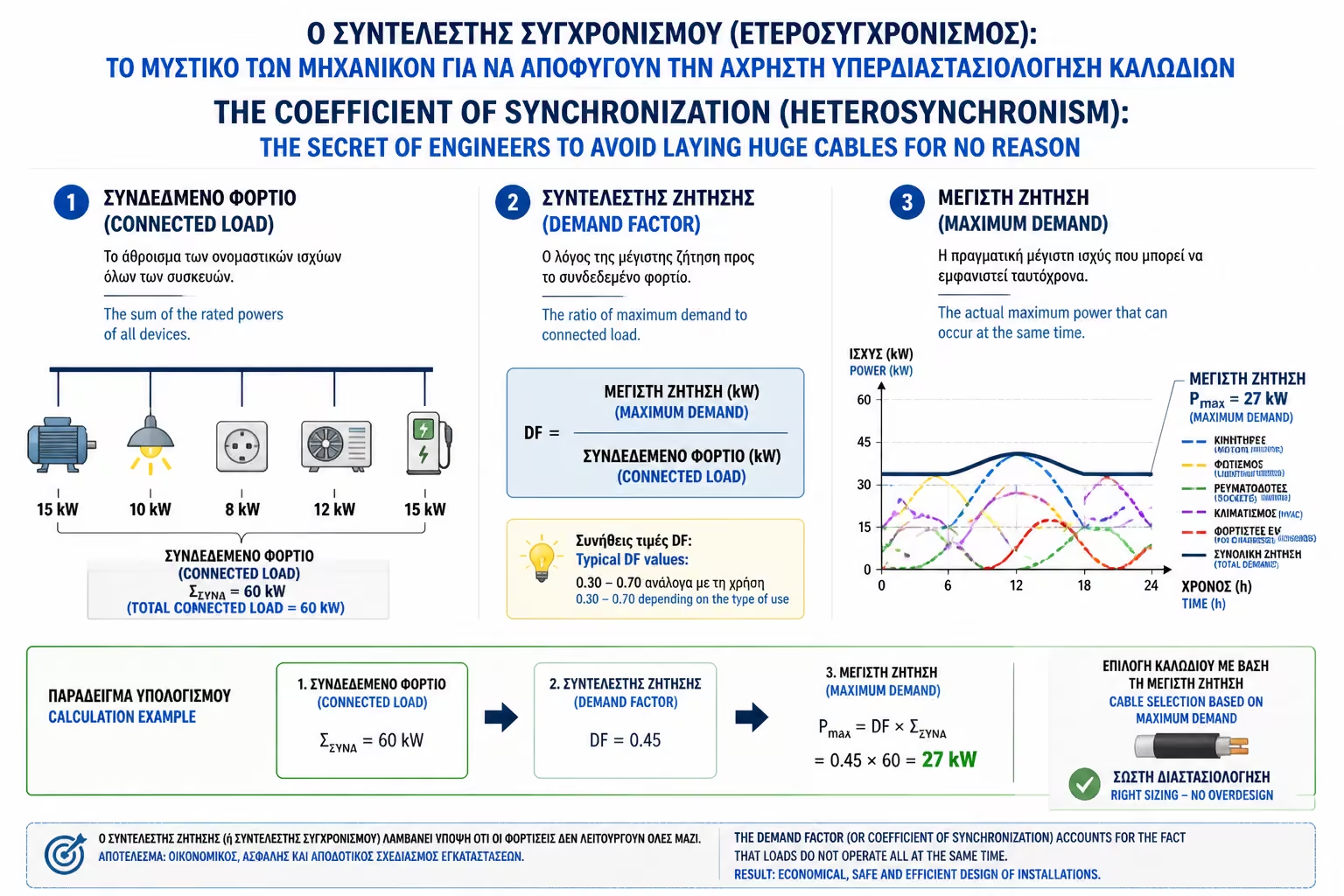
It is a number (multiplier) from 0 to 1, which expresses the probability that the loads of an installation will work at the same time.
Engineers take the total (theoretical) power of all devices and multiply it by this factor to find the Actual Maximum Demand. Based on this actual demand, they choose the thickness of the cables.
The law of probability says that the more users there are, the less likely they will all be doing the same thing at the same time.
The coefficient is usually 0.5 to 0.6 (We estimate that 50-60% of the devices work at the same time).
The overall coefficient drops to 0.4.
The coefficient can drop to 0.25 or 0.3. (From the 300 kW we theoretically produced at the beginning, DEDDIE calculates that in the most extreme case only 75 kW to 90 kW will be requested at the same time. Based on this, it sizes the neighborhood cables!).
Engineers apply this rule even inside your own electrical panel, depending on the type of circuit:
If you have 10 10W lamps in the living room, the coefficient is almost 1.0 (100%). Usually when you press the switch, they all light up together.
You have 5 sockets on the bedroom wall. Theoretically, each one can withstand 3,600W. Will the electrician put in a cable for 5 x 3,600 = 18,000W? No! The coefficient at the outlets is extremely low (eg 0.1 to 0.2). We know that usually the laptop will be in one socket, the mobile charger in the other and the remaining three will be empty.
The concept of simultaneity "saves" our pocket, but there are cases where its application is strictly prohibited by law, because the loads are "continuous". In these cases, the wiring must withstand 100% of the load for an infinite time (Factor = 1).
Such cases are:
The next time you look at your electrical panel or the central cable of your apartment building and ask yourself "Is this little thing holding up the whole house?", remember the Coefficient of Synchronization. It is not the "stinginess" of the electrician, but the impressive application of mathematical probabilities, which makes the electrification of the modern world economically and practically viable.
Next Step: We have seen that Electric Car Chargers "ruin" the synchronization statistic, threatening the cables. How does modern technology solve this problem without tearing down the walls? Continue to our guide: Dynamic Load Management: How the car charger "talks" to the house so it doesn't blow the fuse, to meet the smart "traffic policeman" of the current.
Return to category.
Go to categoryReturn to the central guide.
Go to guide