Voltage Drop in Cables: How it is calculated and why it is critical over
long distances (eg garden supply)
So far we have learned that the thickness of a wire (cross-section) is
chosen based on how much current we want to pass through it (the
Amperes) so that it does not heat up and melt. But what happens when the
current has to travel very far?
Imagine you want to power a warehouse in your garden, a water pump on
the estate, or put floodlights on the front door, 50 meters from the
house. Your electrician says he's going to put in "thick wire"
even though the projector burns minimal current. Is he trying to
overcharge you for materials?
No. It tries to fight the biggest enemy of long distances: Voltage Drop.
As engineers, let's take a look at why this phenomenon occurs, why it
burns the motors of your devices, and how we calculate it with simple
math.
1. What is Voltage Drop? (The Pipe Example)
Think of current like water running through a watering hose. If you
have a very long hose (eg 50 meters), the water pressure at the end of
it will be significantly less than the pressure at the tap. The water
was "tired" by rubbing against the walls of the pipe all
this way.
It is exactly the same with electricity. Copper wires are excellent
conductors, but they are not perfect. They have a small, natural
resistance. The longer the cable, the greater this resistance. As the
current travels through it, it loses some of its power (turns into
heat). The result? While your electrical panel sends out 230 Volts,
the edge of the garden may only get 190 Volts!
2. What are the risks? (Because we care)
If the voltage (Volt) reaching your device is too low, the problems
start:
Burning Electric Motors (Motors)
If you connect a water pump, lawnmower or washing machine to the end
of a very long cable, the motor will get low voltage. To get the
same power, it will have to "pull" more Amperes. It will
overheat and gradually burn out.
Lighting sub-function
Bulbs (especially older ones) will glow very dimly or flicker.
Energy Waste
The voltage that was "lost" along the way, turned into
heat in the soil. It is electricity that you pay to DEDDIE, but it
never reached your device.
3. The Permissible Limits (What the Legislation Says)
The electrical regulations (such as the ELOT HD 384 / 60364 standard)
are strict. They stipulate that the voltage drop from the DEDDIE meter
to the furthest socket or lamp in your home must not exceed certain
percentages:
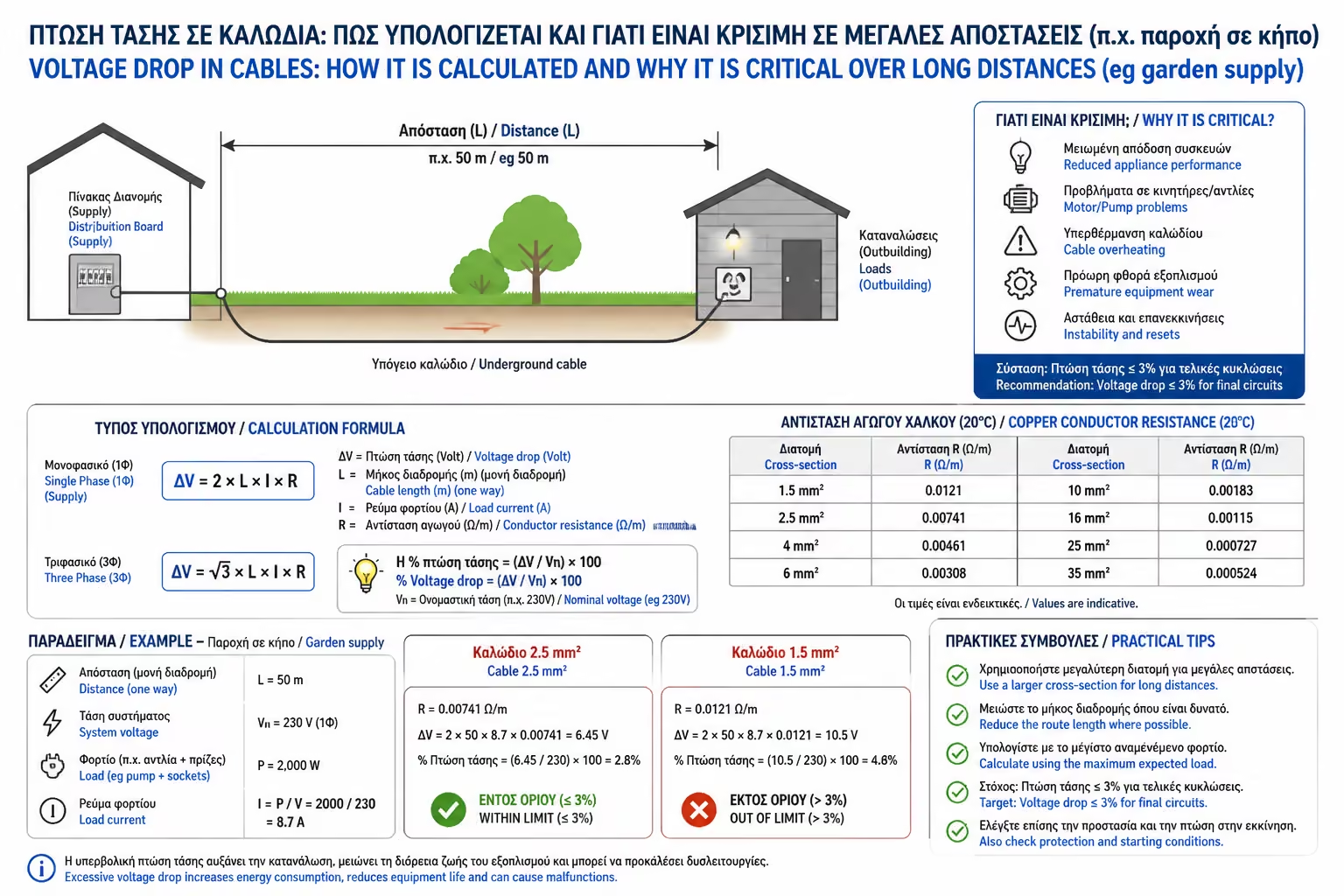
For lighting
Maximum allowable drop of 3% (ie, maximum 6.9V loss at 230V).
For other uses (sockets, motors)
Maximum allowable drop of 5% (ie, maximum 11.5V loss at 230V).
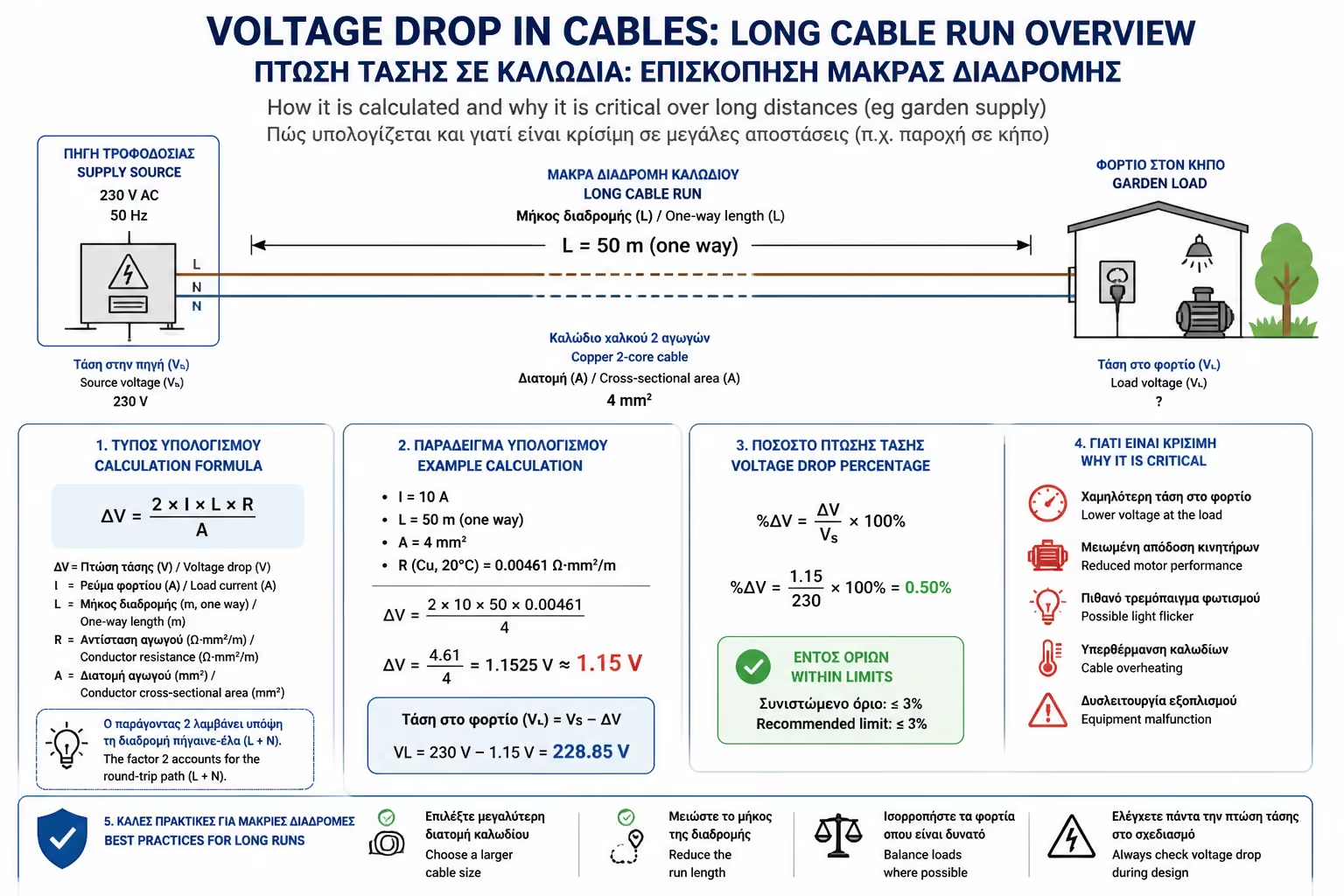
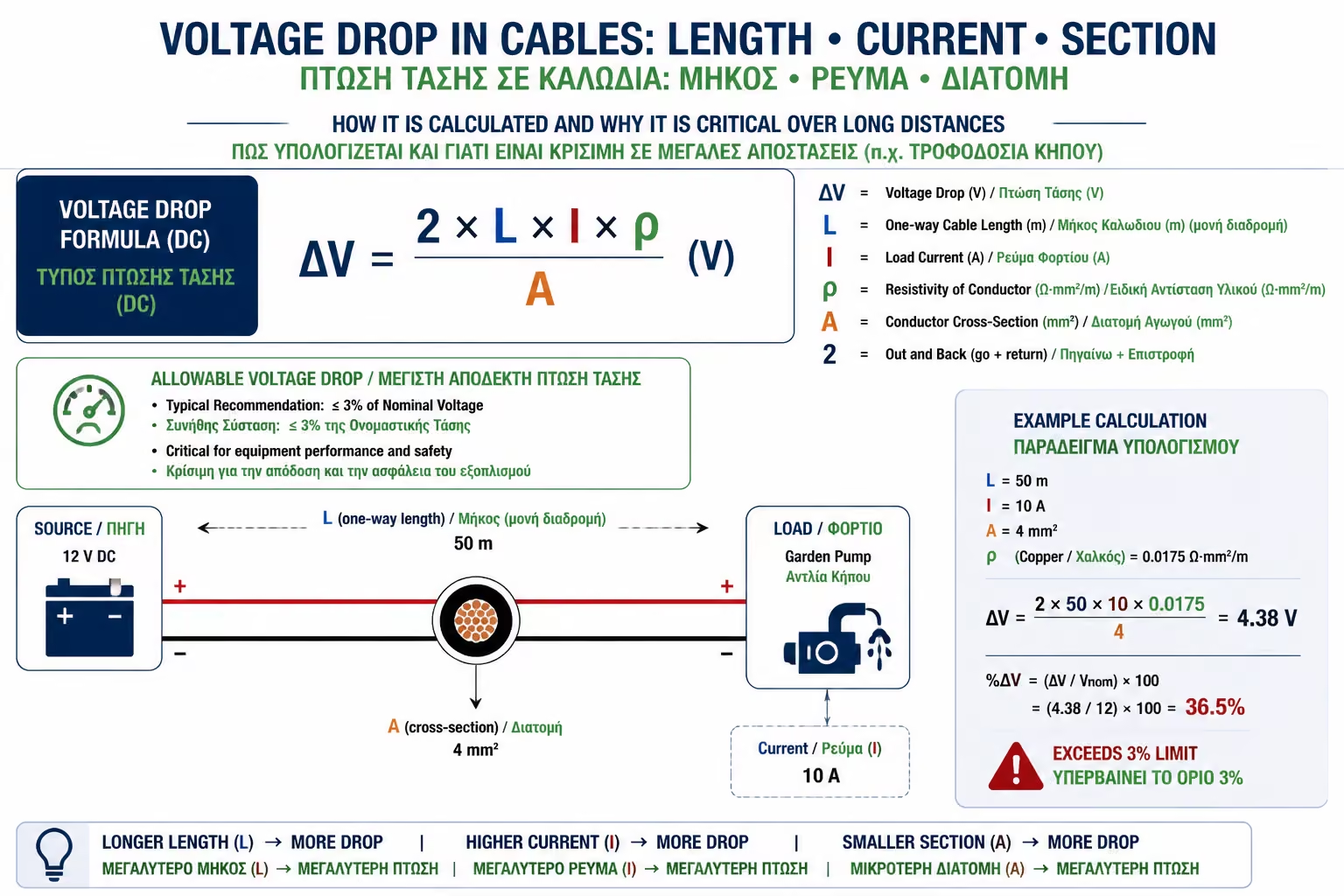
4. How It Is Calculated (Engineer's Mathematics)
To find how many Volts we will lose, we use the following formula (for
single-phase alternating current). The equation includes the current,
the distance and the thickness of the wire:
Delta U = frac2 cdot I cdot rho cdot LS
Where:
(Note: The multiplication by 2 is done because the current has to go
from the Phase and return from the Neutral, so it travels twice the
distance).
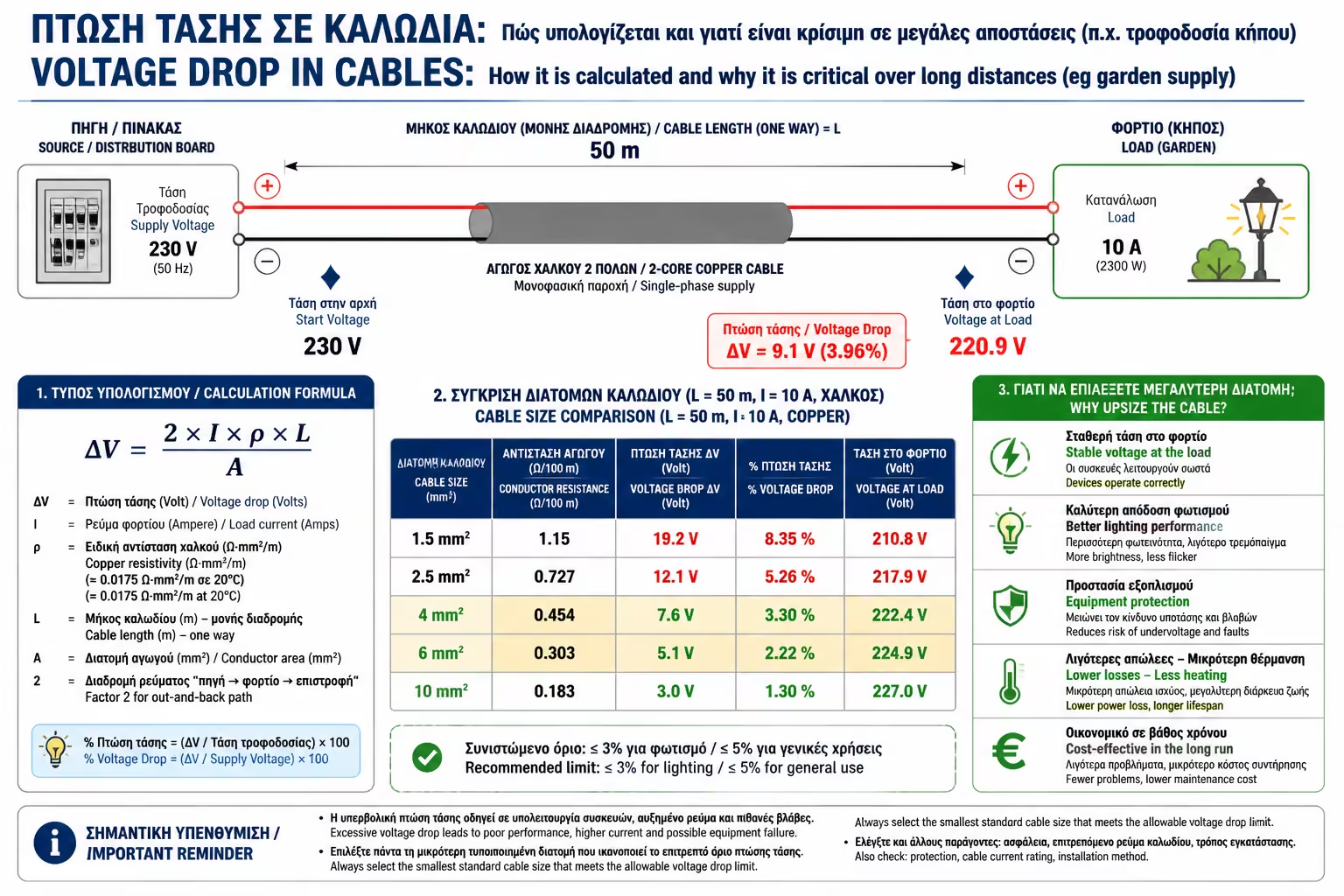
Scenario 1 (We put in the standard 2.5 mm² plug cable): Delta U =
frac2 cdot 16 cdot 0.0175 cdot 502.5 Result: Delta U = mathbf22.4
Volt. What does this mean? You lost 22.4V! Only 207.6 Volts reach your
warehouse. The loss is almost 10%, more than twice the permissible
limit (5%). Your tools will be dangerously strained.
Scenario 2 (We put thick cable 6.0 mm²): Delta U = frac2 cdot 16 cdot
0.0175 cdot 506.0 Result: Delta U = mathbf9.3 Volt. What does this
mean? The loss fell to 4%. We are within the legal limits and our
machines are absolutely safe!
Delta U
The Voltage Drop in Volts (the number we are looking for).
I
The Current that the device will draw in Amperes.
rho
The resistivity of copper (a constant approximately equal to 0.0175
Omega cdot mm^2 / m).
L
The length of the cable in meters (m).
S
The cross-section (thickness) of the wire in square millimeters
(mm^2).
A Practical Example (The Storage in the Garden)
You want to pull a supply to a warehouse, 50 meters away. You'll be
working powerful power tools there, so you want a full 16 Amperes
(3,680W) supply.
5. The Golden Rule for Distances
As we proved with mathematics, the solution to the voltage drop is one:
The longer the distance, the thicker the cable must be, even if the
current we need is small. A larger "tube" (larger
cross-section S) offers less resistance to the current, allowing it to
reach its destination without loss.
Summarizing
In closing this sub-pillar of calculations, remember: Electricity is not
just "putting wires together to light a light bulb". It
requires foresight. When planning exterior lighting, end-of-lot garage
door supplies, or security camera lines, discuss the voltage drop factor
with your installer to ensure longevity of your expensive equipment.