Time 02
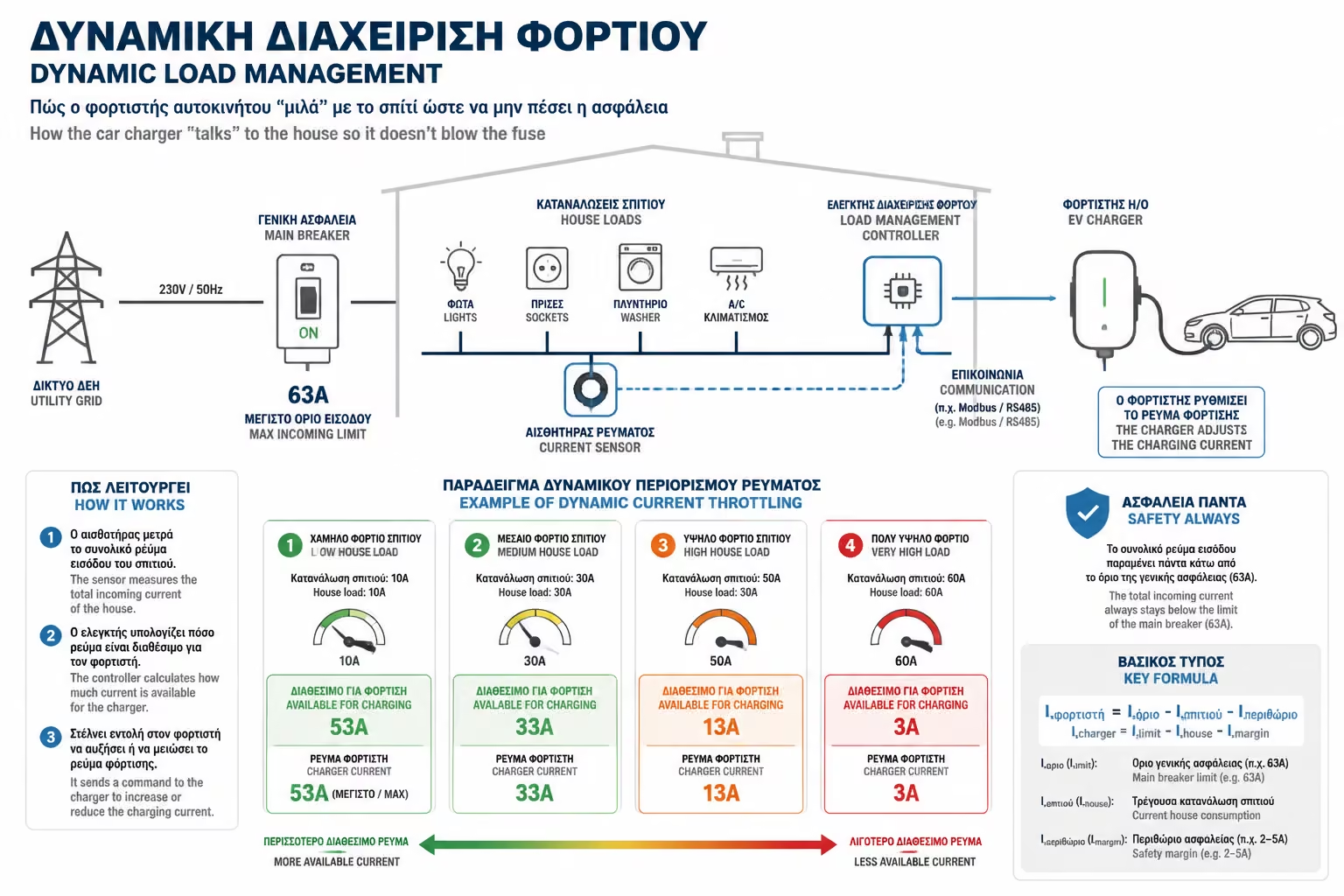
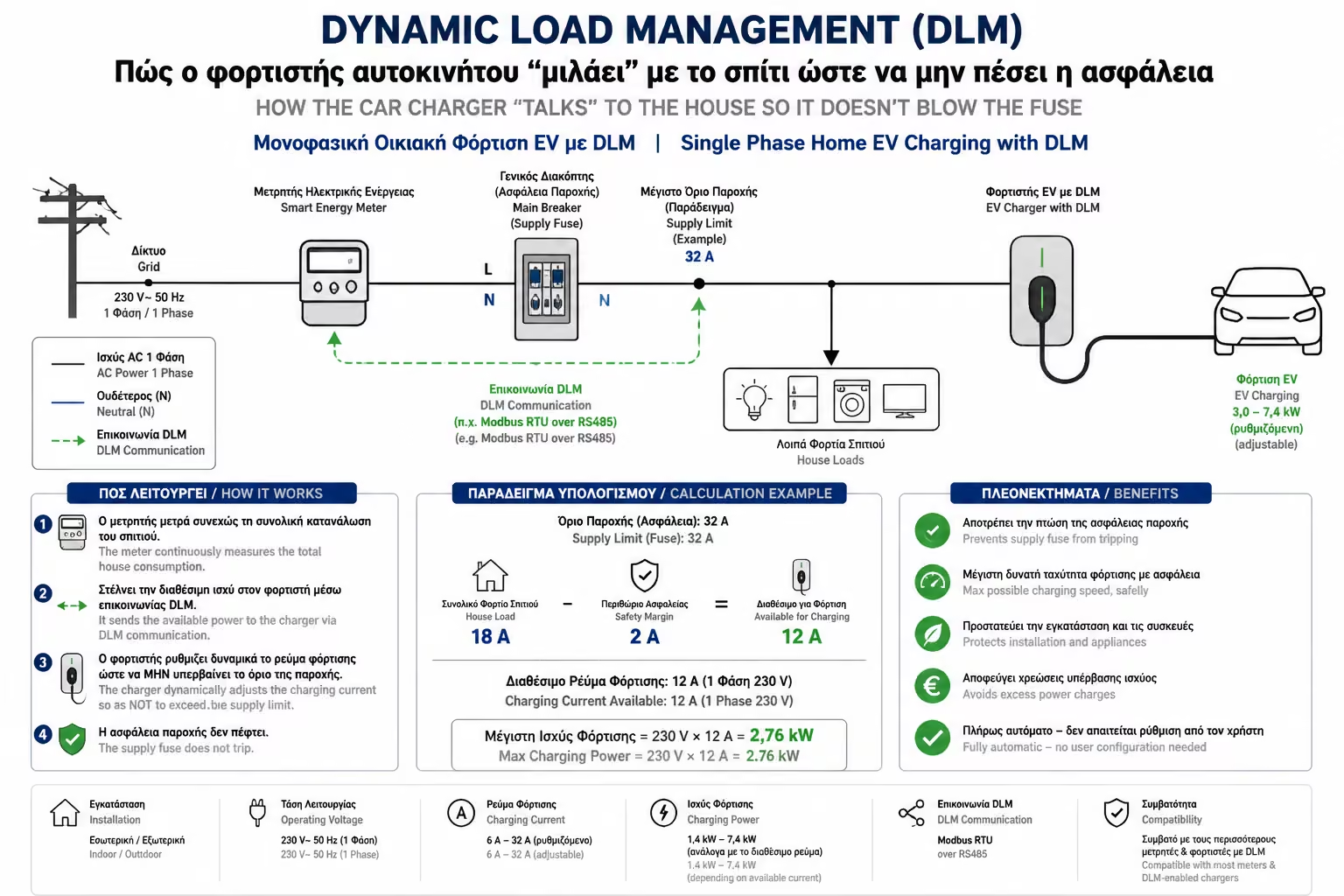
00 (Dawn): You are sleeping. The house consumes only 500W (fridge, router, stand-by). The "traffic warden" sees that 7,500W are left over. He sends a signal to the car: "Charge to the limit!". The EV charges fast with 7,400W.
In the previous chapter we saw how the Coefficient of Synchronization "saves" the electrical network, calculating that we do not turn on all the devices at once. But the revolution of Electric Vehicles (EVs) came to destroy this rule.
When you connect an electric car to the Wallbox in your garage, it will request 100% of its available power (eg 7,400W or 11,000W) and draw it continuously, without any interruption, for 8 to 10 hours. If during this charging, you turn on the oven or the water heater, the central fuse of the house will "blow" from the overload.
In the past, the only solution was to pay a fortune to DEDDIE to bring you huge cables and industrial power. Today, technology has a much more elegant and inexpensive answer: Dynamic Load Management (DLM or DLB). As engineers, let's see how this smart power meter has become an absolute must-have for any modern installation.
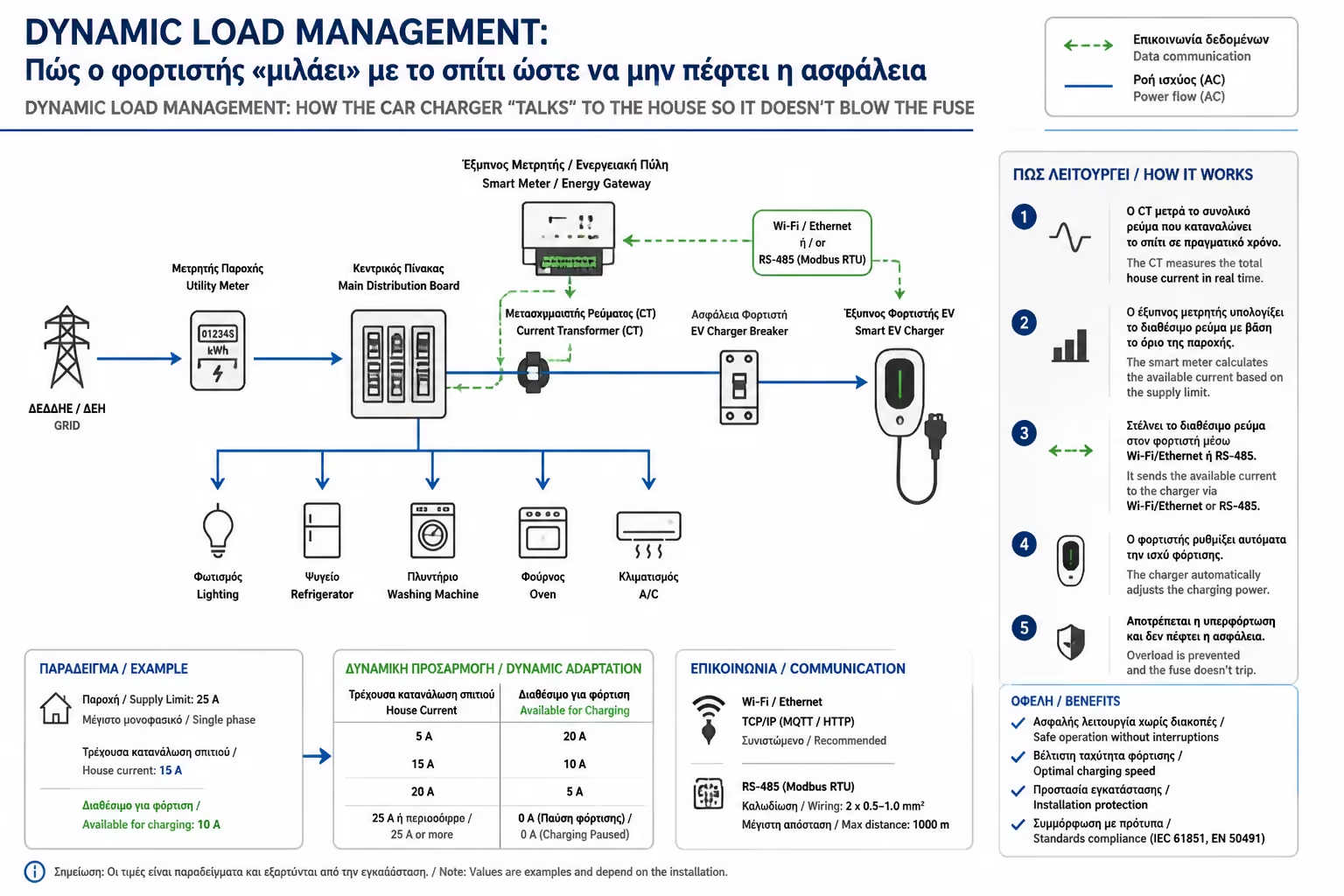
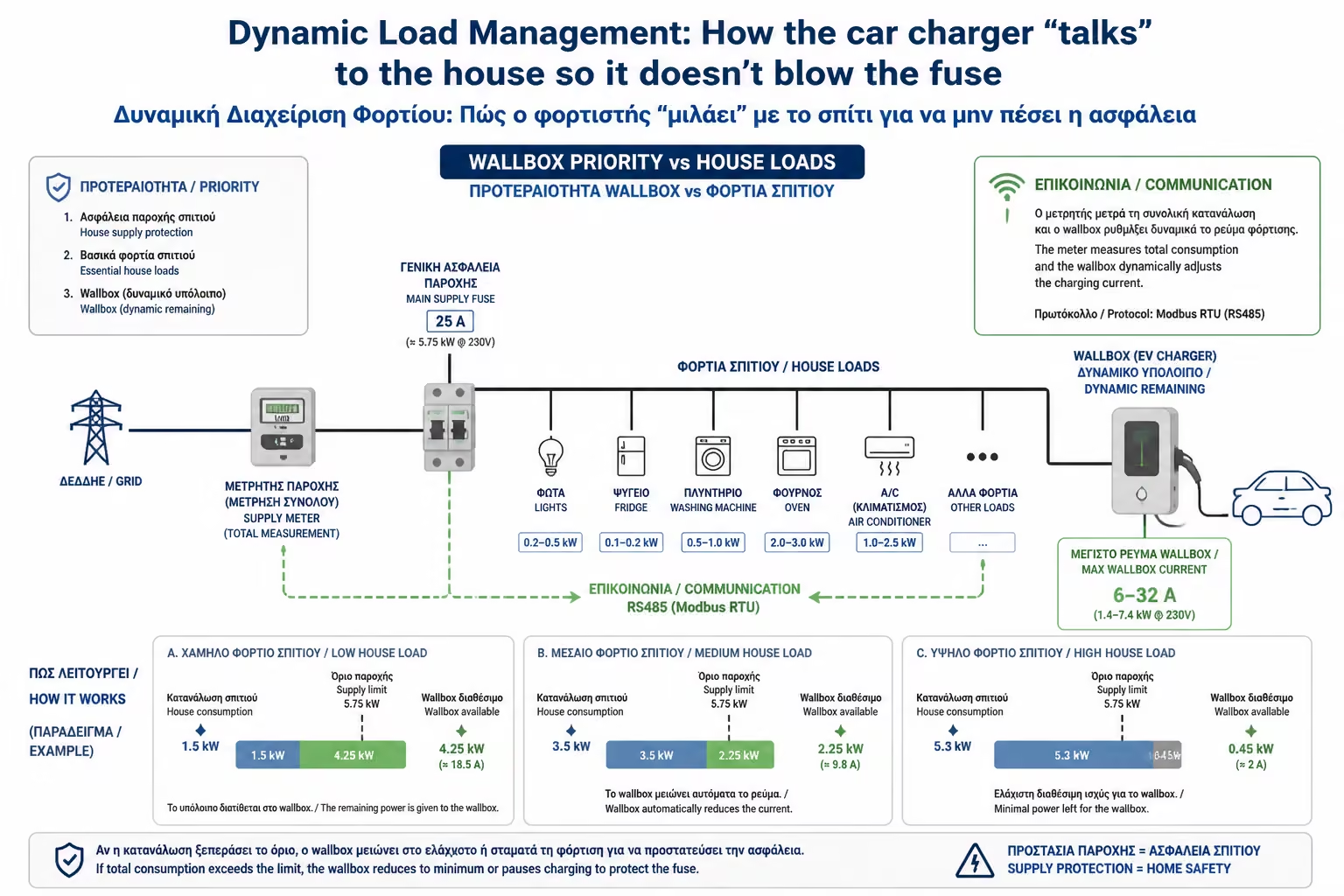
Think of DLM as an invisible, tireless traffic policeman standing inside your electrical panel. Its only job is to constantly monitor how much electricity the house is consuming at that moment, and give the "excess" to the car.
The Scenario (Example in a house with 8,000W supply):
00 (Dawn): You are sleeping. The house consumes only 500W (fridge, router, stand-by). The "traffic warden" sees that 7,500W are left over. He sends a signal to the car: "Charge to the limit!". The EV charges fast with 7,400W.
00 (Breakfast): You wake up and turn on the water heater (4,000W) and the coffee maker (1,500W). The house now requires 6,000W. If the car continued to draw 7,400W, the overall would drop instantly (6,000 + 7,400 = 13,400W > 8,000W).
The traffic warden perceives the change in fractions of a second. It immediately sends a new signal to the Wallbox: "Brake! The house needs power. Only get 1,500W now." The car charge is automatically reduced, the fuse does not fall, and you take a comfortable bath. As soon as you turn off the heater, the car picks up speed again.
For this system to work, the "dumb" electrical panel must acquire "eyes" and "voice".
DLM's technology not only saves single-family homes, but is the only sustainable solution for modern apartment buildings and office buildings.
Imagine an apartment building with 10 parking spaces in the driveway. Even if all 10 tenants buy an electric car and have them all charge together at 6:00 PM in the evening, the central cable of the apartment building will melt!
The solution is called Cluster DLM (Group Dynamic Management): All chargers in the pilot are connected to a common "brain". The administrator defines that the pilot has a maximum limit e.g. 40,000W in total.
In the market you will also hear the term Static Load Management. Beware, they are not the same thing:
The electrician goes into the charger's menu and permanently "locks" it to a low power (eg 16A instead of 32A) to make sure the general never falls. The downside? The car will always charge slowly, even in the early morning when the whole house is closed and there is plenty of power available.
It is constantly adapting. It takes advantage of every available Watt per second, ensuring the maximum possible charging speed, while offering 100% safety from overloads.
If you plan to install an electric car charger (or a large heat pump with equivalent support), the word DLB / DLM is the most important thing to look for in the technical specifications. The extra cost of the smart meter (usually €100 - €200) is negligible compared to the money you will save by avoiding a huge increase in power from DEDDIE.
Next Step: We have seen how we intelligently manage the loads (kW) so that the fuse does not fall. But there is also a "hidden" current that circulates in the cables, which does not produce work, but heats up the lines and brings... fines from PPC (mainly to professionals). Continue to the next, highly technical (but simplified) article: Power Factor (cosφ): What it is, why PPC fines you and how it is corrected with capacitors.
Return to category.
Go to categoryReturn to the central guide.
Go to guide