The Most Energy-Growing Home Appliances: Which Lines Need the Most Attention (and Their Own Fuses)

After seeing how the factories manage the huge loads, it's time to return to the everyday life of our home.

All electrical devices are not created equal. Your cell phone charger (20 Watts) and electric water heater (4,000 Watts) may draw power from the same panel, but their behavior on the grid is night and day.

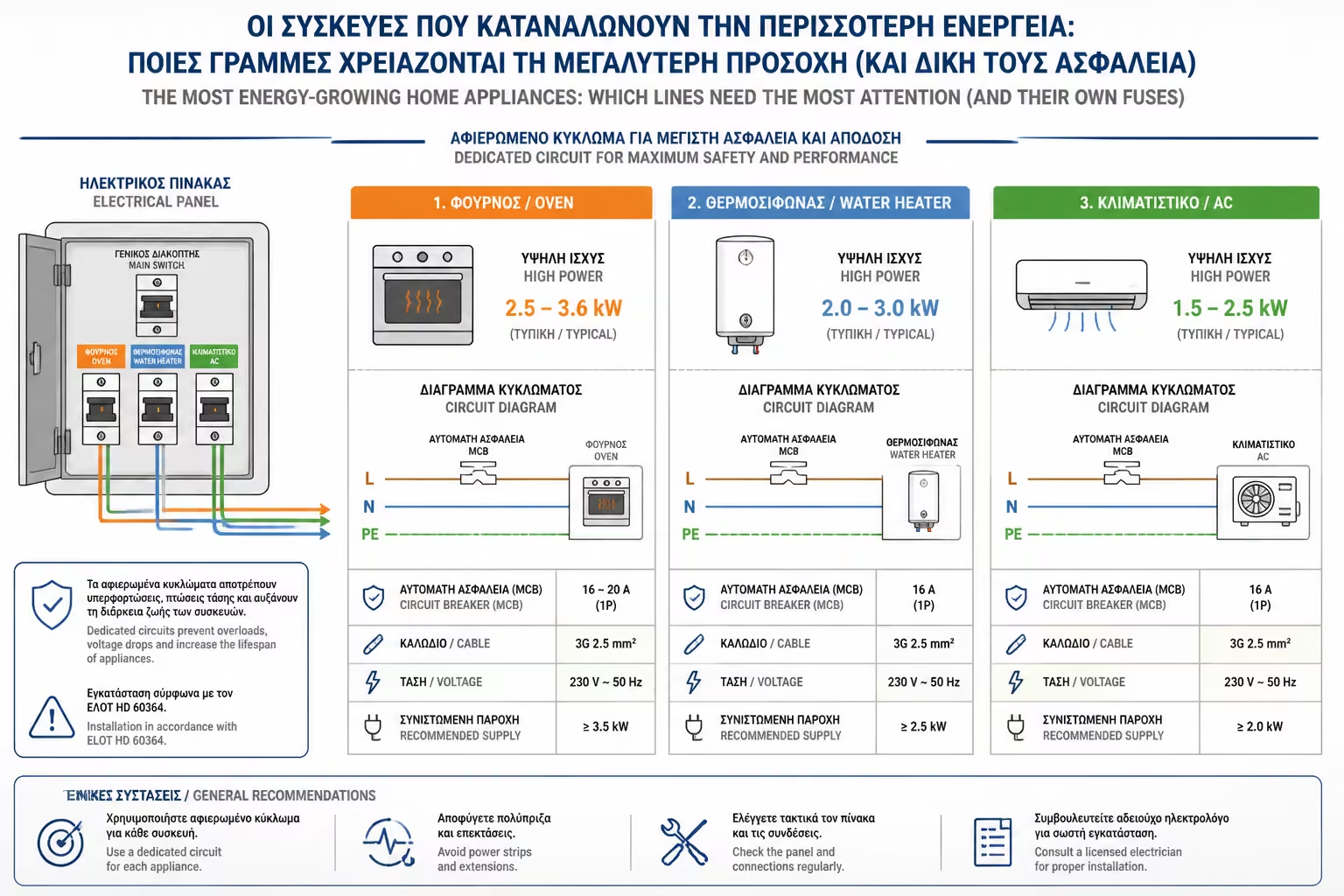
When designing (or renovating) a home's electrical installation, engineers and electricians deal with the "heavy weights" of the home in a special way. They don't make them share the same cable with the rest of the sockets, but make them an Exclusive Line (VIP lane).

Let's see what this means in practice, which are the 5 most power-hungry devices that demand this respect, and what are the dangers of connecting them incorrectly.

What is an "Exclusive Line"?

A typical 16 Amp fuse (for living room outlets) controls a wire that runs through the wall, goes to the first outlet, then continues to the second, third, and so on. All these outlets share the fuse's available 3,600 Watts.

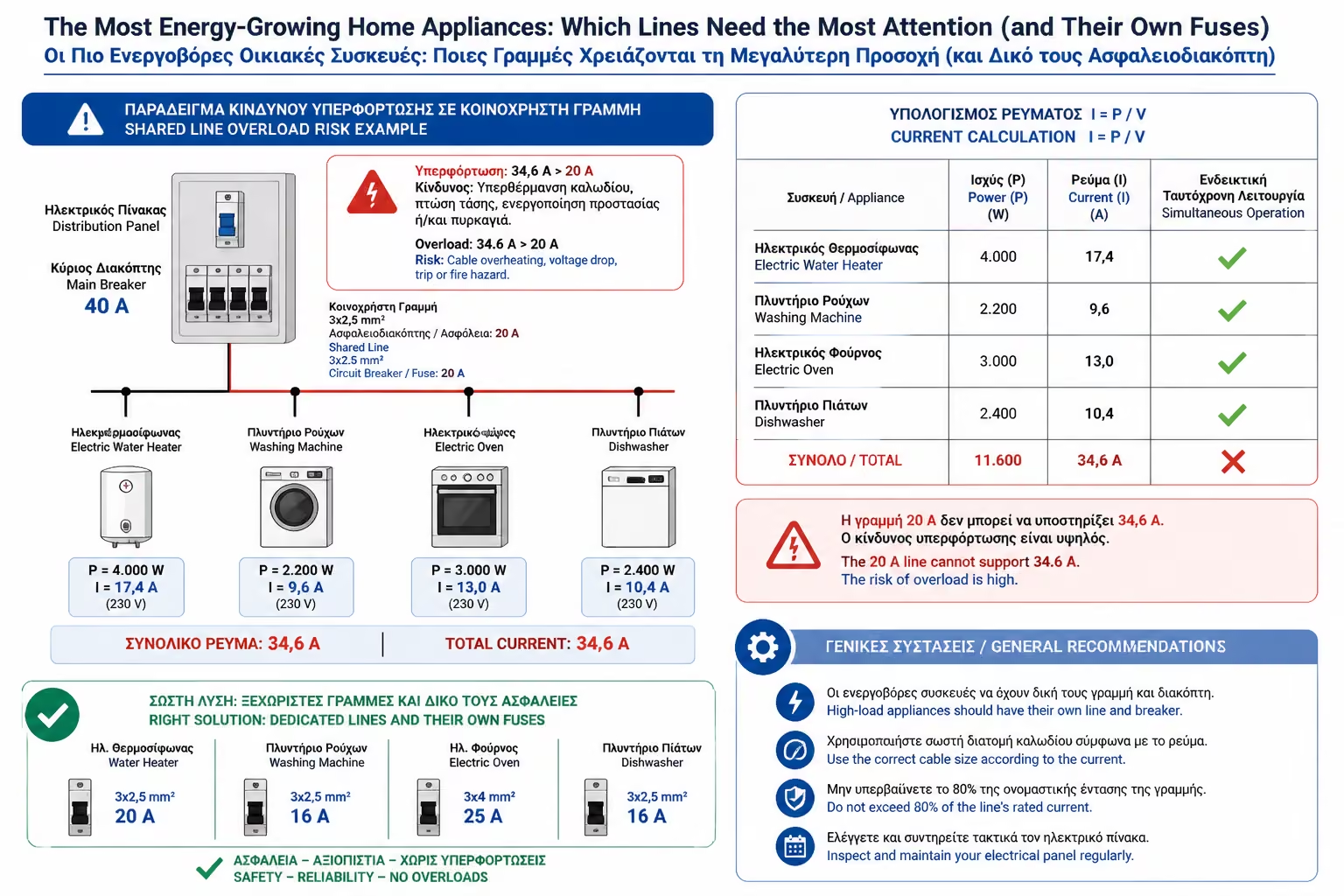
Exclusive Line means that a wire starts from the electrical panel and ends in ONE AND ONLY ONE outlet (or directly to the appliance). It has its own, exclusive security. The reason? If you put a "monstrous" device to share power with others, the fuse will keep blowing or, even worse, the cable will melt from overload.

Illustration for What is an "Exclusive Line"?

The 5 "Giants" of the House

Illustration for The 5 "Giants" of the House

If you are renovating, make sure the electrician has provided a separate fuse and cable for each of the following devices:

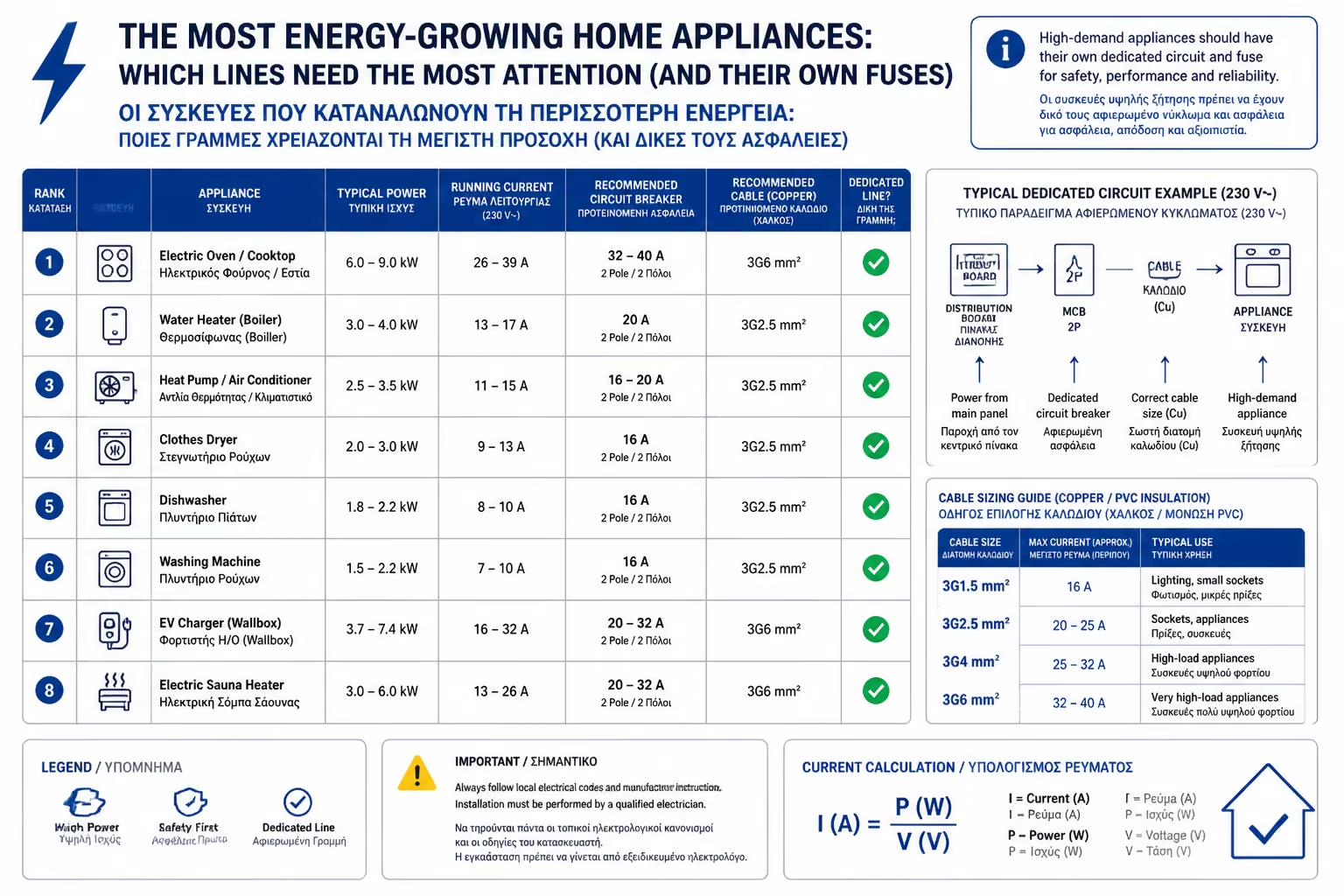
1. The Electric Water Heater (The King of Consumption)

It is by far the most "voraciously" classic home appliance. Power: A typical resistance water heater (even solar) consumes 4,000 Watts. The Requirement: Because it works continuously for 30-40 minutes, its cable gets hot. It strictly requires a thick 4.0 mm² cable and a dedicated 20 Ampere fuse (C20) on the panel. Also, due to its permanent contact with water, its grounding must be impeccable.

2. The Electric Kitchen (Oven & Hobs)

Cooking requires huge amounts of heat energy. The Power: If you turn on the oven and 2-3 eyes at the same time, the kitchen can ask for 6,000 to 8,000 Watts. (If you have induction hobs, maybe even more). The Claim: It's the line with the thickest cable in the house. It requires a cross-section of at least 6.0 mm² and a massive fuse of 25 Amperes (C25) or 32 Amperes (C32). It never plugs into an ordinary socket, but connects directly to the wall with a special heavy-duty terminal.

3. The Laundry & Dryer

The washing machine does not burn electricity to spin the drum (the motor is small). It burns electricity to heat the water! The Power: When its resistance is working, it draws about 2,000 to 2,500 Watts. The same applies to classic clothes dryers. The Requirement: They must have their own line with 2.5 mm² cable and 16 Amperes fuse. The common mistake:* Many people put the washer and dryer in the same double outlet in the bathroom (which is often a shared line). If you turn them on at the same time (2500W + 2500W = 5000W), the 16 pin fuse will blow immediately. It takes TWO separate lines from the table.

4. The Dishwasher

Like the washing machine, its job is to heat water. Power: About 2,000 Watts. The Requirement: 2.5 mm² cable and 16 Amperes fuse. The hidden danger:* In old kitchens, owners simply put the dishwasher in line with the counter outlets (where the coffee maker and toaster go). If the washing machine (2,000W) is running and you turn on the kettle (2,000W), you are overloading the line.

5. The Big Air Conditioners (A/C)

Here we have to make a distinction between the small bedroom air conditioners and the "beasts" of the living room. Power: A small 9-ar (9,000 BTU) Inverter consumes about 800W. A large 18- or 24-gauge in the living room can reach 2,000 - 2,500 Watts at start-up or in big colds. The Requirement: While 9's can (marginally) fit into a reinforced room outlet, manufacturers and regulations require each air conditioner to have its own, independent line straight from the panel (1.5mm² or 2.5mm² cable with 10A or 16A fuse), mainly to avoid creating interference and voltage drops in other appliances.

The Rule of Renewal

If you go into the process of digging up walls and changing wires, the golden rule of modern electricity is one: "Abundance in the lines."

The cost of running 3-4 extra wires (separate lines) from the panel to the kitchen during construction is negligible. But if the house is done and you find you can't turn on the dishwasher along with the toaster, the cost and hassle to fix it will be enormous.

Check the legend of your electrical panel. If you do not see the words "Washing Machine", "Dishwasher", "Air Conditioner 1, 2, 3" on separate insurances of their own, your installation is suffering from contractor discounts.

Next Step: We talked about the thickness of the cable (cross-section) so that it doesn't melt from the heat. But what happens when the cable has to travel far? For example, if you want to power the garden shed 50 meters away? Continue to the last Category B technical guide: Voltage Drop in Cables: How it's calculated and why it's critical over long distances (eg garden supply).

Illustration for The Rule of Renewal

Related Articles

Preview