Pure Beer (Active Power - kW)
It's the current that your machines actually use to produce useful work (turn motors, light bulbs). It is what quenches your thirst.
If you own an average home, you've probably never heard of the term "Reactive Power" or "cosφ". But if you are the owner of a craft shop, bakery, hotel or a large business premises, these conditions may cost you hundreds or even thousands of euros every year in "hidden" fines on your electricity bills.
To understand this extremely important phenomenon, we'll put aside the complex equations of alternating current for a moment and enlist the most famous (and successful) example in electrical engineering: the beer glass.
Imagine ordering a large draft beer. The waiter brings you the glass full. But the glass does not only hold pure beer (liquid). It also has a thick layer of foam on top.
In electrical engineering, things work just like this:
So what is Coefficient of Power (cosφ)? It is the ratio (fraction) of Pure Beer to the Whole Glass.
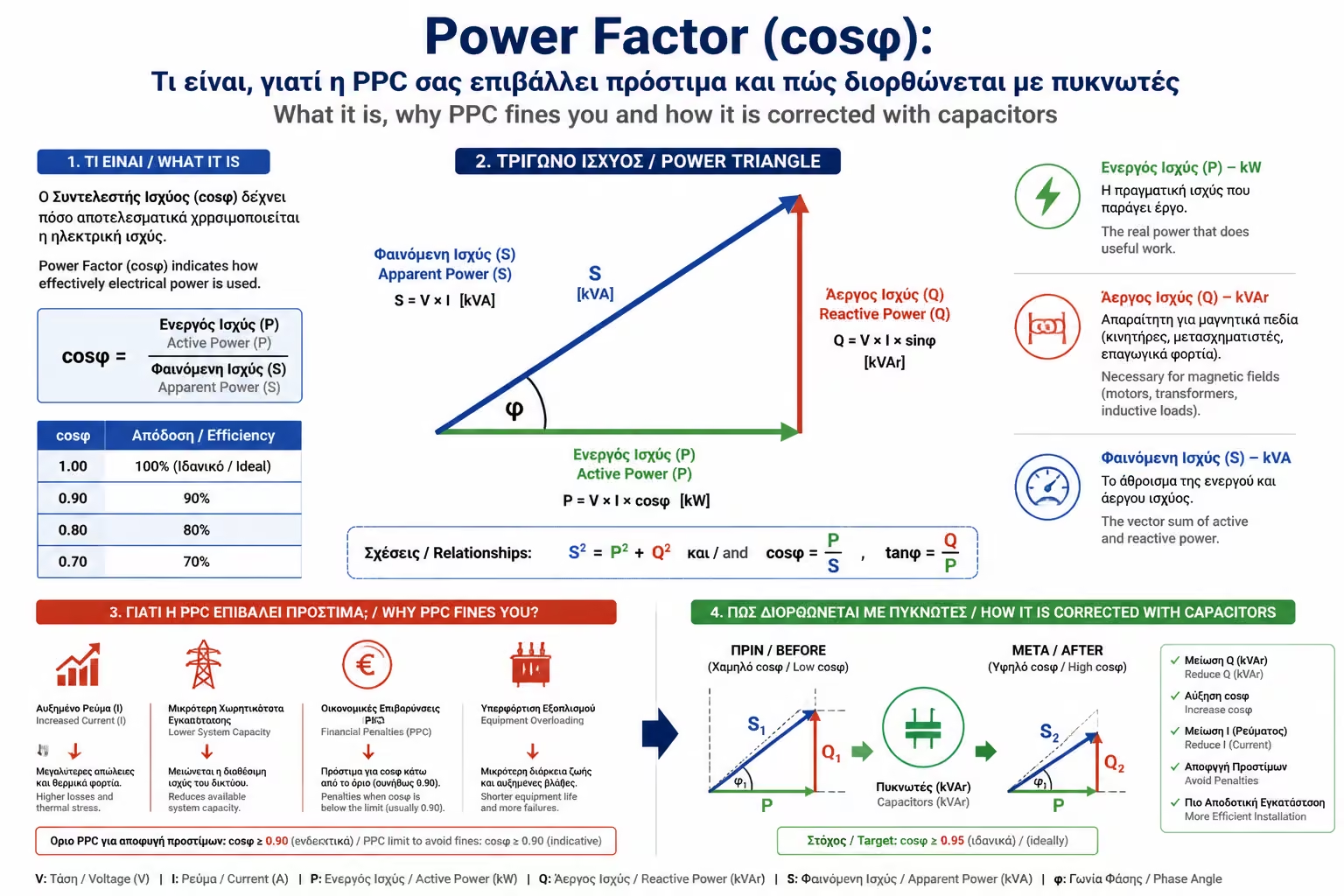
It's the current that your machines actually use to produce useful work (turn motors, light bulbs). It is what quenches your thirst.
It is a "junk" current. It does not produce work. But it is absolutely necessary to create the magnetic fields inside the motors (just like foam is an integral part of a good keg).
It is the total current (Beer + Foam) that DEDDIE is forced to send you through its cables to operate your factory.
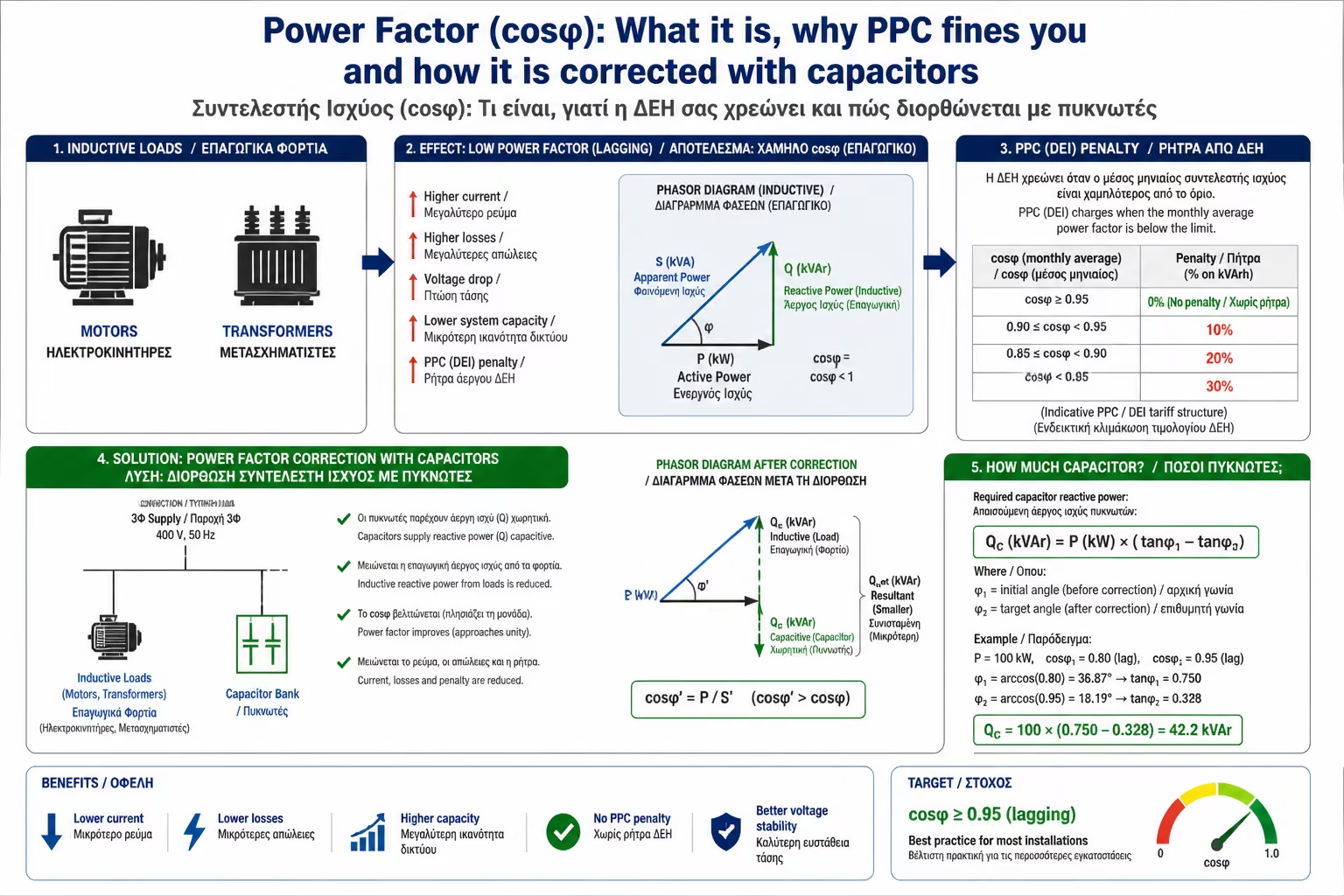
As we said, your motors (refrigerators, pumps, air conditioners, elevators) need Reactive Power (the foam) to build their magnetic fields and turn. If you don't give it to them, they will "pull" it themselves from the DEDDIE network.
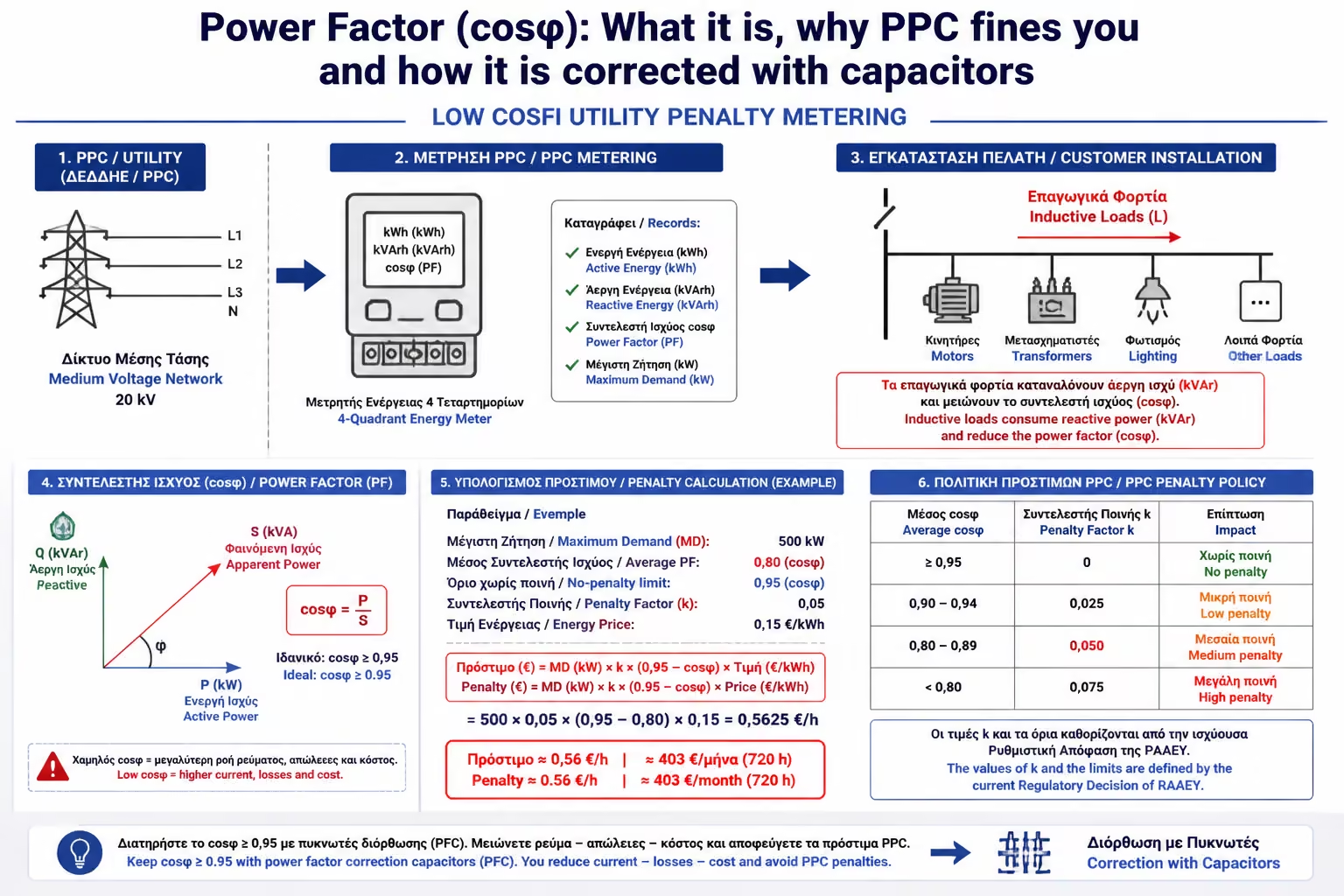
Here begins the problem of the Provider (PPC, Protergia, Heron, etc.): While your meter records (and you pay) only the net Active Power (kW), DEDDIE is forced to "fat" its central cables and put huge transformers in the neighborhood, so that it can send you BOTH Active AND Reactive power (the whole kVA).
Reactive power travels through the city's wires, overheating them, creating voltage drops and taking up valuable grid space, without producing work!
(Note: On residential tariffs, this charge does not usually apply as homes do not have as many industrial motors. It mainly applies to C22 business tariffs, industrial and large utilities).
In order to force businesses to "get together", DEDDIE sets a limit. In Greece, if the power factor of your business falls below 0.85 (ie you have a lot of "foam" and cause the grid to "scramble"), it imposes a heavy surcharge (penalty) on your electricity bill.
Since our motors require Reactive Power (magnetism) to work, but we don't want to pull it from the DEDDE cables to avoid a fine, what do we do?
We produce it locally in our factory!
This is achieved by installing Capacitor Banks next to the central electrical panel of the business. Capacitors act like "Reactive Power generators".
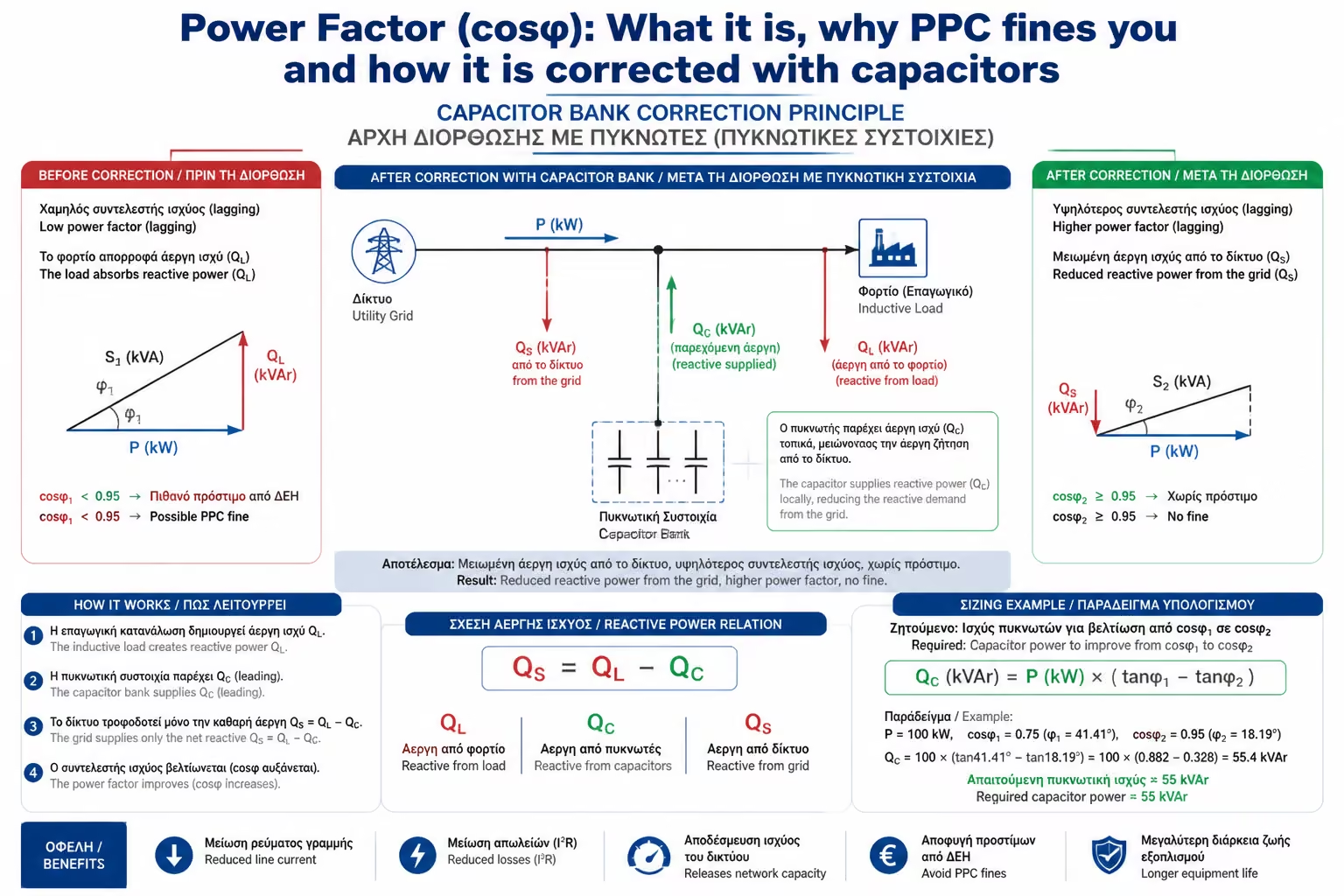
When the big motor of your fridge kicks on and asks for magnetism ("foam"), the smart panel controller understands. Instantly, it connects the capacitors. The capacitors "feed" the motor with the reactive power it needs.
The engine runs perfectly, but the DEDDE meter out on the road "sees" absolutely nothing! The city grid only sends you the useful Active Power (pure beer). The cosφ coefficient of the company rises to the ideal 0.95 - 0.99.
Installing a central bank of capacitors (PFC - Power Factor Correction) is probably the most cost-effective investment a business can make.
Idle power is an invisible enemy to the budget of any business. If you run a business, get your hands on the latest utility bill. Look for the line that says "Power Factor (cosφ)" or "Idle Charge". If the number is below 0.90, you are losing money every day. Call your mechanic for a compensation study as soon as possible.
Next Step: We've seen the "heavy" industrial loads. Returning to our home, what are the devices that suck the most energy and require their own dedicated space in the electrical panel? Continue to our guide: The Most Energy-Growing Home Appliances: Which Lines Need the Most Attention (and Exclusively Their Own Fuses).
Return to category.
Go to categoryReturn to the central guide.
Go to guide