
The new loads are sustained
Unlike many domestic appliances, they can draw high current for long continuous periods.
Heat pumps and EV wallboxes change the energy behaviour of a home fundamentally. They do not merely add one more appliance; they introduce large and often continuous loads that demand a different way of thinking about the supply, the protective devices and the physical capacity of the board.
The common mistake is to assume that the installer will simply pull one extra cable from a free breaker. In reality the supply capacity, the available module space and the compatibility of differential protection all need to be assessed first.
When that is not done properly, the panel becomes the bottleneck of the installation. That is why adding a heat pump or an EV charger correctly starts with the board, not with the machine sitting outside or in the garage.
In practice, the guide "Panel Upgrade for a Heat Pump or EV Wallbox: Space, Capacity and Protection Requirements" is not just theory. It works as a practical checklist for owners, supervisors and installers who want to verify that the decision, the pricing and the technical execution of the work genuinely stand up to professional scrutiny.
Large new loads such as a 7.4 kW wallbox or a heat pump can occupy a significant share of the available supply for long periods. In a marginal single-phase installation that leaves very little headroom for the rest of the home's everyday loads.
The correct approach is to calculate the total demand and decide whether a capacity increase or conversion to three-phase supply is required. If that stage is skipped, the system ends up operating at the edge and trips the main protection in real use.
Within the topic "Panel Upgrade for a Heat Pump or EV Wallbox: Space, Capacity and Protection Requirements", the section "1. Supply capacity is the first limit that must be checked" acts as a critical control point. If that level of thinking or execution is missing, the installation may look complete on the surface while remaining technically vulnerable, awkward to use or more expensive to maintain in the future.
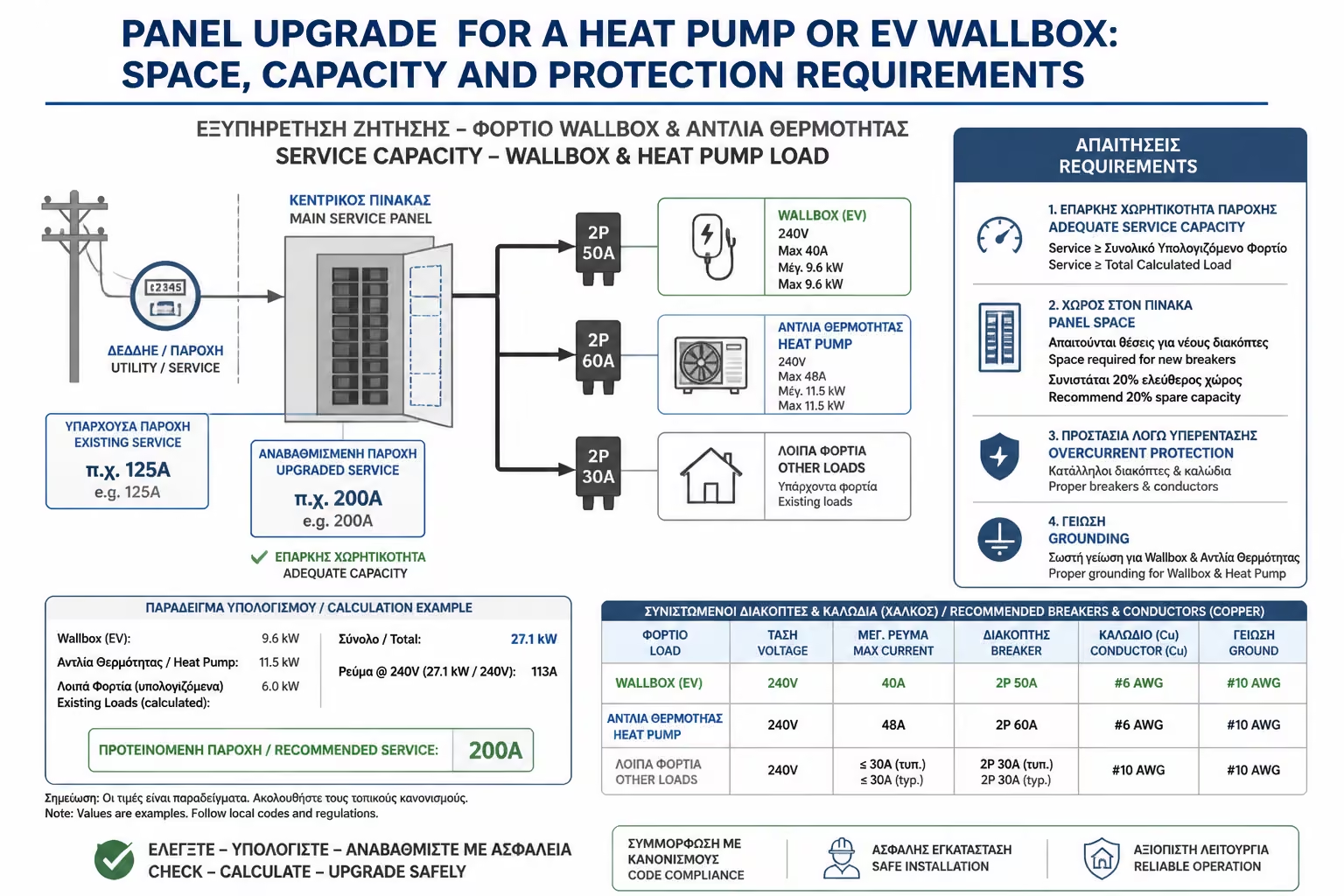
Unlike many domestic appliances, they can draw high current for long continuous periods.
An EV charger can consume almost all of the available margin.
The network must be checked before the equipment is installed.
In many cases both the utility connection and the panel must evolve together.
Adding these systems is not just a matter of one extra breaker. Separate overcurrent protection, an independent RCD, indicators, meters or auxiliary modules may all be needed. A board that is already full rarely accommodates this properly.
That is why a serious upgrade often involves a larger enclosure or even an auxiliary sub-panel. The aim is not to squeeze devices into every available millimetre, but to preserve thermal and operational breathing space inside the system.
Within the topic "Panel Upgrade for a Heat Pump or EV Wallbox: Space, Capacity and Protection Requirements", the section "2. The board needs real module space for the new hardware" acts as a critical control point. If that level of thinking or execution is missing, the installation may look complete on the surface while remaining technically vulnerable, awkward to use or more expensive to maintain in the future.
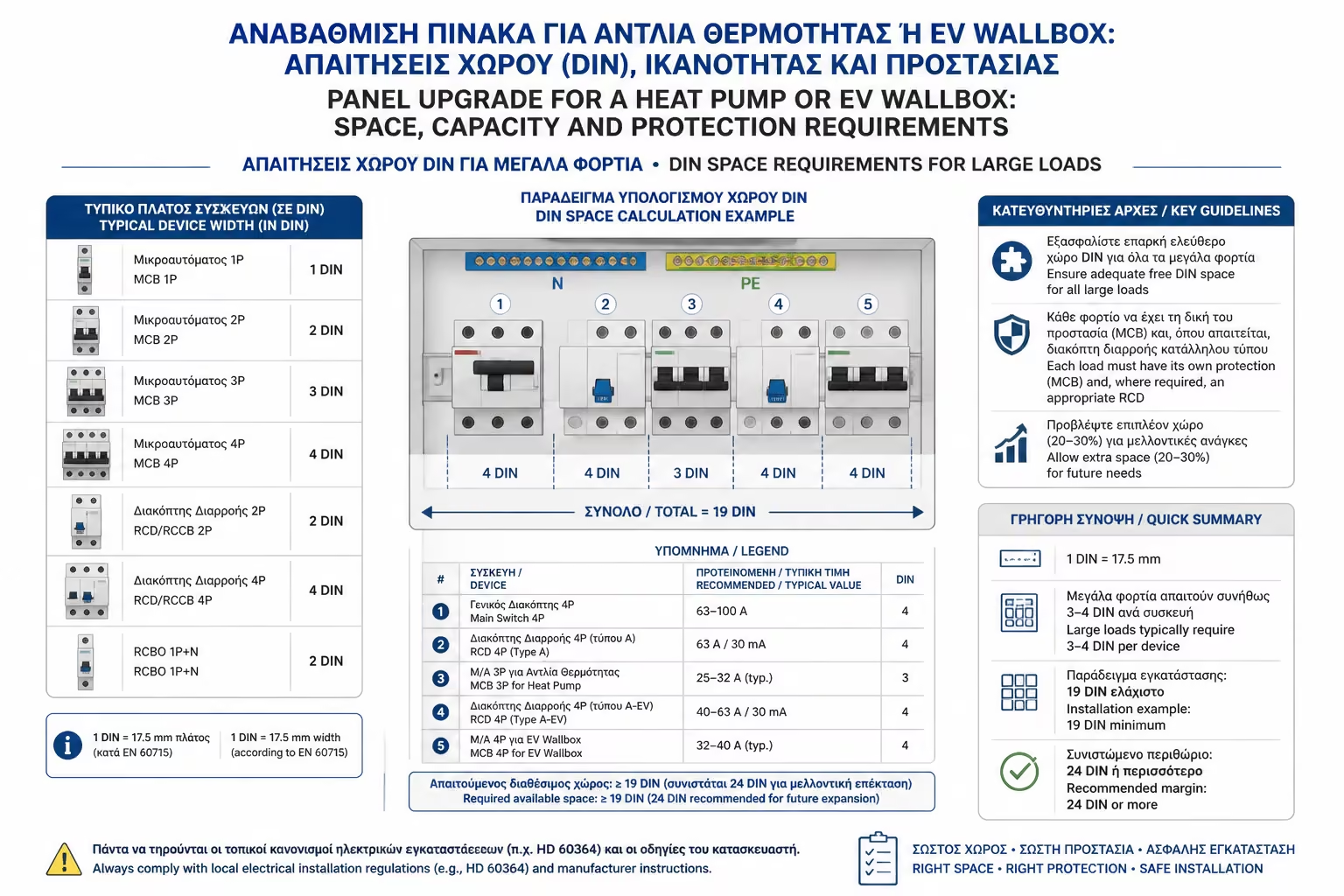
The load also brings significant additional protection requirements.
Without it, a safe upgrade becomes impossible or improvised.
It is often the mature solution for clean layout and future expansion.
Dense arrangements increase the importance of spacing and ventilation.
Certain inverter loads and EV charging systems create leakage forms that an old basic RCD does not handle correctly. That is why Type A, Type F, Type B or EV-specific protection appears in the discussion depending on manufacturer requirements and applicable standards.
If the wrong RCD is fitted, the result may be nuisance tripping or inadequate protection. In either case the installation is wrongly designed, regardless of how expensive the main equipment itself may be.
Within the topic "Panel Upgrade for a Heat Pump or EV Wallbox: Space, Capacity and Protection Requirements", the section "3. Wallboxes and heat pumps may require specialised RCD protection" acts as a critical control point. If that level of thinking or execution is missing, the installation may look complete on the surface while remaining technically vulnerable, awkward to use or more expensive to maintain in the future.
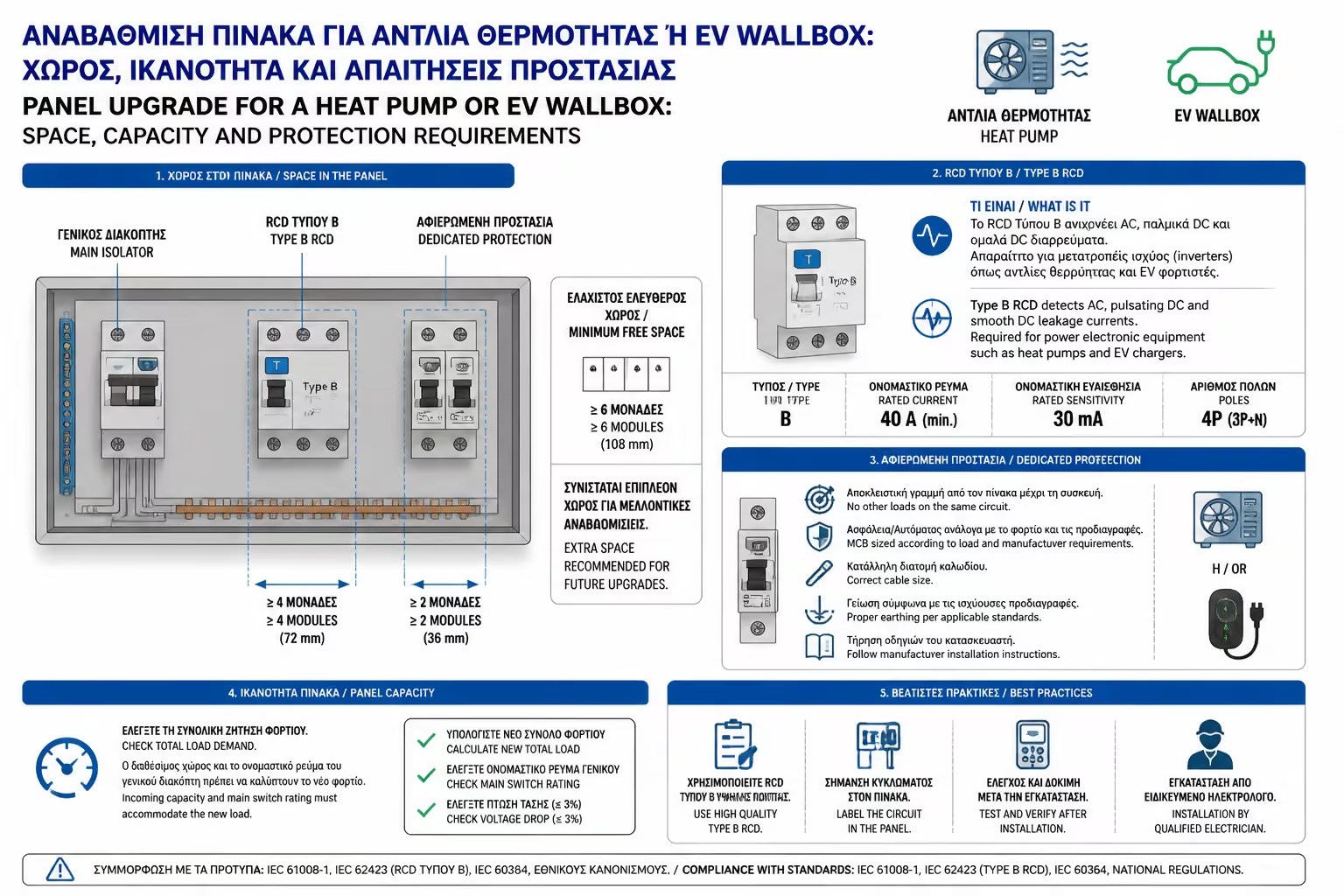
It must be selected by technical compatibility, not installer habit.
EV charging introduces distinct DC-related residual-current issues.
Protection logic must follow the electronic nature of the machine.
Even if the system appears to work, the safety architecture may be wrong.
Where the supply cannot easily be upgraded, dynamic load balancing works as a coordination system. It measures the total household demand and temporarily reduces EV charging or another flexible load when the service is approaching its limit.
That does not always replace the need for a future upgrade, but it can make the transition much smoother. It still requires extra equipment, proper configuration and reliable communication between the panel and the controlled device.
Within the topic "Panel Upgrade for a Heat Pump or EV Wallbox: Space, Capacity and Protection Requirements", the section "4. Dynamic load balancing makes limited supplies more usable" acts as a critical control point. If that level of thinking or execution is missing, the installation may look complete on the surface while remaining technically vulnerable, awkward to use or more expensive to maintain in the future.
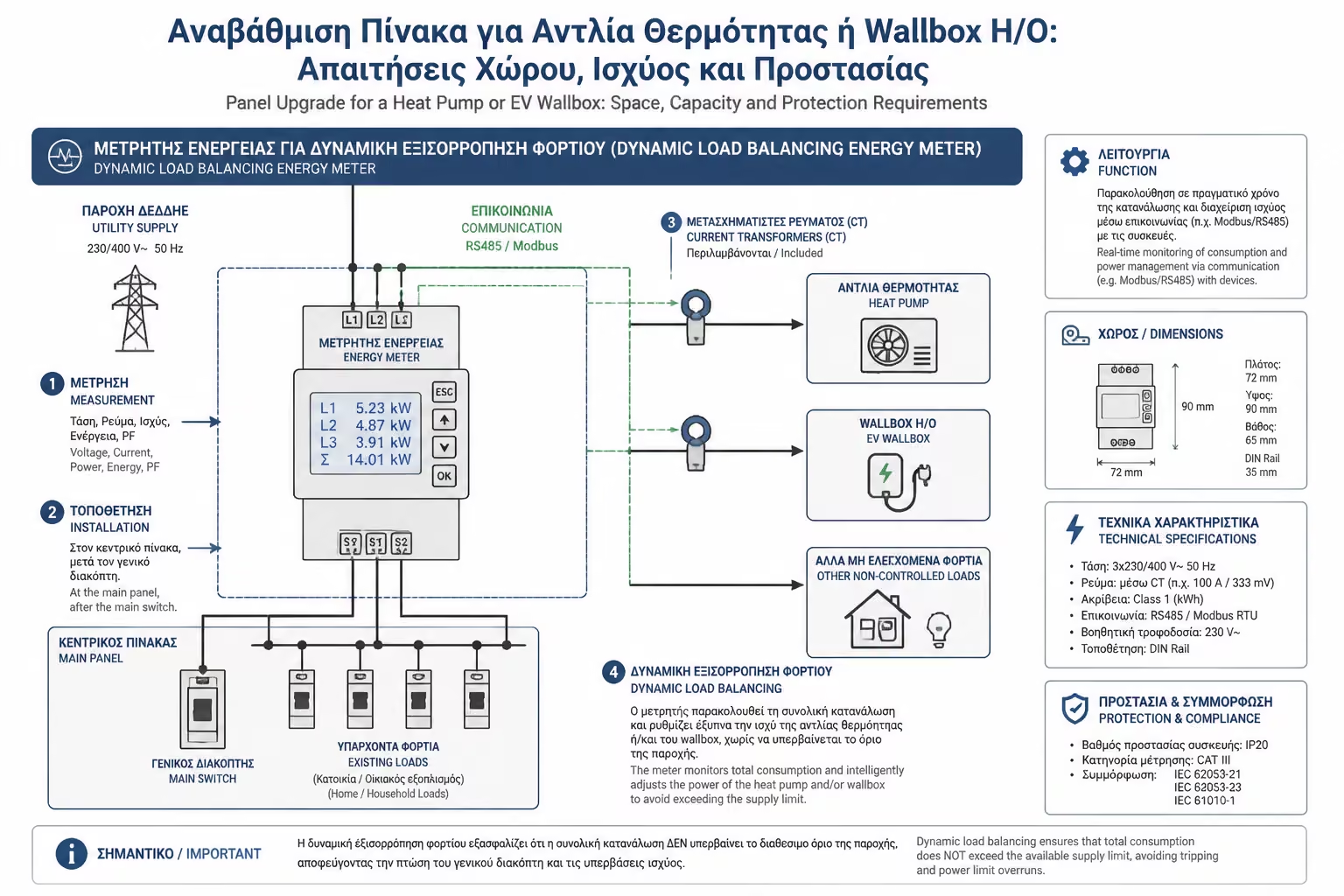
It does not magically create more supply; it allocates the existing margin more intelligently.
That means extra hardware, extra space and correct integration.
It can delay or reduce the need for immediate heavy utility upgrades.
If implemented casually, the system loses reliability and value.
Return to category.
Go to categoryReturn to the central guide.
Go to guide