
Sockets do not suddenly become 400V
The three-phase logic concerns central distribution, not ordinary final outlets.
Moving a home from single-phase to three-phase supply is surrounded by myths. The most common is the fear that '400V will reach every socket' and destroy household appliances. In reality, most of the change concerns the structure of the board rather than everyday use of final outlets.
Three-phase supply gives the engineer much better scope for load distribution, especially when the home adds induction cooking, a heat pump, EV charging or other heavy demands. But that benefit appears only if the new board is designed correctly and the right central hardware is changed.
The real question is therefore not whether the entire house must be stripped out, but which parts of the supply system and board must be transformed so that the upgrade becomes safe, balanced and genuinely useful.
In practice, the guide "Converting a Single-Phase Panel to Three-Phase: What Actually Changes in the Board and Its Materials" is not just theory. It works as a practical checklist for owners, supervisors and installers who want to verify that the decision, the pricing and the technical execution of the work genuinely stand up to professional scrutiny.
Three-phase supply brings three phases and a neutral to the board, yet most ordinary domestic circuits still take one phase and one neutral. That means standard sockets and lighting continue to operate at 230V exactly as before.
The real gain is that different zones and loads can now be distributed across three phases instead of accumulating on one. That reduces overload risk and gives the house a far better base for future heavy loads.
Within the topic "Converting a Single-Phase Panel to Three-Phase: What Actually Changes in the Board and Its Materials", the section "1. Final sockets remain at 230V, but the distribution architecture changes" acts as a critical control point. If that level of thinking or execution is missing, the installation may look complete on the surface while remaining technically vulnerable, awkward to use or more expensive to maintain in the future.
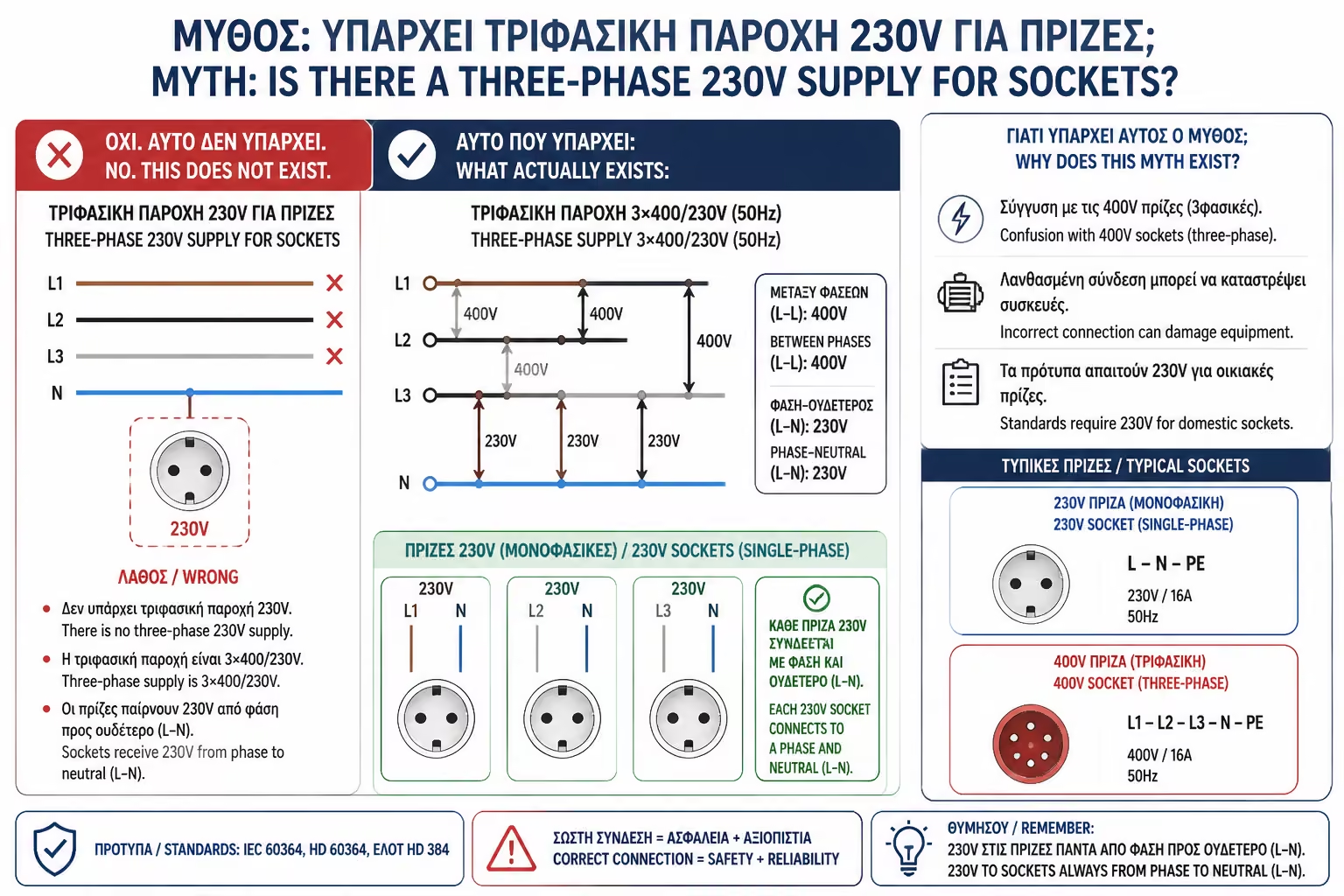
The three-phase logic concerns central distribution, not ordinary final outlets.
Different parts of the home can now be assigned to different phases.
The three-phase structure opens the door to more demanding energy additions.
The upgrade changes system balance and headroom rather than daily user behaviour.
A three-phase upgrade is not limited to the board inside the house. It normally involves the utility meter being replaced and, on the building side, a new main cable of suitable size and conductor count so that three phases, neutral and earth are all carried correctly.
This is where part of the cost and complexity is decided, because the distance from the meter to the panel, the route, containment and accessibility all affect the work. It is much more than swapping one box on the wall.
Within the topic "Converting a Single-Phase Panel to Three-Phase: What Actually Changes in the Board and Its Materials", the section "2. The move requires a new meter and a new main supply cable" acts as a critical control point. If that level of thinking or execution is missing, the installation may look complete on the surface while remaining technically vulnerable, awkward to use or more expensive to maintain in the future.
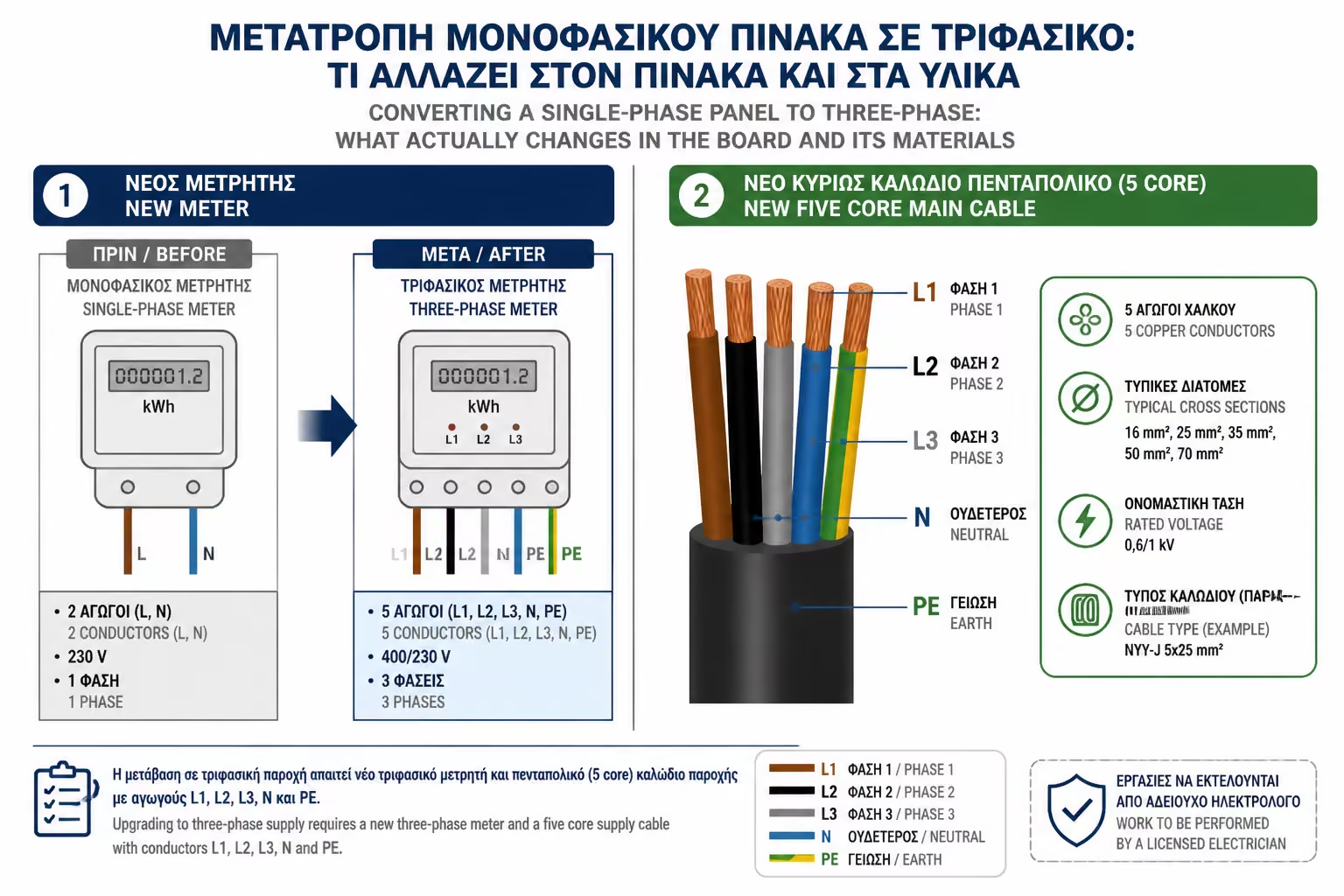
Capacity increase and meter replacement are not purely internal matters.
The new supply needs a different backbone between the meter and the board.
The harder the access, the more demanding the installation becomes.
The service backbone is a major part of the upgrade.
The new board introduces four-pole RCDs, four-pole main switches, larger busbars and usually more rows overall. That is not excess but the consequence of managing three phases in a safe and organised way.
The physical size of the board changes because the distribution itself becomes more complex. Trying to force a three-phase logic into a box designed for an older single-phase layout almost always leads to technical compromise.
Within the topic "Converting a Single-Phase Panel to Three-Phase: What Actually Changes in the Board and Its Materials", the section "3. A three-phase board needs different hardware and more space" acts as a critical control point. If that level of thinking or execution is missing, the installation may look complete on the surface while remaining technically vulnerable, awkward to use or more expensive to maintain in the future.
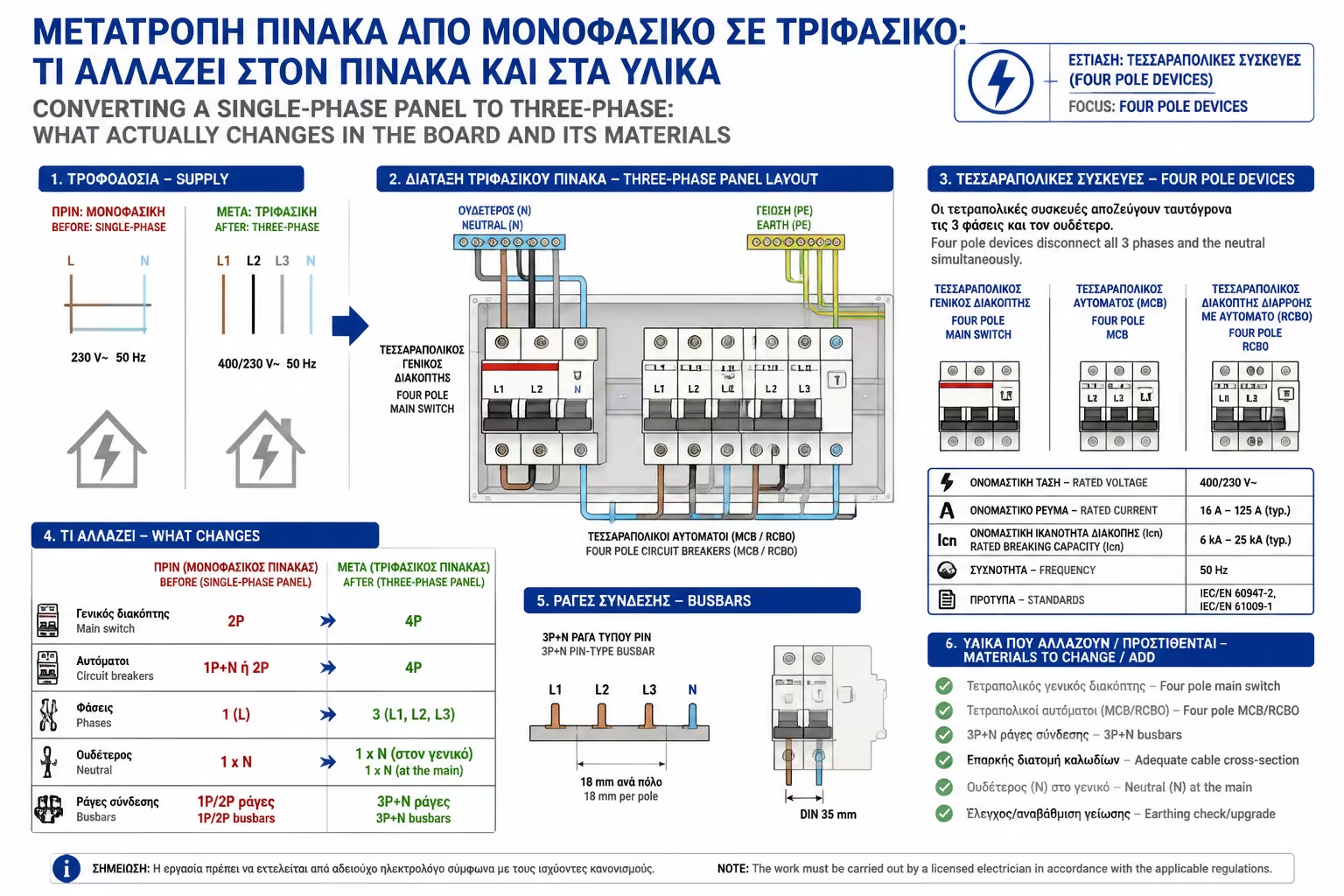
The main protection and isolation architecture changes in both form and size.
Additional rows are a functional requirement, not a vanity choice.
Three-phase distribution requires a different internal architecture.
It is not enough for the devices to fit; serviceability must also remain.
The success of a three-phase conversion is not decided only by installing a new board, but by how the large loads are distributed across the three phases. If the oven, water heater and major air-conditioning units all sit on one phase, the core advantage of the upgrade is lost.
That is why the engineer must design, not merely connect. Proper balancing makes the three-phase supply stable, efficient and ready for the next major energy steps of the home, such as EV charging or full electrification of heating.
Within the topic "Converting a Single-Phase Panel to Three-Phase: What Actually Changes in the Board and Its Materials", the section "4. Phase balancing is the real craft of the conversion" acts as a critical control point. If that level of thinking or execution is missing, the installation may look complete on the surface while remaining technically vulnerable, awkward to use or more expensive to maintain in the future.
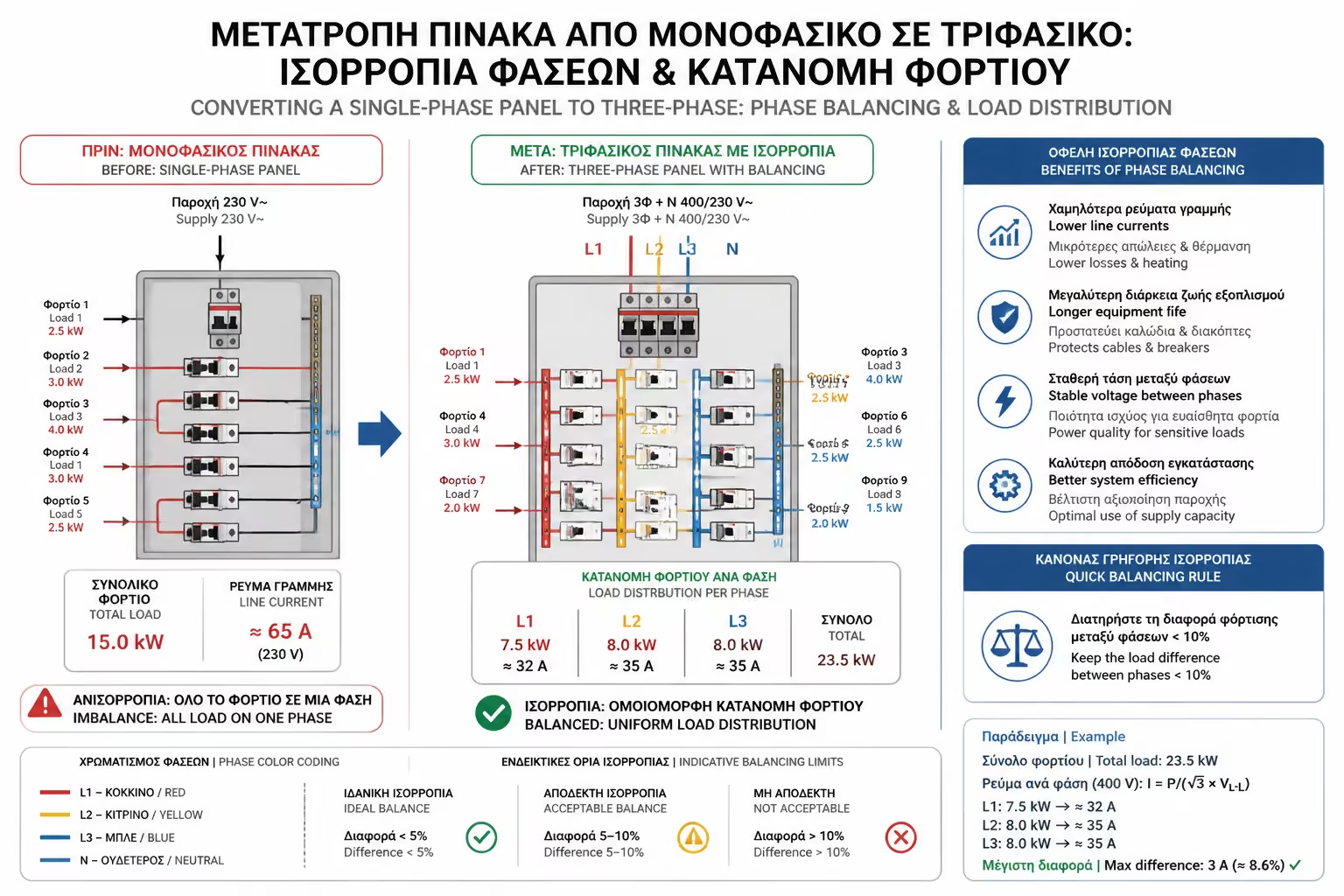
Without it, the upgrade loses its main practical value.
Concentrating them on one phase creates a new problem instead of solving one.
Three-phase distribution requires logic and documentation.
The home gains real infrastructure for more demanding energy use.
Return to category.
Go to categoryReturn to the central guide.
Go to guide