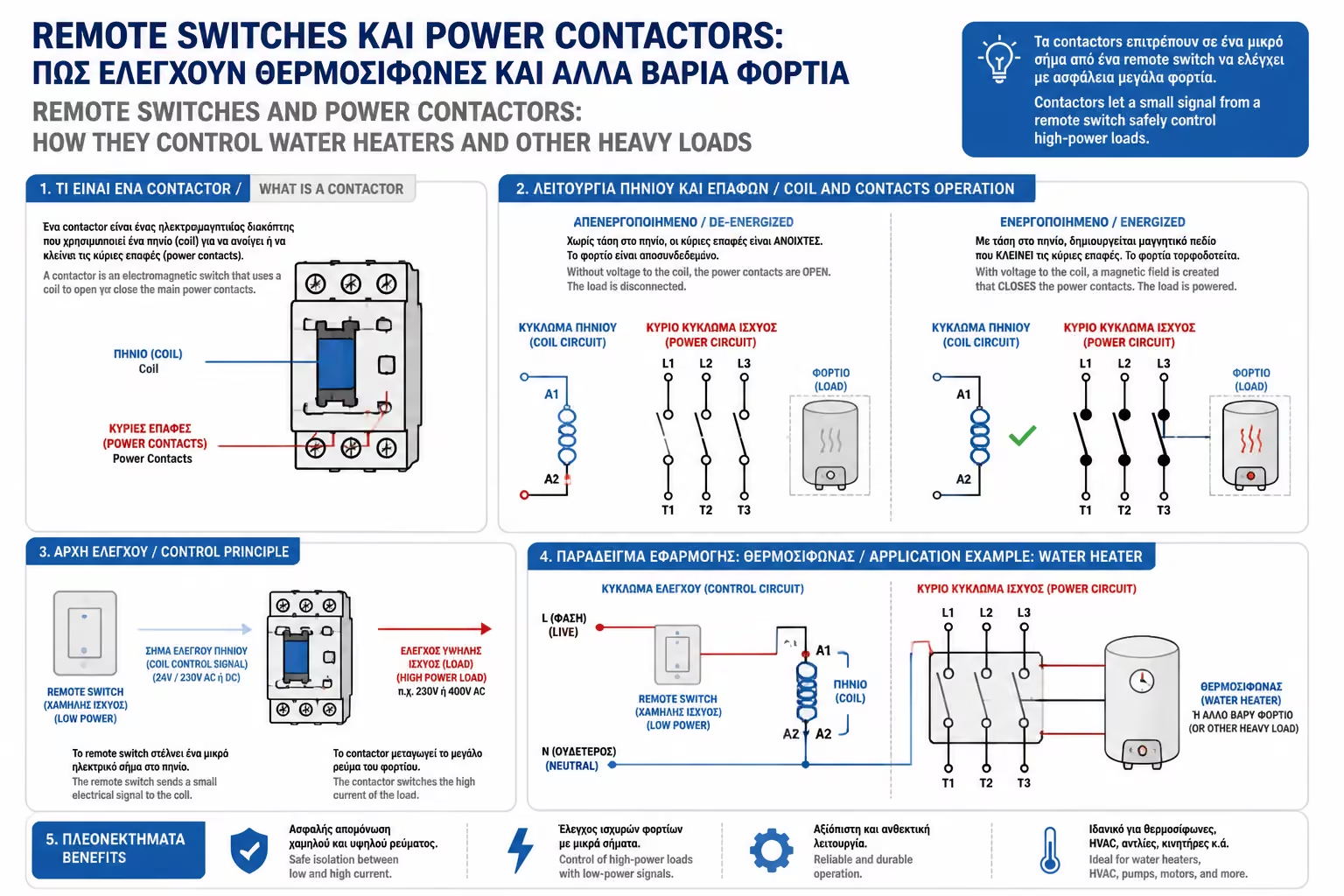
The smart relay is the controller
Excellent for logic and remote commands, not for heavy-duty power switching.
When a load is heavy, it is not enough to control it with any small switch or a simple smart module. A water heater, strong electric heating loads, some machines or selected larger circuits draw currents that require contacts designed for serious power and for safe repeated switching.
That is exactly where the power contactor appears. The basic idea is simple but crucial: the small control circuit gives the command, while the heavy-duty contacts carry the actual load. That separation allows safe automation without forcing a small electronic module to handle current it was never built to carry.
For that reason, in water-heater control, night-tariff logic, centralised switching or smart-home automation, a contactor is not overkill. It is the correct separation between the brain of the control system and the muscle that actually switches power.
A small smart relay is excellent for commands, automation logic, scenarios and lighter currents. It is not designed to repeatedly switch large thermal or inductive loads. If we force that role onto it, its contacts are overstressed, heating increases and both reliability and safety deteriorate rapidly.
A contactor, by contrast, is built for heavy duty. It contains a control coil and robust power contacts so it can handle the real switching of the circuit. The smart relay can then be limited to energising the coil only, remaining electrically protected from the main load current.
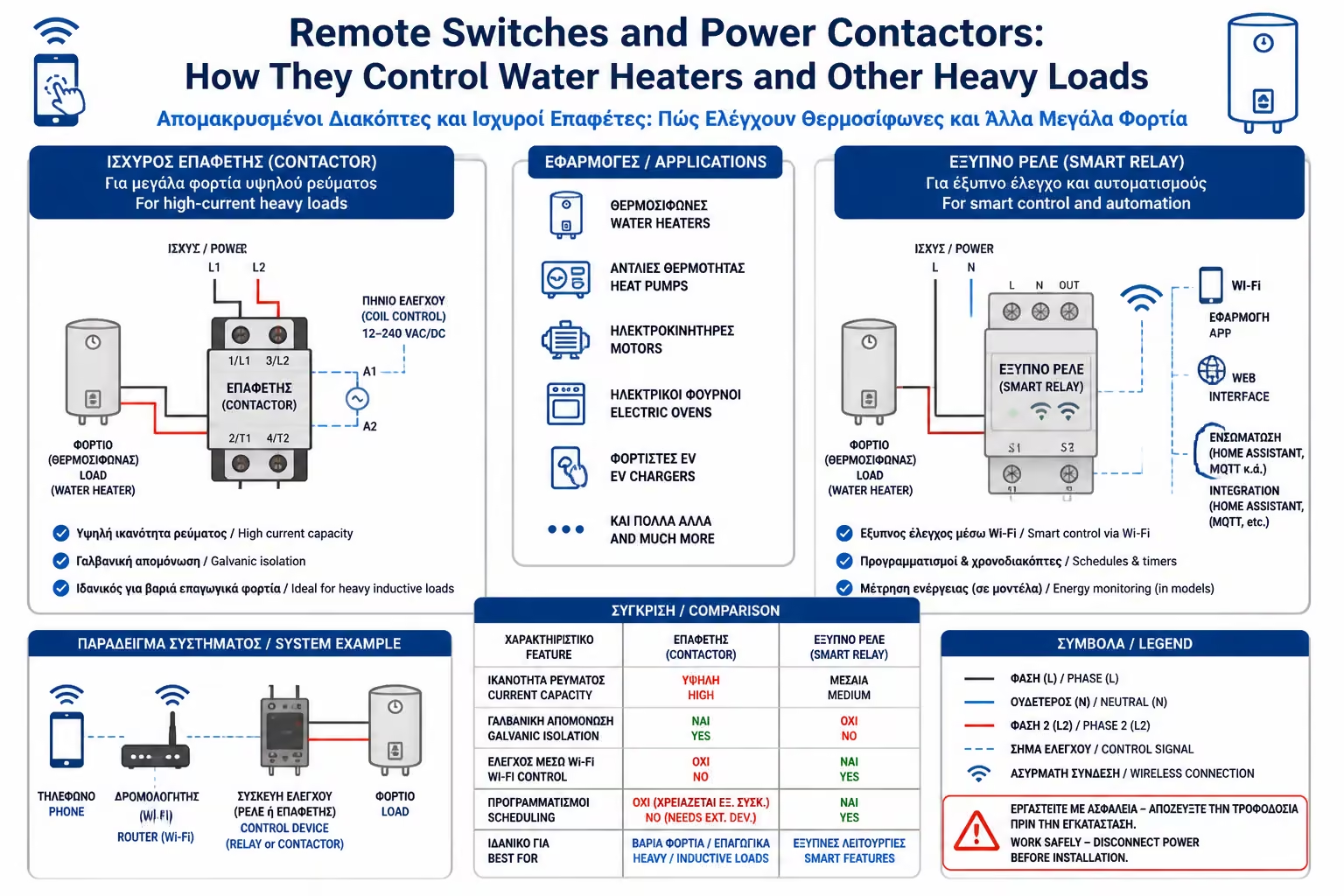
Excellent for logic and remote commands, not for heavy-duty power switching.
It handles real power through contacts designed for the load.
The sensitive electronic module is not exposed directly to the heavy current.
Each component performs the role it was actually designed for.
The operating principle of a contactor is based on an electromagnetic coil. When the coil is energised, it mechanically pulls the moving assembly and closes the power contacts. In that way, a small control current can switch a much larger load current safely.
This simple arrangement has major practical value. It allows timers, smart modules, push-buttons, supervisory devices or night-tariff signals to control the load without those peripherals carrying the full electrical power of the consumer itself.
A low-power signal can issue a safe switching command.
That is where the appliance’s real current flows.
The automation device does not directly touch the heavy load.
It enables clean, professional and expandable wiring.
The water heater is the most familiar example. It is a significant load, it is often switched manually and many owners now also want remote control. The correct solution is for a small control circuit to issue the command while the contactor performs the actual switching of the load.
The same logic applies to night-tariff arrangements, central enabling commands and various technical support systems. The contactor gives the panel the ability to become smarter without sacrificing the electrical reliability of the installation.
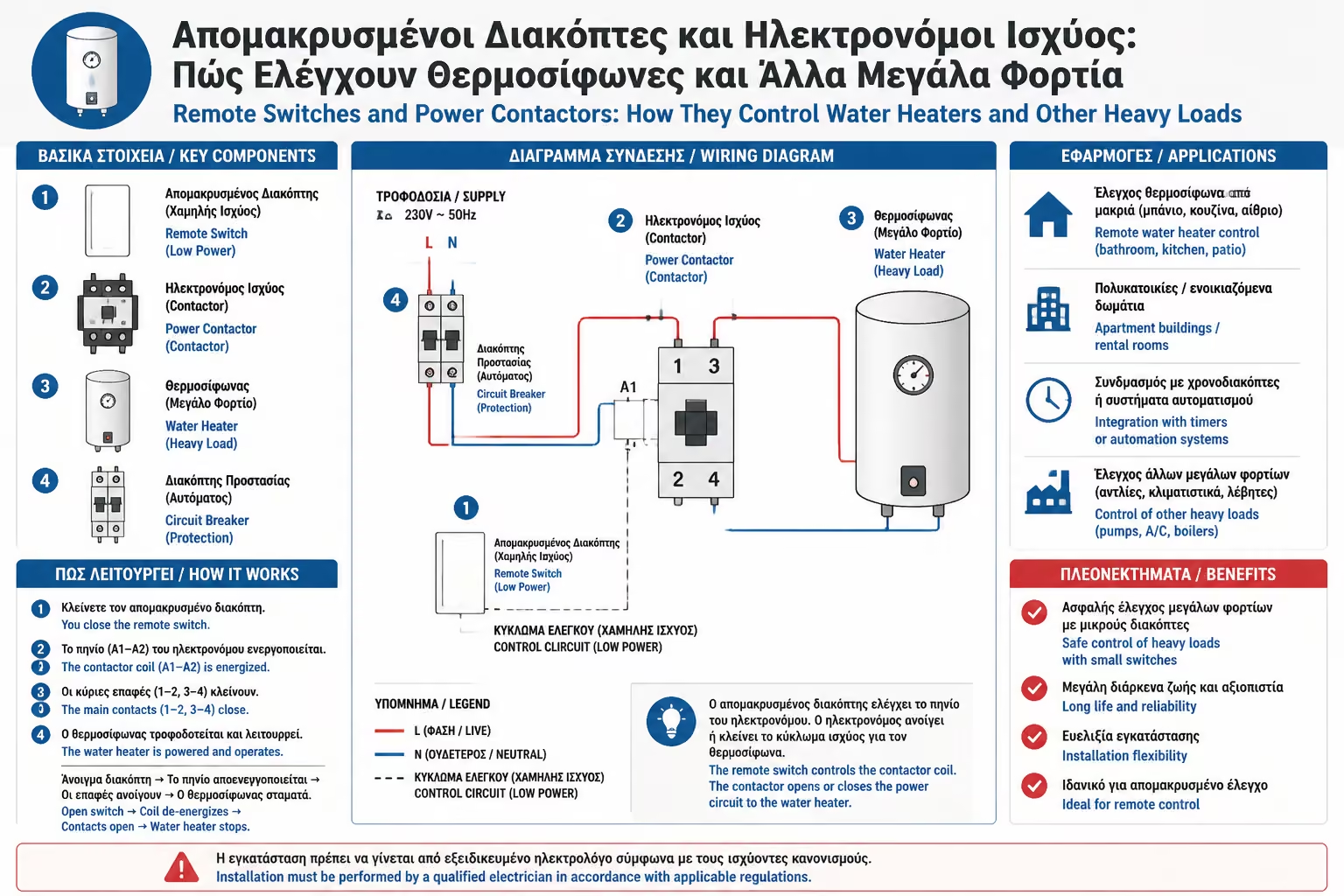
A heavy load combined with a common need for remote or timed control.
The contactor can follow external signals or control-selection logic.
Automation can be added without redesigning the power path.
The control circuit is protected from the stress of the real load.
Not all contactors are the same. Rated current, utilisation category, load type, coil voltage and practical issues such as operating noise must all be considered. In residential settings, a noisy contactor can be irritating if the panel is close to bedrooms or quiet living areas.
So the right answer is not merely to install any contactor. It is to choose one that genuinely matches the load and the use environment. Only then does the system become safe, quiet and technically serious for years to come.
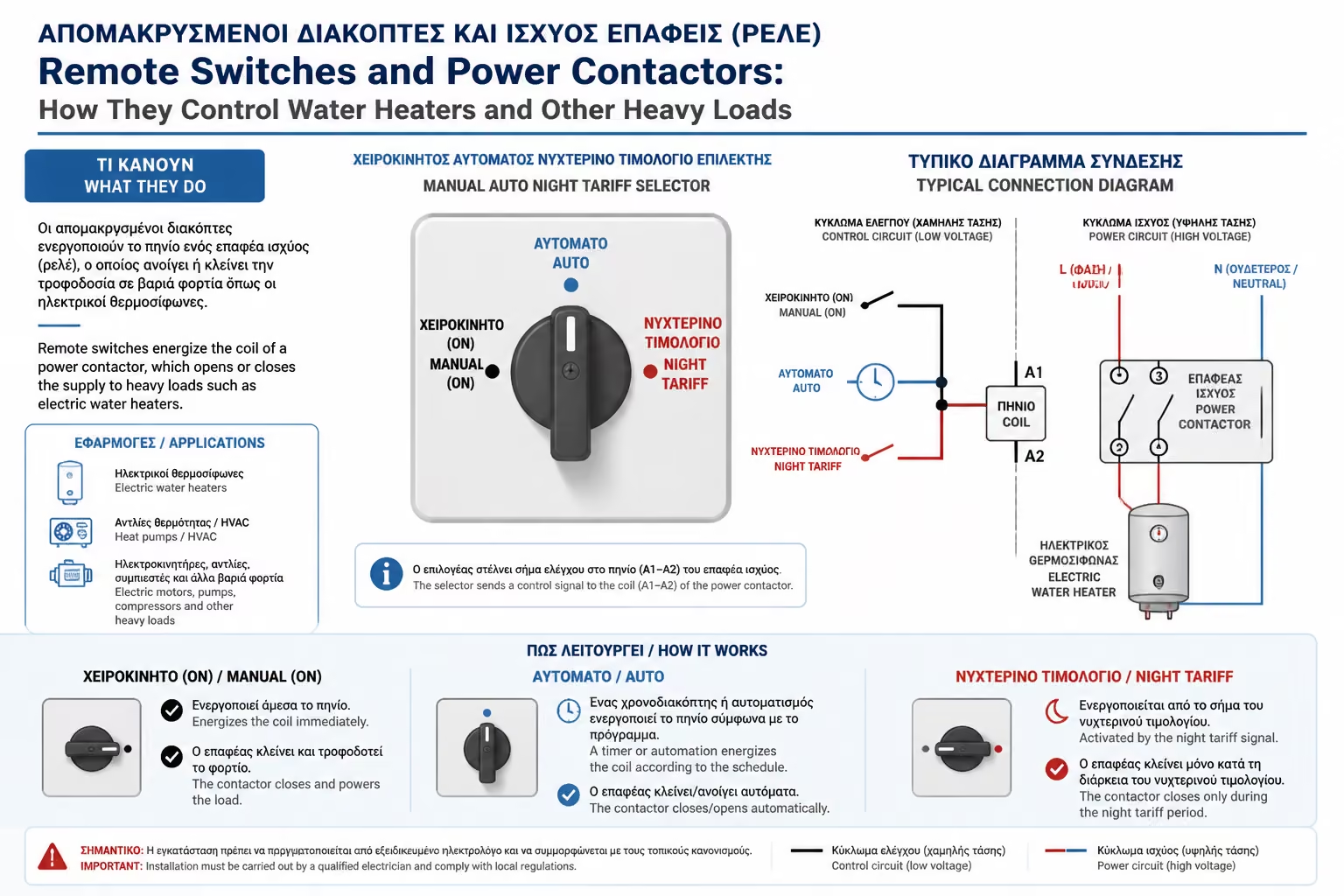
Sizing remains critical as with any power-handling device.
Thermal and inductive loads stress contacts differently.
Quiet versions can make real sense in residential panels.
Electrical adequacy and quality of use must be considered together.
Proper heavy-load automation begins when we stop asking a small relay to do a contactor’s job.
Return to category.
Go to categoryReturn to the central guide.
Go to guide