
Power isolation is unavoidable
A panel cannot be replaced safely without fully isolating the incoming supply.
Electrical panel replacement is often exaggerated in the minds of owners who imagine days without power, dust everywhere and major building disruption. In reality, in the hands of an organised professional, the process is far more controlled and methodical.
That does not mean it is trivial work. It involves full power isolation, removal of the old board, possible wall adaptation, internal reorganisation, circuit identification and final testing with instruments. It simply means those stages can be executed with discipline and predictability.
Owners benefit greatly when they understand in advance what will happen, how long each stage normally takes and how they should prepare. Good information reduces anxiety and also makes it easier to judge the professionalism of the contractor doing the work.
In practice, the guide "What Happens During an Electrical Panel Replacement: Timeline, Disruption and What the Client Should Expect" is not just theory. It works as a practical checklist for owners, supervisors and installers who want to verify that the decision, the pricing and the technical execution of the work genuinely stand up to professional scrutiny.
The first reality of a panel replacement is that the home will be without power for a defined period. That affects lighting, internet, possibly heating, chargers and daily routines, so the owner needs practical preparation beforehand.
A good professional explains the expected time window clearly and gives basic guidance: charge devices, clear access around the board, remove obstacles and understand that the house will temporarily move into maintenance mode.
Within the topic "What Happens During an Electrical Panel Replacement: Timeline, Disruption and What the Client Should Expect", the section "1. The day begins with full isolation and practical preparation" acts as a critical control point. If that level of thinking or execution is missing, the installation may look complete on the surface while remaining technically vulnerable, awkward to use or more expensive to maintain in the future.
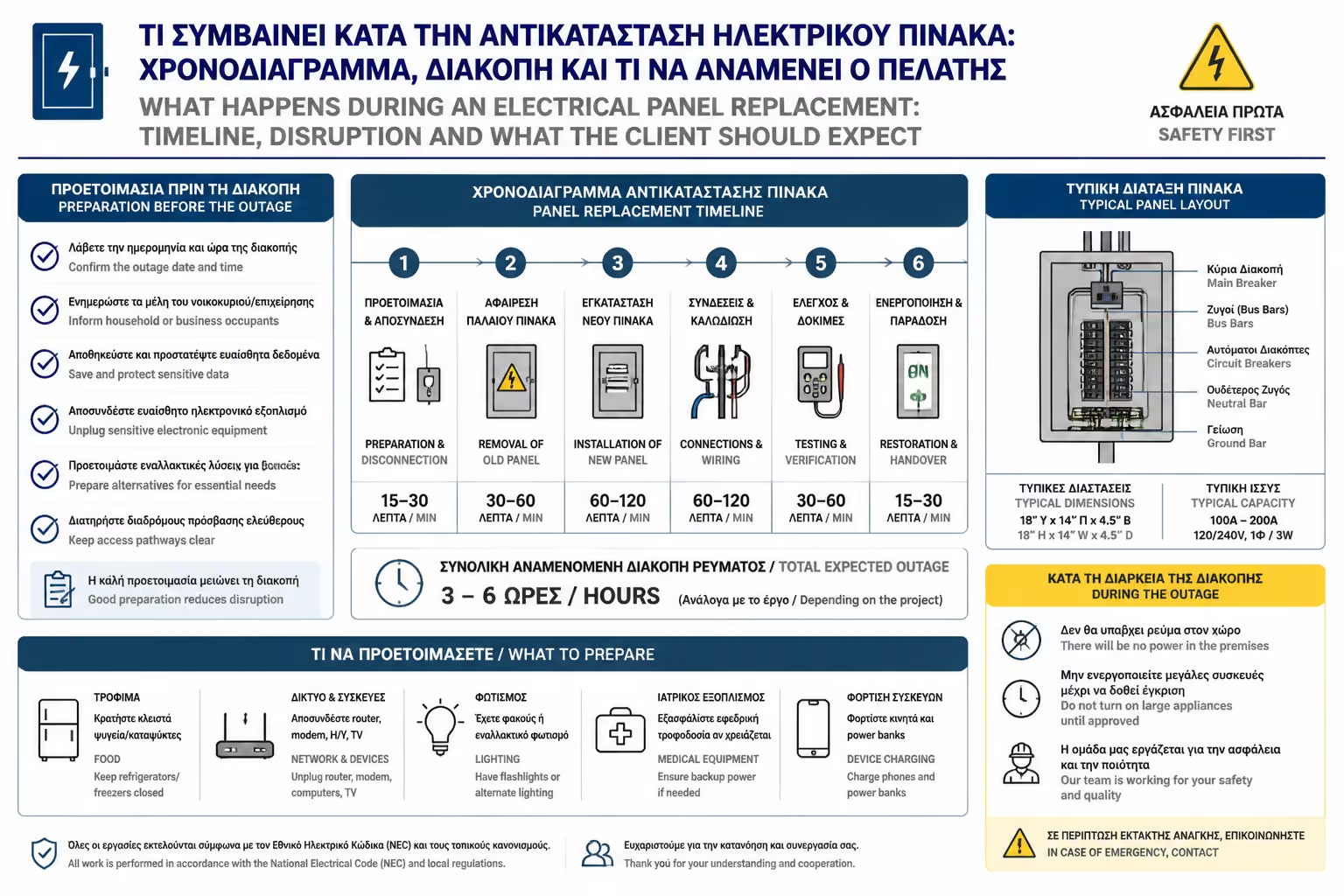
A panel cannot be replaced safely without fully isolating the incoming supply.
Charged devices, access to the area and practical organisation all matter.
Vague timing increases stress and reduces confidence.
Good work starts before the first tool is used.
If the new panel fits the existing opening or if a surface-mounted solution is chosen, the intervention can remain relatively clean. When the old recessed box is too small and the new board needs more rows, wall chasing is often necessary and real dust is created.
That stage should still be controlled, with extraction where possible and protection of the immediate area. It is not a major construction project, but neither is it a harmless detail once the geometry of the installation has to change.
Within the topic "What Happens During an Electrical Panel Replacement: Timeline, Disruption and What the Client Should Expect", the section "2. Dust and disturbance depend mainly on whether the enclosure size changes" acts as a critical control point. If that level of thinking or execution is missing, the installation may look complete on the surface while remaining technically vulnerable, awkward to use or more expensive to maintain in the future.
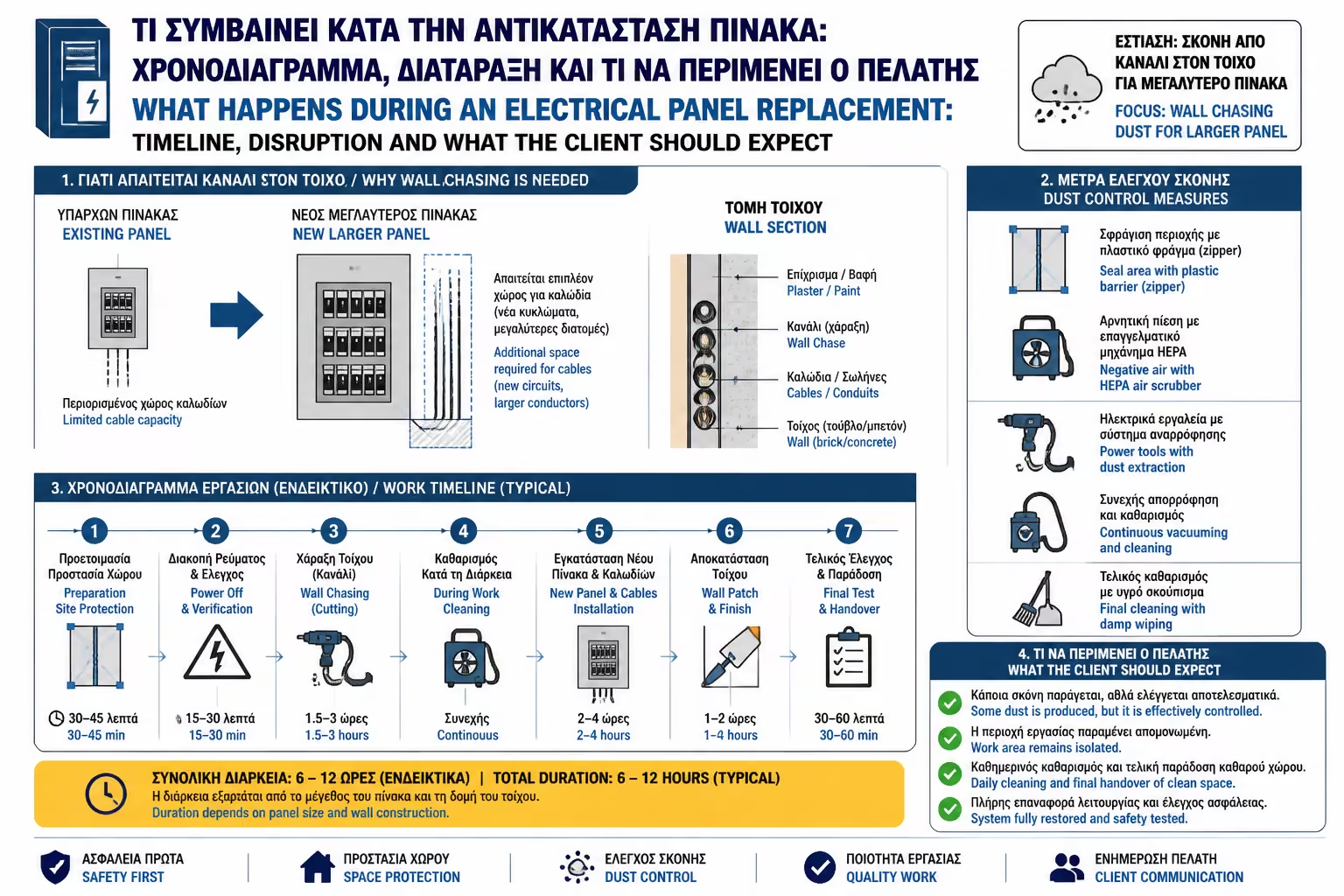
The less wall adaptation is needed, the lighter the disruption becomes.
Extra space for modern equipment does not appear without intervention.
This is where the organisation of the crew becomes very visible.
The owner needs clarity on what the electrician restores and what is excluded.
Once the new enclosure is in place, the technician must bring order to a bundle of conductors that often carries no useful labels at all. This is where trimming, ferruling, rail organisation and the creation of a maintainable internal logic all happen.
In older homes this stage becomes heavier because the technician also has to determine which conductor serves which part of the house. That may require tests, owner cooperation or dedicated tools, but it is essential if the new board is not to remain just as unclear as the old one.
Within the topic "What Happens During an Electrical Panel Replacement: Timeline, Disruption and What the Client Should Expect", the section "3. The most time-consuming stage is internal setup and circuit identification" acts as a critical control point. If that level of thinking or execution is missing, the installation may look complete on the surface while remaining technically vulnerable, awkward to use or more expensive to maintain in the future.
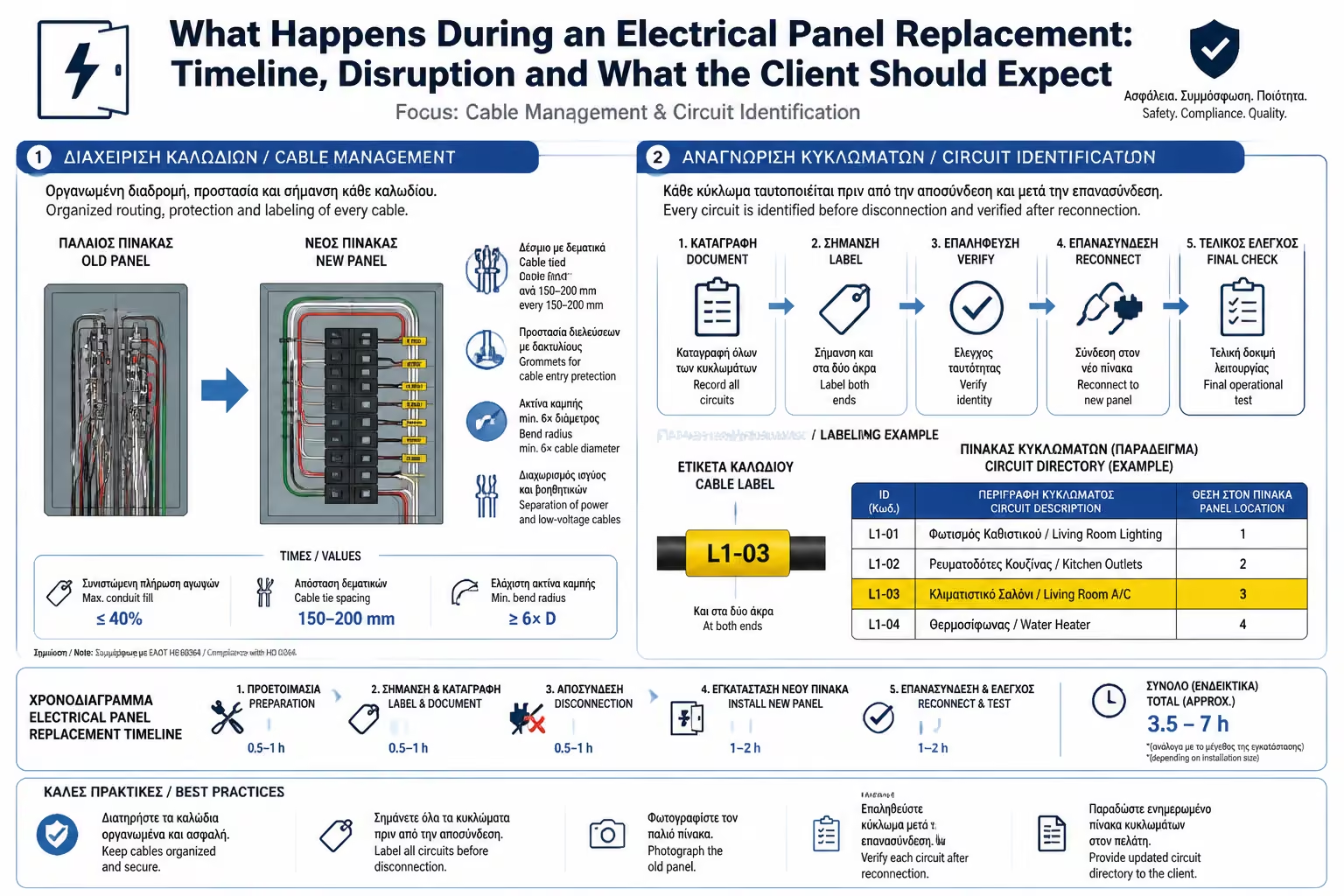
It is not enough for the wires to fit; they need to be arranged intelligently.
Identifying them takes time but creates major long-term value.
It makes every future fault or intervention easier to handle.
A badly organised board reveals poor workmanship immediately.
A panel is not finished just because power is restored. The RCD should be tested, insulation checked, circuit function confirmed and, ideally, the board should be clearly labelled before the technician leaves the house.
That is where genuine professionalism separates itself from the attitude of 'the lights came on, so we are done'. Technical handover should be measured, understandable and safe, not merely superficially functional.
Within the topic "What Happens During an Electrical Panel Replacement: Timeline, Disruption and What the Client Should Expect", the section "4. Proper completion includes tests, measurements and a clean handover" acts as a critical control point. If that level of thinking or execution is missing, the installation may look complete on the surface while remaining technically vulnerable, awkward to use or more expensive to maintain in the future.
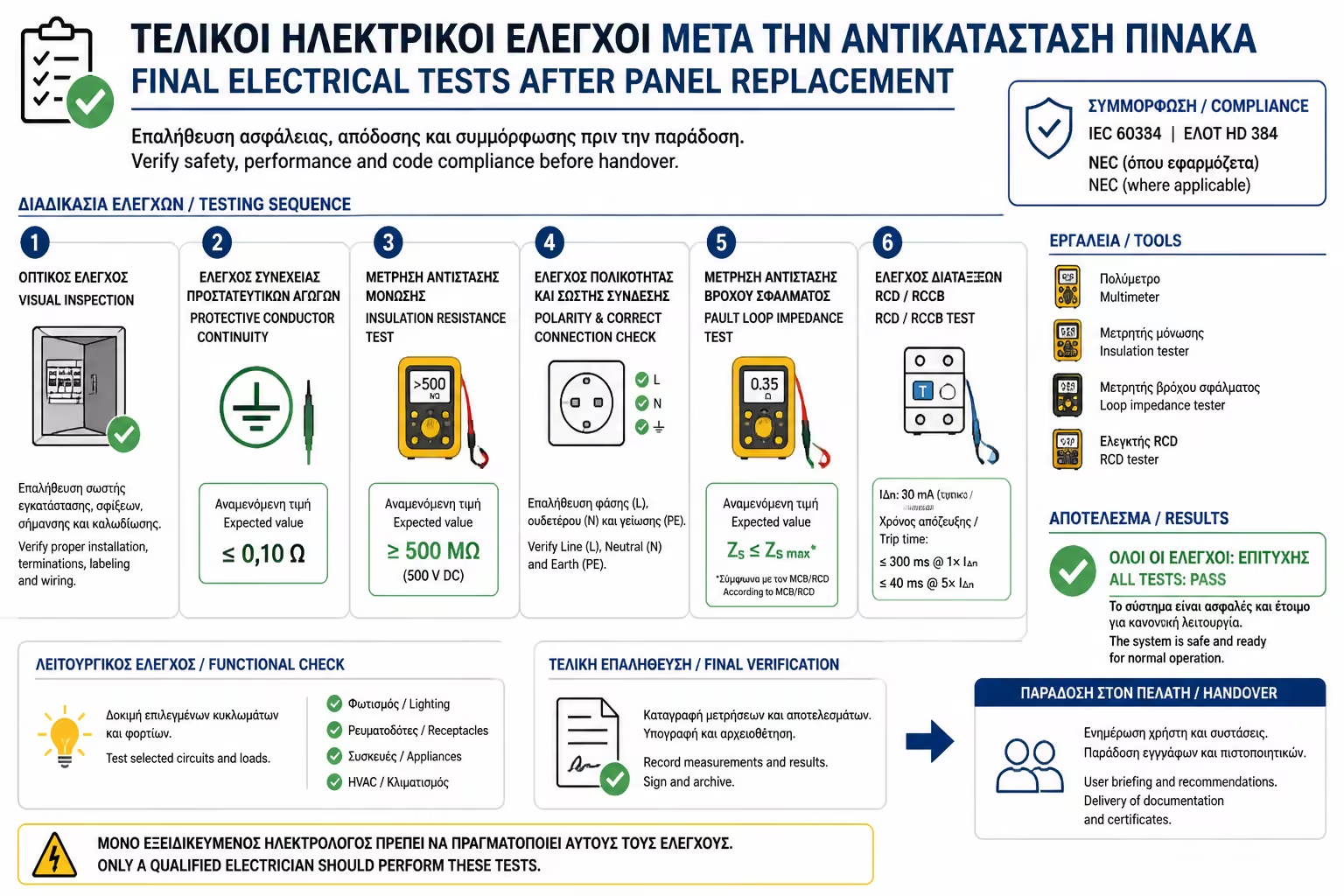
Function should be confirmed by instruments, not only by visual impression.
Its presence means little if its real operation has not been checked.
A new board without identification remains incomplete work.
The end of the project should leave confidence, not new uncertainty.
Return to category.
Go to categoryReturn to the central guide.
Go to guide