
Wrong isolation wastes time
During a fault, every minute of uncertainty increases disruption and stress.
A new panel may have excellent internal organisation and modern protection devices, yet still remain functionally weak if its circuits are not labelled properly. The weakness usually becomes obvious at the worst possible moment: during a fault, a water leak or when a technician needs to isolate one circuit immediately.
A rushed label such as 'Kitchen' or 'Sockets' may seem enough on installation day, but in real operation it creates ambiguity, delay and sometimes serious risk of incorrect handling. Labelling is therefore not decorative finishing but part of the technical completion of the project.
Correct labelling should be easy to read, durable over time and precise enough to describe the purpose of each circuit clearly. Only then does the panel become a real control tool instead of a box full of unknown switches.
In practice, the guide "Correct Circuit Labelling: The Most Underrated but Critical Step After Installing a New Panel" is not just theory. It works as a practical checklist for owners, supervisors and installers who want to verify that the decision, the pricing and the technical execution of the work genuinely stand up to professional scrutiny.
When a panel carries general or sloppy labels, the user cannot know which circuit should be isolated during a problem. That leads to blind trial-and-error, unnecessary shutdown of unrelated loads or, worse, the false belief that a circuit is dead when it is still live.
For technicians working on appliances or local wiring, that ambiguity becomes a serious hazard. Labelling therefore serves not only user convenience but the basic electrical safety of every future intervention.
Within the topic "Correct Circuit Labelling: The Most Underrated but Critical Step After Installing a New Panel", the section "1. Vague labelling creates real operational and safety risk" acts as a critical control point. If that level of thinking or execution is missing, the installation may look complete on the surface while remaining technically vulnerable, awkward to use or more expensive to maintain in the future.
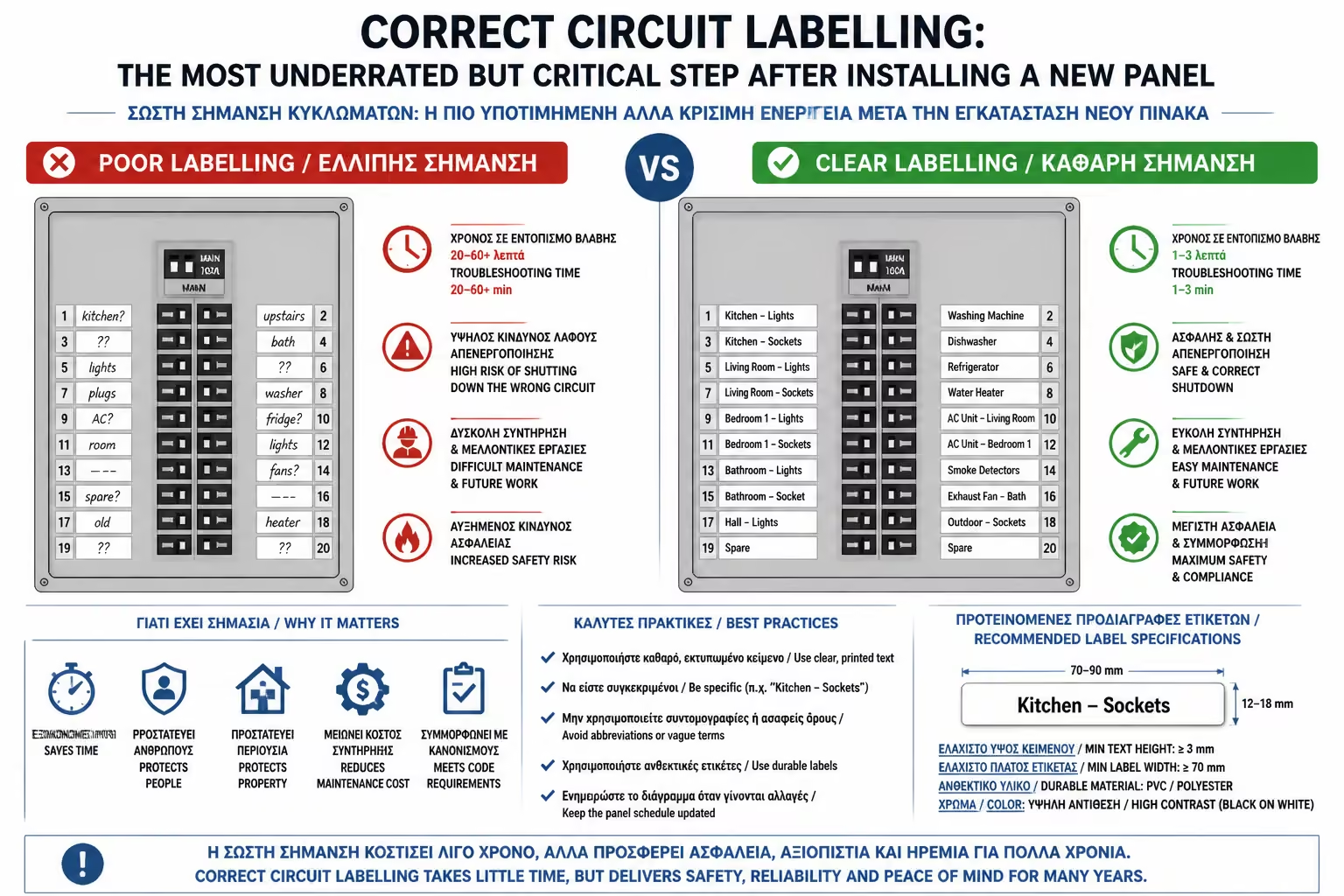
During a fault, every minute of uncertainty increases disruption and stress.
A technician must know with confidence what has actually been isolated.
Without clear labels it behaves like a puzzle instead of a control point.
It is not cosmetic excess but an operational necessity.
Writing directly on plastic with a marker is the cheapest method but also the least stable. It fades, smears and makes future changes messy. Insert strips or printed labels, by contrast, produce a cleaner, more durable and more professional result.
The method is not only about appearance. It affects readability, ease of updating and whether the panel will remain understandable after years of dust, heat and service work.
Within the topic "Correct Circuit Labelling: The Most Underrated but Critical Step After Installing a New Panel", the section "2. Not all labelling methods deliver the same quality" acts as a critical control point. If that level of thinking or execution is missing, the installation may look complete on the surface while remaining technically vulnerable, awkward to use or more expensive to maintain in the future.
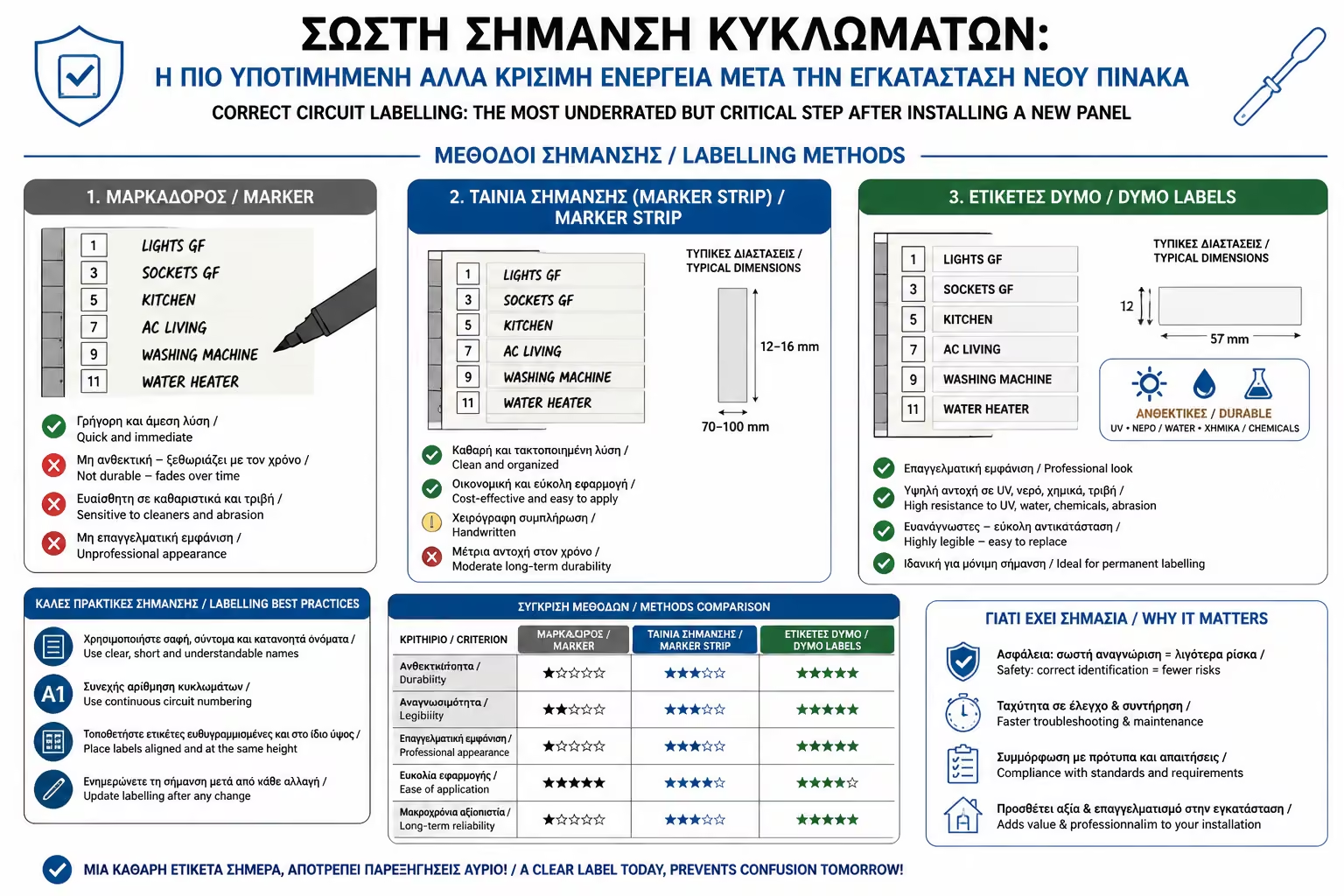
The information fades and the board gradually loses usability.
They provide a clean and protected surface for structured labelling.
Readability and long-term durability improve significantly.
All circuits should follow the same system instead of mixing styles.
A generic term such as 'Sockets' says very little in a modern home with many zones, dedicated lines and diverse uses. Labels such as 'Living Room and Hall Sockets', 'Bedroom Lighting', 'Dishwasher' or 'Master AC' immediately carry operational meaning.
Good naming balances brevity and precision. It does not require a novel on each position, but it does require enough clarity to identify the circuit without doubt when action is needed quickly.
Within the topic "Correct Circuit Labelling: The Most Underrated but Critical Step After Installing a New Panel", the section "3. Good circuit naming must be specific and functional" acts as a critical control point. If that level of thinking or execution is missing, the installation may look complete on the surface while remaining technically vulnerable, awkward to use or more expensive to maintain in the future.
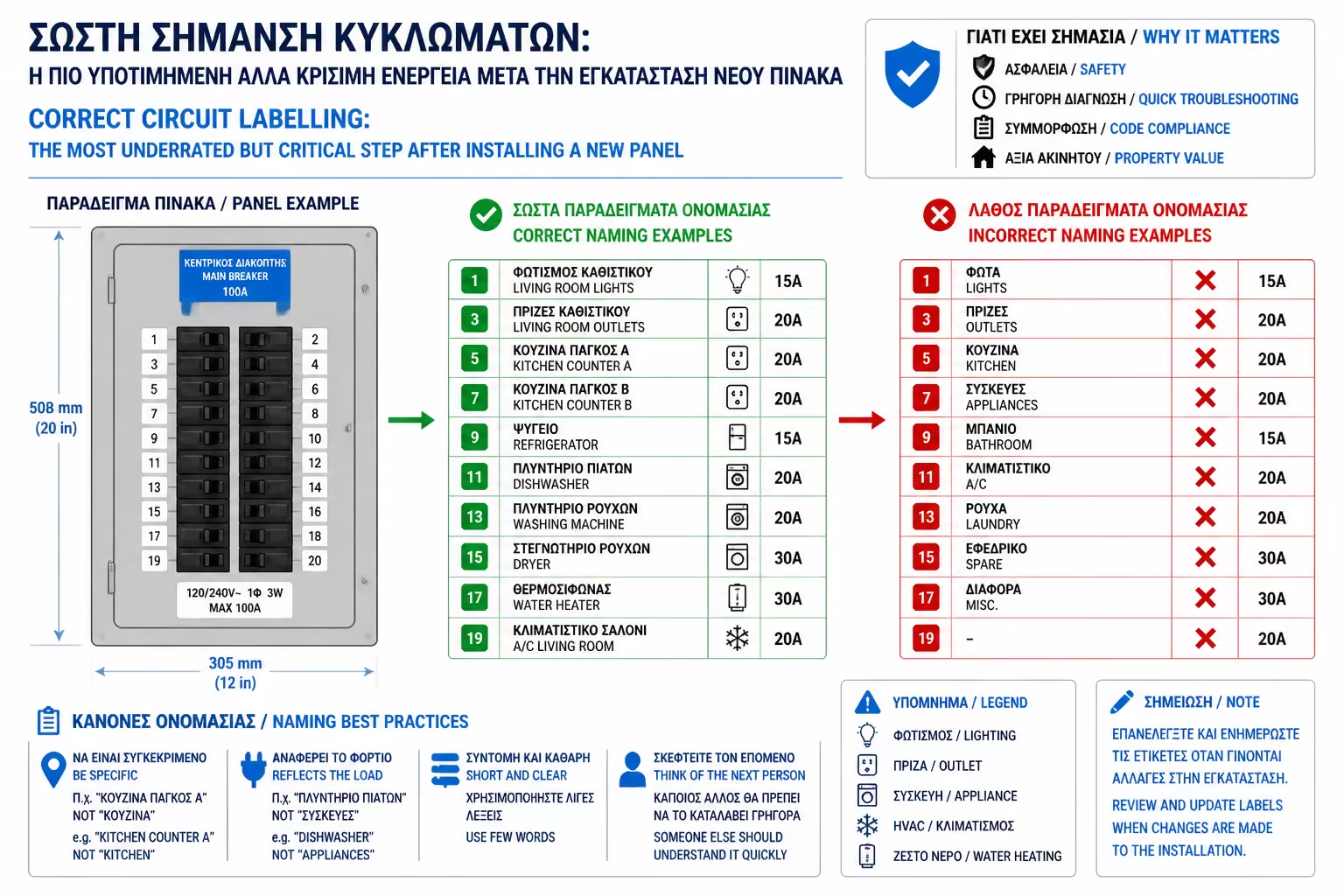
The vaguer the label, the less useful it becomes.
Loads such as oven or washing machine deserve clear identification.
The user knows what is being switched off without guessing.
Uniform phrasing makes the panel faster to read and harder to misinterpret.
In larger or denser boards, the most effective approach is to number the circuits and provide a detailed legend inside the door. That keeps the face of the panel clean while preserving full information whenever the user or technician opens it.
The legend acts as a map of the installation. It helps during faults, future extensions and collaboration with different technicians over the years. It is one of the smallest documentation steps that can make a disproportionately large difference.
Within the topic "Correct Circuit Labelling: The Most Underrated but Critical Step After Installing a New Panel", the section "4. A legend inside the panel door is the most mature practice" acts as a critical control point. If that level of thinking or execution is missing, the installation may look complete on the surface while remaining technically vulnerable, awkward to use or more expensive to maintain in the future.
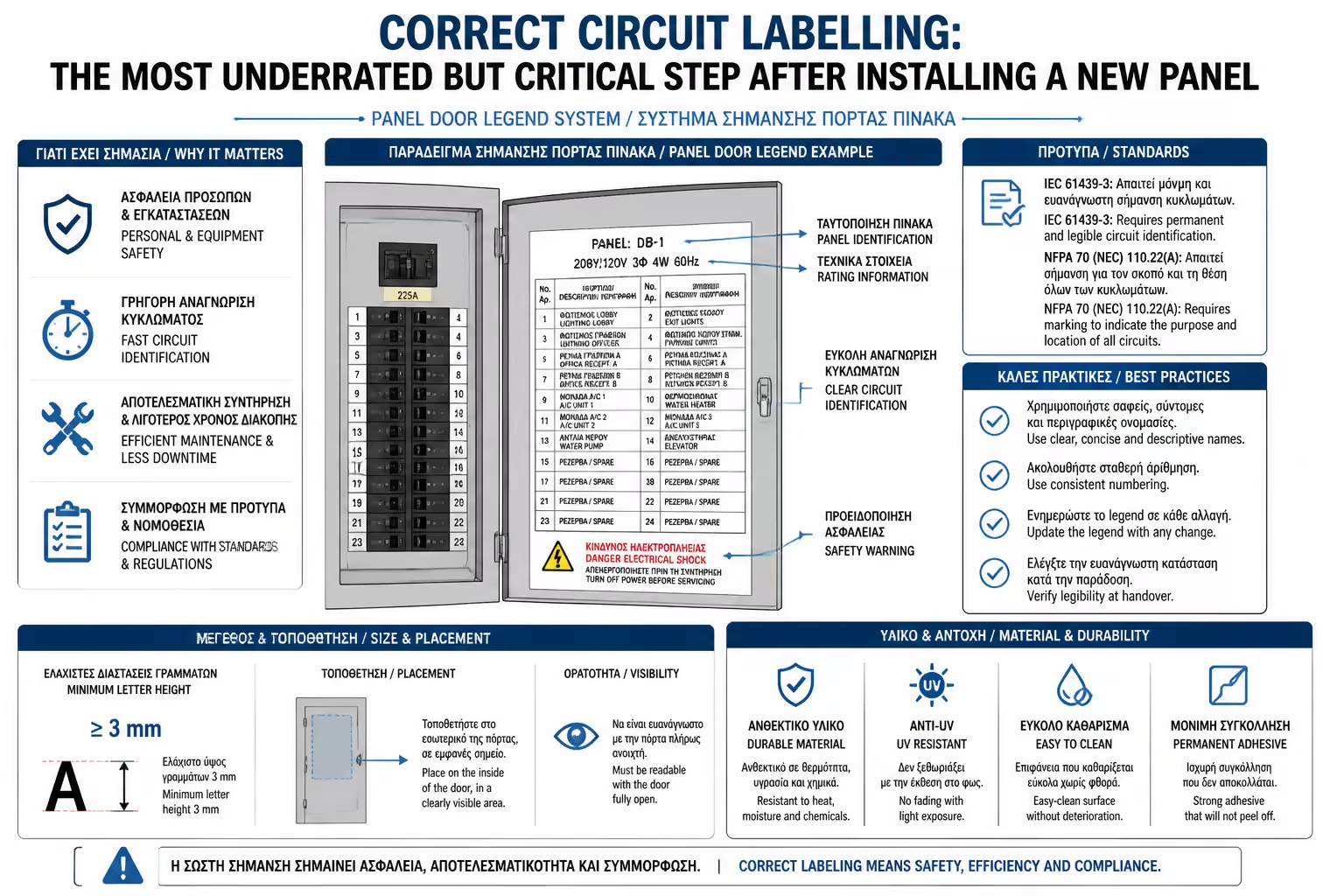
The panel stays readable without overloading each position with text.
The user can see exactly what each number refers to.
It is far easier to update and maintain correctly.
It shows the board was delivered with maintenance in mind, not just installation.
Return to category.
Go to categoryReturn to the central guide.
Go to guide