
A single-phase board is simpler
It usually requires fewer modules, fewer components and shorter labour time.
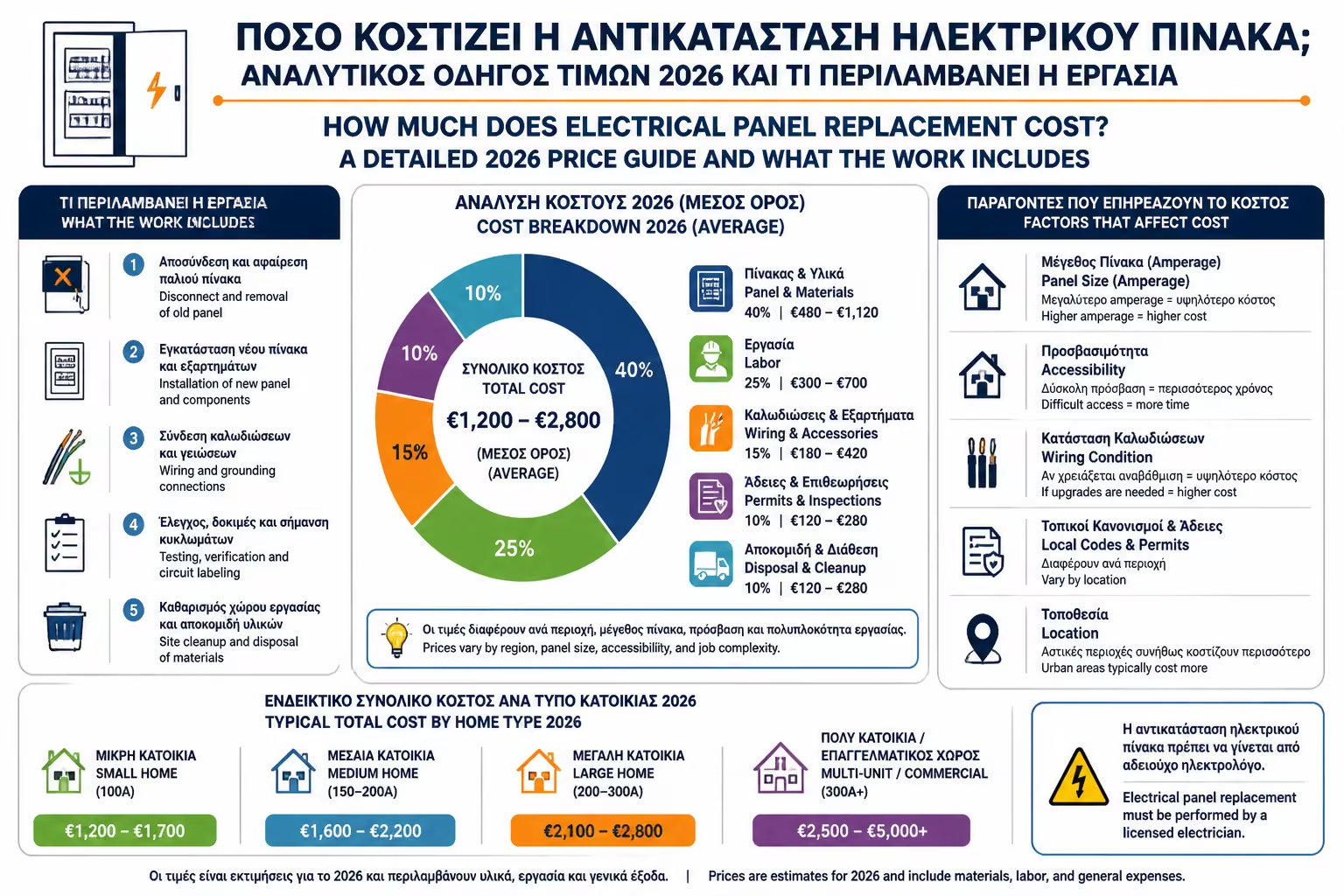
When an owner decides to replace an old electrical panel, the first question is not technical but financial. How much will the work cost, which part is materials, which part is labour and when does an unusually cheap quote represent real risk rather than value.
The answer cannot be reduced to one number because cost is shaped by the supply type, the size of the new board, the need for a larger enclosure, the addition of surge protection or smart modules and, of course, whether the project includes wider electrical upgrading at the same time.
A serious cost guide therefore needs to explain not only indicative prices but what the owner is actually paying for. The difference between a safe upgrade and a superficial replacement is often hidden in details that do not appear clearly on the first line of a quote.
In practice, the guide "How Much Does Electrical Panel Replacement Cost? A Detailed 2026 Price Guide and What the Work Includes" is not just theory. It works as a practical checklist for owners, supervisors and installers who want to verify that the decision, the pricing and the technical execution of the work genuinely stand up to professional scrutiny.
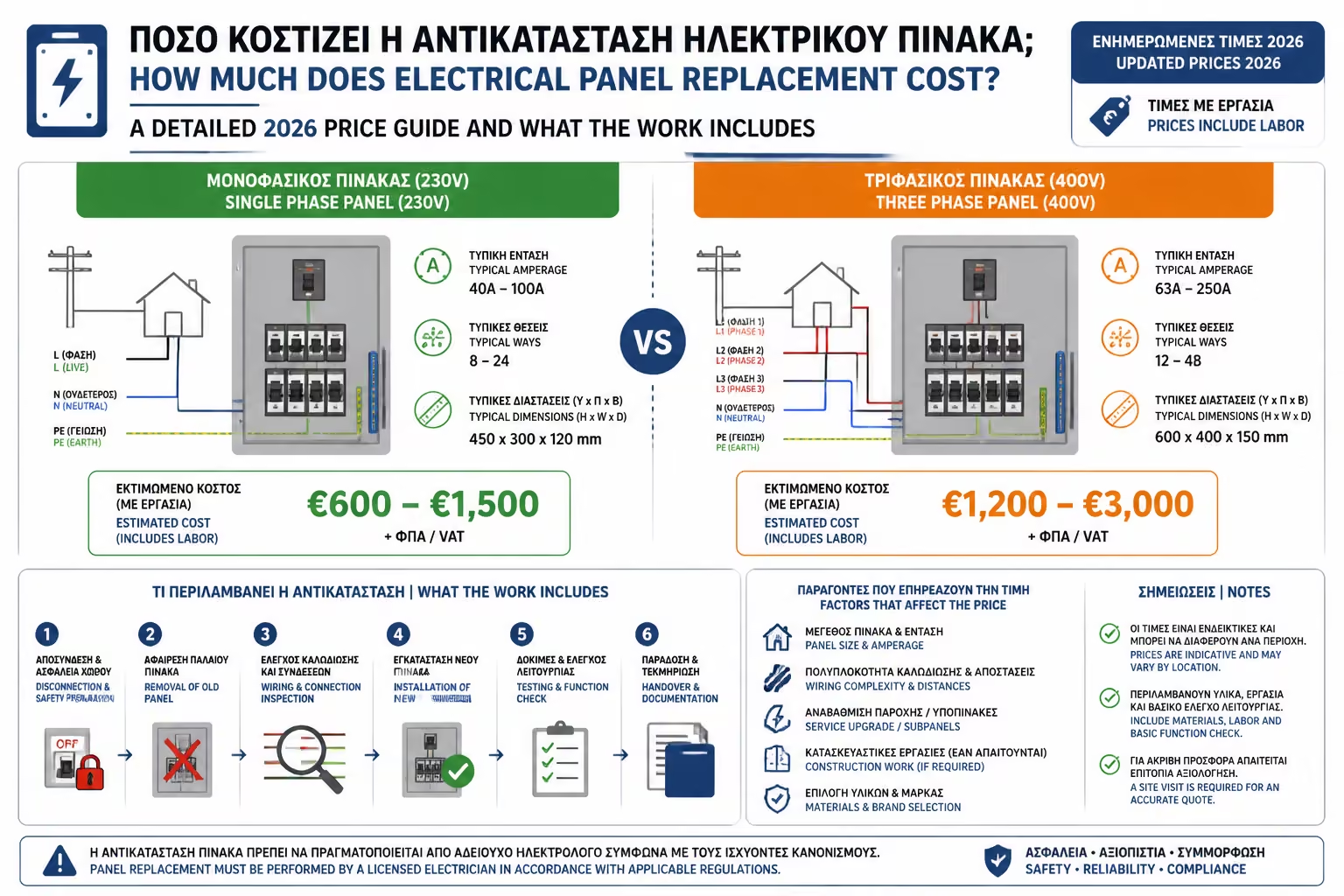
A typical single-phase panel involves fewer devices, a smaller enclosure and simpler internal organisation than a three-phase board. That means both material procurement and installation labour generally remain at a lower level when the project concerns an ordinary home without unusual requirements.
In a three-phase board, however, the number of modules, busbars, four-pole devices, phase balancing and the overall working time all increase. The comparison is therefore not only about more amperes, but about a more complex protection and distribution architecture.
Within the topic "How Much Does Electrical Panel Replacement Cost? A Detailed 2026 Price Guide and What the Work Includes", the section "1. Cost changes substantially between single-phase and three-phase boards" acts as a critical control point. If that level of thinking or execution is missing, the installation may look complete on the surface while remaining technically vulnerable, awkward to use or more expensive to maintain in the future.
It usually requires fewer modules, fewer components and shorter labour time.
Module count and four-pole devices increase both size and cost.
It is not just installation but proper load distribution design.
Materials and labour need to be shown distinctly to create transparency.
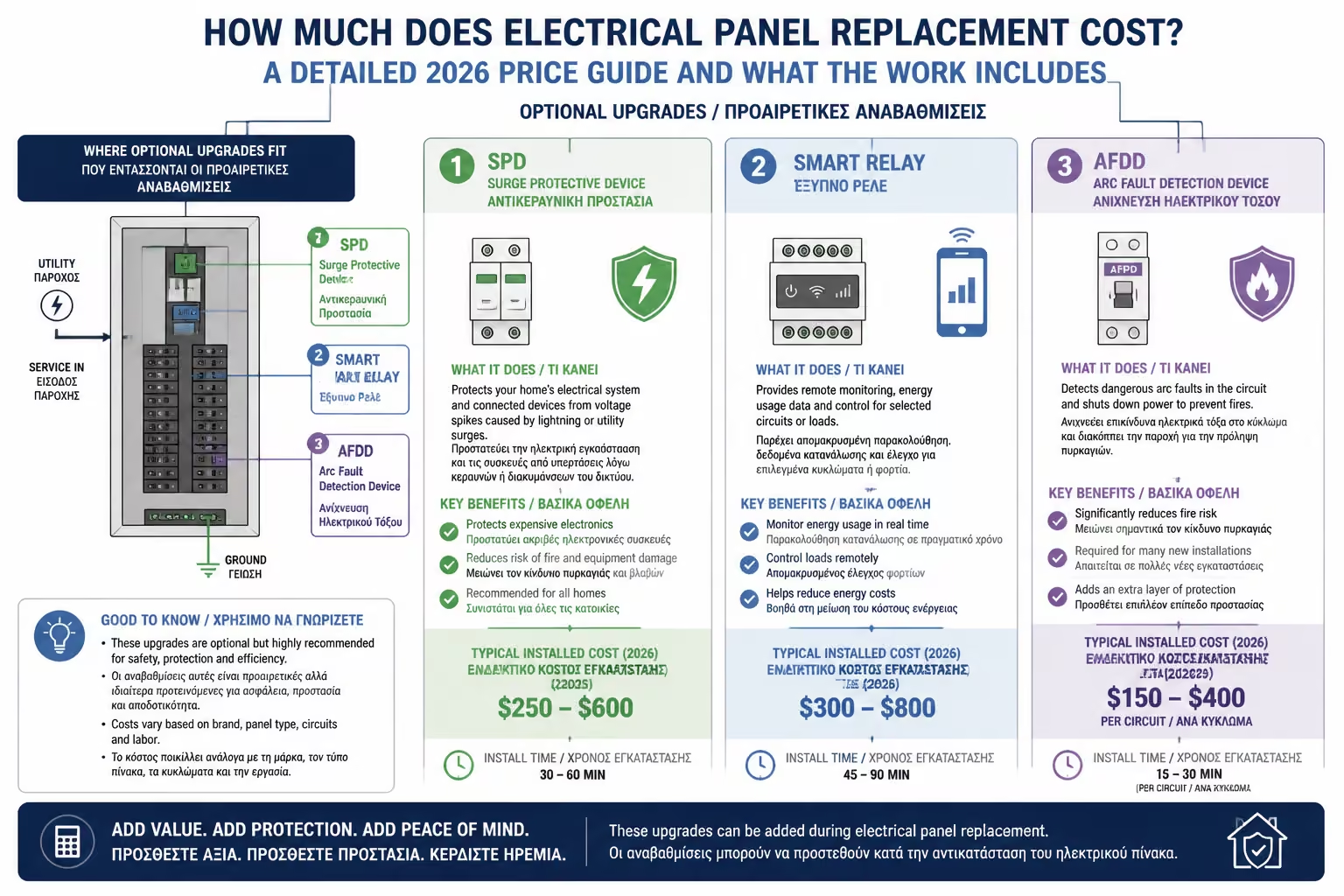
A panel may work with a basic configuration, but many owners now add SPD protection, smart water-heater control, AFDD devices or provision for future loads such as EV charging and heat pumps. Each of these adds cost, but often improves either protection or long-term expandability in a meaningful way.
The key is to distinguish what is strictly necessary, what is strongly recommended and what is an optional upgrade. Only then can the owner understand whether a quote is honest or whether vague extras are being added without clear technical justification.
Within the topic "How Much Does Electrical Panel Replacement Cost? A Detailed 2026 Price Guide and What the Work Includes", the section "2. Final price depends on optional devices and the real needs of the project" acts as a critical control point. If that level of thinking or execution is missing, the installation may look complete on the surface while remaining technically vulnerable, awkward to use or more expensive to maintain in the future.
It adds cost, but it protects expensive electronic equipment against surges.
They cannot simply be bought; they must be integrated correctly into the board.
They belong to a more demanding fire-protection strategy.
A little more space or a better enclosure today can avoid a second intervention later.
Removing the old board, identifying circuits, trimming and organising conductors, adding ferrules, arranging the new devices and completing final measurements all take real time and carry real technical responsibility. When labour is priced suspiciously low, part of that scope is usually missing.
The owner should understand that experience is part of what is being paid for. A panel is not judged only when the lights come back on, but when the RCD has been tested, the circuits are clearly identified and the internal layout allows future maintenance without chaos.
Within the topic "How Much Does Electrical Panel Replacement Cost? A Detailed 2026 Price Guide and What the Work Includes", the section "3. Labour is not just mounting hardware but full reorganisation and testing" acts as a critical control point. If that level of thinking or execution is missing, the installation may look complete on the surface while remaining technically vulnerable, awkward to use or more expensive to maintain in the future.
A clean internal arrangement is part of quality, not a luxury extra.
A competent installer does not hand over the board without functional and insulation checks.
Especially in older homes, this phase can absorb many labour hours.
The owner is buying future maintainability as well as present functionality.
After a serious modification, the electrical certificate is not bureaucratic decoration but a real stage of testing and documentation. For that reason it should be clear whether it is included in the quote or billed separately together with the associated measurements.
A proper quotation therefore does not give only one final number. It should define material brands, labour scope, exclusions, wall repairs and whether certification belongs to the same package. That is the only honest way to compare two different contractors.
Within the topic "How Much Does Electrical Panel Replacement Cost? A Detailed 2026 Price Guide and What the Work Includes", the section "4. The certificate and quote transparency are part of the total cost" acts as a critical control point. If that level of thinking or execution is missing, the installation may look complete on the surface while remaining technically vulnerable, awkward to use or more expensive to maintain in the future.
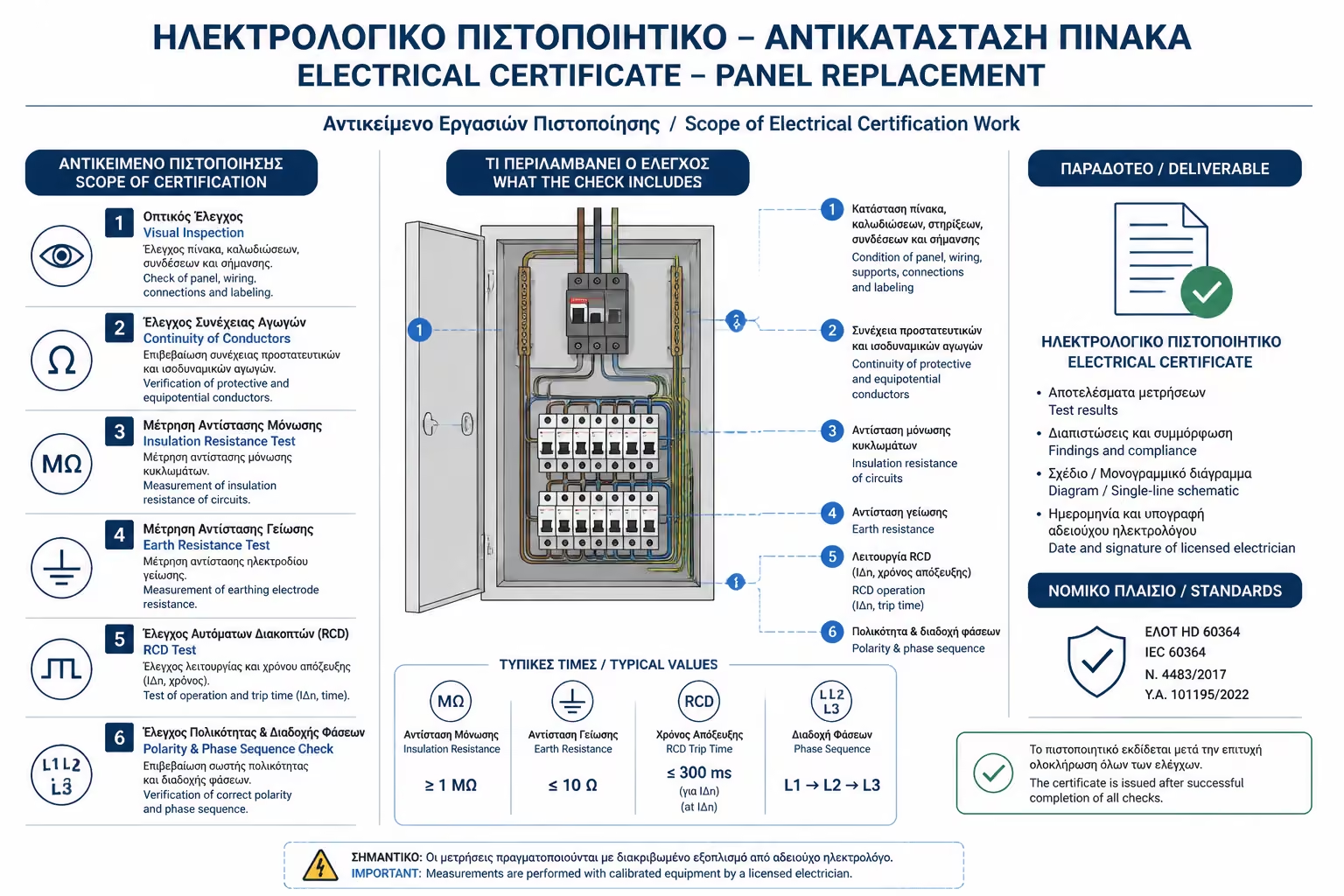
It reflects testing and responsibility, not just a piece of paper.
Recognised branded devices do not carry the same value as anonymous low-cost hardware.
In many cases they are not included and should be declared in advance.
The more explicit the quotation, the fewer surprises during execution.
Return to category.
Go to categoryReturn to the central guide.
Go to guide