
The smell is an early alarm
It often appears before obvious smoke or visible darkening.
An electrical panel rarely fails completely without warning. More often there are signs first: unusual smells, noises, unexplained trips, unstable lighting behaviour or hardware that clearly belongs to another era.
The problem is that many owners become accustomed to those warnings and treat them as minor annoyance until a major fault or fire occurs. The panel is a high-density point of load and thermal stress, so its warnings should be taken literally.
The correct stance is not panic but technical alertness. Once you know which symptoms are truly dangerous, you can call an electrician early and avoid far more expensive or hazardous consequences.
In practice, the guide "5 Signs Your Electrical Panel Needs Immediate Replacement" is not just theory. It works as a checklist for supervisors, owners and installers who want to verify that the chosen solution on site is genuinely safe, measurable and compatible with the wider protection architecture of the building.
A burnt-plastic, rubbery or distinctive fish-like smell near the panel usually means that insulation or a connection is overheating. The cause may be a loose terminal, fatigued hardware or persistent circuit overload.
You do not need visible smoke before treating the issue seriously. By the time damage becomes visible, thermal deterioration may already be advanced inside the enclosure or conductors.
Within the topic "5 Signs Your Electrical Panel Needs Immediate Replacement", the section "1. A burning smell is a sign of active overheating" is more than background information. It is a control point that determines whether the study, the site execution and the future maintenance of the work remain technically coherent and operationally reliable over time.
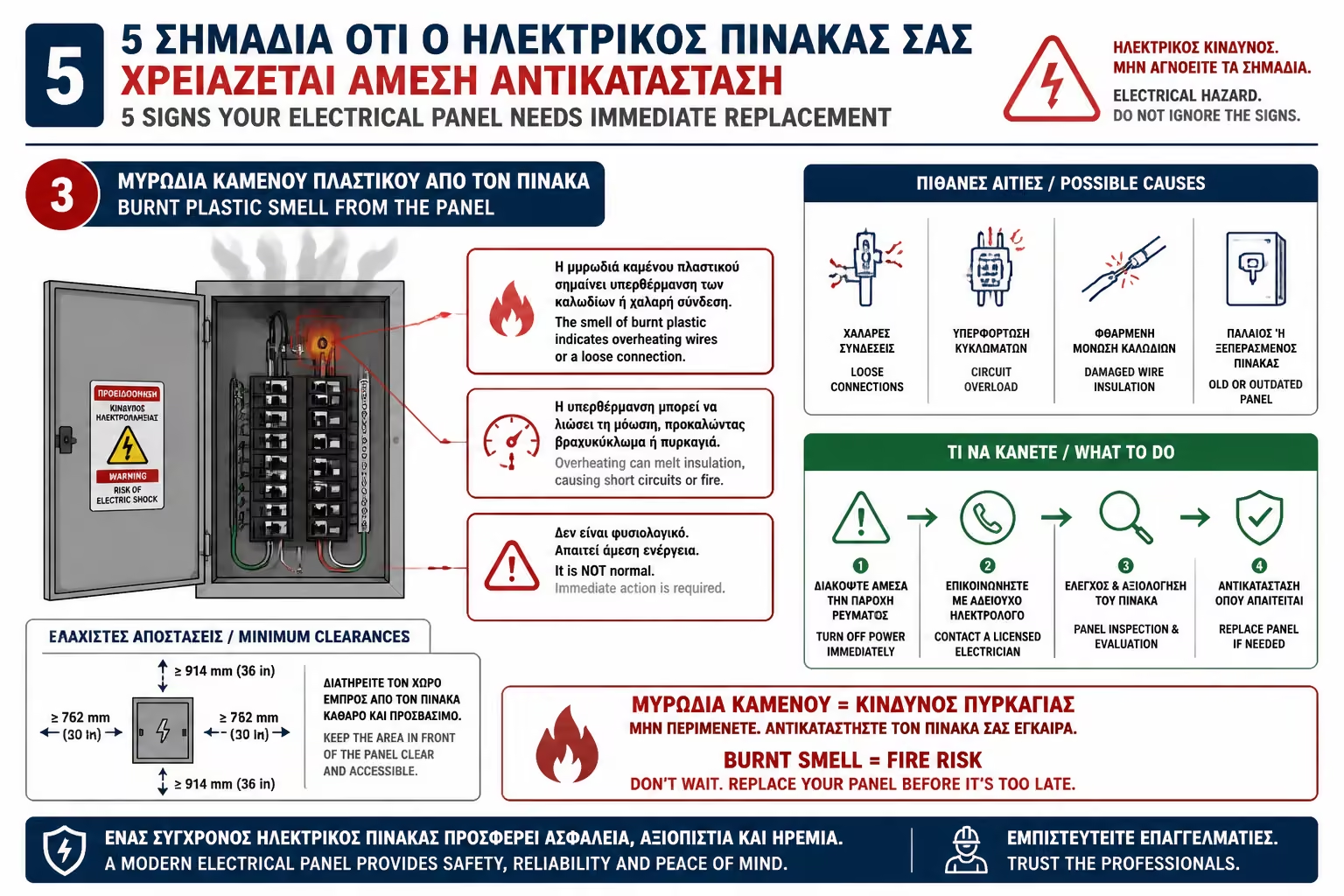
It often appears before obvious smoke or visible darkening.
Reduced contact area causes a local rise in temperature.
Older materials respond poorly to long-term thermal stress.
Delay can turn a warning sign into a fire event.
A residential panel should be essentially quiet, aside from certain controlled devices such as contactors or bell transformers. When continuous buzzing or sizzling appears, there may be arcing across poor contacts.
Electrical arcing creates local temperatures of thousands of degrees and is one of the major fire causes in older panels. The noise is therefore not cosmetic annoyance but a serious warning.
Within the topic "5 Signs Your Electrical Panel Needs Immediate Replacement", the section "2. Buzzing or crackling can indicate electrical arcing" is more than background information. It is a control point that determines whether the study, the site execution and the future maintenance of the work remain technically coherent and operationally reliable over time.
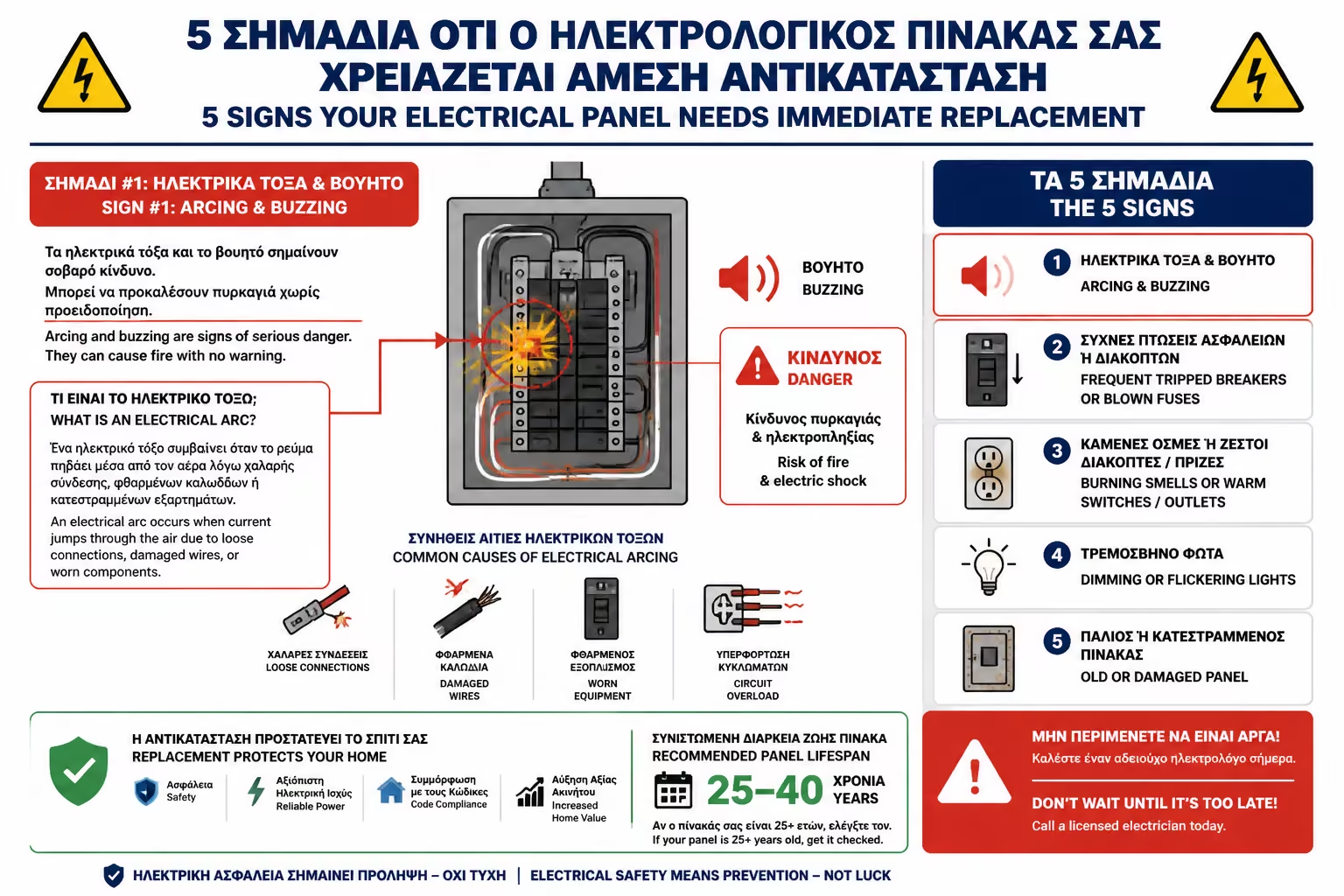
Continuous sound activity is a reason for investigation.
Repeated sparking drives extreme local thermal stress.
Small mechanical flaws can create major electrical risk.
Live arcing is not a theoretical hazard.
If breakers trip more and more often or lights dim every time a heavy appliance starts, that does not automatically mean 'fit a larger breaker'. It often means the panel, connections or circuits were designed for far smaller loads than today's usage.
Frequent tripping may come from fatigued breakers, overload, poor load distribution or a problematic neutral. Flickering similarly points to voltage drop and often reveals an infrastructure that no longer supports modern demands comfortably.
Within the topic "5 Signs Your Electrical Panel Needs Immediate Replacement", the section "3. Frequent trips and flickering show a panel or network under strain" is more than background information. It is a control point that determines whether the study, the site execution and the future maintenance of the work remain technically coherent and operationally reliable over time.
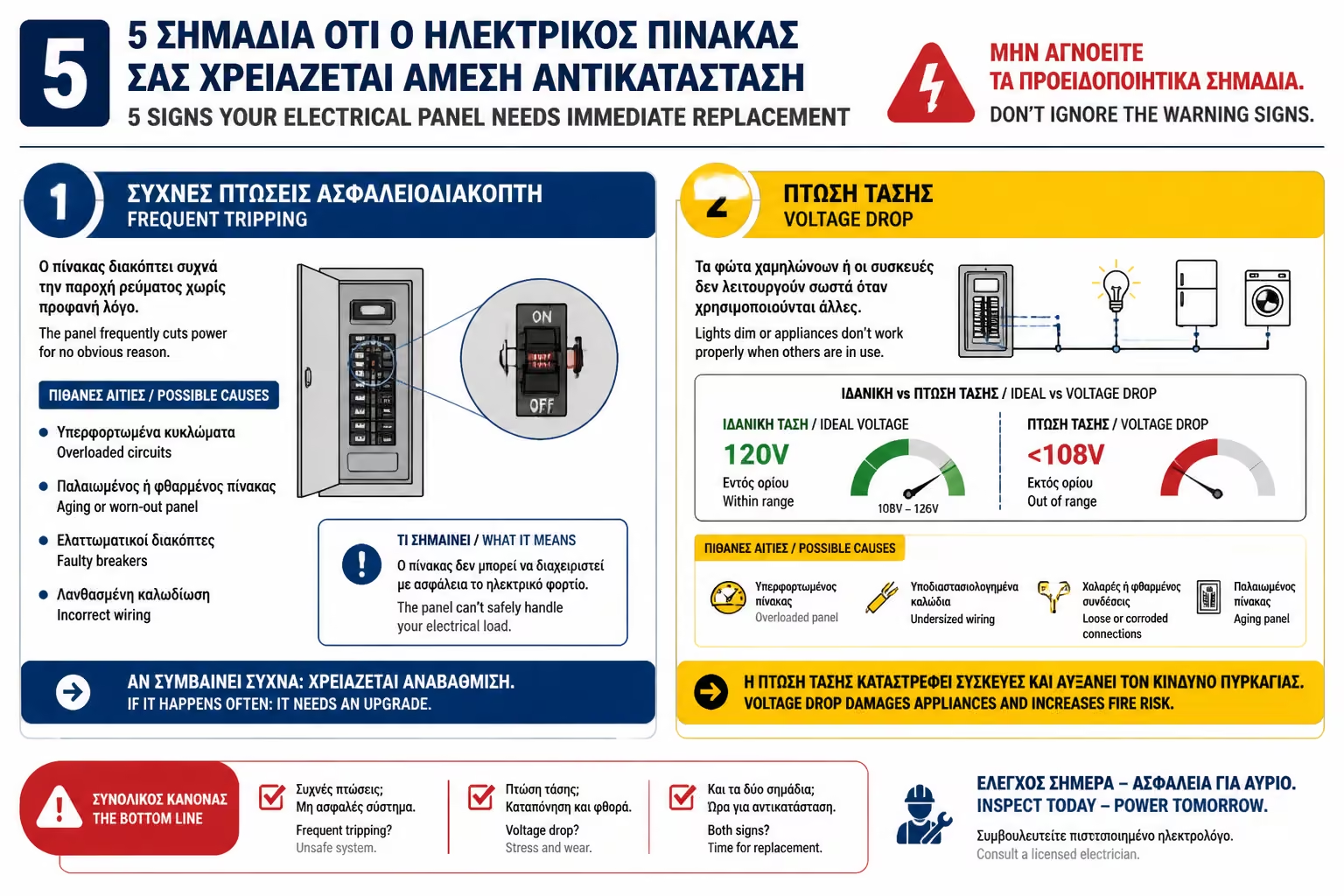
Something in the protection logic or load pattern needs review.
It can expose the cable to more serious risk.
Voltage drop often reveals marginal connections or undersized conductors.
The review must cover panel, circuits and load distribution together.
The presence of porcelain fuses or similar legacy hardware shows that the panel belongs to an era with different load expectations and much lower standards of personal protection. Even if it still 'works', that does not make it acceptable by modern criteria.
The absence of modern RCD protection, limited module space, aged insulation and poor labelling or organisation all make replacement a mature and often urgent decision. Old hardware is not nostalgic. It is technical risk.
Within the topic "5 Signs Your Electrical Panel Needs Immediate Replacement", the section "4. Obsolete hardware is reason enough to modernise" is more than background information. It is a control point that determines whether the study, the site execution and the future maintenance of the work remain technically coherent and operationally reliable over time.
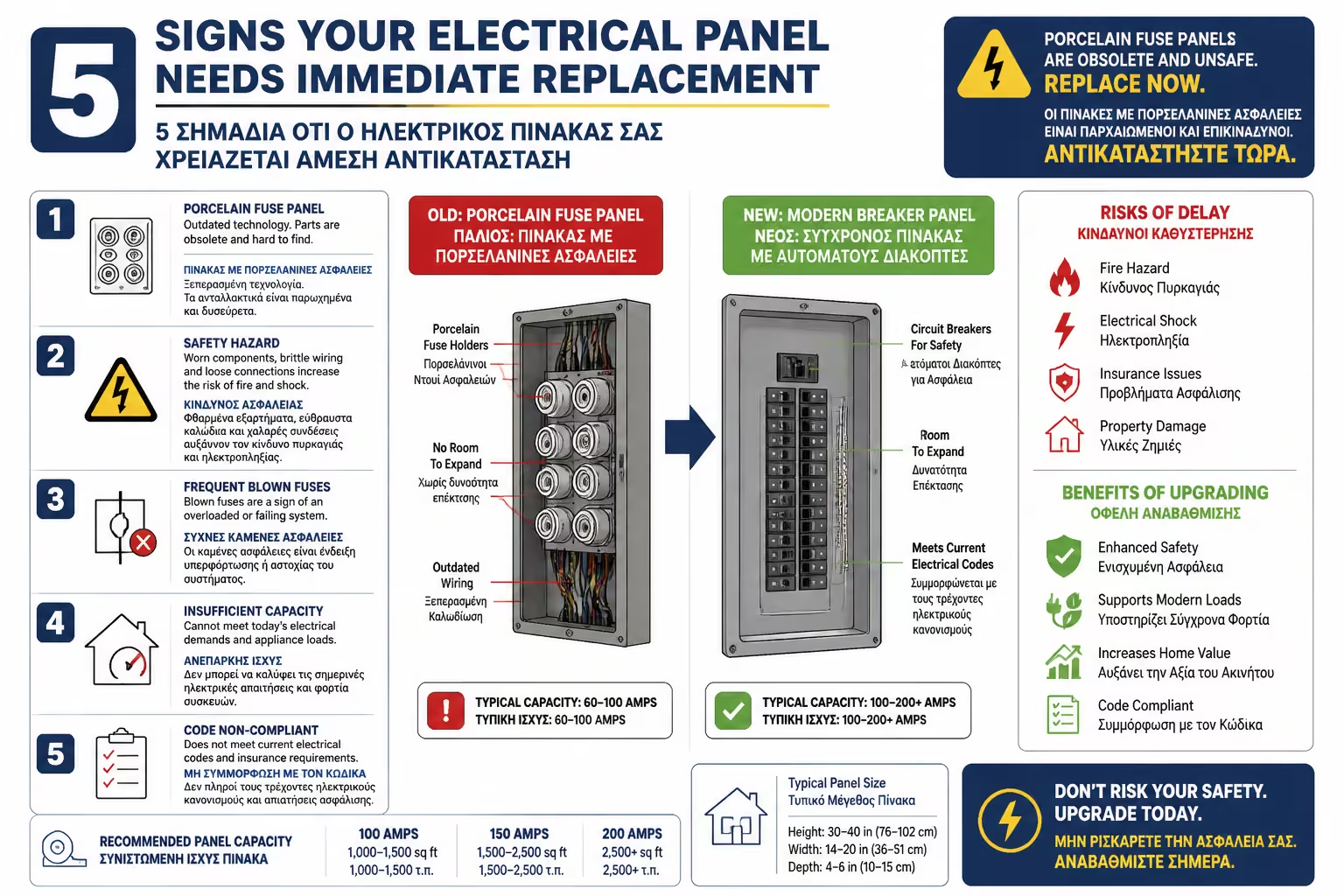
Past functionality does not guarantee present adequacy.
Modern panels provide a much higher level of safety logic.
Older boards struggle to accept sensible upgrades.
Timely replacement is usually the cheapest safe decision.
Return to category.
Go to categoryReturn to the central guide.
Go to guide