
Location matters
Height, isolation and local lightning activity change the risk picture.
External lightning protection concerns the building envelope itself and what happens when lightning decides to strike the structure directly. At that level we are no longer talking only about damaged electronics but about thermal, mechanical and fire effects capable of destroying roofs, insulation layers and major installations.
Even so, a lightning rod is not mandatory everywhere. The correct decision comes from risk assessment rather than instinct or blind copying of neighbouring buildings. Height, geography, materials and building use all change the answer dramatically.
If protection is justified, the project then requires the correct capture technology, the correct down-conductor geometry and a reliable connection to earth. Otherwise an incomplete or badly designed system can create a false sense of security instead of real protection.
In practice, the guide "External Lightning Protection (Faraday Cage vs Rods): Design Principles and Requirements for Exposed Installations" is not just theory. It works as a checklist for supervisors, owners and installers who want to verify that the chosen solution on site is genuinely safe, measurable and compatible with the wider protection architecture of the building.
We do not install a lightning rod simply because it sounds serious or because an exposed house looks vulnerable. The decision should be based on risk assessment considering strike frequency, exposure, building use and the consequences of failure.
A simple dwelling in a dense urban block and an isolated building on a hill have completely different risk profiles. The same applies to schools, hospitals, hotels, industrial plants or culturally important buildings.
Within the topic "External Lightning Protection (Faraday Cage vs Rods): Design Principles and Requirements for Exposed Installations", the section "1. The need for an external system comes from risk assessment" is more than background information. It is a control point that determines whether the study, the site execution and the future maintenance of the work remain technically coherent and operationally reliable over time.
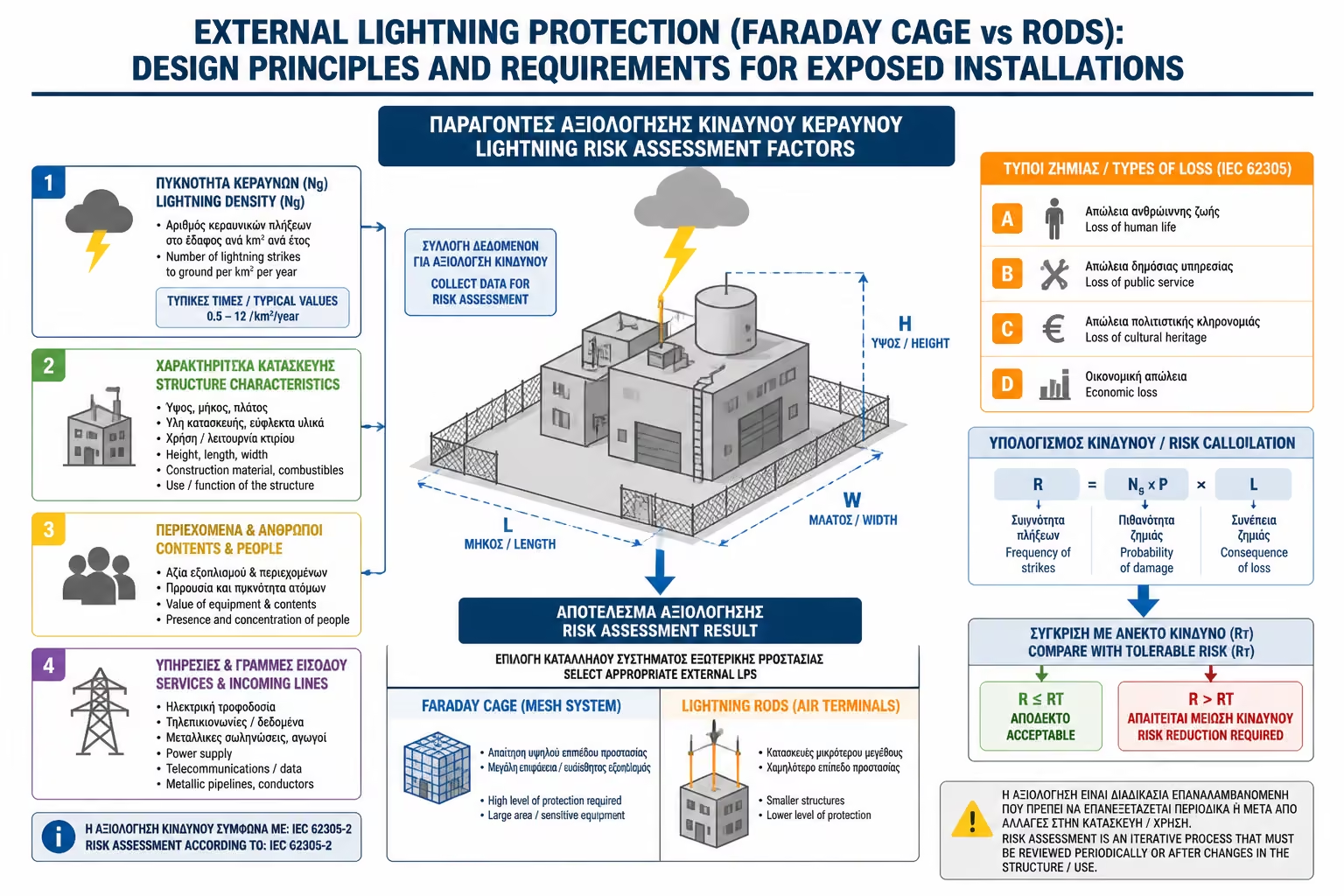
Height, isolation and local lightning activity change the risk picture.
The consequences of a strike are not the same in a house and a hospital.
Combustible or lightweight envelopes affect the strategy strongly.
Need is demonstrated first and equipment is selected afterwards.
The classic Franklin rod is a simple and reliable option for smaller or clearly defined exposed points such as chimneys, masts or small roofs. Its role is not to magically attract lightning from afar but to provide a predictable capture point when a strike reaches that zone.
Its protection range is limited and geometrically defined. For that reason it is not a universal answer for large or complex buildings where the roof area and possible strike paths exceed the simple protection cone of one rod.
Within the topic "External Lightning Protection (Faraday Cage vs Rods): Design Principles and Requirements for Exposed Installations", the section "2. The Franklin rod gives local protection with clear limits" is more than background information. It is a control point that determines whether the study, the site execution and the future maintenance of the work remain technically coherent and operationally reliable over time.
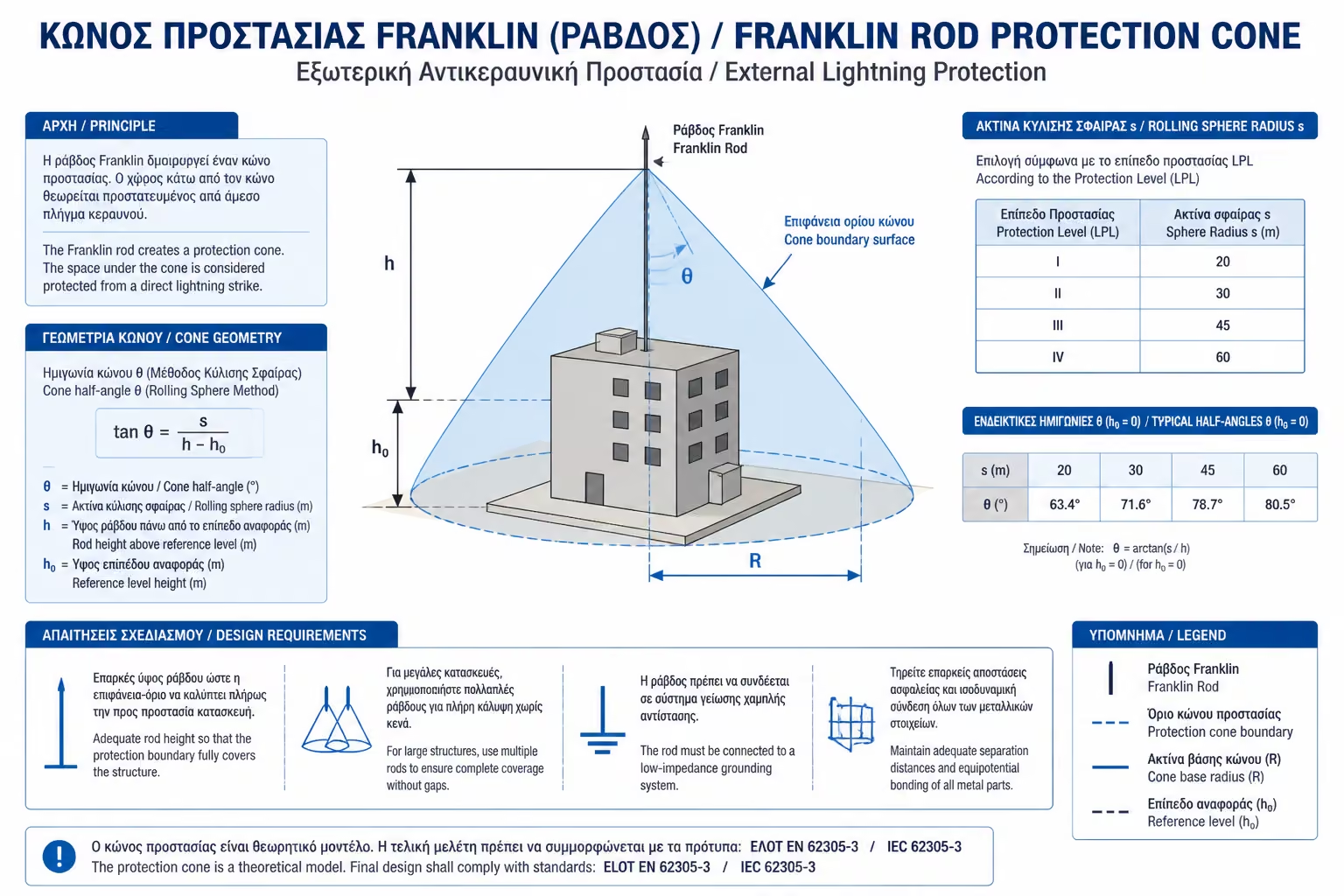
It works well on smaller or clearly defined geometries.
It does not cover every surrounding surface automatically.
The highest and most exposed point is typically the logical location.
Large envelopes often require broader collection systems.
A roof mesh with multiple down-conductors distributes lightning energy around the building perimeter. That architecture is far more mature for large roofs, apartment blocks, industrial buildings and other high-consequence facilities.
Its benefit is not limited to capture alone. A more even current distribution also reduces internal electromagnetic stress, which supports the internal protection strategy as well.
Within the topic "External Lightning Protection (Faraday Cage vs Rods): Design Principles and Requirements for Exposed Installations", the section "3. The Faraday cage is the most complete option for large or critical buildings" is more than background information. It is a control point that determines whether the study, the site execution and the future maintenance of the work remain technically coherent and operationally reliable over time.
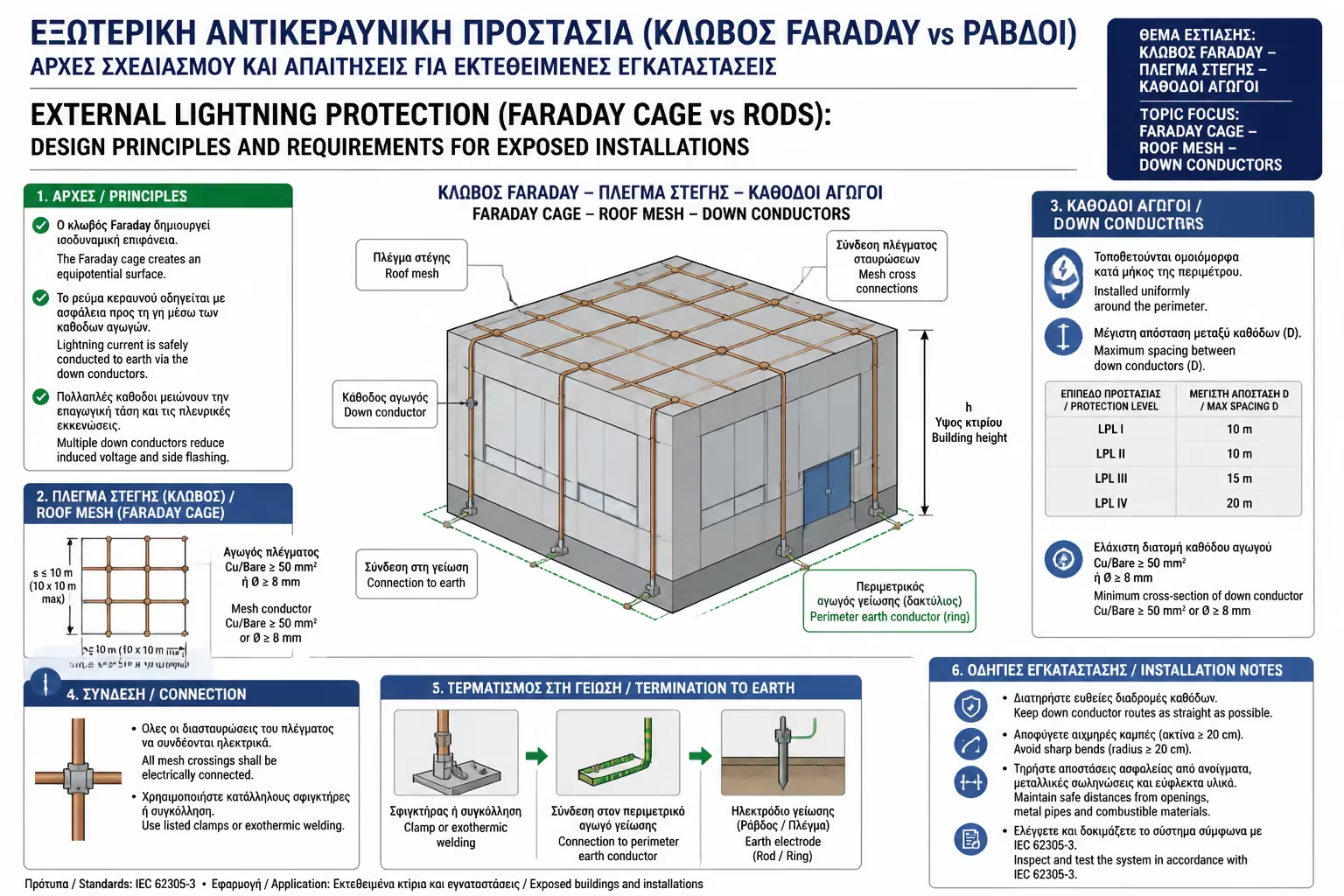
It treats the roof as an organised collection field.
Energy is not forced through one dangerously concentrated path.
This is the mature choice for large and critical structures.
Lower electromagnetic stress brings secondary benefits inside the building.
Capturing the lightning is only the first stage. If down-conductors include sharp bends, poor routing or weak connections to earth, the energy can divert, flash over or find another path through the building.
That is why open curves, low-impedance paths, good foundation earthing or another reliable electrode and strong bonding to the rest of the systems are decisive. A lightning rod without serious down-conductors and earthing is only half a system.
Within the topic "External Lightning Protection (Faraday Cage vs Rods): Design Principles and Requirements for Exposed Installations", the section "4. Whatever the capture technology, down-conductors and earthing decide the result" is more than background information. It is a control point that determines whether the study, the site execution and the future maintenance of the work remain technically coherent and operationally reliable over time.
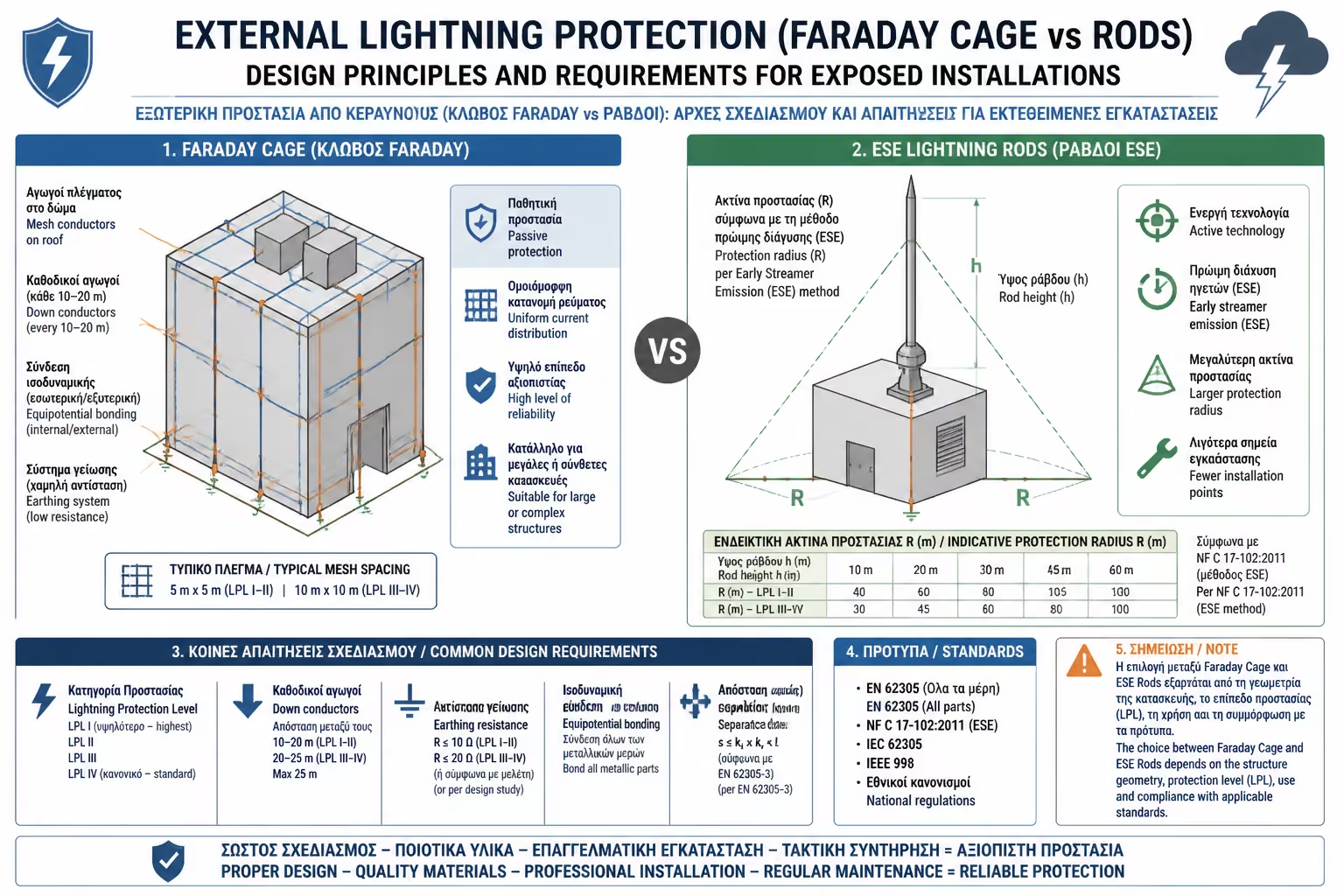
Sharp bends increase the risk of unwanted discharge paths.
Lightning energy needs a low-impedance exit into the ground.
The external system must cooperate with the internal protection network.
Correct design and execution determine whether the system works when it matters.
Return to category.
Go to categoryReturn to the central guide.
Go to guide