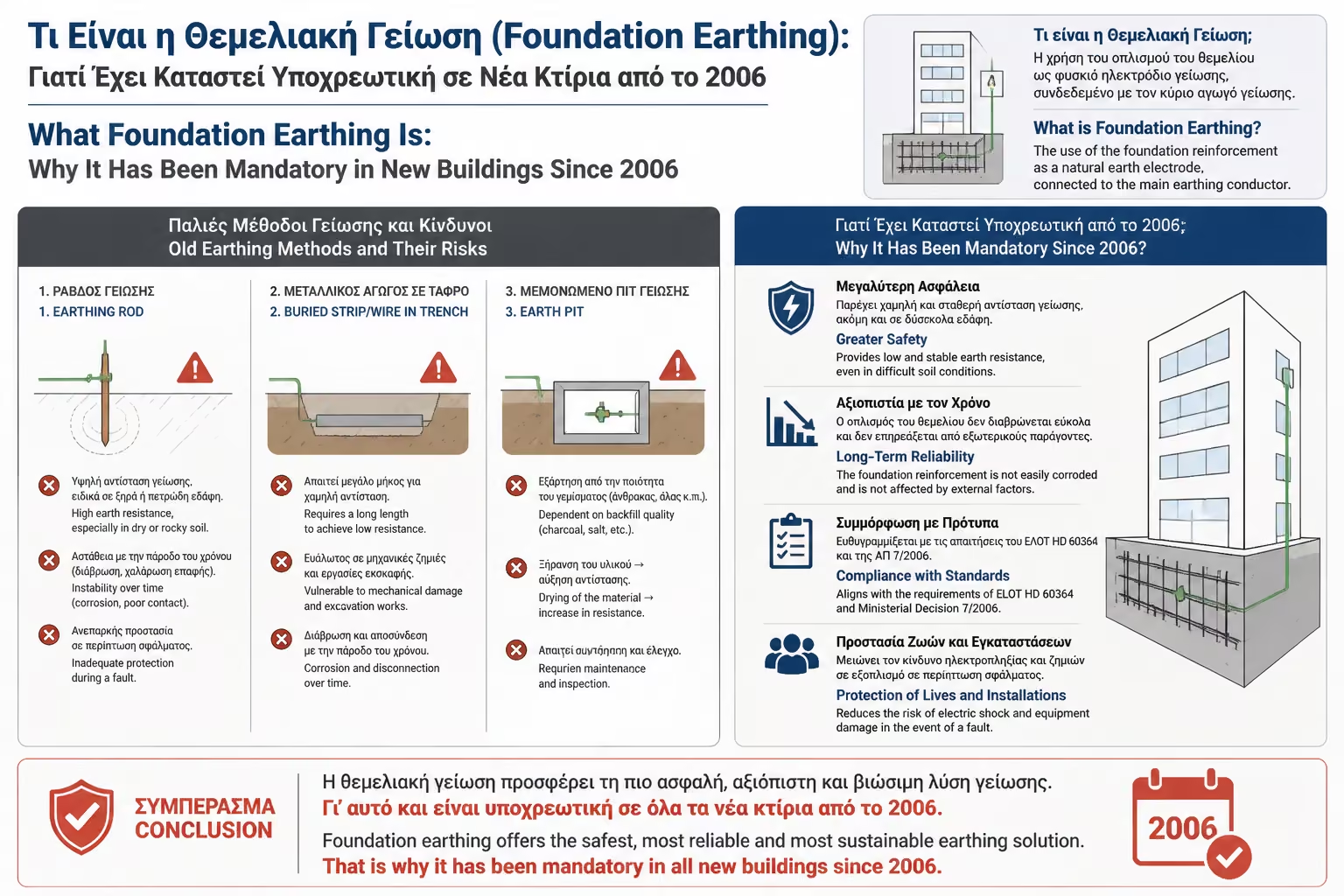
Rods and plates have limits
Their behaviour depends heavily on soil, moisture and depth conditions.
Every modern protection concept, from the RCD to surge protection, relies on one basic fact: when dangerous current or surge energy must be discharged, there must truly be a reliable path to earth. If that path is poor, improvised or unstable, the rest of the protection strategy is degraded.
Foundation earthing is the mature answer to that problem. Instead of relying on isolated improvised solutions, it uses the building structure itself, especially the foundation zone, to create a broad, stable and long-lived connection to the ground.
That is also why it became mandatory in new construction. It is not a luxury, nor a specialist detail for only a few projects. It is the correct base on which every serious new electrical installation should be built.
In older practice we often find rods, plates or even arrangements that relied on metallic pipe networks. While some of these methods worked for their time, they carried significant weaknesses: dependence on local soil conditions, difficulty in maintaining low resistance and vulnerability to later changes or interventions by others.
The issue is not only whether such a solution works on the day it is measured, but whether it remains genuinely reliable over decades. That is exactly where older methods fall behind foundation earthing, which creates a far more permanent and structurally integrated relationship with the building.
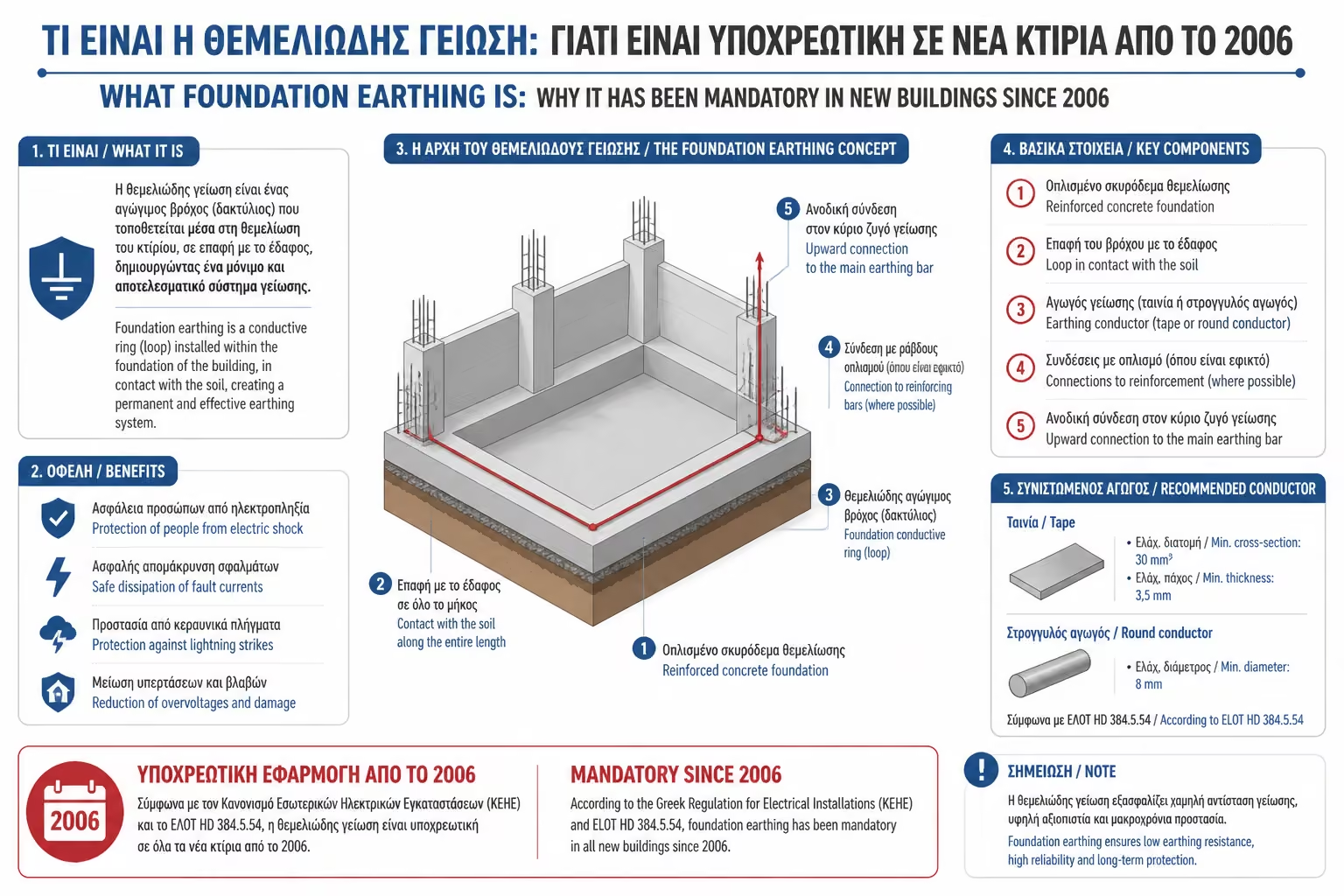
Their behaviour depends heavily on soil, moisture and depth conditions.
Dependence on third-party networks or future alterations is structurally weak logic.
Earthing is not designed for a single inspection but for the whole life of the building.
In a modern project there is no reason to begin from outdated logic.
In foundation earthing, the galvanised strip or equivalent conductor is placed within the foundation zone and works together with the concrete and reinforcement. Concrete is not merely a structural material. It forms a stable hygroscopic mass that supports broad and consistent contact with the ground.
The large geometric extent of the foundation, combined with the stable conditions in that buried environment, gives behaviour that is far more consistent over time than a small local solution. The result is an earthing system deeply integrated into the building itself.
The foundations provide far more cooperative geometry than a local rod.
The behaviour of the system becomes more uniform and longer-lived.
Earthing stops being an attachment and becomes part of the structure.
All other protective systems stand on better grounding.
Making foundation earthing mandatory in new buildings is not bureaucratic burden. It is the formal recognition that this is the technically correct and safest base solution for a new building’s grounding system. While the project is still at foundation stage, it is the only moment when this can be done properly and economically.
If the building is completed without such infrastructure, any later attempt to achieve equivalent quality becomes harder, more expensive and usually technically inferior. The law therefore forces the design process to use the correct construction timing.
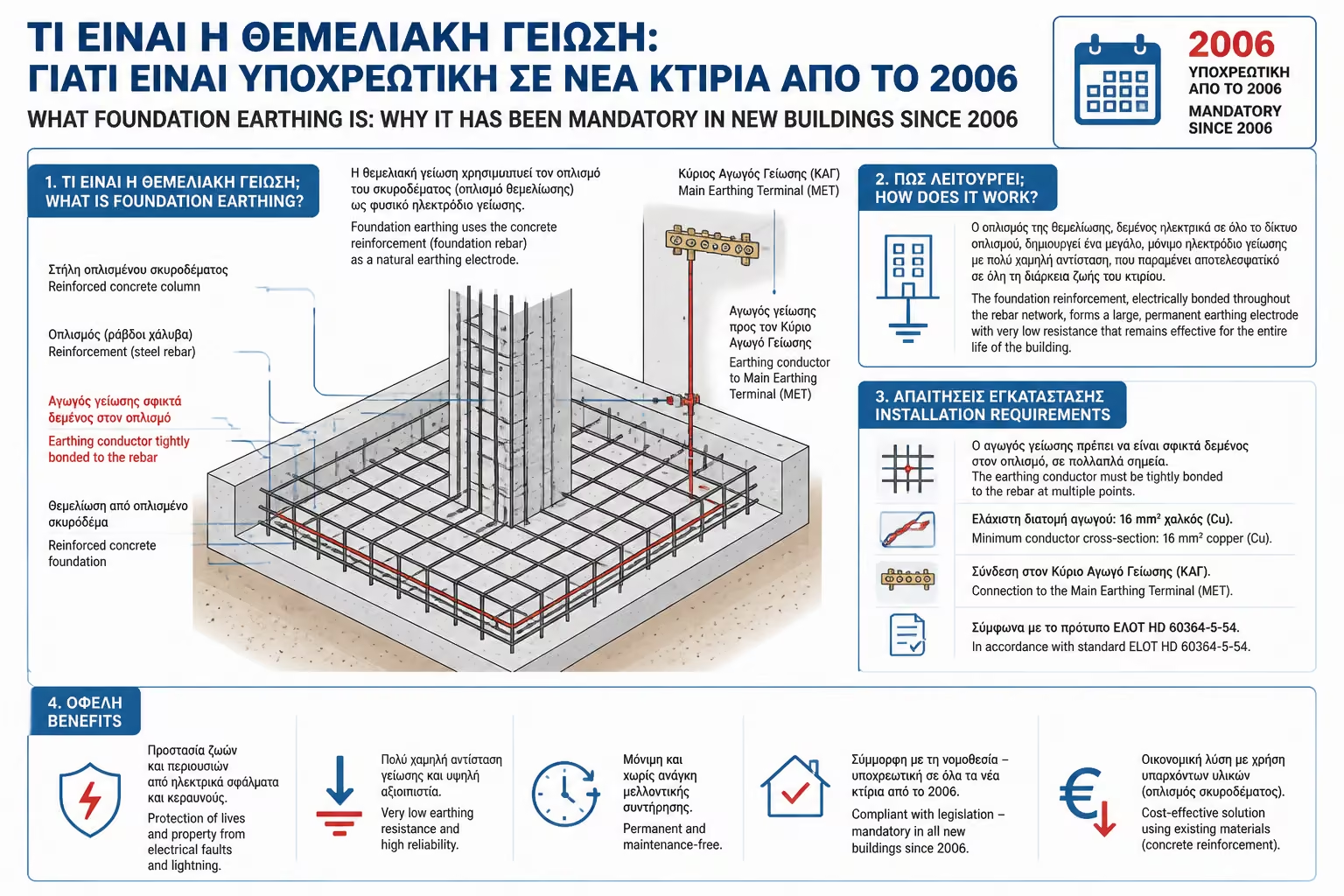
It was not imposed arbitrarily but because it represents best practice for new work.
After structural completion, equal quality is much harder to achieve.
Integration during construction is far more efficient than after-the-fact solutions.
The standard turns best practice into a minimum requirement.
When we design RCD protection, surge protection, equipotential bonding and the wider electrical safety strategy of a building, we are effectively assuming that sound earthing infrastructure exists. If that base is missing or unstable, the other protections may look complete on paper while underperforming in reality.
Foundation earthing is therefore not just another chapter of electrical design. It is the root of it. The more seriously it is treated during construction, the more reliably all the systems that follow can operate over decades of building use.
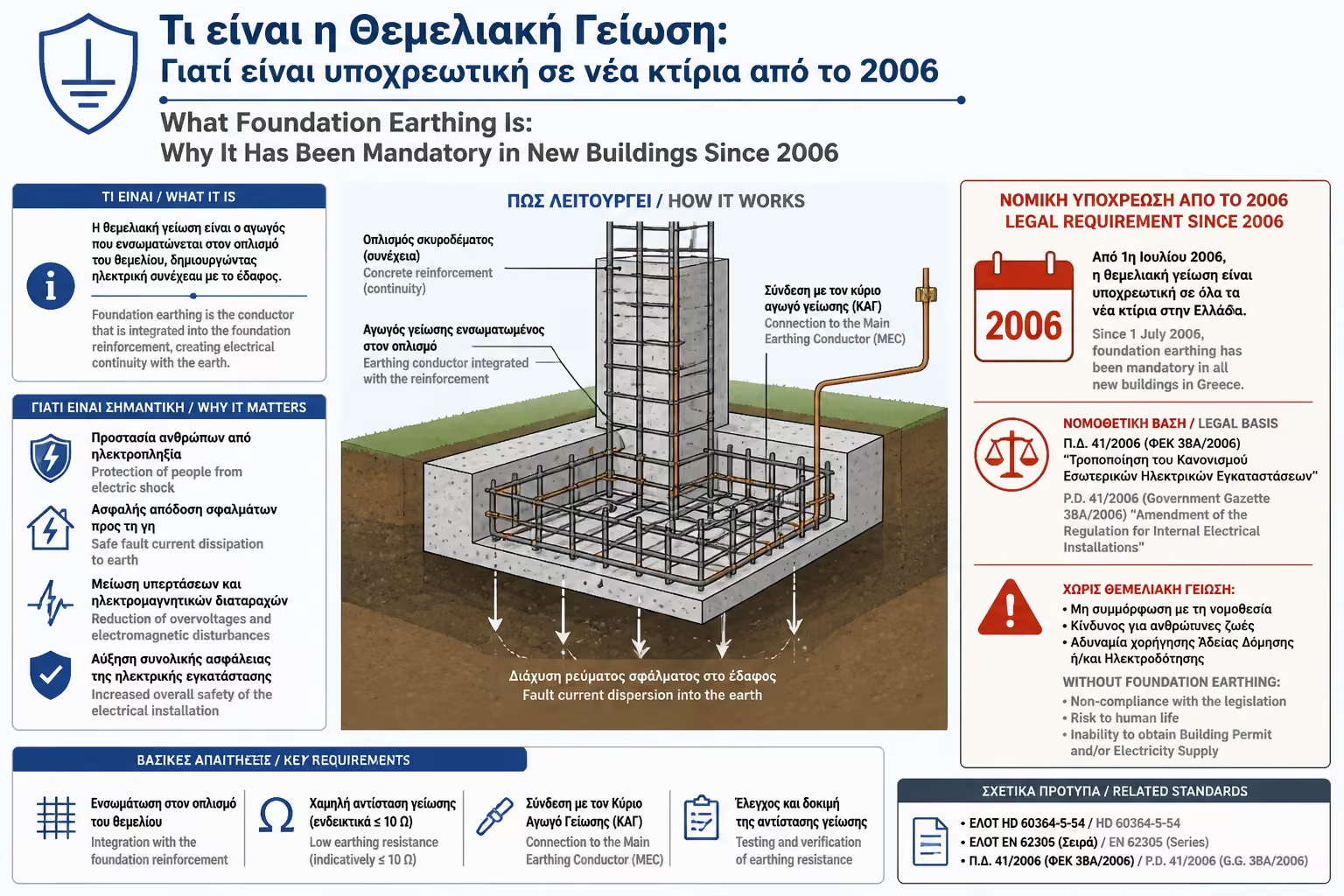
RCDs, SPDs and bonding all rely on it.
Without proper earth, the rest of the protection works at a reduced level.
The building gains a true safety foundation instead of isolated add-ons.
Grounding quality is determined before the concrete is poured, not after.
Foundation earthing is not merely a conductor to the soil. It is the decision that the building will have a serious electrical foundation from the first day of its life.
Return to category.
Go to categoryReturn to the central guide.
Go to guide