
The first zone sees the greatest energy
The main service entry needs the heaviest initial stage of surge control.
Most owners associate lightning danger with a direct strike on the roof. In reality, many serious residential failures come from indirect strikes, where lightning energy reaches the building through power, telecom or data networks.
Internal lightning protection does not try to 'cancel' lightning. It reduces the energy progressively until it reaches levels that equipment and the internal electrical environment can tolerate. That strategy is implemented with protection zones, surge protective devices and unified equipotential bonding.
In an era full of inverters, routers, cameras, smart-home systems and expensive electronics, internal lightning protection is not a luxury. It is a basic form of building hardening against the most deceptive way surges enter a property.
In practice, the guide "Internal Lightning Protection: How to Protect a Building from Indirect Strikes" is not just theory. It works as a checklist for supervisors, owners and installers who want to verify that the chosen solution on site is genuinely safe, measurable and compatible with the wider protection architecture of the building.
Modern lightning engineering does not depend on one component that magically solves everything. It divides the building into exposure zones and places the appropriate level of protection at each boundary so that the energy is reduced step by step.
That way of thinking explains why one class of device belongs at the service entry, another at sub-panels and another close to sensitive end equipment. Protection is a chain, not a single box.
Within the topic "Internal Lightning Protection: How to Protect a Building from Indirect Strikes", the section "1. The LPZ philosophy organises the building into successive defence zones" is more than background information. It is a control point that determines whether the study, the site execution and the future maintenance of the work remain technically coherent and operationally reliable over time.
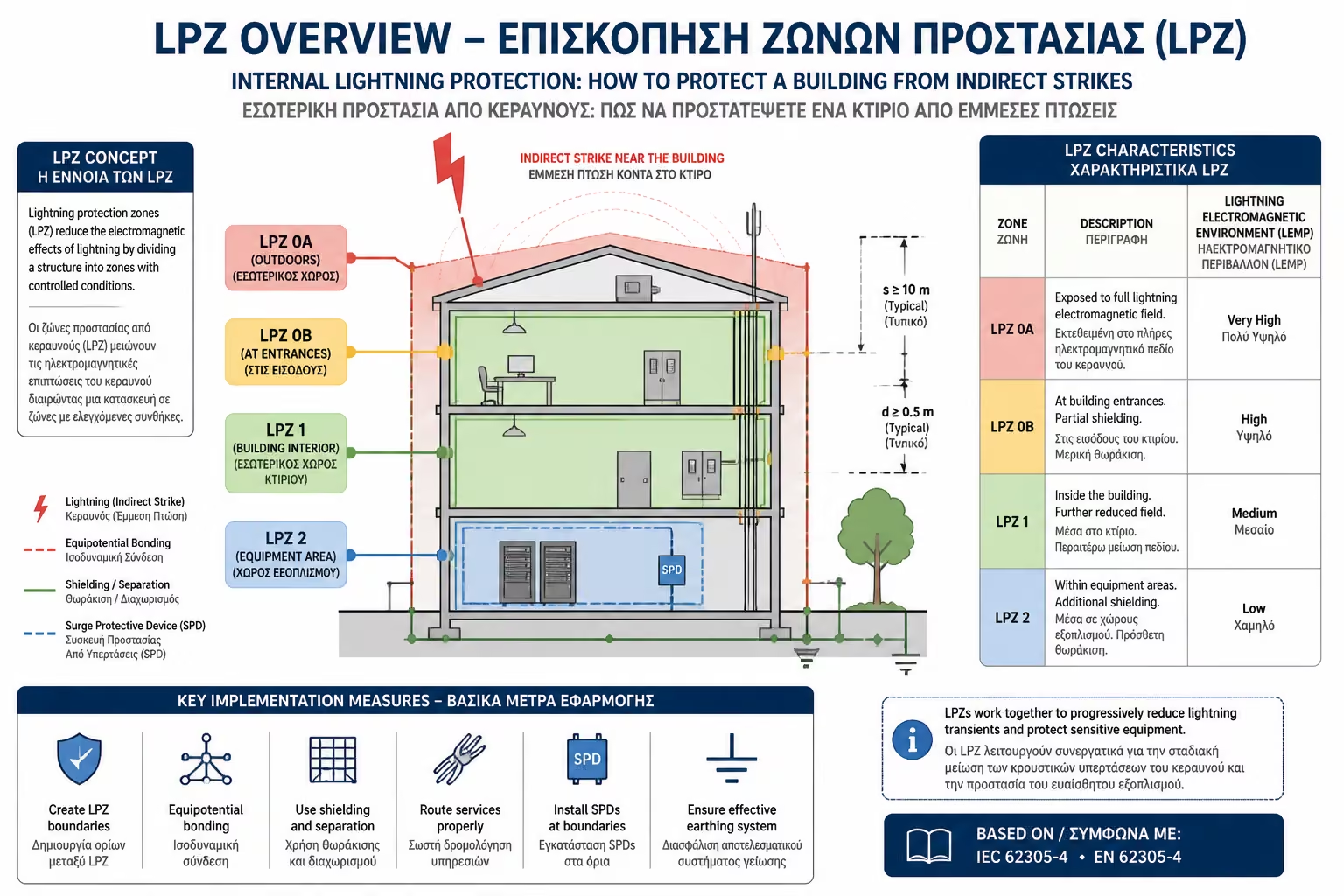
The main service entry needs the heaviest initial stage of surge control.
Each transition lowers the remaining surge intensity.
Microelectronics tolerate much less stress than distribution hardware.
It turns protection into something predictable and technically manageable.
The SPD at the building entry absorbs the most violent part of the event. Additional protection at sub-panels and a final layer near sensitive appliances complete the energy reduction path.
If we try to solve everything with one small device in the wrong place, the result is often inadequate. Every protection stage has to cooperate with the one before it and the one after it.
Within the topic "Internal Lightning Protection: How to Protect a Building from Indirect Strikes", the section "2. SPDs must be staged, not scattered randomly" is more than background information. It is a control point that determines whether the study, the site execution and the future maintenance of the work remain technically coherent and operationally reliable over time.
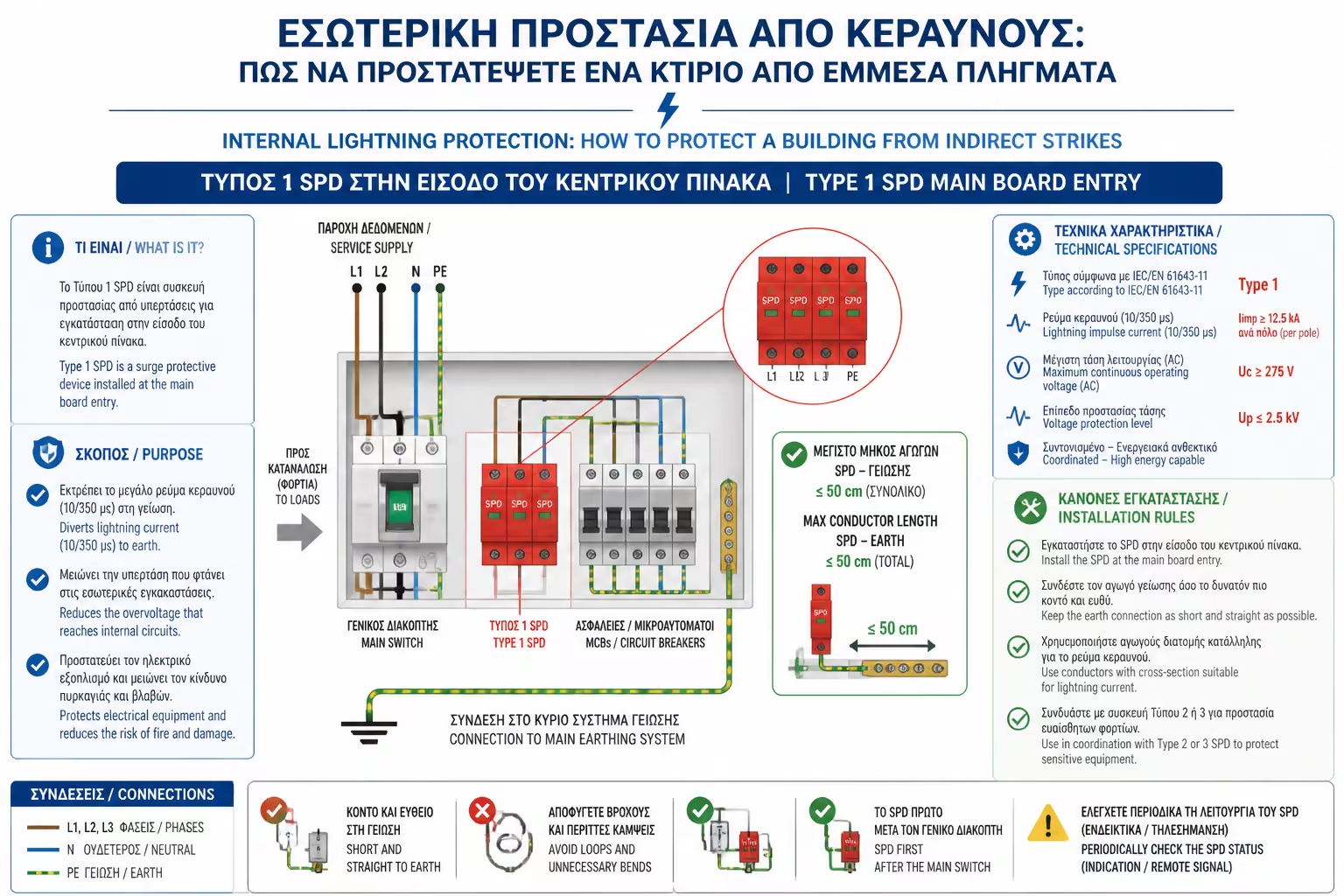
It is designed for the impulse energy present at the service entry.
Long internal runs create new vulnerability inside the property.
Smart TVs, computers and control gear need a finer level of limitation.
SPDs should be treated as a system rather than isolated accessories.
A common mistake is to protect only the power supply and forget that every copper communication line can act as a surge path. Routers, telephone pairs, Ethernet and coaxial feeds often sit inside the same vulnerability network.
That is why serious internal protection also extends to data lines where needed. Fibre changes the picture positively, but wherever copper remains, surge entry remains possible too.
Within the topic "Internal Lightning Protection: How to Protect a Building from Indirect Strikes", the section "3. Lightning also enters through data, telecom and antenna lines" is more than background information. It is a control point that determines whether the study, the site execution and the future maintenance of the work remain technically coherent and operationally reliable over time.
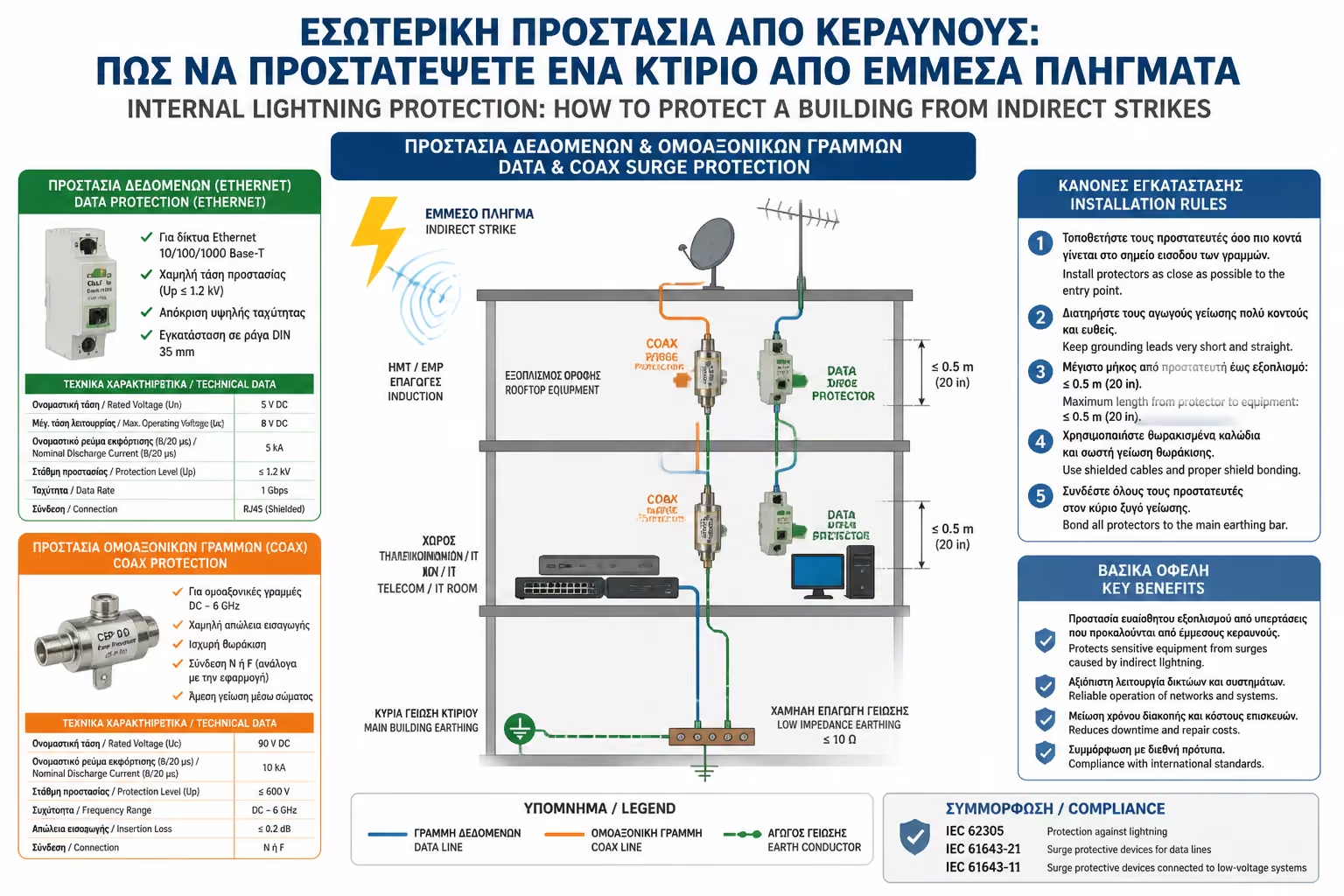
Any metallic communications line can carry surge energy inward.
From there damage can spread through the whole domestic network.
They sit near the roof and connect directly to sensitive electronics.
Once the medium stops being conductive, the threat changes fundamentally.
Without a common earth reference, different circuits can momentarily rise to different voltages during a lightning event. That is exactly when flashover and uncontrolled internal paths appear, right where we thought we had protection.
The common bonding bar and the building earthing system tie SPDs, metal services and related systems into one strategy. Internal lightning protection never stands alone; it always depends on serious earthing and bonding beneath it.
Within the topic "Internal Lightning Protection: How to Protect a Building from Indirect Strikes", the section "4. Every system must terminate at a common bonding bar" is more than background information. It is a control point that determines whether the study, the site execution and the future maintenance of the work remain technically coherent and operationally reliable over time.
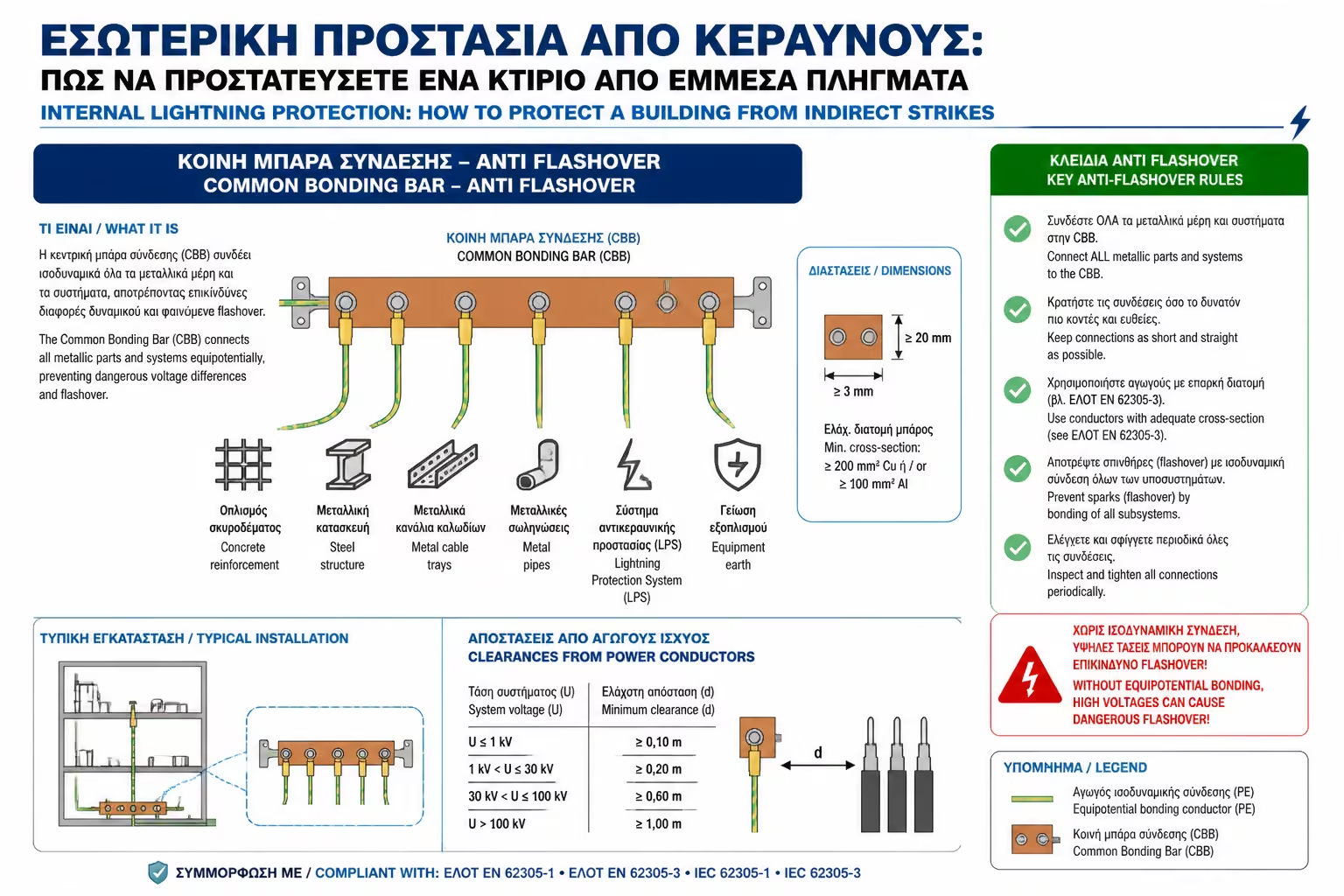
It reduces dangerous voltage differences between separate networks.
It still needs a safe route to divert the energy away.
It becomes the physical basis of internal protection.
Power, data and metallic services must be treated as one coordinated set.
Return to category.
Go to categoryReturn to the central guide.
Go to guide