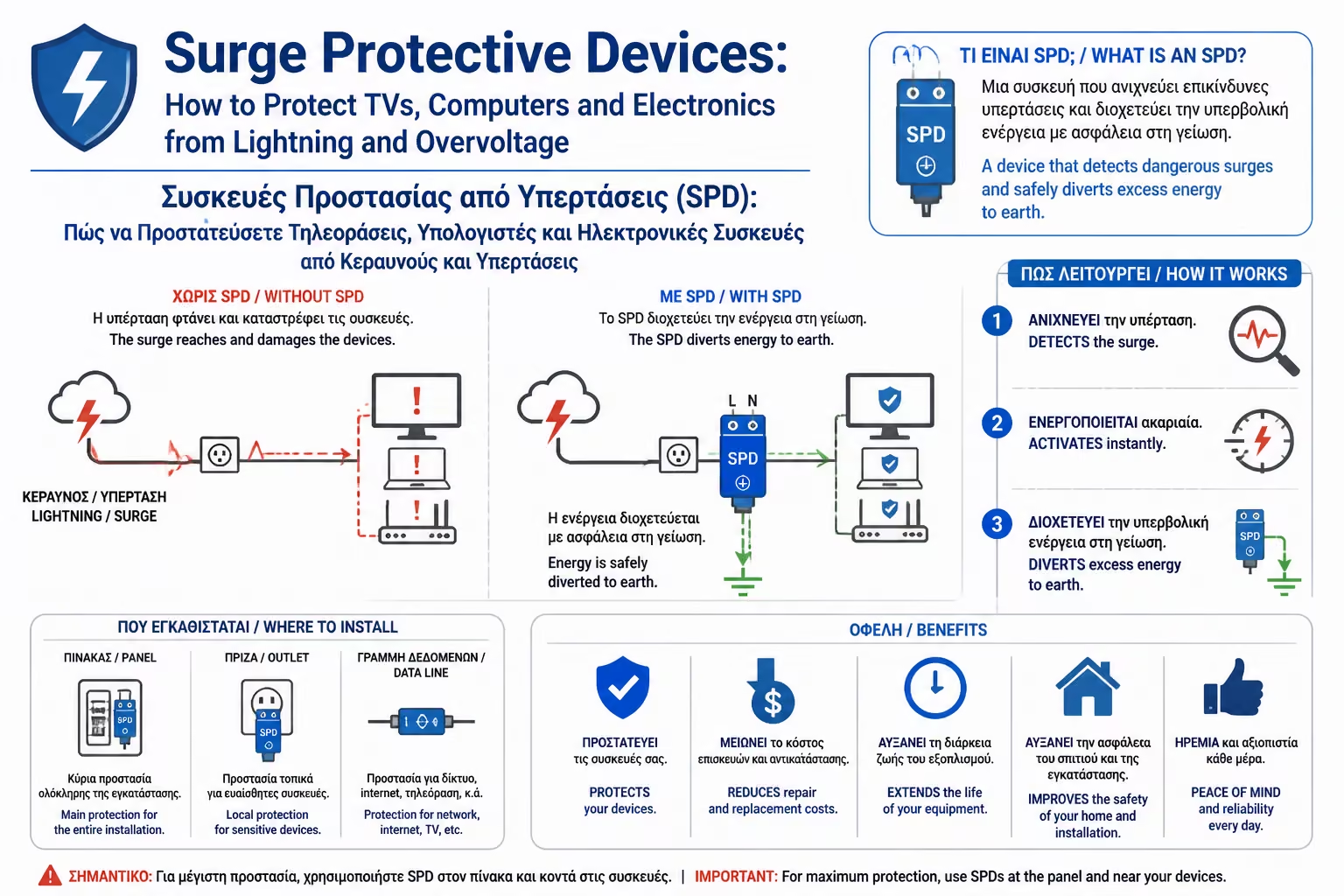
Short duration does not reduce risk
A very brief spike can still destroy sensitive boards.
Most household appliances today contain sensitive electronics. That means a momentary overvoltage from the grid or a nearby lightning event may leave an old incandescent lamp unaffected, yet instantly destroy boards, power supplies, routers, televisions, inverter air-conditioners or automation equipment.
The breaker and the RCD are not designed to deal with those voltage spikes. They may be entirely correct for overcurrent and leakage protection while still leaving equipment exposed to a violent electrical surge lasting only an instant but capable of puncturing delicate electronic circuits.
This is exactly where surge protective devices enter the picture. Their value is not that they cut the power, but that they divert dangerous energy to earth before it can pass through the installation and the sensitive loads connected to it.
Surges arise either from external events, such as lightning strikes or induced effects from nearby lightning, or from internal switching and grid irregularities. The crucial point is that the duration is short, yet the voltage magnitude can be enormous compared with what appliance electronics can tolerate.
Because the duration is so short, people often assume a surge is not a serious event. In practice, electronics do not need time to be destroyed. They need only one sufficiently high spike to puncture insulation, semiconductors or power-input stages.
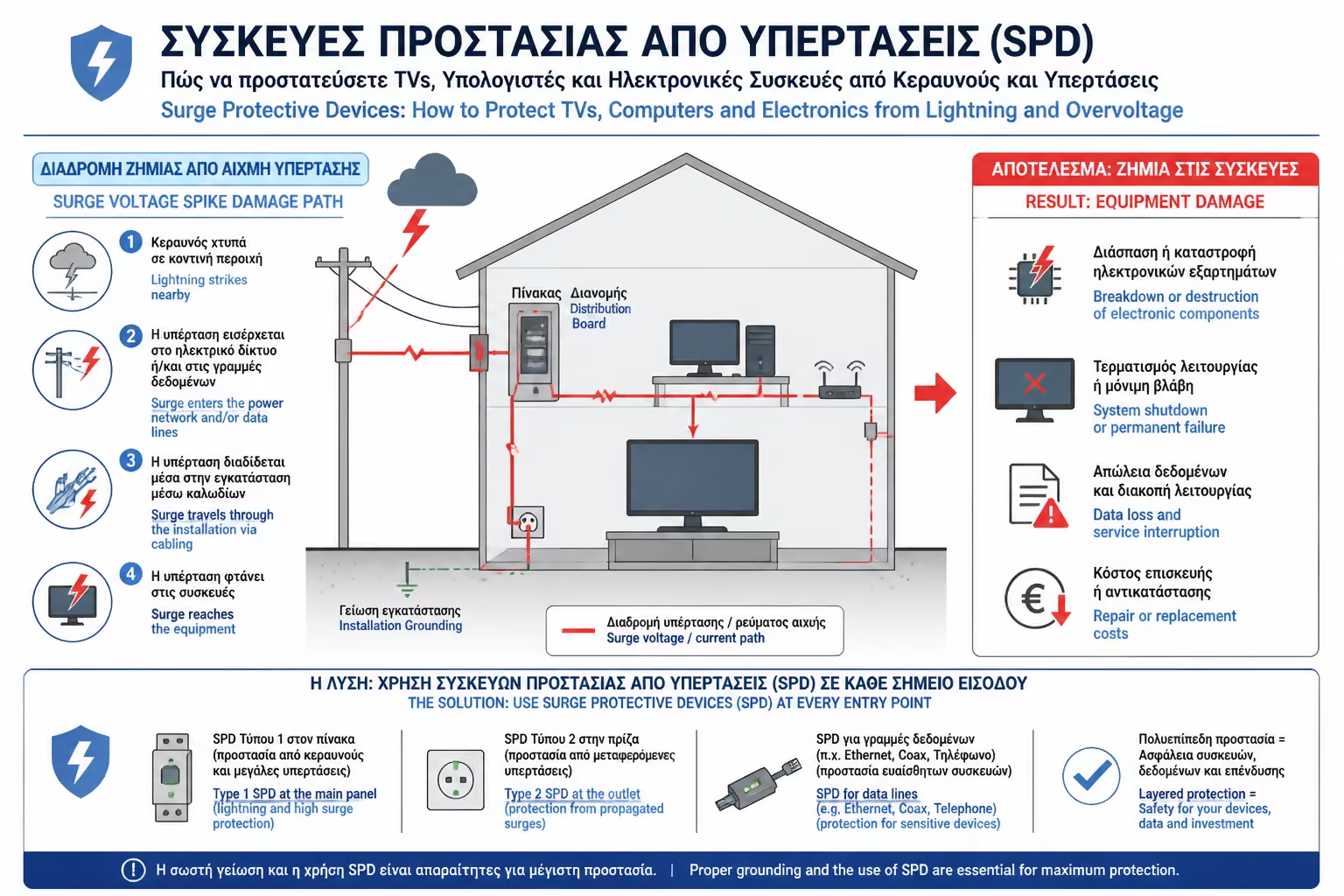
A very brief spike can still destroy sensitive boards.
Nearby events can induce serious surges in the installation.
Switching events and supply interruptions or returns are not harmless.
The more sophisticated the equipment, the greater the need for protection.
The correct mental model is not that an SPD behaves like a breaker. It does not wait to disconnect the circuit in a classical way. Instead, when voltage rises above a safe threshold, it creates a controlled low-impedance path to earth so the excess energy can leave through that route.
That is also why grounding quality is non-negotiable. An SPD without a meaningful earthing path has nowhere to send the energy. Its effectiveness therefore depends directly on the grounding architecture of the building and on correct placement within the panel.
Its role is to channel energy rather than trip like an MCB.
Without a proper earth path, the protection is incomplete.
Correct integration in the panel improves the real protective result.
The goal is to release the spike before it reaches the equipment.
Type 1 relates to heavier lightning scenarios and is used where the installation genuinely requires it, such as buildings with greater exposure or specific lightning-protection architecture. Type 2 is the main residential panel solution in a very large share of homes. Type 3 sits even closer to sensitive equipment as a final finer protective stage.
A proper strategy is not to buy any surge strip and assume the problem is solved. It is to understand that surge protection is layered: coarse diversion at the centre, complementary protection near loads and always in cooperation with the grounding system.
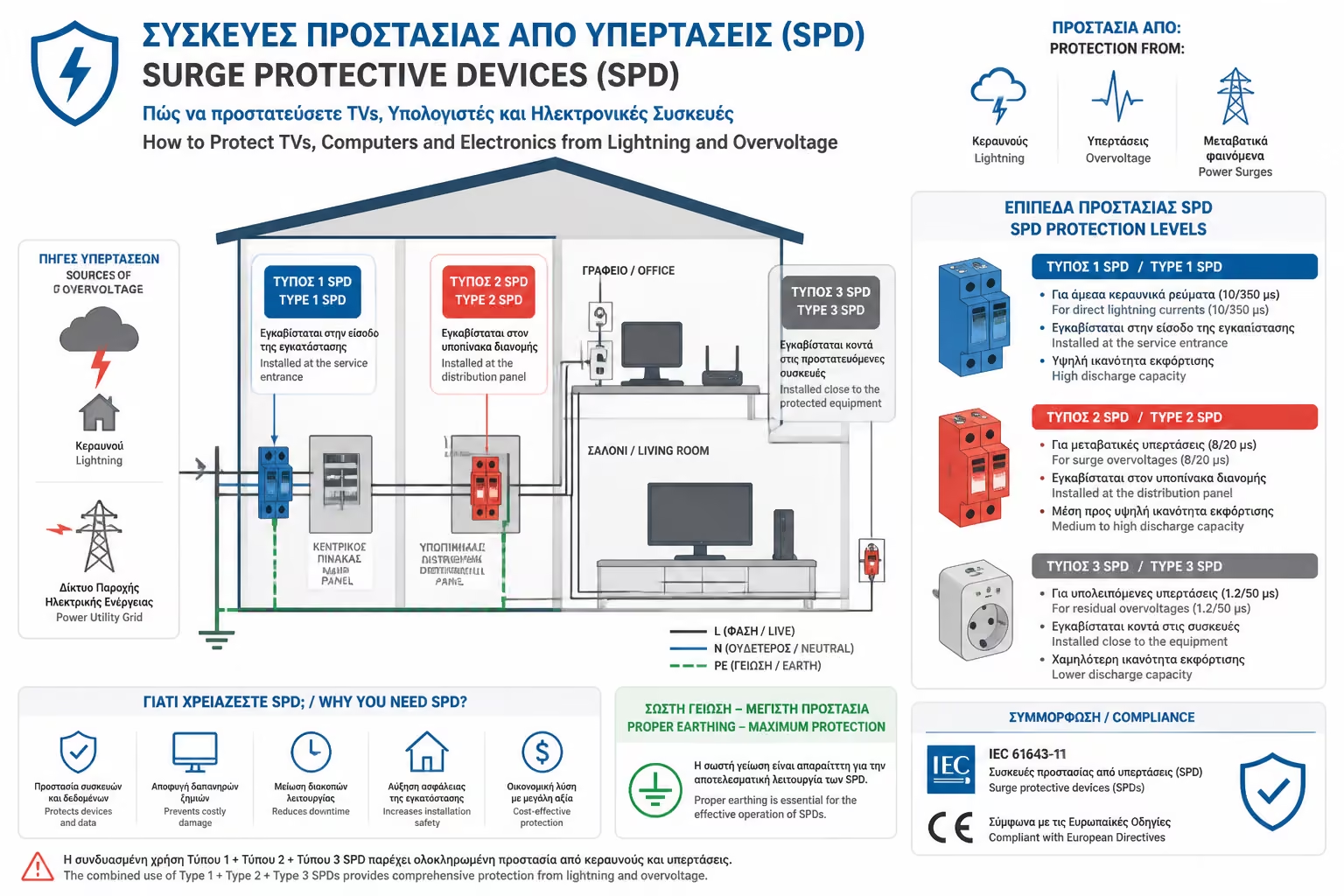
This is usually the main SPD installed in a domestic panel.
It is used where the building’s exposure or design makes it necessary.
It is placed near sensitive equipment as a complementary defence.
No single item replaces a sound overall architecture.
A surge protective device is not an eternal component. Every time it handles a serious surge, it is stressed. That is why serious devices include visible status indication and often replaceable cartridges, allowing renewal without dismantling the whole assembly.
Having an SPD in the panel is not enough if nobody checks whether it remains serviceable. In proper panel maintenance, the condition of the surge protector should be monitored just as we monitor the RCD and the overall health of the panel connections.
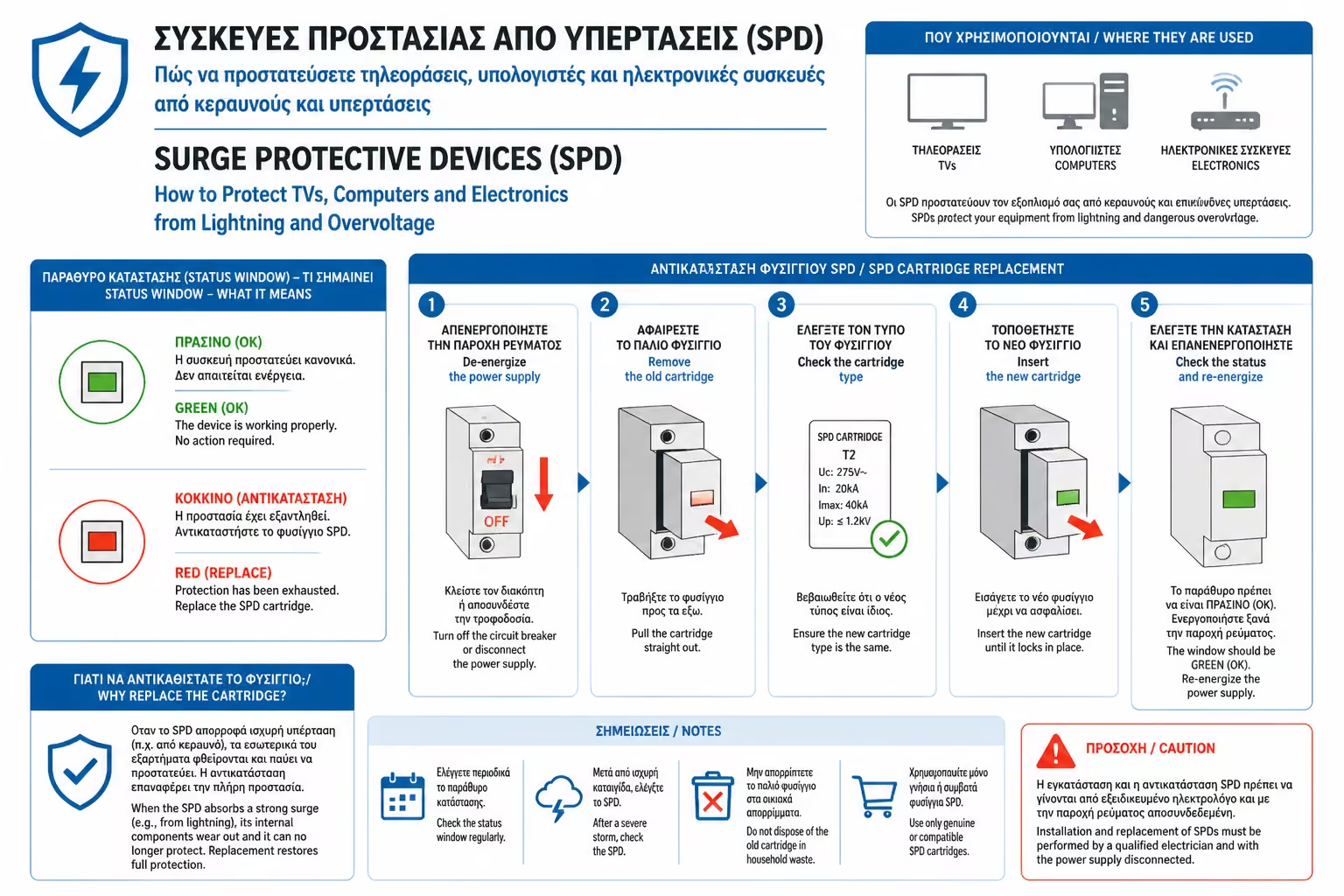
Its protective role is tied to handling real surge energy and therefore real stress.
Green or red windows and similar systems provide immediate verification.
Replacement can be fast once the protective element is spent.
A panel is not static; its devices must be followed over time.
The best surge protector is not the one merely present in the panel, but the one correctly grounded, correctly selected and still functional when the event arrives.
Return to category.
Go to categoryReturn to the central guide.
Go to guide