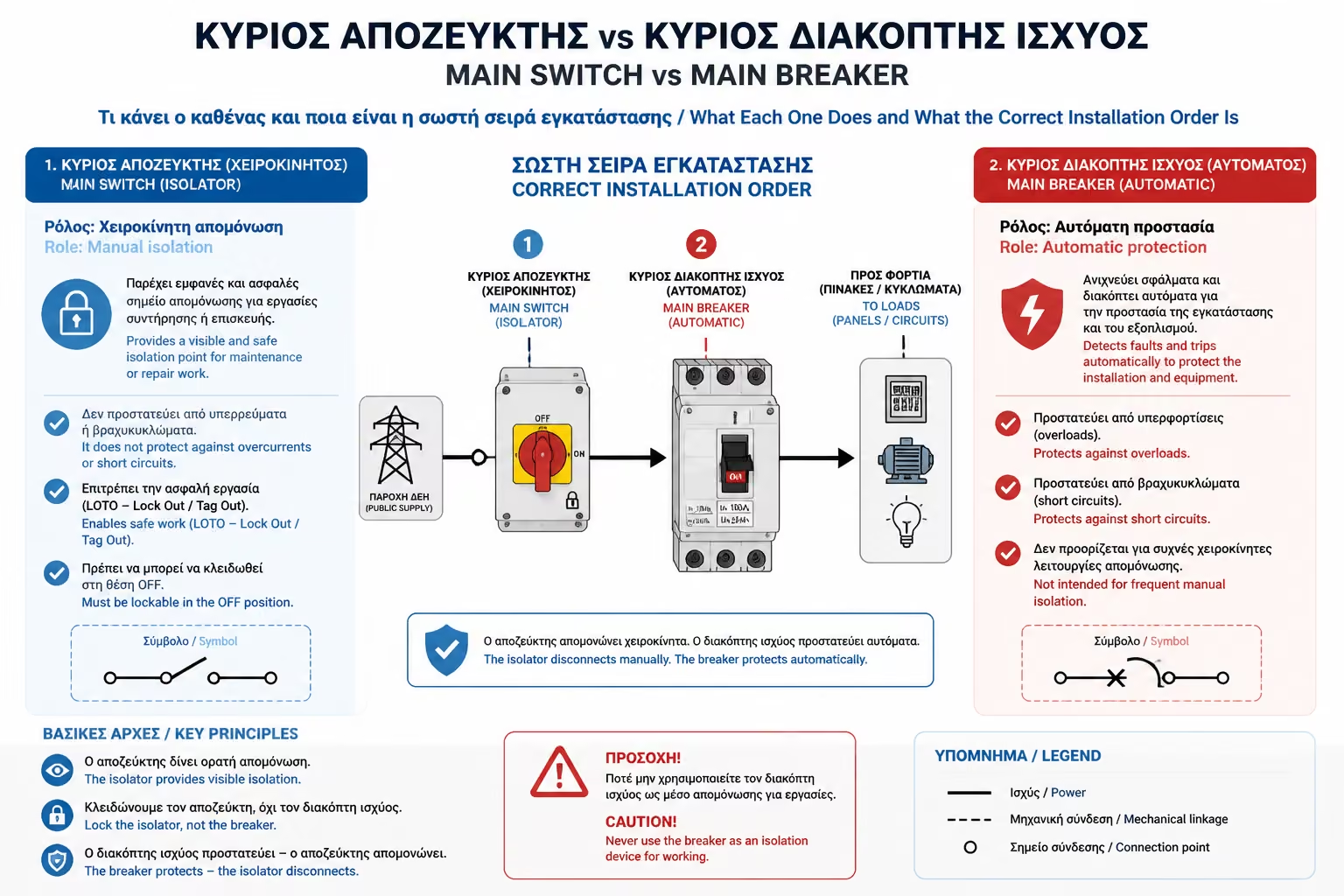
It is an isolation device
Its primary role is safe manual on/off control of the supply for work or inspection.
In a residential panel, two devices are often confused: the main switch and the main breaker. They may look similar to a non-specialist, yet their roles are fundamentally different and that difference affects both safety and maintenance.
The main switch is primarily a manual isolation device. The main breaker is a protective device that reacts to overload and fault conditions. When that distinction is not understood, people develop incorrect operating habits and designers sometimes create poor arrangements that make maintenance harder or less safe.
That is why the correct installation order is not a minor drafting detail but a basic principle that affects how a panel is de-energised, how components are replaced and how a technician can work with real safety.
A well-organised entrance sequence also improves diagnosis during faults. When roles are explicit, the person standing in front of the board can understand whether the event concerns routine isolation, upstream protection or a wider installation problem, instead of handling every large device as though they were interchangeable.
The main switch is not primarily designed for overload protection. Its core role is to provide a clear manual means of isolating the panel or a major part of it. When work, inspection or general shutdown is needed, this device offers a safe and explicit disconnection point.
That is why it should never be confused with the main breaker. A technician needs a reliable isolation point before touching downstream equipment. When the main switch is used properly, maintenance becomes cleaner in logic and significantly safer in practice.
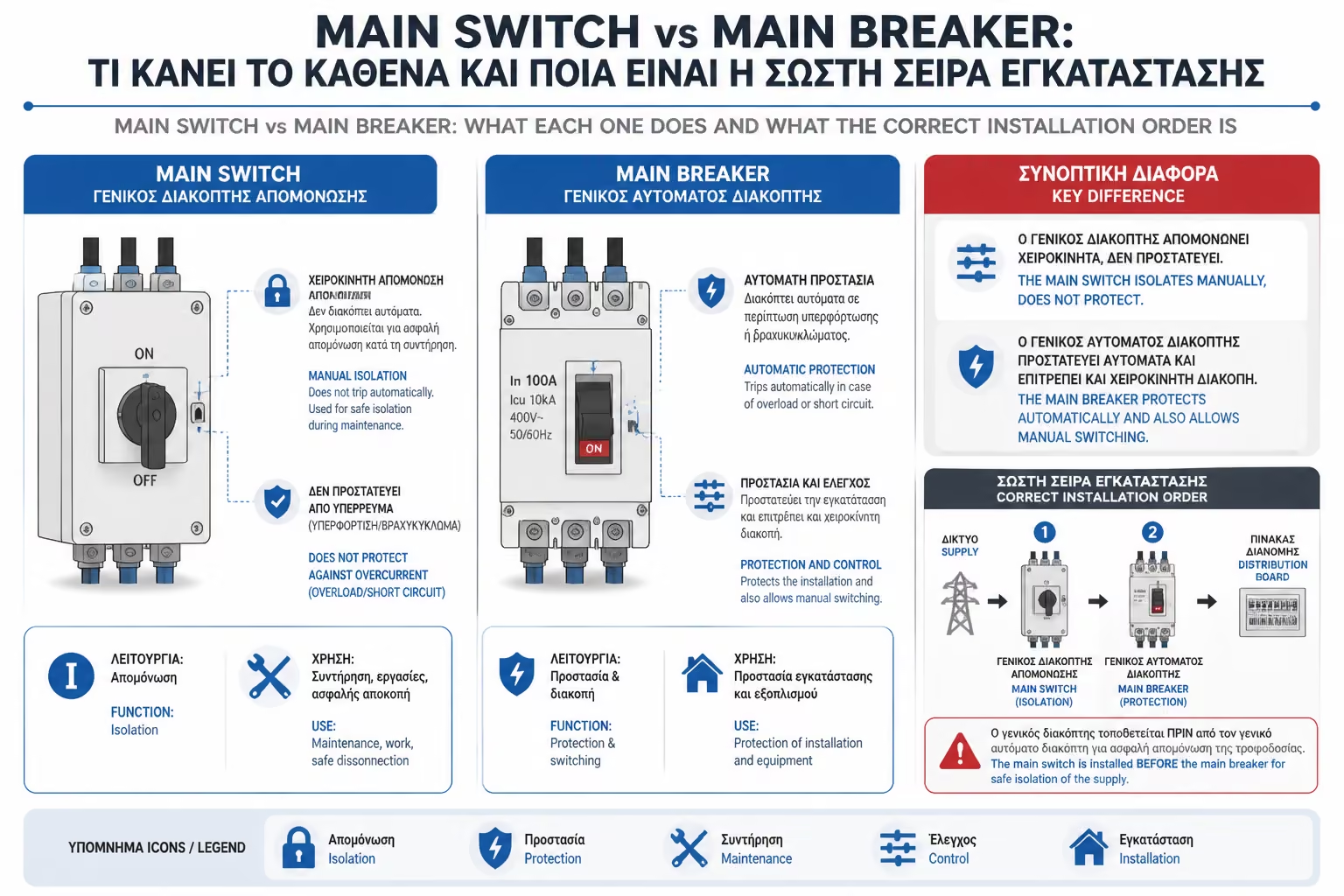
Its primary role is safe manual on/off control of the supply for work or inspection.
Its presence does not mean overload and short-circuit protection is covered.
Owner and technician know which component is used for general cutoff.
A panel with explicit isolation is much easier to manage safely.
The main breaker protects the upstream portion of the installation against overload and fault conditions and acts as the essential protective threshold at the panel entry. This is not merely a switching device, but a component intended to intervene automatically when electrical values move outside acceptable limits.
Precisely because it is a protective device, the way we use it is different. It is not the ideal choice for routine manual daily switching when a dedicated main isolator exists. Its first role is protection, not ordinary functional handling.
It acts when current or fault conditions exceed allowable limits.
It is not installed primarily as an everyday manual disconnector.
It is a critical safety stage at the entrance of the installation.
Only then does the whole entrance architecture make sense.
When the main switch comes first as the isolation device and the protective device follows, the electrician gets a much more workable maintenance environment. The panel can be cleanly de-energised downstream, and the next devices become accessible under a far safer maintenance logic.
The reverse or unclear arrangement often creates problems because it turns replacement or inspection of a device into work without a clean isolation point where it is actually needed. That is why the order is not an aesthetic preference but a matter of practical safety for the technician.
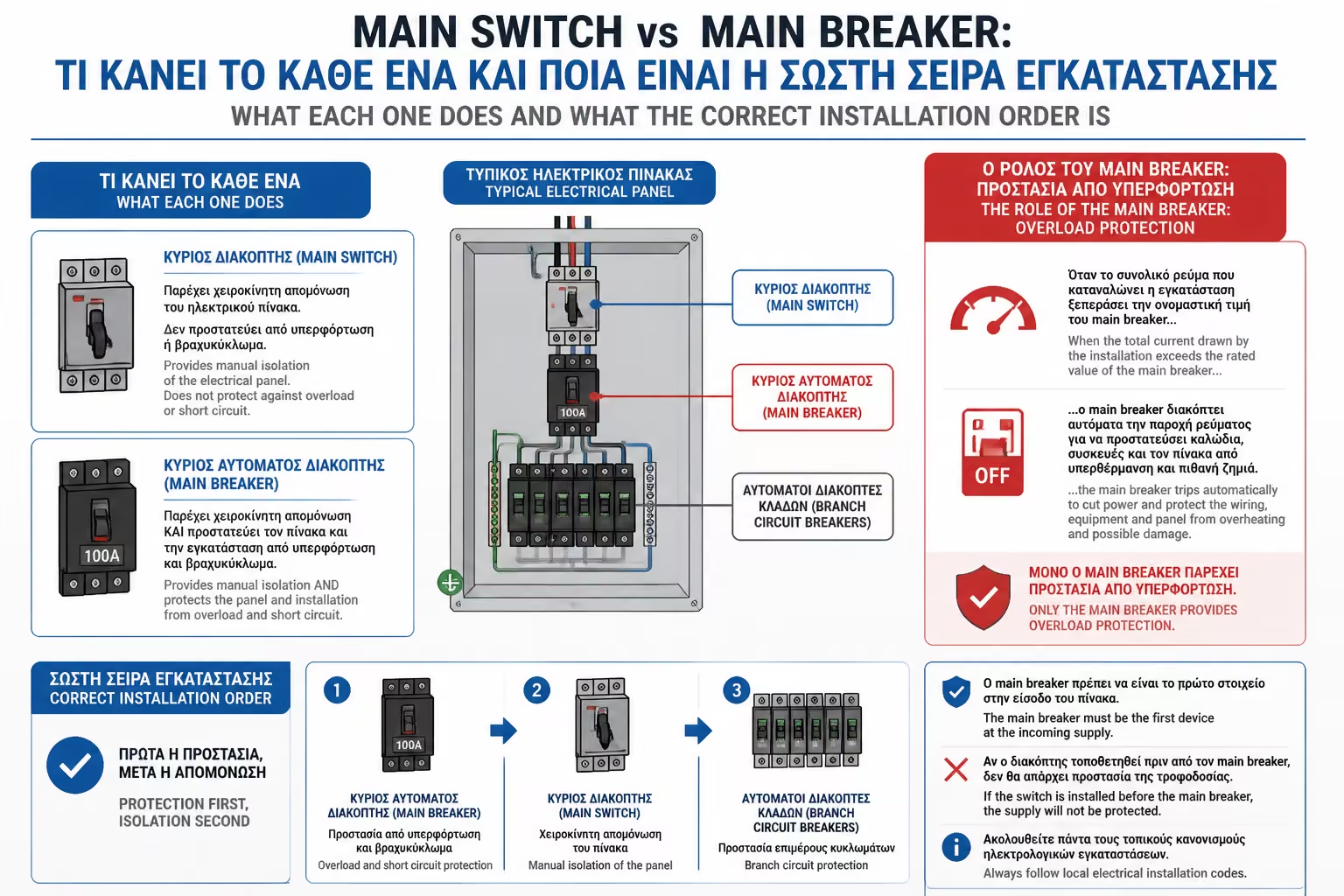
A panel is built not only to operate but also to be serviced correctly.
The technician must know exactly what de-energises the next section.
Panel architecture should actively guide safe working practice.
A mature panel reveals itself in how the front end is organised.
Beyond design, there is everyday use. Owners often guess which device to operate when they want to isolate the house or understand a fault condition. If the panel follows a clear logic, that uncertainty is reduced and operation becomes safer.
Good labelling and clear role separation help greatly. The main switch should be recognisable as the isolation point, while the main breaker should be understood as the entrance protective device. When the user knows what is being touched, unnecessary operations and misinterpretations are reduced.
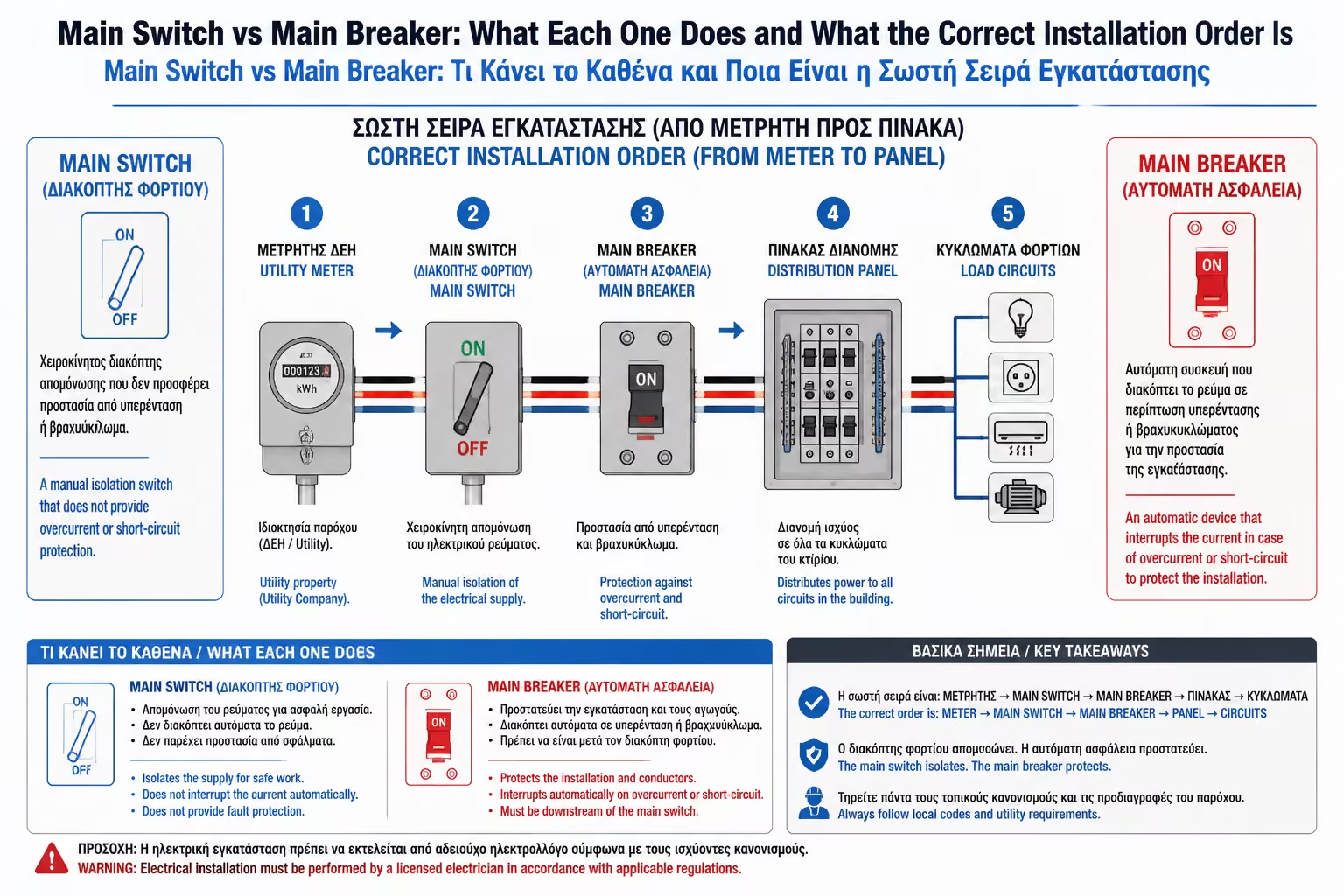
It is not only aesthetic but a tool for correct use.
The panel architecture should communicate its own function.
Correct roles prevent wrong-handling behaviour.
A serious panel is understandable, not only electrically correct.
A good panel protects not only against electricity, but also against user and maintenance confusion.
Return to category.
Go to categoryReturn to the central guide.
Go to guide