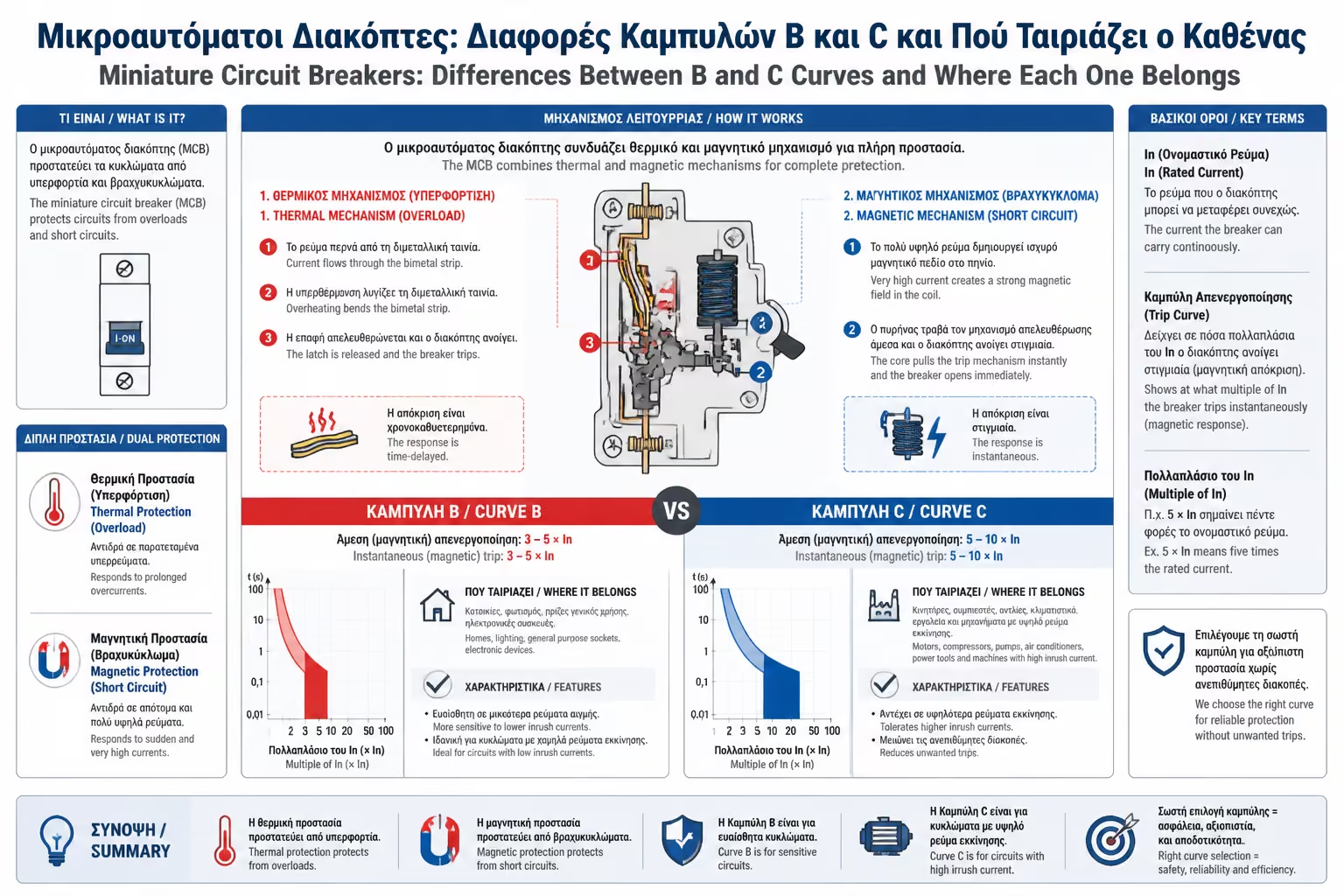
The conductor comes first
The breaker is primarily a guardian of the line rather than a universal doctor for appliances.
Most owners think of a miniature circuit breaker simply as the device they reset when the power trips. In reality it is the main protective element that keeps the cable inside the wall safe from thermal damage and violent short-circuit conditions.
The marking B10, C16 or C20 is not just a letter and a number. The number indicates the rated current, but the letter describes how the breaker reacts when a sudden current surge appears. That is exactly where the difference between a correct and an incorrect selection is hidden.
If you install a curve that is too sensitive on a load with heavy inrush, you will get nuisance trips. If you install an overly tolerant curve on the wrong circuit, you may lose valuable protective response time. That is why breakers are not selected by habit but by engineering logic.
The primary role of an MCB is to disconnect the circuit when current exceeds the allowable limits for the cable cross-section and installation conditions. That means selection does not begin with the appliance alone, but with the cable that has been installed and the load the circuit is expected to carry safely.
An MCB contains two protective mechanisms: thermal protection for slower overloads and magnetic protection for very sudden high currents. The curve letter mainly concerns the point at which the magnetic part reacts, in other words how the device decides whether it is seeing a short circuit or merely a normal inrush event.
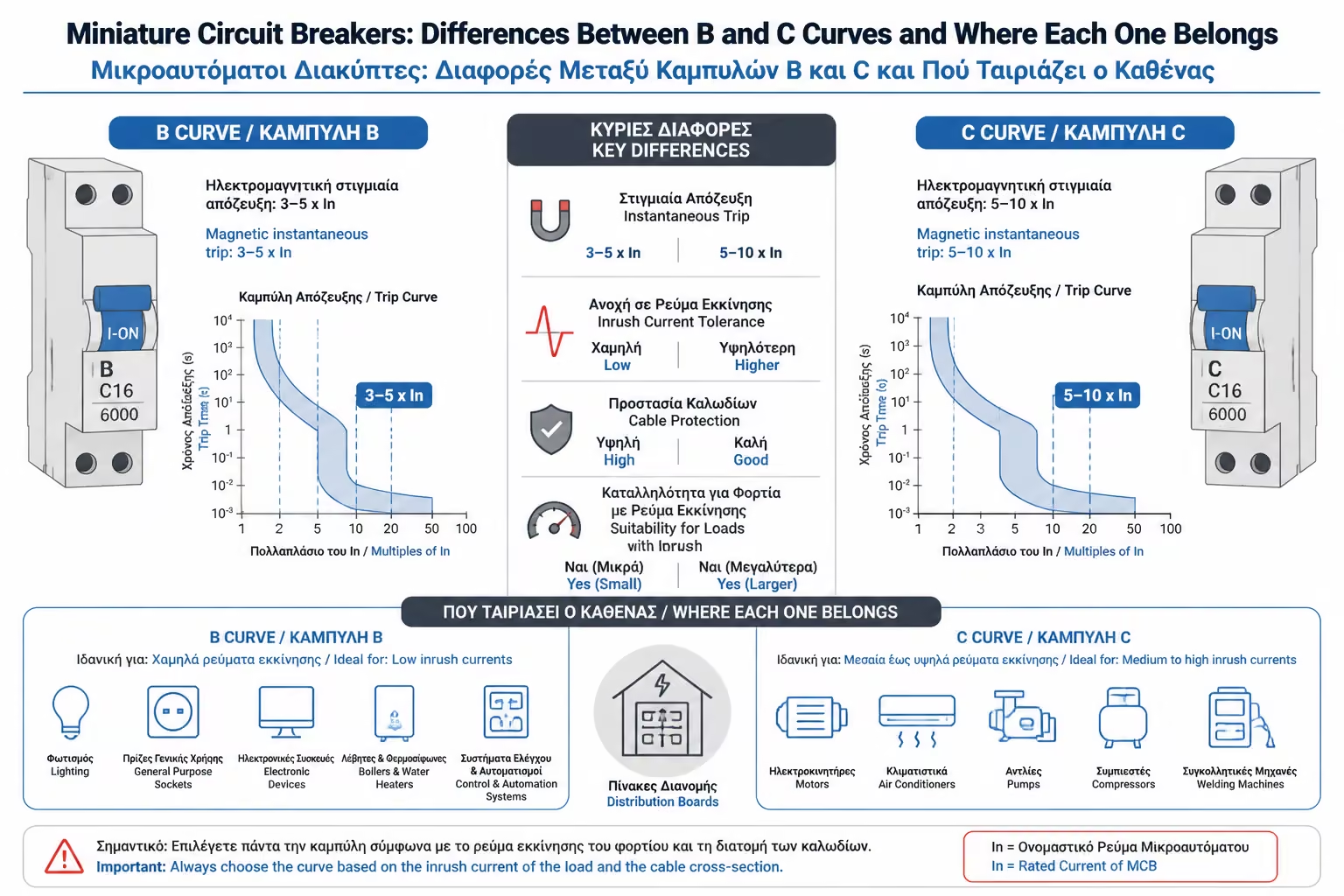
The breaker is primarily a guardian of the line rather than a universal doctor for appliances.
When current stays high for longer, the breaker heats and trips.
In a very abrupt current event, disconnection is almost instantaneous.
It does not change the ampere rating, but the way surge conditions are interpreted.
Curve B activates magnetic protection at a lower multiple of the rated current than curve C. That makes it more immediate and more sensitive where large starting currents are not expected, such as lighting circuits or other mild domestic loads.
In those circuits, that sensitivity is an advantage rather than a problem. Disconnection under fault conditions is faster and more compatible with the need to protect a line that has no reason to tolerate large momentary current peaks.
It suits lines where transient surges are small or nearly absent.
Lighting and similarly mild loads rarely require high start-up tolerance.
It can react more quickly in scenarios that do not generate huge current.
Where strong inrush exists, curve B may cause nuisance tripping.
Loads with motors or compressors, such as air-conditioners, refrigerators, pumps and some power tools, present momentary starting currents that are much higher than their normal running current. Curve C gives the breaker more tolerance so it does not interpret every start-up event as a short circuit.
That does not mean curve C is superior or more professional than curve B. It simply means it is more suitable for a specific electrical load profile. If applied everywhere without thought, it may unnecessarily delay protection on circuits that do not need that tolerance.
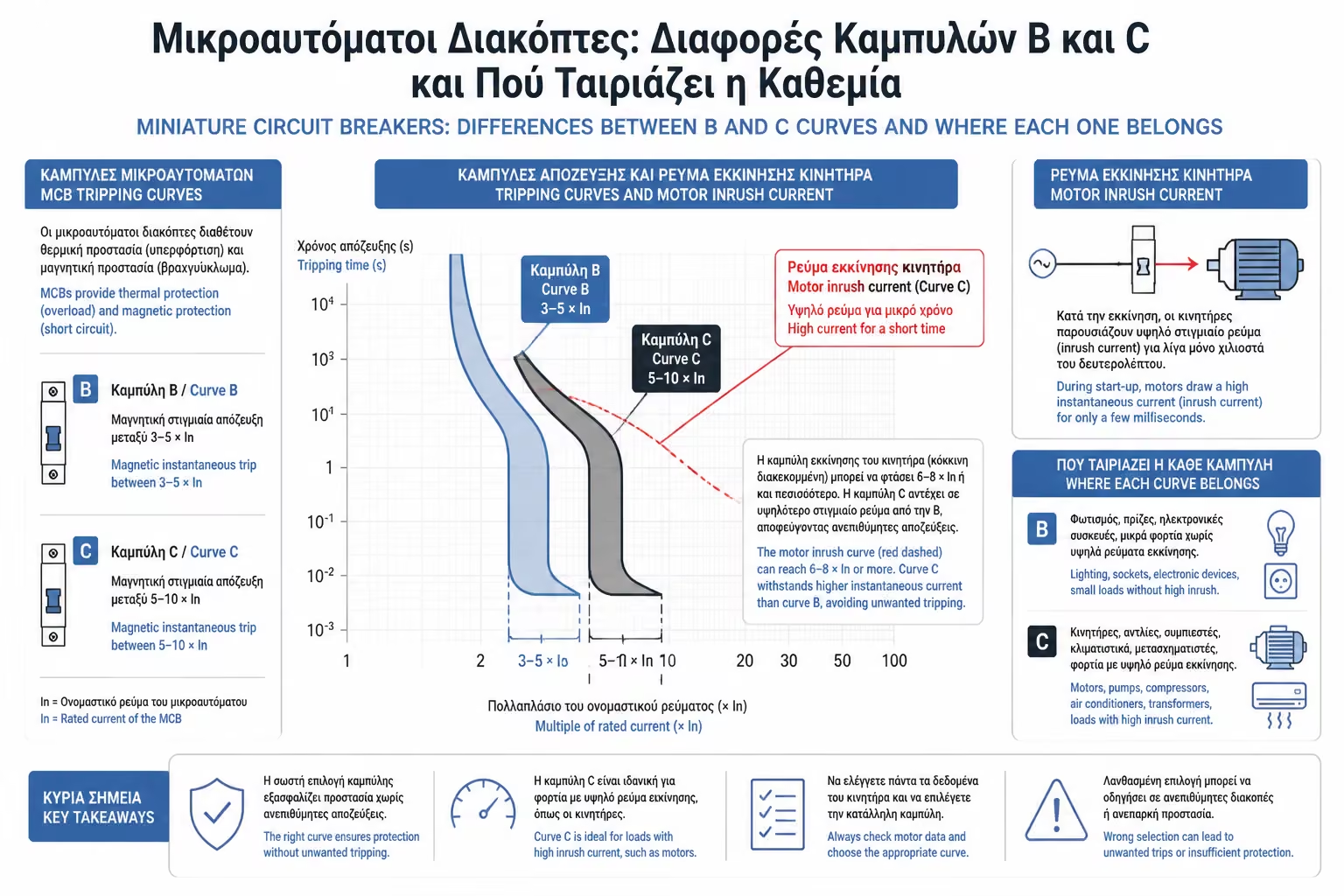
It is useful where natural inrush from motors and inductive loads is expected.
On such circuits curve B can easily prove too strict.
Using it across the whole house by default is not technically mature.
The line must be designed around its function rather than installer habit.
One of the most dangerous mistakes is to debate B and C curves while forgetting that the real foundation is the relationship between cable size, run length, routing method and rated current. A wrong 16A or 20A selection on an unsuitable cable is not saved merely by choosing the right letter.
Engineering maturity shows when the designer evaluates the circuit as a whole: cross-section, load, voltage drop, prospective short-circuit current, selectivity and expected inrush. Only then does the choice between B and C acquire real meaning and the breaker becomes part of a properly structured protection strategy.
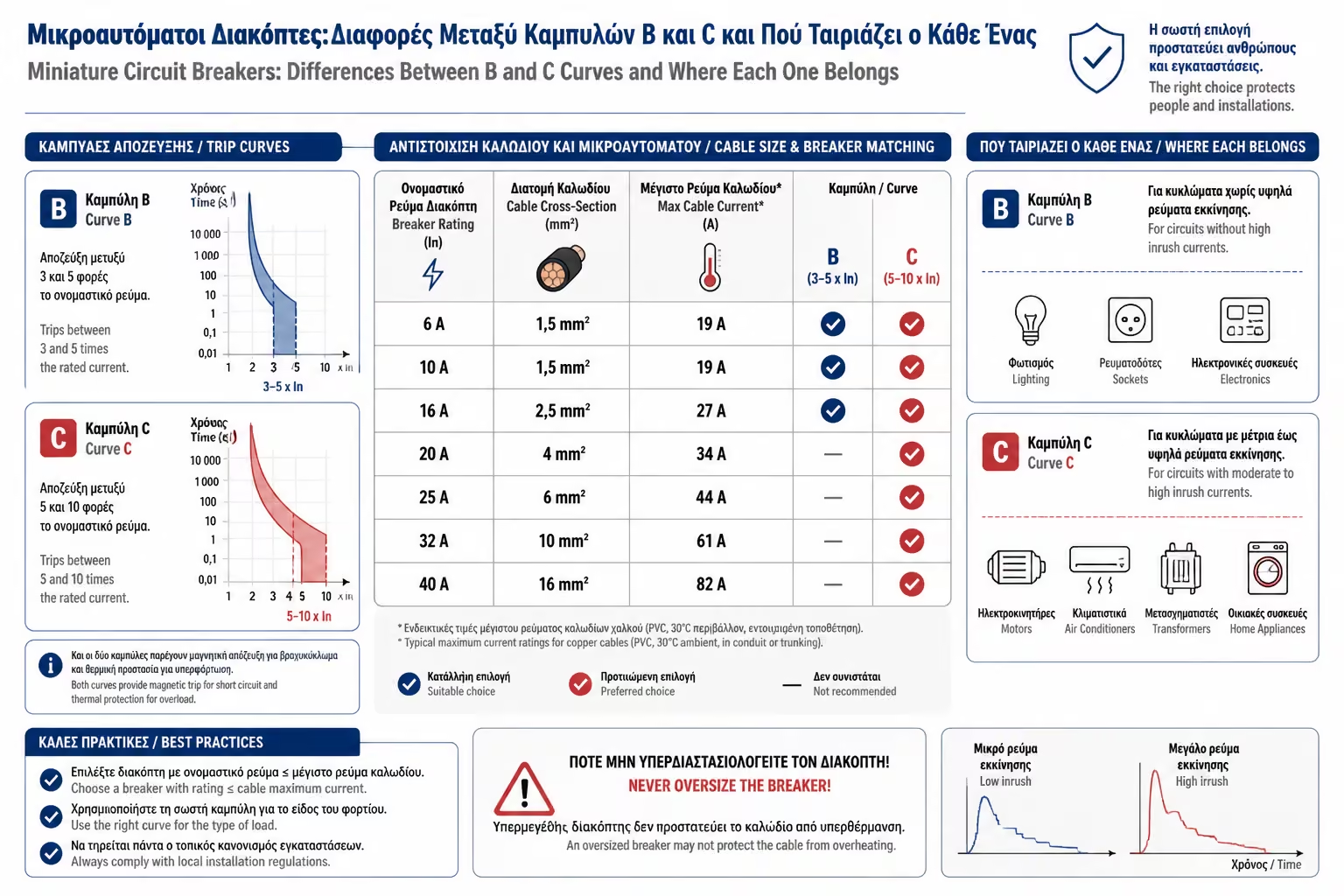
Correct sizing remains the basis of every good selection.
After the correct size is chosen, the right behaviour is selected.
Line length, loads and installation conditions all influence the result.
It requires rules, calculations and clear knowledge of actual use.
The difference between a correct installation and a careless one is often hidden in a single letter printed on the breaker.
Return to category.
Go to categoryReturn to the central guide.
Go to guide