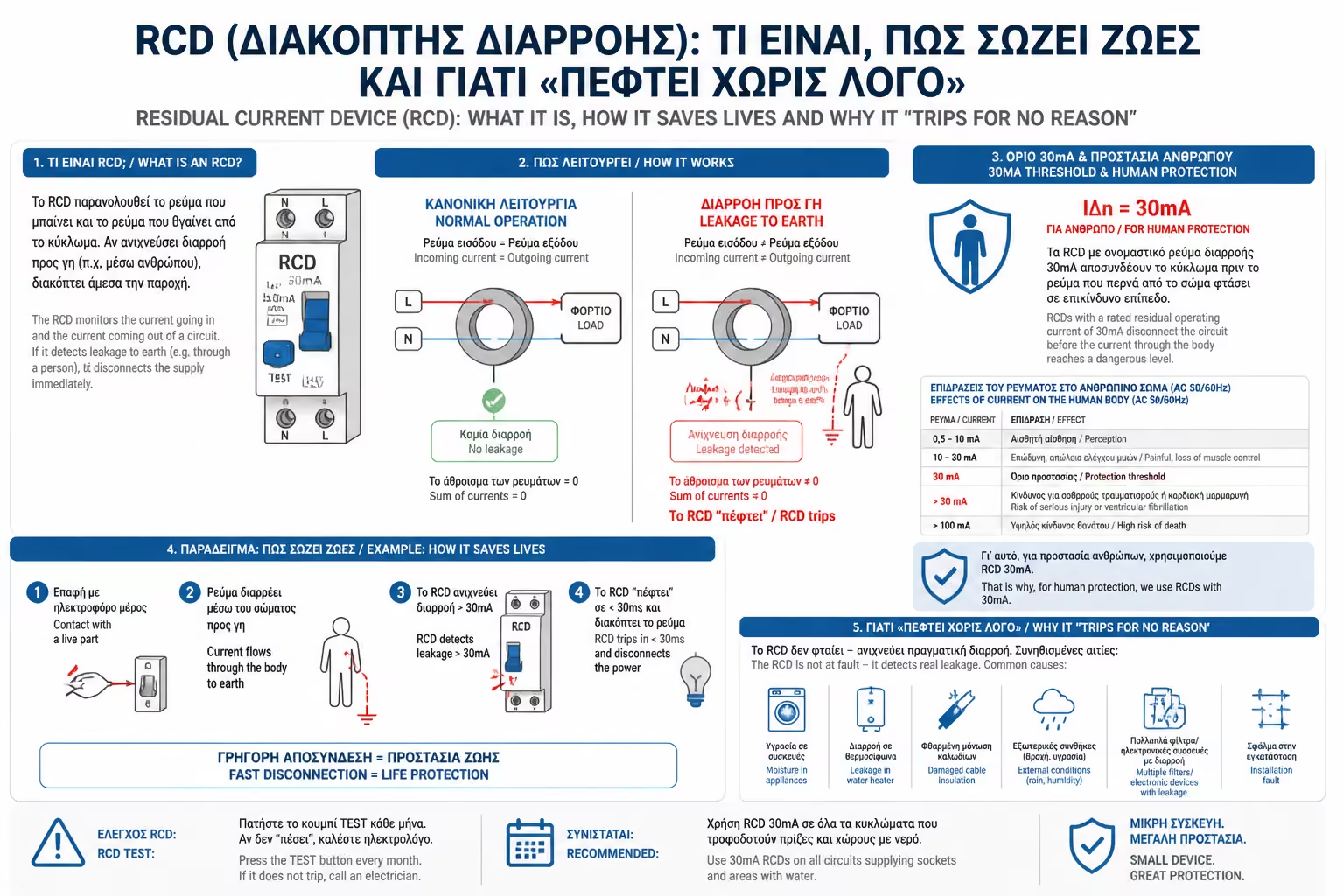
It measures difference, not total load
The RCD checks whether what leaves returns, not how many watts the appliance consumes.
The residual current device is arguably the single most important protective device in a modern home. It does not merely protect cables or equipment. It directly protects people from electric shock when current leaves its intended path and seeks a route to earth.
Despite its importance, many owners confuse it with ordinary breakers. As a result, when it trips they assume it is defective or overly sensitive, while in reality it is usually doing exactly what it should do and warning that something is wrong.
To understand why the RCD matters so much, we first need to understand how it thinks. Its logic is based on current balance and on detecting leakage at levels far below anything an ordinary breaker would treat as a problem.
In normal operation, the current leaving toward the load through the live conductor returns completely through the neutral. The RCD monitors this balance continuously. If the two currents match, the device considers the circuit healthy.
If, however, part of the current leaks elsewhere, for example toward earth, a metal enclosure or through a human body, the balance breaks. The RCD detects that difference and opens the circuit very quickly.
Its intelligence lies precisely in the fact that it does not wait for a major short-circuit current. It observes very small imbalances, exactly where human protection becomes critical.
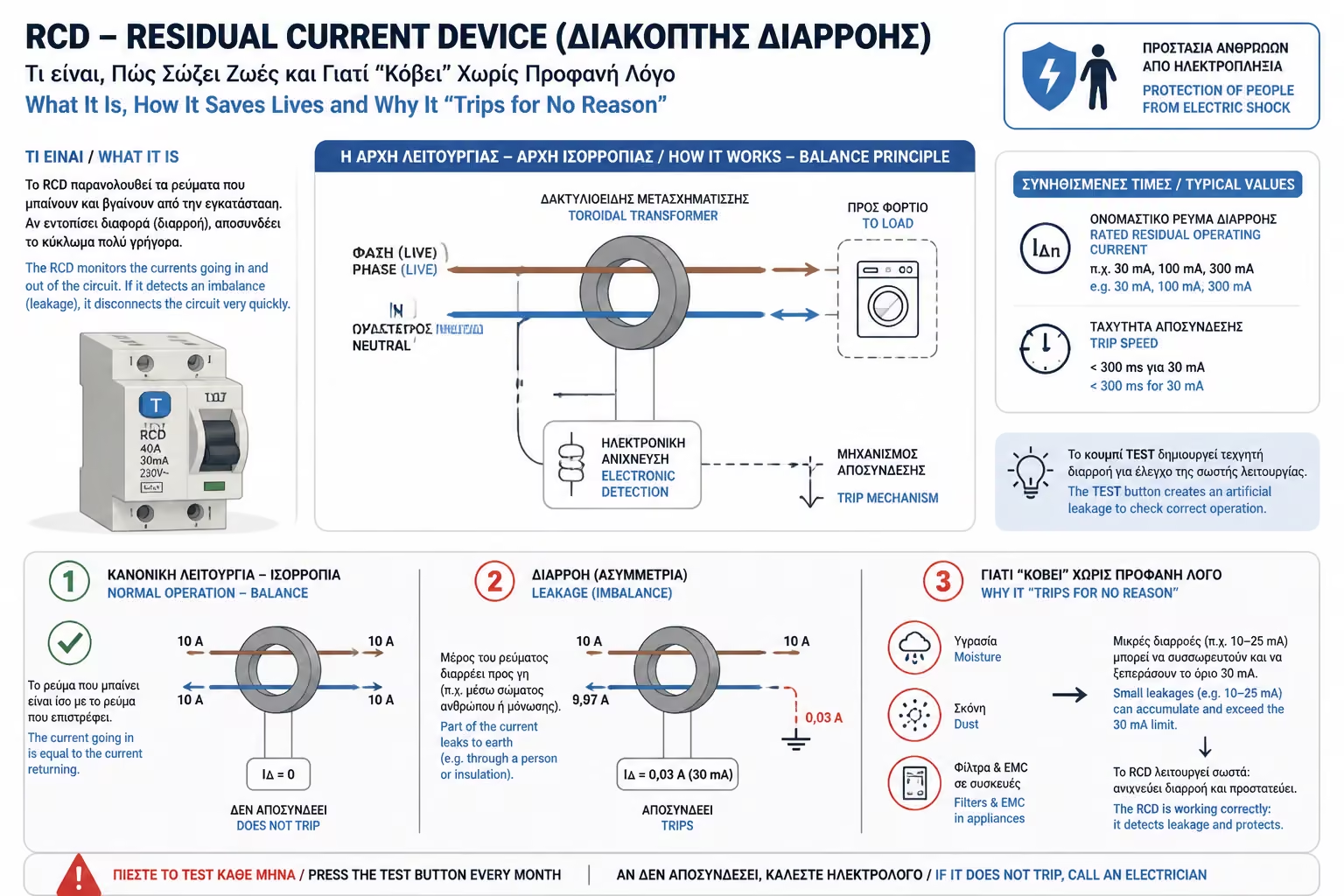
The RCD checks whether what leaves returns, not how many watts the appliance consumes.
That is why the RCD is fundamentally a human-protection device.
Its action begins long before there is a large fault current or classical short circuit.
Fast disconnection is what makes the difference in electric-shock scenarios.
In residential installations, the typical RCD is rated at 30mA sensitivity. That number is not arbitrary. It has been established as a level intended for protecting people against dangerous physiological effects of electric current.
This shows how different the RCD is from other protective devices. A standard socket circuit may be protected by a 16A breaker, which means 16,000mA. The RCD intervenes at a tiny fraction of that value because the point is not protecting the cable but protecting life.
That is why its presence in modern installations is not a secondary choice but a foundational safety requirement. Without it, a serious leakage scenario could develop far before the rest of the board protection even notices a problem.
The sensitivity of the device is tied to the limits of human physiological tolerance.
An MCB protects the cable, not the body against low-level leakage.
The RCD acts exactly where other protections still have no reason to respond.
A home without correct residual-current protection carries a major safety gap.
The most common misunderstanding is to treat the RCD as a normal breaker that simply works in a more sensitive way. That is not true. A miniature circuit breaker mainly protects against overload and short circuit, which are threats to the cables and the installation itself.
The RCD, by contrast, protects against current escaping outside its intended path. The two devices therefore do not compete; they cooperate. One protects the wiring from overcurrent, while the other protects people and the system from leakage.
That is why a proper installation needs both. Either one on its own leaves a serious gap in the overall protection strategy.
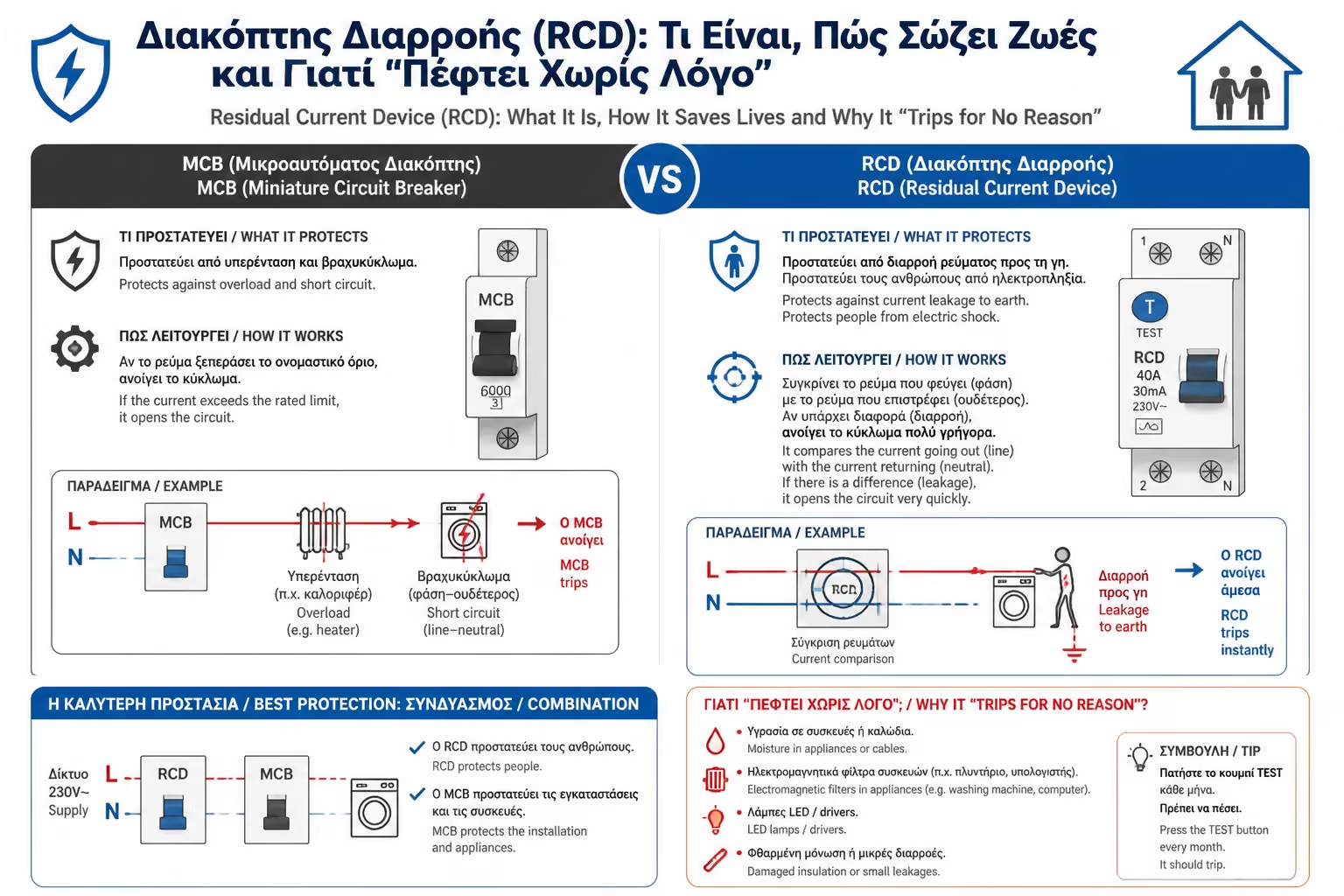
If the issue is overload or short circuit, that is its domain.
If current takes the wrong path, the RCD intervenes.
Each one covers a different category of danger in the same installation.
A home needs cooperating devices, not one supposedly magical component.
An RCD rarely trips 'for no reason'. It usually warns of moisture, appliance leakage, a failing heating element, an incorrect neutral-to-earth connection or an accumulation of small leakage currents from multiple modern electronic devices.
That means the correct response is not to treat it as annoying, but to investigate the cause. Outdoor lines, water heaters, ovens, washing machines and deteriorating appliances are all classic areas where the RCD acts as an early warning before the fault develops into something worse.
The test button matters as well. Periodic testing confirms that the mechanism has not become inactive or stuck. In that way, the RCD is not merely installed; it is verified to be operational when it is actually needed.
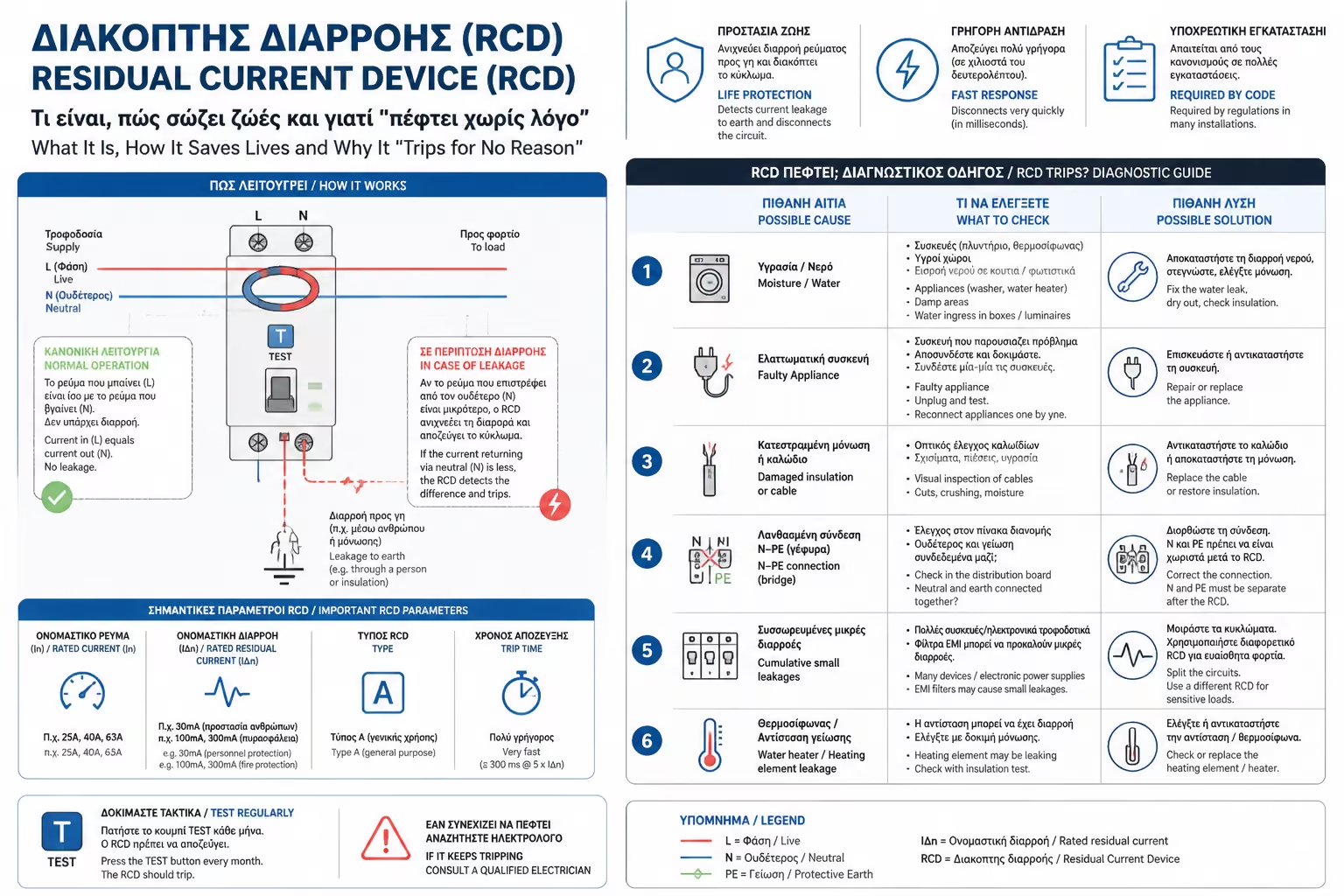
Outdoor outlets and damp zones are classic sources of leakage.
Water heaters and white goods often lie behind repeated trips.
Many modern electronic devices together may bring the system close to the threshold.
Regular testing confirms that the device will actually trip when needed.
The RCD is not an enemy that 'cuts your power'. It is the mechanism that tells you current is trying to go somewhere it should not.
Return to category.
Go to categoryReturn to the central guide.
Go to guide