
The fuse melts to protect
Its operation is destructive by design, even when correctly calibrated.
Porcelain fuses served Greek homes for decades and, in their time, they were a respectable technical solution. The problem is that today they survive inside installations whose loads, use patterns and safety expectations have changed dramatically.
Many owners still look at them with nostalgia or with the argument that 'they have worked for years'. That is a weak criterion. The real question is not whether electricity still flows, but whether the protection system still safeguards people, wiring and modern appliances under a real fault condition.
In most cases the answer is no. That is due not only to the age of the hardware, but also to the fact that rewirable fuse systems make dangerous improvisation far too easy and can turn the board from protective device into a fire risk.
In practice, the guide "Old Porcelain Fuses: Why Replacing Them with Modern Breakers Is the Only Serious Option" is not just theory. It works as a practical checklist for owners, supervisors and installers who want to verify that the decision, the pricing and the technical execution of the work genuinely stand up to professional scrutiny.
A porcelain fuse works because a thin calibrated element melts when current rises above the allowed limit. That principle was effective in its time, especially in simple installations with modest loads and without today's concentration of electronics.
Its weakness is that after operation it must be replaced and it offers neither easy reset nor the controlled performance of a modern breaker. Even at the level of basic operating principle, it clearly belongs to another technological era.
Within the topic "Old Porcelain Fuses: Why Replacing Them with Modern Breakers Is the Only Serious Option", the section "1. The old fuse relies on self-sacrifice" acts as a critical control point. If that level of thinking or execution is missing, the installation may look complete on the surface while remaining technically vulnerable, awkward to use or more expensive to maintain in the future.
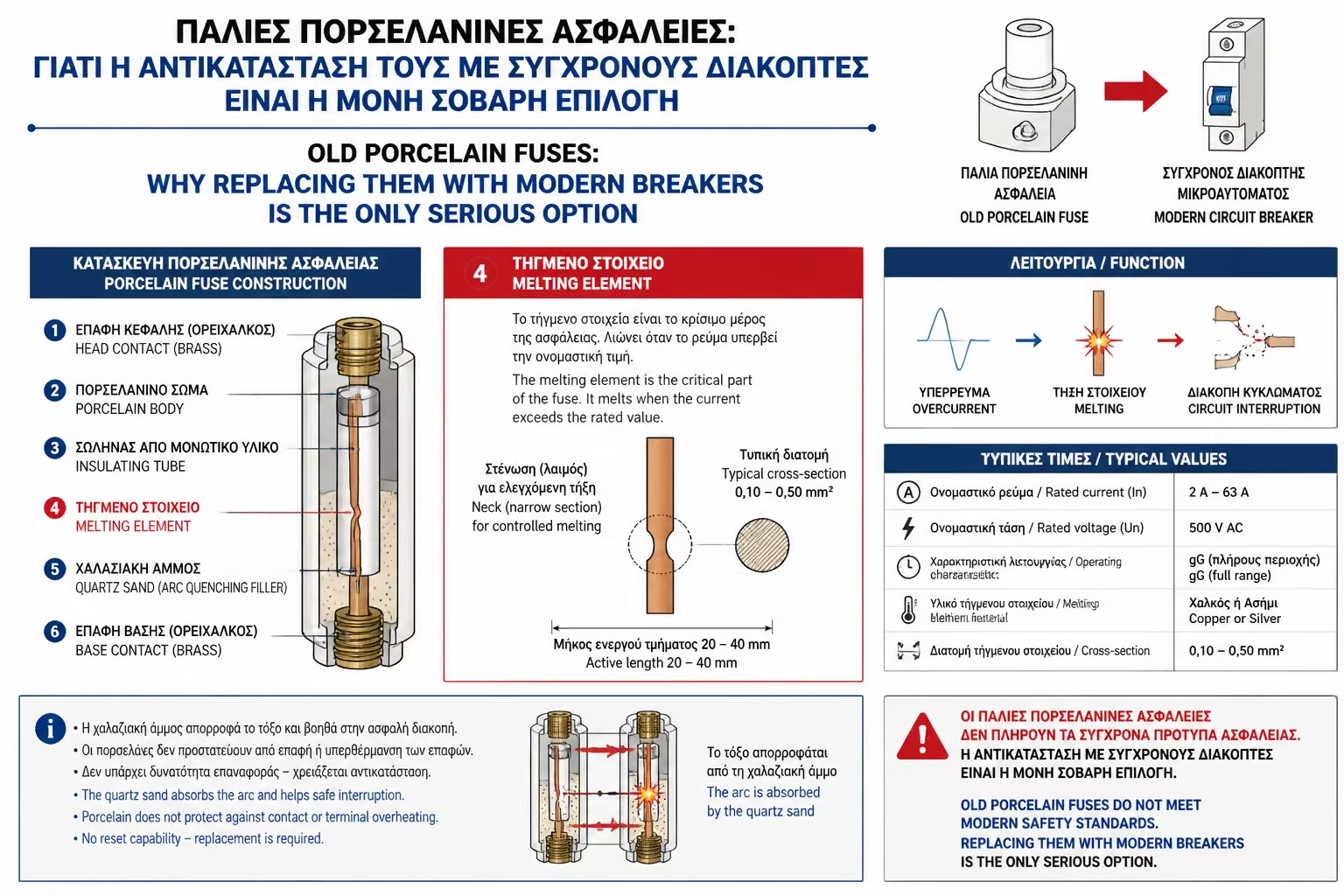
Its operation is destructive by design, even when correctly calibrated.
It was not designed for homes full of inverter-based electronics.
After operation it does not simply reset with a lever.
Past usefulness is not enough to justify present retention.
The most dangerous aspect of rewirable fuse systems is how easily the user can interfere with the protective mechanism. Replacing the calibrated element with random copper wire turns the device into a fake fuse that no longer disconnects when it should.
At that point the installation gives the illusion of protection while actually allowing the wall wiring to overheat. That is one of the strongest reasons why old fuse boards are treated as high-risk systems.
Within the topic "Old Porcelain Fuses: Why Replacing Them with Modern Breakers Is the Only Serious Option", the section "2. The wire bypass trick completely destroys protection" acts as a critical control point. If that level of thinking or execution is missing, the installation may look complete on the surface while remaining technically vulnerable, awkward to use or more expensive to maintain in the future.
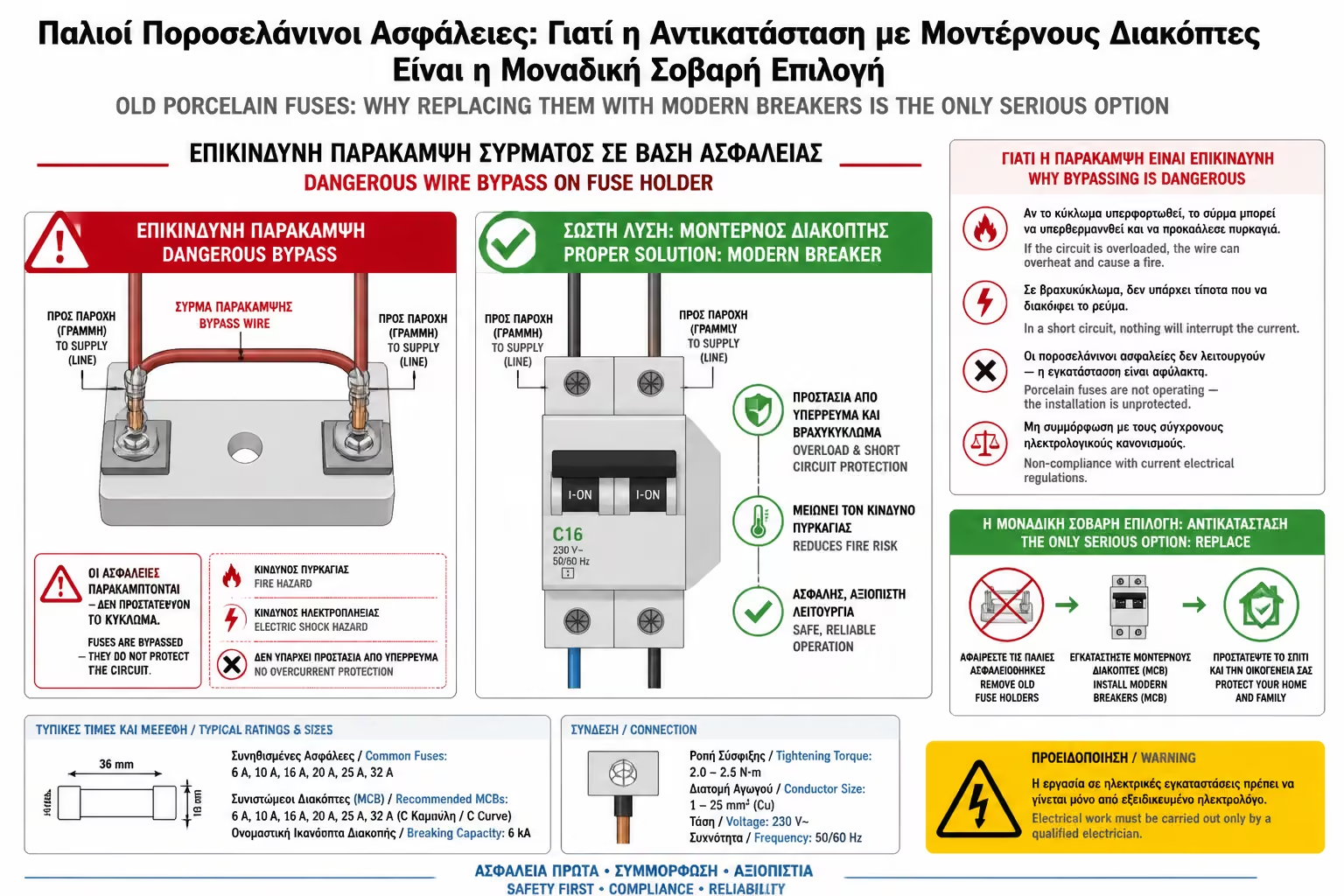
Nobody knows accurately what current the circuit will now tolerate.
It becomes an improvised handmade intervention instead.
Instead of disconnecting the supply, hidden wiring starts to overheat.
Damage is transferred from the fuse point into the building wiring itself.
Modern miniature circuit breakers combine thermal and magnetic protection and operate with clearly defined curves. They can be reset, are far harder to tamper with and can be matched much more accurately to the real circuit they protect.
That means the board stops depending on improvised repairs and starts functioning as a genuinely engineered protection system. Moving from porcelain fuses to MCBs is not a cosmetic update but a fundamental safety upgrade.
Within the topic "Old Porcelain Fuses: Why Replacing Them with Modern Breakers Is the Only Serious Option", the section "3. Modern breakers are better in accuracy, reset and controlled behaviour" acts as a critical control point. If that level of thinking or execution is missing, the installation may look complete on the surface while remaining technically vulnerable, awkward to use or more expensive to maintain in the future.
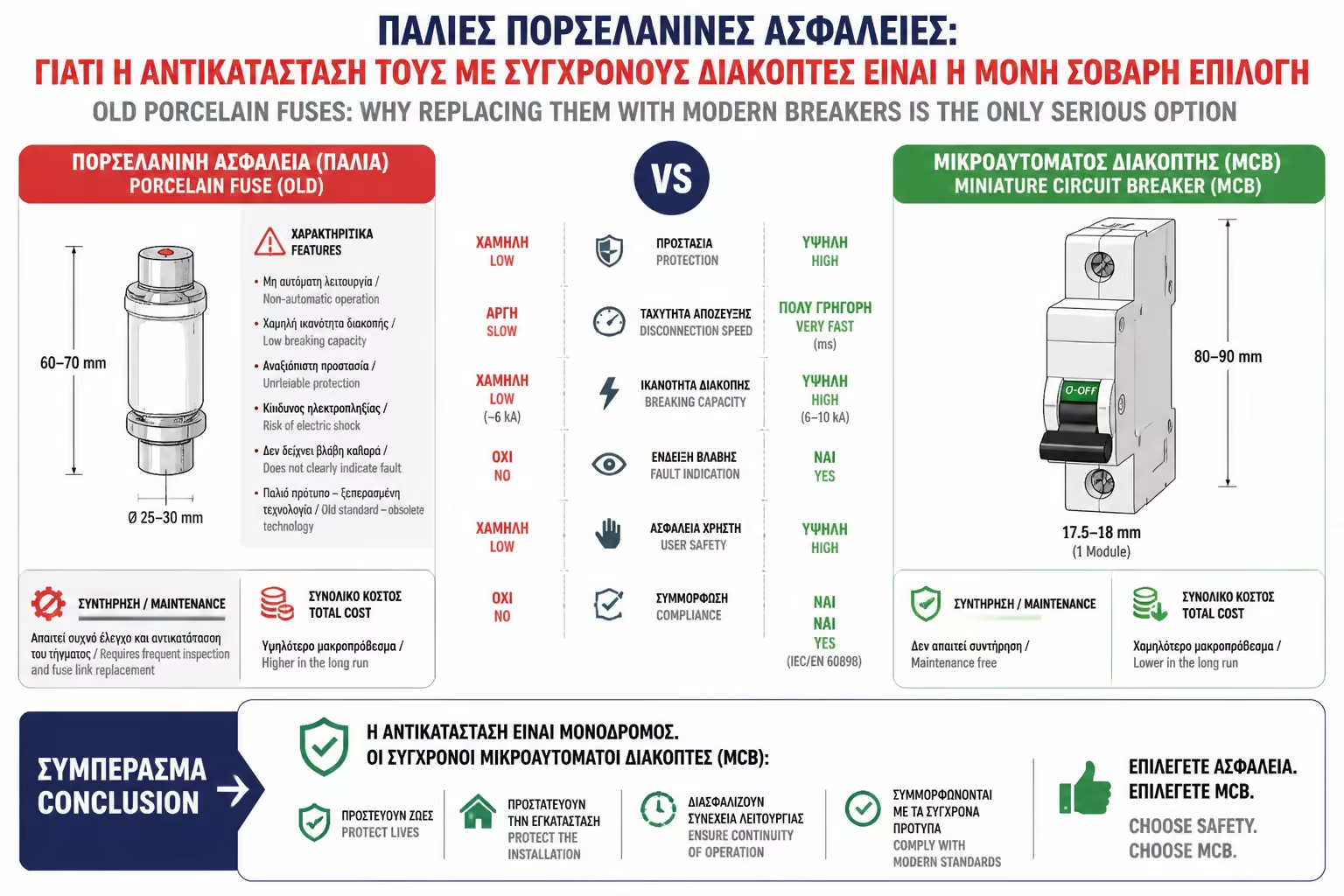
Restoration is possible without replacing fuse cartridges.
It is not easily bypassed with improvised tricks.
The protective behaviour is more predictable and reliable.
The technician can inspect and manage the circuit much more cleanly.
The most troubling issue is that fuse boards of this age almost always belong to an era before widespread use of residual-current protection. So even where some overcurrent protection exists, personal protection against leakage current is missing or seriously inadequate.
In practice that means the discussion is not only about replacing fuses, but about redesigning the core of the home's safety architecture. A new panel with breakers and a modern RCD is usually the first mature step in any serious renovation.
Within the topic "Old Porcelain Fuses: Why Replacing Them with Modern Breakers Is the Only Serious Option", the section "4. Old fuse boards usually miss the most important layer: RCD protection" acts as a critical control point. If that level of thinking or execution is missing, the installation may look complete on the surface while remaining technically vulnerable, awkward to use or more expensive to maintain in the future.
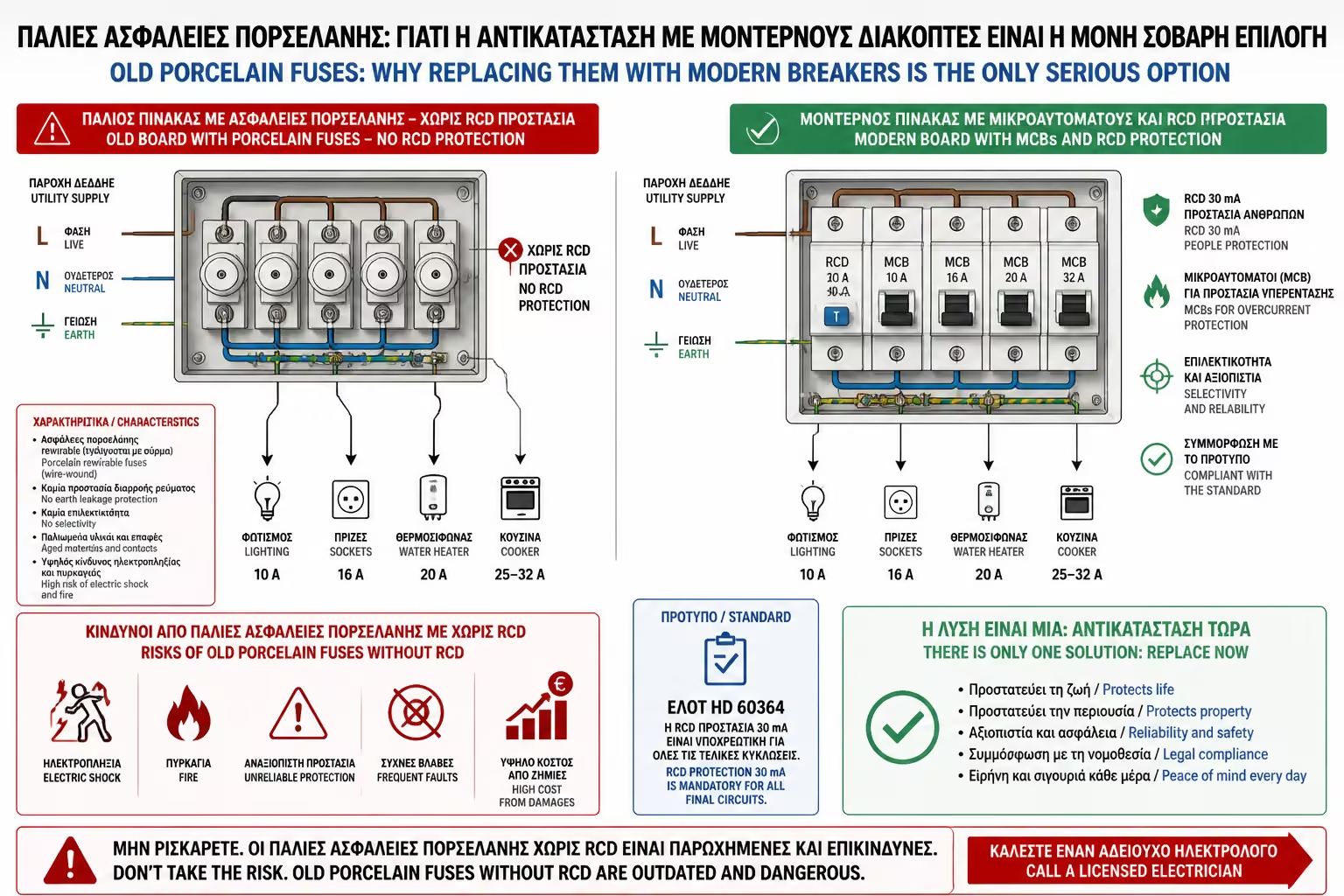
Personal protection remains far below modern expectations.
This is not just a component swap but a change in protection philosophy.
Where porcelain fuses exist, broader technological obsolescence usually exists too.
It is not a luxury but a basic adaptation to current standards.
Return to category.
Go to categoryReturn to the central guide.
Go to guide