
Depth has value
As the electrode reaches more stable moist zones, conductivity generally improves.
In an older building without foundation earthing, protection does not end just because the ideal solution was never integrated into the structure. It changes form and moves to local electrodes, which must be designed seriously instead of being treated like a random rod hammered into the soil.
The choice between rods, plates or combinations depends on soil conditions, available working space, target resistance and future testing needs. There is no single electrode type that suits every site.
The real question is how to build a stable, measurable and maintainable earthing system in an existing property. The answer lies in understanding the ground, arranging the electrodes correctly and planning for long-term verification.
In practice, the guide "Earth Plates vs Rods: How to Build Proper Earthing in Existing Older Buildings" is not just theory. It works as a checklist for supervisors, owners and installers who want to verify that the chosen solution on site is genuinely safe, measurable and compatible with the wider protection architecture of the building.
Earth rods perform especially well where the soil is reasonably soft and allows deeper penetration toward layers with more stable moisture. That is what makes so-called deep earthing highly effective, especially when seasonal drying affects only the upper layers.
In practice, serious installations rarely stop at one short rod. Using threaded extensions and reaching greater depth often changes the final test result dramatically.
Within the topic "Earth Plates vs Rods: How to Build Proper Earthing in Existing Older Buildings", the section "1. Rods exploit depth and stable moisture" is more than background information. It is a control point that determines whether the study, the site execution and the future maintenance of the work remain technically coherent and operationally reliable over time.
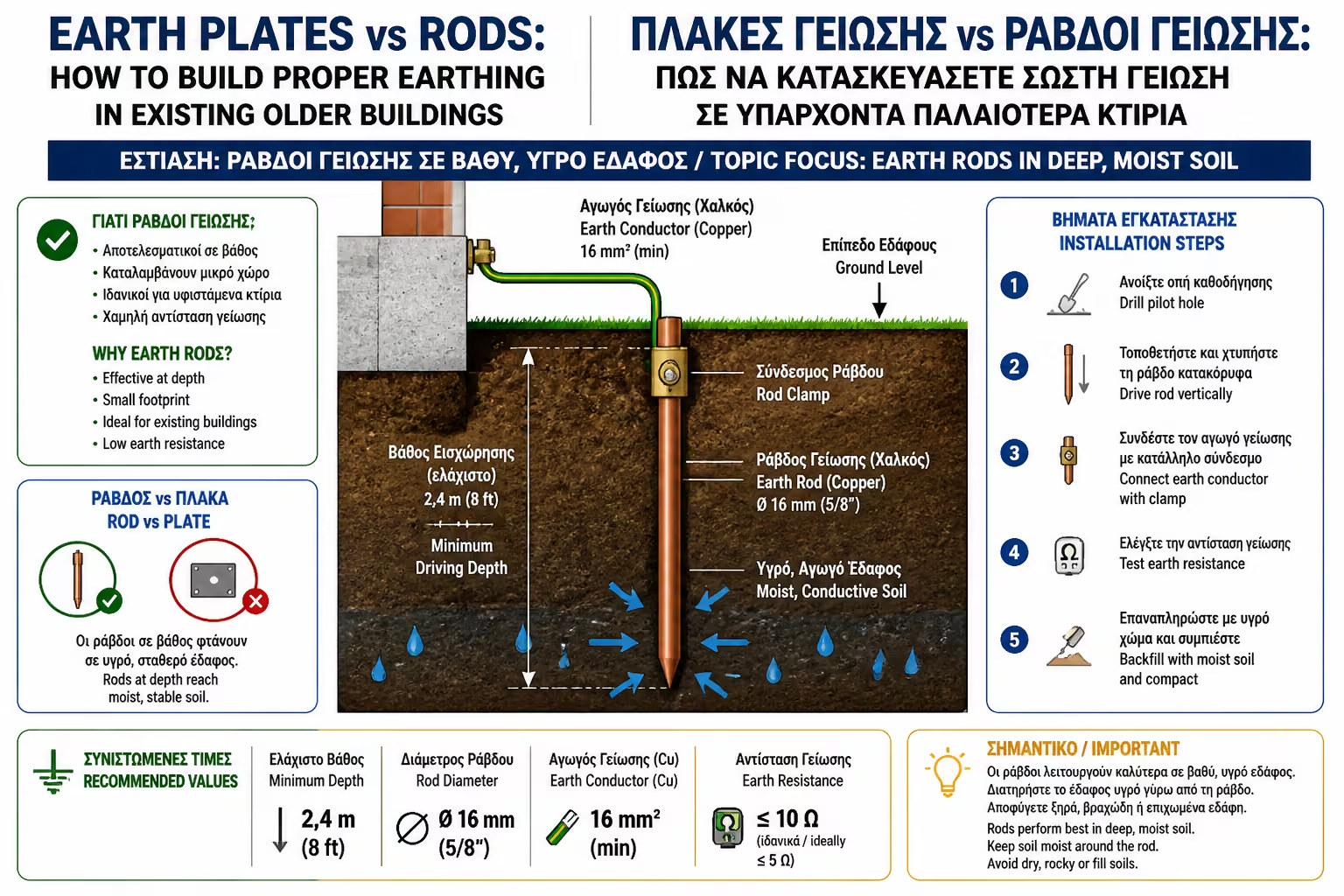
As the electrode reaches more stable moist zones, conductivity generally improves.
Performance depends on soil conditions and the required resistance target.
Poor alignment or impact against rock can defeat the solution.
For many plots, rods are the most economical serious option.
In rocky, stony or island-type soil, driving a rod to meaningful depth may be practically impossible. In those cases an earth plate offers large contact area in a shallower trench and lets the installer work with the site rather than against it.
Vertical placement is not cosmetic but fundamental. The plate should be embraced by soil on both sides so that air gaps are avoided and the full surface contributes electrically.
Within the topic "Earth Plates vs Rods: How to Build Proper Earthing in Existing Older Buildings", the section "2. Plates solve the cases where rods fail" is more than background information. It is a control point that determines whether the study, the site execution and the future maintenance of the work remain technically coherent and operationally reliable over time.
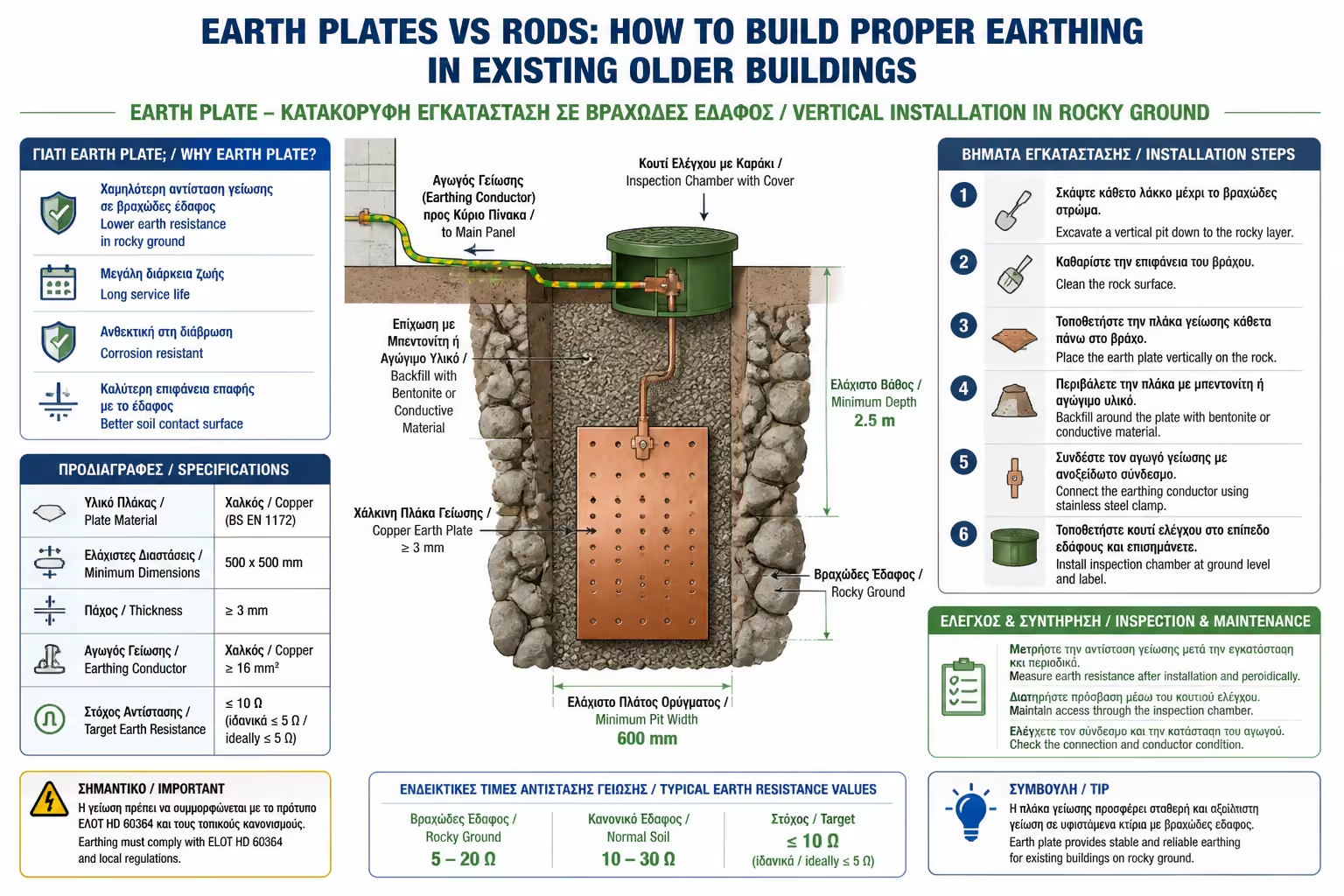
It appears when depth is no longer technically available.
That is how the actual contact area is maximised.
But it pays back where rods cannot perform properly.
Depth, backfill and protection all have to be managed carefully.
When a single electrode cannot achieve the required values, the correct response is not improvisation but an array. The best-known example is the earthing triangle, where multiple rods work together as one system.
Spacing must be designed properly. If rods are placed too close together, their fields overlap and the gain is reduced significantly. Quantity alone is not enough; geometry matters too.
Within the topic "Earth Plates vs Rods: How to Build Proper Earthing in Existing Older Buildings", the section "3. Triangles and electrode arrays multiply effectiveness" is more than background information. It is a control point that determines whether the study, the site execution and the future maintenance of the work remain technically coherent and operationally reliable over time.
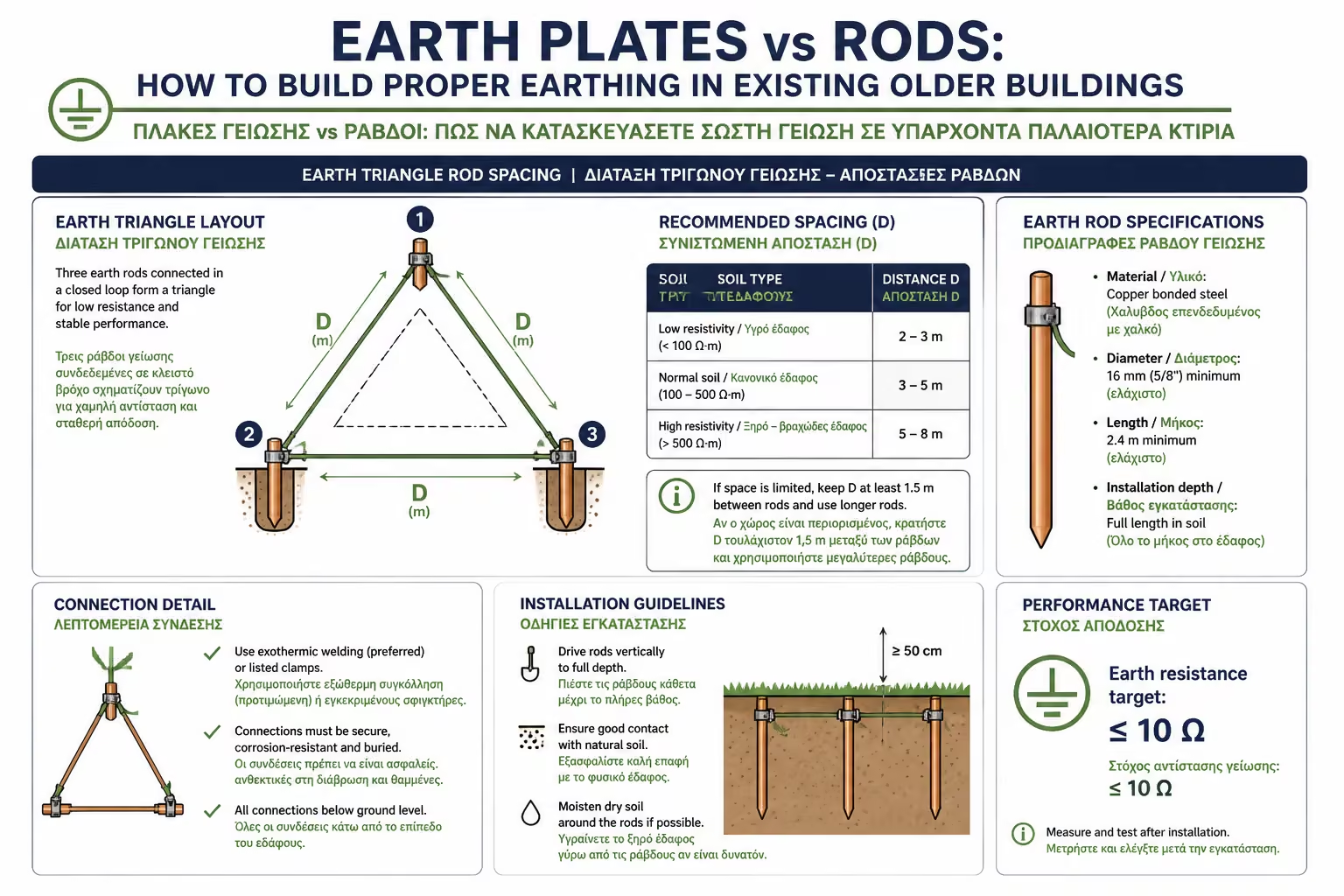
More active soil volume means better current dissipation.
Rods should be separated by at least their own length.
The copper linking network between electrodes is part of the solution.
A correct arrangement delivers real benefit instead of symbolic extra metal.
Bentonite is not magic, but it is a very practical improvement tool when the soil is dry or poor. Around the electrode it creates a better moisture and contact environment and can reduce resistance significantly.
The inspection pit is what separates a professional installation from a disposable one. Without the ability to isolate and test the electrode in future years, you never really know whether the system remains effective.
Within the topic "Earth Plates vs Rods: How to Build Proper Earthing in Existing Older Buildings", the section "4. Bentonite and an inspection pit turn an improvised fix into real infrastructure" is more than background information. It is a control point that determines whether the study, the site execution and the future maintenance of the work remain technically coherent and operationally reliable over time.
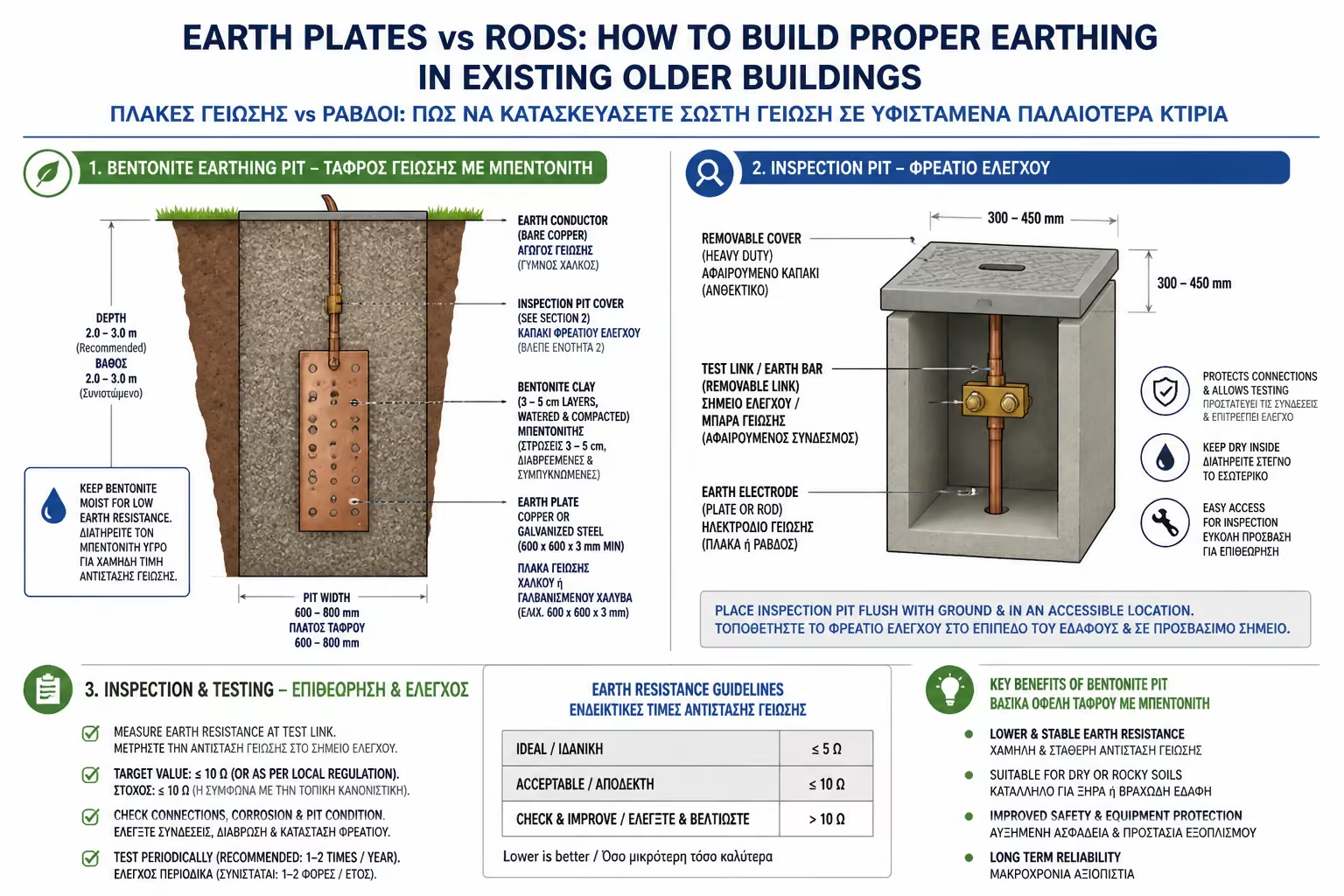
On difficult soils it acts as a serious engineering enhancement.
It allows the electrode to be isolated for proper measurement.
Earthing is not a one-day job but a decades-long asset.
The final criterion is always the measured result, not visual impression.
Return to category.
Go to categoryReturn to the central guide.
Go to guide