
T means earth
It indicates direct connection of either the source or the installation to ground.
TT, TN-S and TN-C-S often sound like academic abbreviations meant only for design engineers. In practice they are the core language that describes how a building connects to the source and how fault current returns safely.
That logic directly affects crucial choices: how an RCD behaves, what kind of surge protection the board needs, which measurement targets make sense and where local earthing must be strengthened.
If an owner or a junior engineer does not identify the actual system correctly, it becomes very easy to install technically sound components inside the wrong overall architecture. The first step is therefore not the product but the network understanding.
In practice, the guide "Earthing Network Types (TT, TN-S, TN-C-S): A Clear Guide for Engineers and Students" is not just theory. It works as a checklist for supervisors, owners and installers who want to verify that the chosen solution on site is genuinely safe, measurable and compatible with the wider protection architecture of the building.
The first letter shows how the source is connected to earth, the second how the installation is connected, and the following letters whether neutral and protective conductors travel together or separately. The naming is not paperwork; it is a compressed description of protection architecture.
Once you read those letters correctly, you understand which conductor does what, where separation is allowed, what fault loop is expected and where safety depends on the local earth electrode or on the neutral arrangement.
Within the topic "Earthing Network Types (TT, TN-S, TN-C-S): A Clear Guide for Engineers and Students", the section "1. The letters describe the relationship between source, neutral and earth" is more than background information. It is a control point that determines whether the study, the site execution and the future maintenance of the work remain technically coherent and operationally reliable over time.
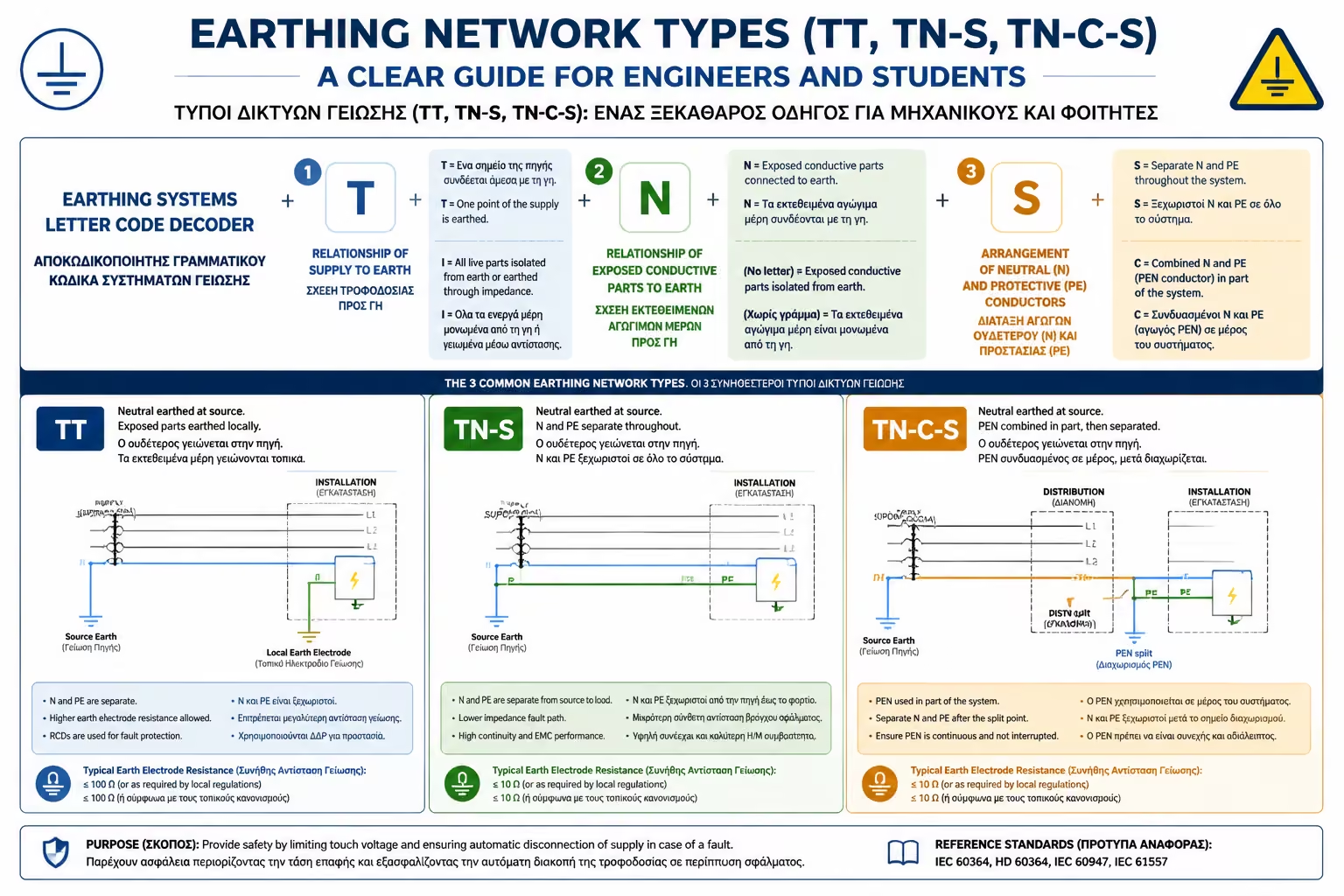
It indicates direct connection of either the source or the installation to ground.
It describes the link of exposed parts to the source neutral arrangement.
Neutral and PE travel on separate conductors.
Those functions are temporarily combined in one PEN conductor.
In TT the building has its own earth electrode and does not rely on a dedicated protective conductor coming from the network. This is common on many overhead or peripheral supply systems and gives a clear local grounding logic.
The trade-off is that fault current does not return through as low-impedance a metallic path as in TN systems. Personal protection therefore depends strongly on the RCD and on the quality of the local earthing electrode.
Within the topic "Earthing Network Types (TT, TN-S, TN-C-S): A Clear Guide for Engineers and Students", the section "2. TT provides independence but depends on differential protection" is more than background information. It is a control point that determines whether the study, the site execution and the future maintenance of the work remain technically coherent and operationally reliable over time.
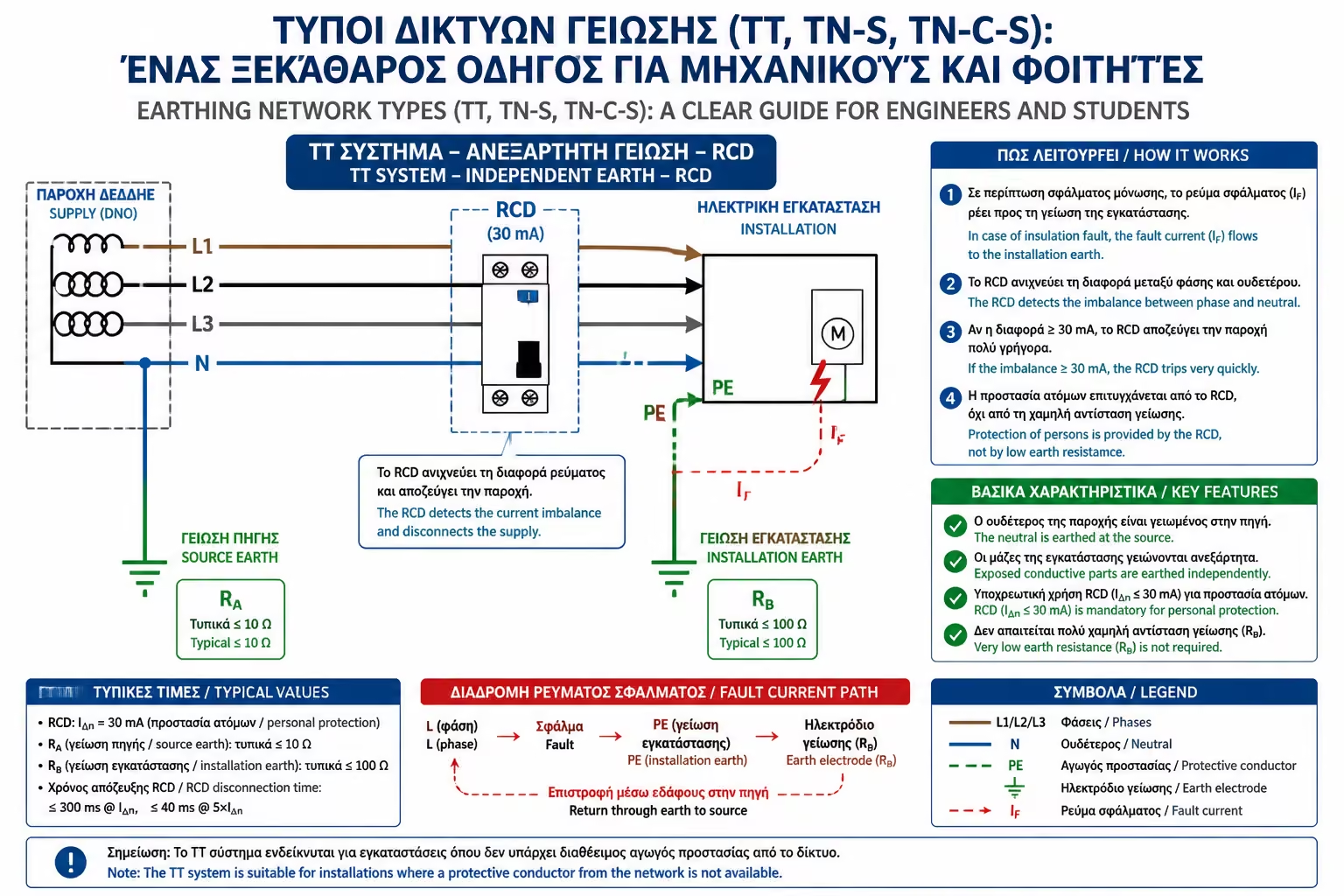
The building establishes its own connection to ground.
Without it, disconnection under earth-fault conditions is not adequately fast.
The electrode value directly affects the overall safety margin.
SPD connection logic changes between TT and TN arrangements.
In TN-S the neutral and protective conductors remain separate all the way from the source to the load. That gives clean behaviour, lower interference and a high level of control, which is why it is common in serious facilities or private substations.
In TN-C-S a combined PEN conductor is used for part of the supply and separated near or inside the building. It is practical and widespread, but it demands attention because failure of the PEN can create dangerous conditions quickly.
Within the topic "Earthing Network Types (TT, TN-S, TN-C-S): A Clear Guide for Engineers and Students", the section "3. TN-S and TN-C-S improve the fault loop in different ways" is more than background information. It is a control point that determines whether the study, the site execution and the future maintenance of the work remain technically coherent and operationally reliable over time.
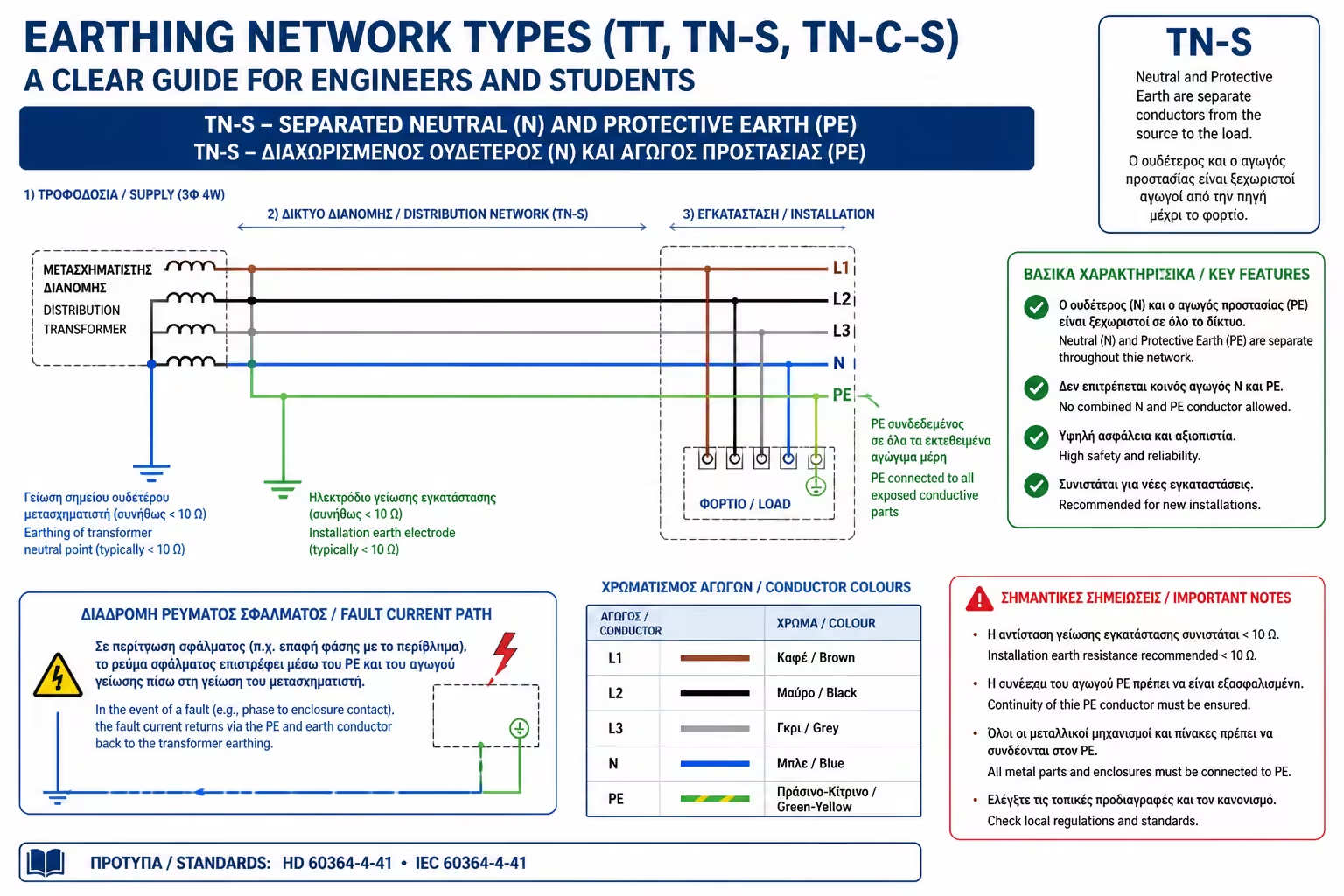
PE and N never share the same conductor path.
Network economy comes with higher control requirements.
That is where bars and local earthing must be arranged correctly.
A real building-to-ground connection remains valuable and necessary.
Surge protection, RCDs, loop measurements, equipotential checks and risk assessment make sense only when they are interpreted against the correct network model. That is why the question 'which system do we have?' should come before 'which component should we buy?'.
In homes upgraded over time, the original architecture is often forgotten. The result is a mixture of logic, improvised bridges and difficult troubleshooting. A clear mapping of the supply system is the basis of every sound panel renovation.
Within the topic "Earthing Network Types (TT, TN-S, TN-C-S): A Clear Guide for Engineers and Students", the section "4. Correct identification of the system drives every later choice" is more than background information. It is a control point that determines whether the study, the site execution and the future maintenance of the work remain technically coherent and operationally reliable over time.
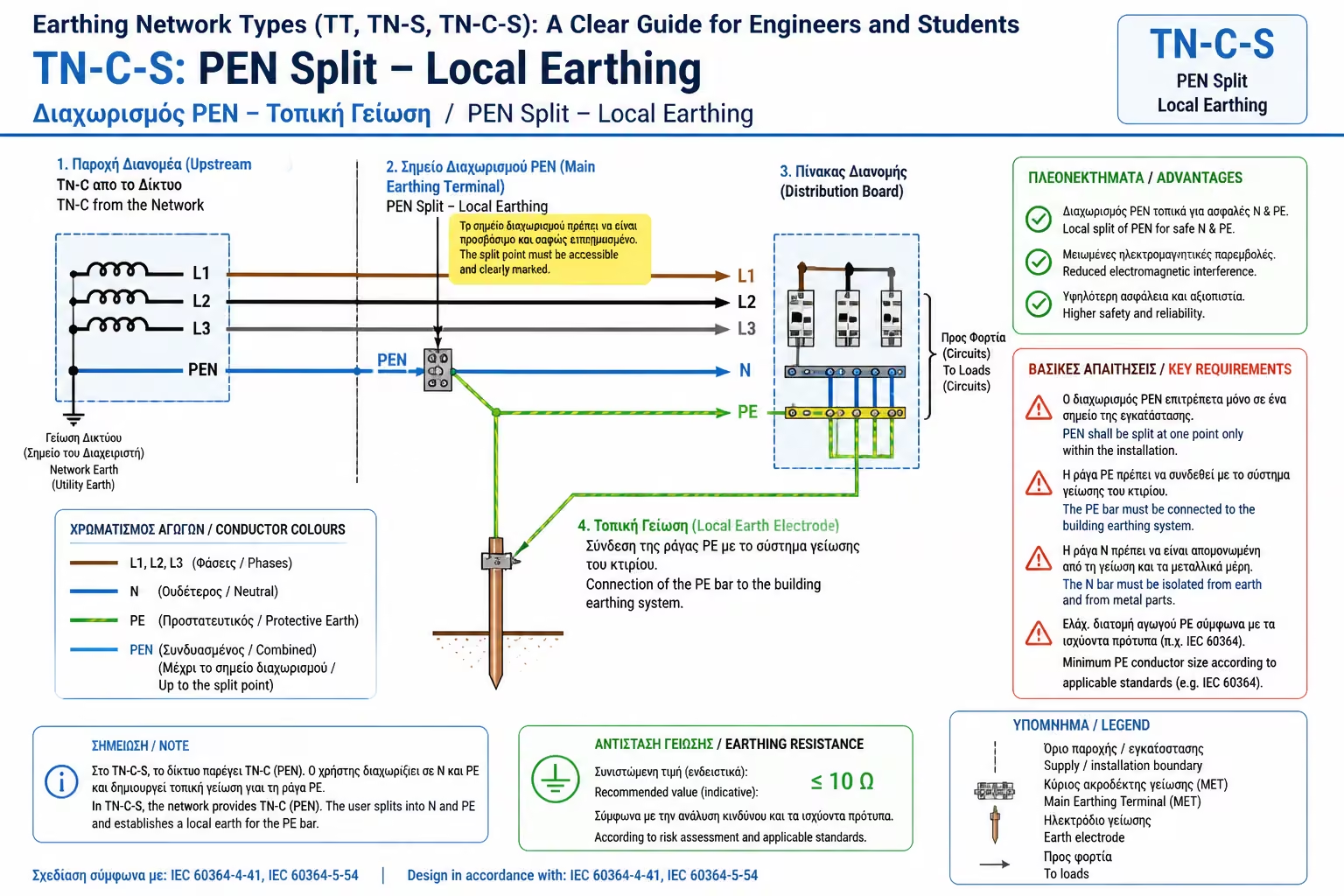
The wrong type can perform badly or even fail destructively.
Its placement and interpretation change with the earthing arrangement.
Without it, the panel fills up with contradictions.
Understand the system first, then design the protection.
Return to category.
Go to categoryReturn to the central guide.
Go to guide