Class II insulation
The plastic enclosure inherently reduces the risk of indirect contact through the shell.
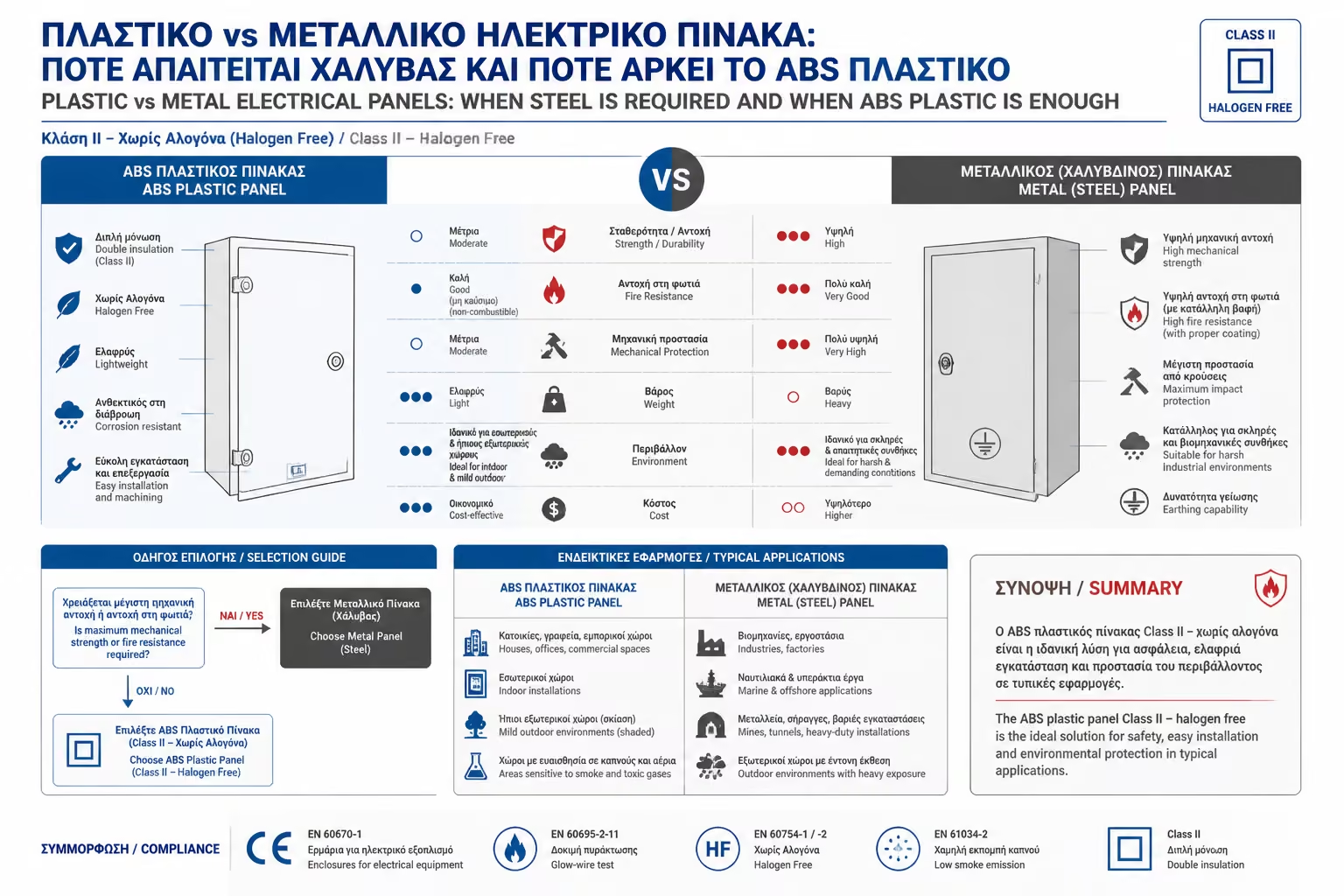
In residential work, the standard electrical panel is usually plastic. In plant rooms, larger technical installations or heavier-duty environments, however, metal enclosures become far more common. That difference is not a matter of style alone.
The panel material affects insulation behaviour, mechanical strength, fire performance, heat dissipation and the overall philosophy of the installation. The choice should therefore not be made through vague assumptions that metal is always more professional or that plastic is always enough.
The correct decision depends on board size, installation location, load density, exposure to impact and the need to earth the enclosure itself. That is exactly what this article clarifies.
The main reason most residential panels are plastic is that plastic is an insulating material. If an internal fault occurs and a live part touches the enclosure, the outer user is not exposed to the same immediate shell-contact risk that exists with a conductive metal housing.
Quality domestic plastic panels are also light, easy to install and easy to modify for cable or conduit entry points. In renovation work this usually means faster installation and more flexible handling on site.
Material quality matters here as well. Modern halogen-free and self-extinguishing plastic enclosures are very different from cheap older plastics and are now a mature solution for most domestic applications.
The plastic enclosure inherently reduces the risk of indirect contact through the shell.
Installation and preparation are simpler than with a heavy metal box.
In apartments and standard houses it covers most needs without needless complexity.
Halogen-free self-extinguishing materials are the correct level for a modern installation.
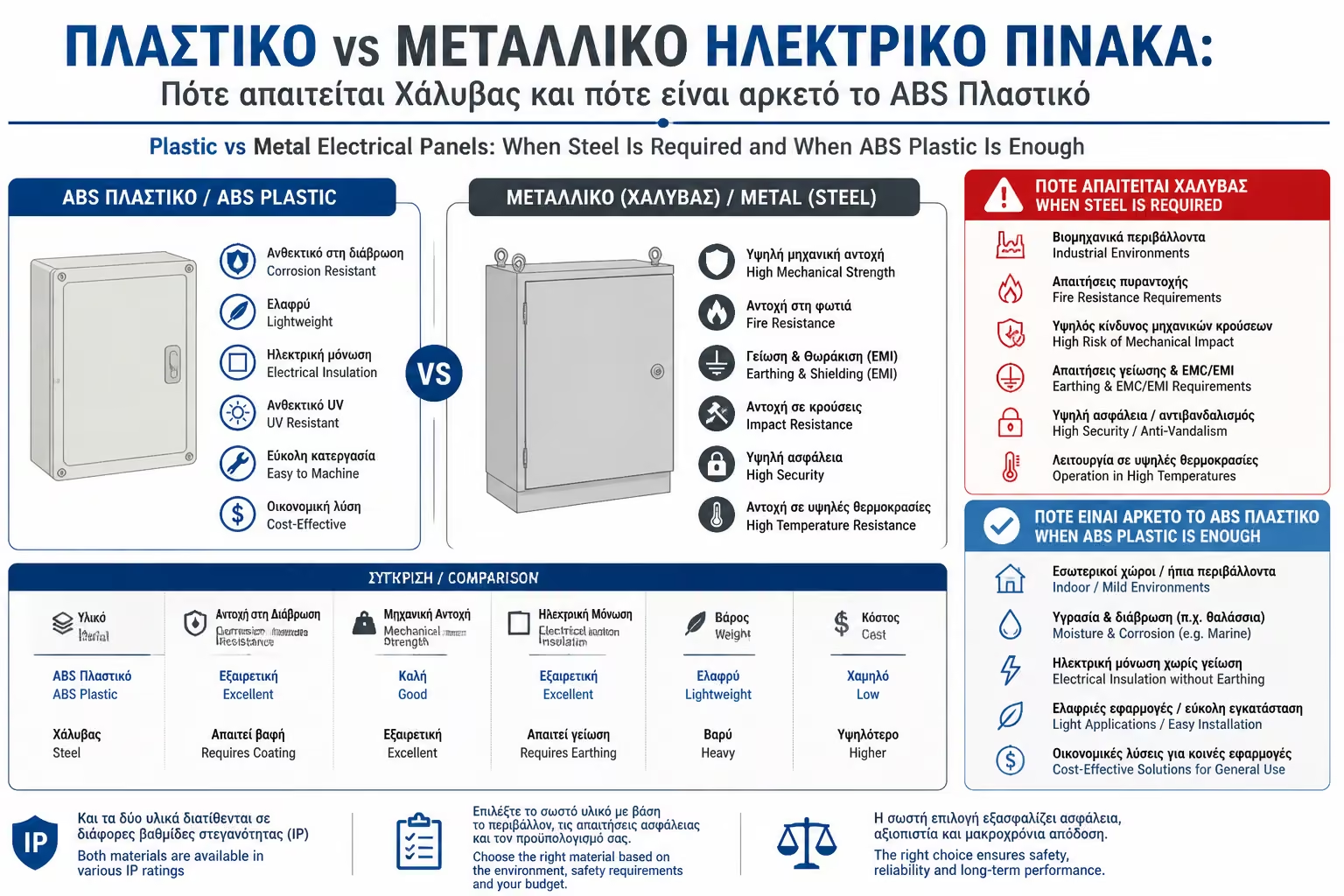
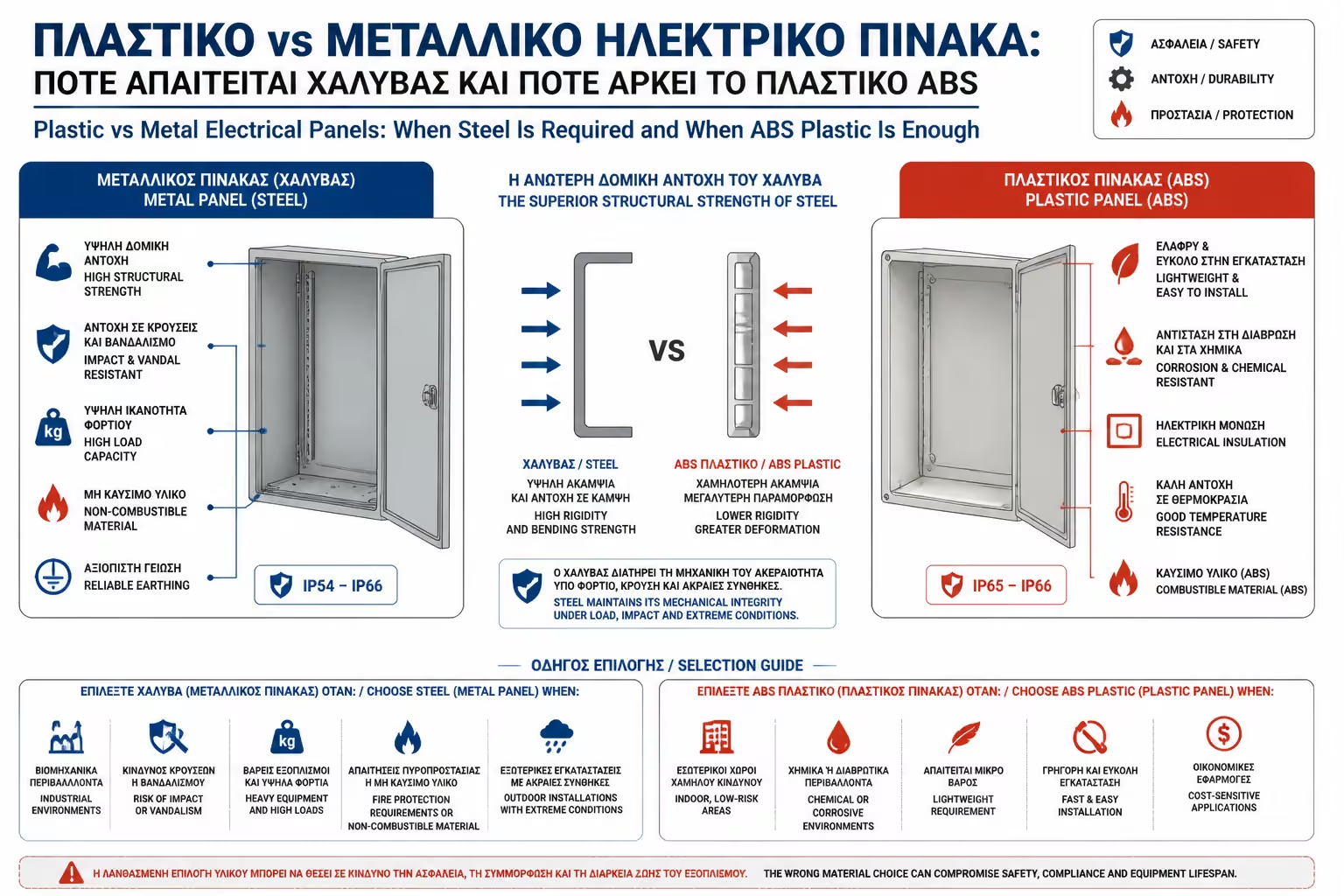
Metal panels appear where the project moves beyond ordinary domestic logic. Once the board becomes large, dense with equipment and heavily loaded with thick conductors, the metal enclosure offers much stronger structural rigidity.
In industrial, semi-industrial or technical environments there is also a higher probability of mechanical abuse. An impact that might crack a weak plastic shell will often result only in deformation of a metal enclosure, without immediate exposure of live parts.
In high-power panels, metal can also contribute to a more robust thermal behaviour. It does not solve every heat problem by itself, but it creates a more serious enclosure for demanding applications.
As rows, devices and cables increase, mechanical stability becomes a critical concern.
In tougher spaces a metal enclosure tolerates mechanical stress more maturely.
Plant rooms, large garages and equipment areas often favour a metal board.
Beyond a certain scale, metal stops being optional and becomes necessary.
In panels with many loads, relays, contactors and heavy outgoing lines, thermal behaviour is not an abstract issue. Airflow, heat rejection and the long-term reliability of the devices are part of real-world performance.
A metal enclosure can help the overall thermal robustness of the assembly, but it also introduces something plastic does not: the need for serious grounding of the enclosure. If a conductive shell is not correctly bonded and a live fault touches the metal, the board becomes a hazardous surface.
That means a metal panel is a more demanding technical choice. It is not enough for it to be stronger. It has to be integrated correctly into the building’s earthing and protection system.
As power and equipment increase, thermal behaviour becomes a real selection criterion.
The conductivity of the enclosure creates obligations that do not exist with plastic.
In typical domestic use this remains a major practical advantage.
It must be evaluated together with protection strategy and installation architecture.
It is not true that a metal panel is always better, nor that a plastic one is always a second-rate budget option. Each material has a context in which it performs ideally.
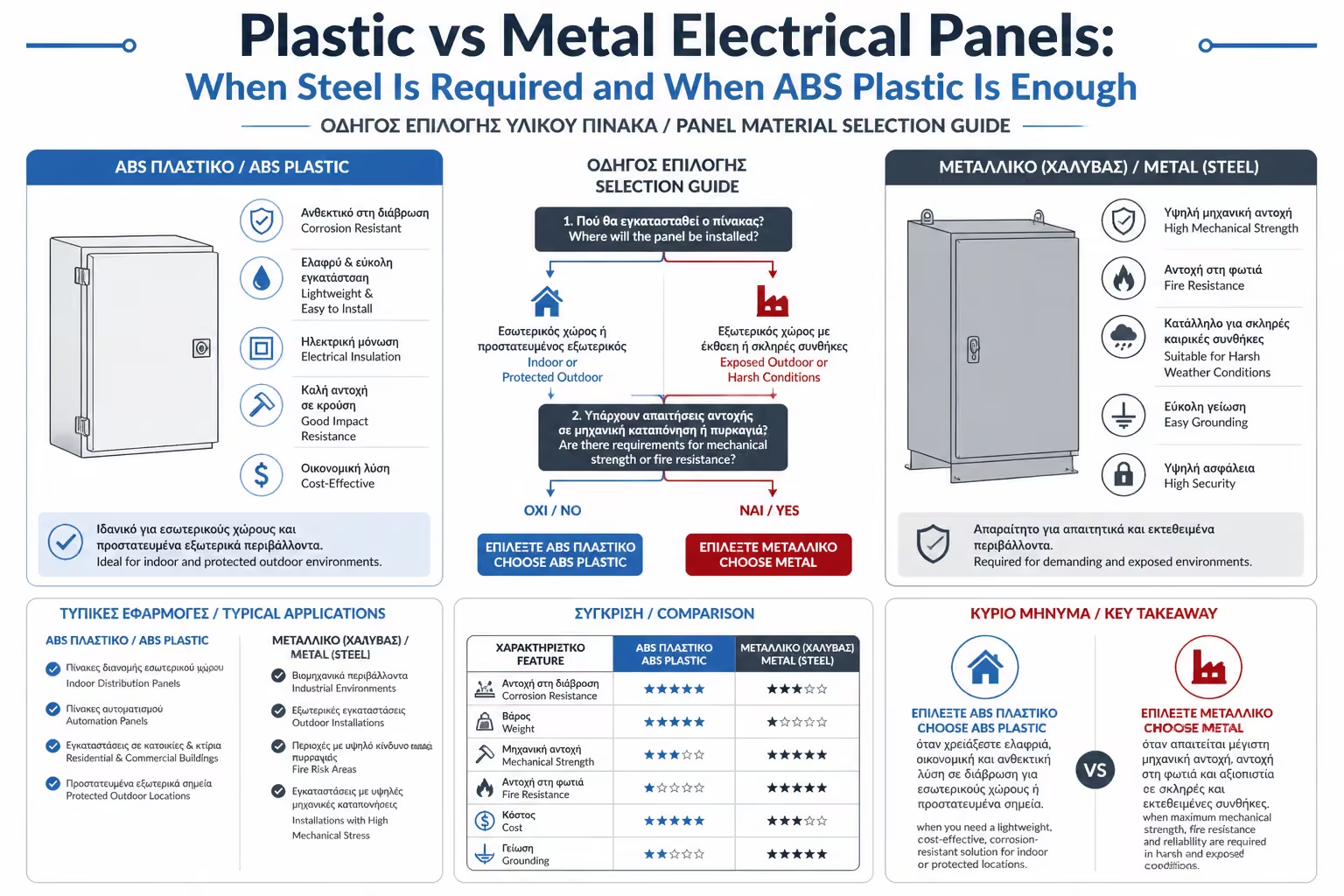
For a standard house or apartment, a quality plastic enclosure is usually the most rational, safe and sufficient answer. For very large boards, harsher environments or special technical requirements, sheet steel may be the correct choice.
A mature engineer does not begin with the material. The process begins with the project: location, loads, mechanical risk, maintenance requirements, thermal behaviour and the overall protection philosophy. The correct enclosure follows from that analysis.
In a great many homes it is exactly the correct solution.
If the project does not need it, it may only add complexity.
Size, location, loads and environment are the true criteria.
It belongs to the architecture of protection, not to the category of decorative accessories.
The best panel is not the heaviest one. It is the one that matches the real demands of the installation precisely.
Return to category.
Go to categoryReturn to the central guide.
Go to guide