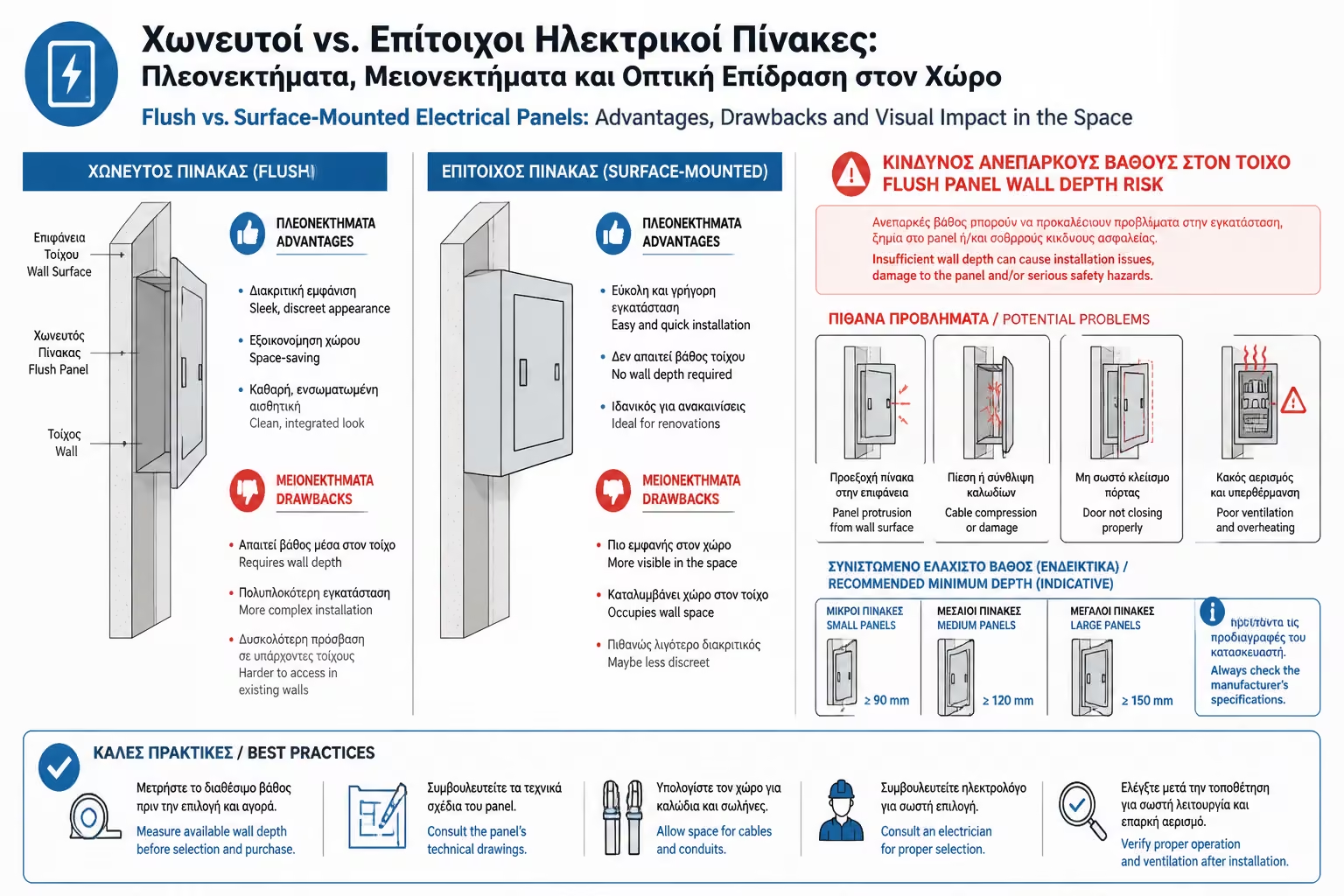
Its strongest advantage is visual integration
The panel becomes part of the wall instead of dominating the space.
The electrical panel is one of the few technical elements in a home that remains visible in everyday life. That is why the choice between a flush and a surface-mounted enclosure is not only a technical decision but also one of function, space and visual integration.
First impressions usually favour the flush panel because it nearly disappears into the wall. But that visual advantage does not mean it is always the correct answer. Wall thickness, structural safety, the scale of the renovation and whether the building is already finished can completely change the right decision.
In this article we look at when the recessed solution is genuinely mature, when the surface-mounted panel is the cleaner technical answer and how to avoid the common mistakes that turn an aesthetic preference into a construction or safety problem.
A flush panel sits inside a recess cut into the wall and leaves only its trim and door visible. That makes it the most discreet option, especially in entrances, corridors and other locations where clean surfaces matter a great deal.
The visual benefit, however, comes with real structural requirements. It needs adequate depth, the correct wall location and controlled cutting. In thin partitions or walls with limited capacity, the desire to make the panel disappear can easily lead to excessive weakening of the surrounding construction.
In new-build work or deep renovation, where the design is coordinated from the beginning, a flush panel can be an excellent choice. In already finished homes, the same solution often demands far more disruption than the owner initially expects.
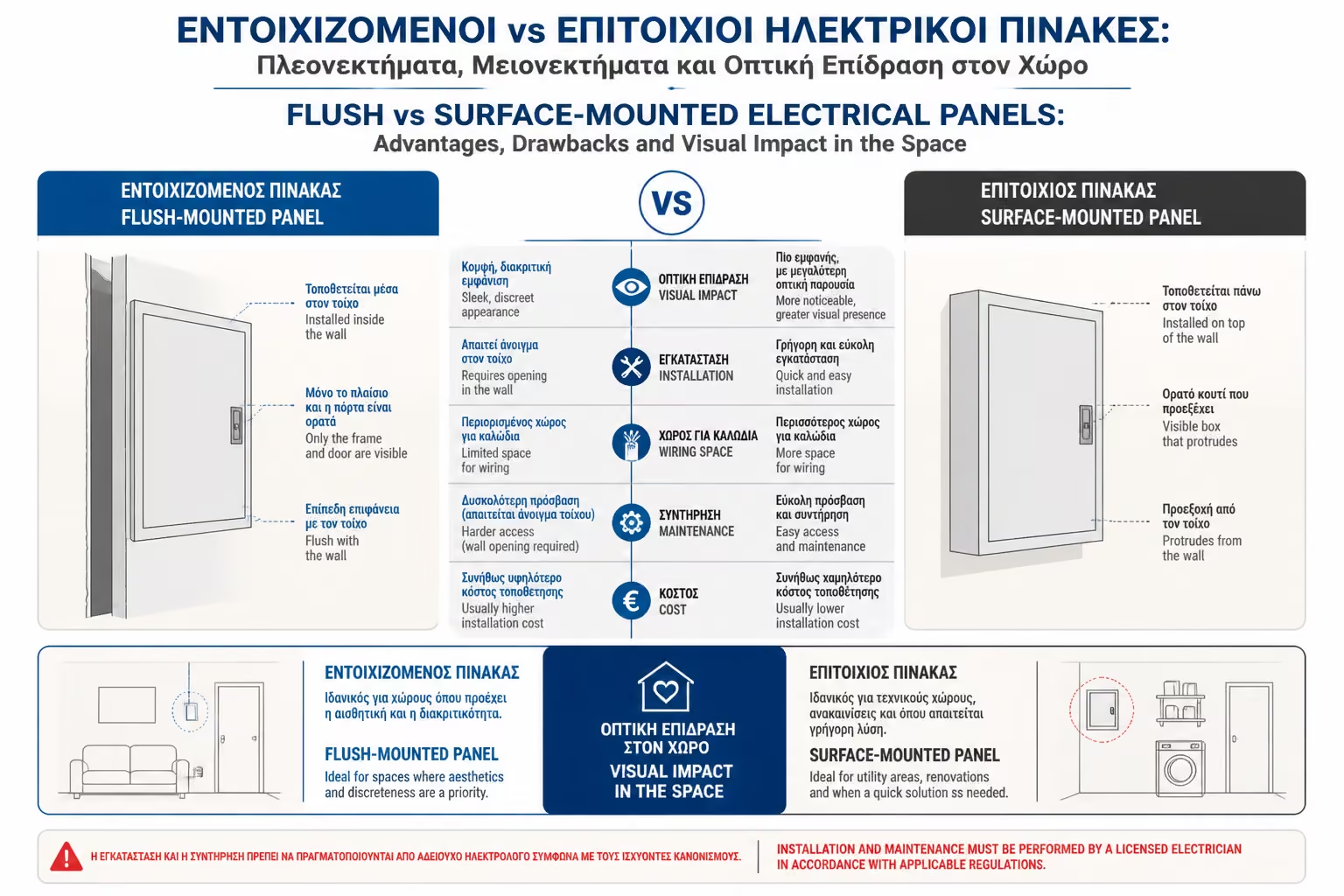
The panel becomes part of the wall instead of dominating the space.
If the wall lacks depth or strength, the flush solution quickly turns into a construction risk.
When the panel is coordinated from the design phase, the integration is much cleaner.
The maturity of the decision depends on the building fabric, not only on the minimalist image.
Modern multi-row boards need meaningful depth, often around 9 to 11 centimetres or more depending on the enclosure. That means a thin partition wall may not genuinely be suitable for safe recessing without being punctured or weakened.
An even more serious mistake is cutting into columns or other load-bearing elements. Electrical convenience never justifies chasing reinforced concrete in a way that affects the structural frame. At that point, aesthetics end and structural safety begins.
Before a flush panel is selected, the real wall thickness must be checked honestly and any thought of locating the panel in structurally critical zones must be rejected. If those conditions are not met, a surface-mounted panel is not a compromise but the correct answer.
The more rows and devices the panel carries, the harder it becomes to recess safely.
The fact that something can be chased does not mean it remains technically comfortable afterwards.
Load-bearing elements are not valid hiding places for an electrical board.
The structural conditions must be confirmed before the panel type is chosen.
A surface-mounted panel is fixed onto the finished wall and avoids heavy chasing work. For that reason it becomes extremely useful in quick renovations, thin wall build-ups, garages, storage rooms and all spaces where installation speed and minimal wall intervention matter.
Its greatest strength is that it removes the entire uncertainty of depth. It goes where it needs to go without turning the project into a debate about whether the wall can safely accept a deep recess just to gain a little visual refinement.
Yes, it projects further from the wall and has a stronger physical presence. But in many situations that honesty is preferable to a badly recessed board achieved through technical compromises. In future maintenance or expansion scenarios, the surface-mounted option is also much easier to work with.
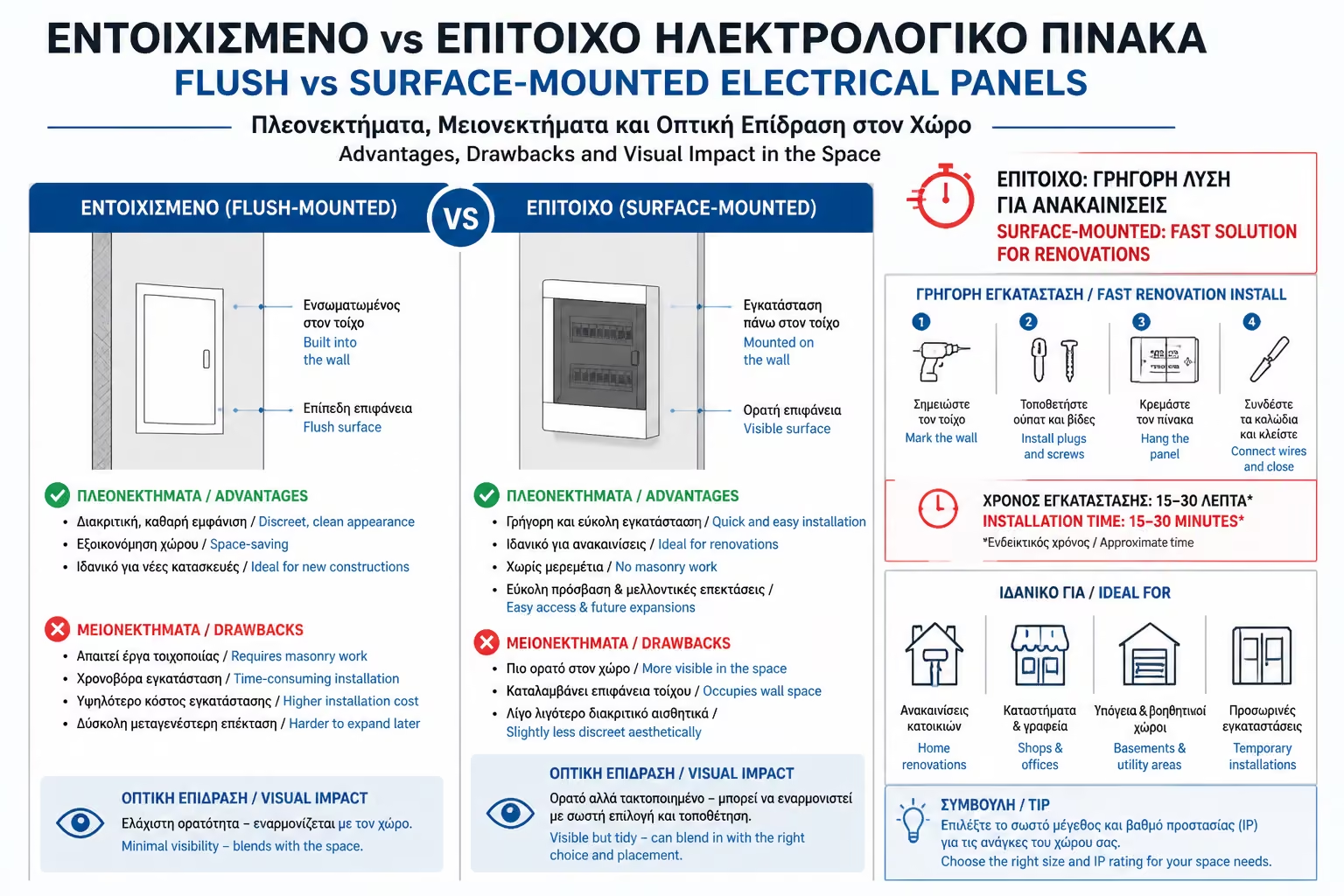
Installation is cleaner and faster compared with building in a deep recessed panel.
It removes the uncertainty about whether the wall can accept recessing safely.
Technicians can usually access and adapt the system more easily later on.
The right electrical decision must serve long-term function, not only immediate appearance.
In new construction, in drywall with proper planning or in deep renovation with generous wall build-up, a flush panel is often the most elegant solution. In finished apartments, marginal wall thicknesses or utility spaces, the surface-mounted board is usually the more mature and technically cleaner choice.
The goal is not to follow fashion but to make a decision that balances safety, maintenance, space, appearance and construction realism. Gaining a little visual tidiness while losing structural comfort or future access is not a good trade.
So the right question is not “which panel looks better?” It is “which panel best serves this exact building, at this phase of work, under this pattern of use?” That is where the genuinely correct technical judgement lies.
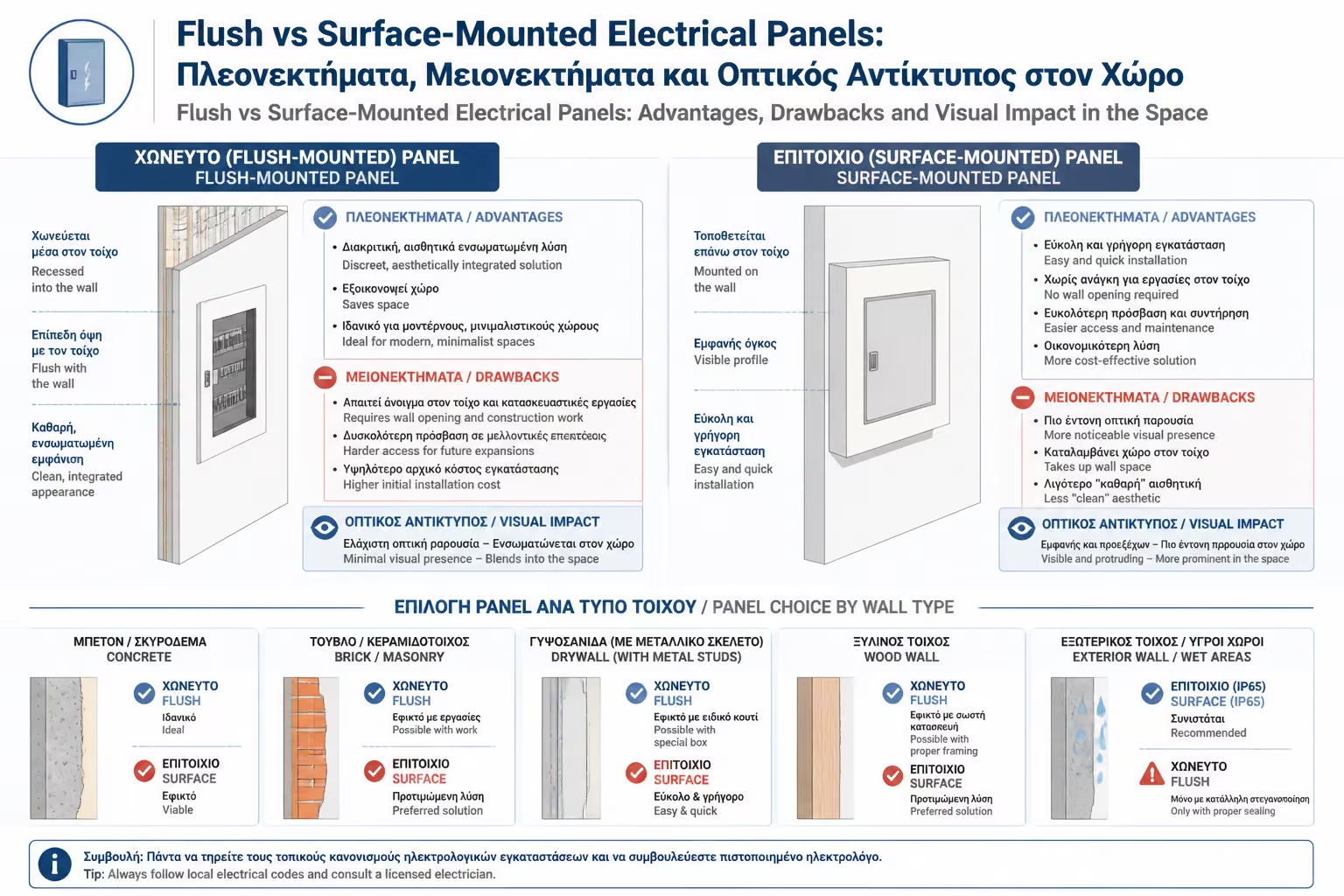
When the building is designed from the start, discreet integration becomes much easier.
It reduces disruption, cost and construction risk without sacrificing function.
With the right hollow-wall system, you can achieve recessed aesthetics without heavy demolition.
The best solution is the one that stands up technically, functionally and visually at the same time.
The best electrical panel is not the one that hides the most. It is the one that is installed correctly, safely and remains serviceable throughout the life of the installation.
Return to category.
Go to categoryReturn to the central guide.
Go to guide