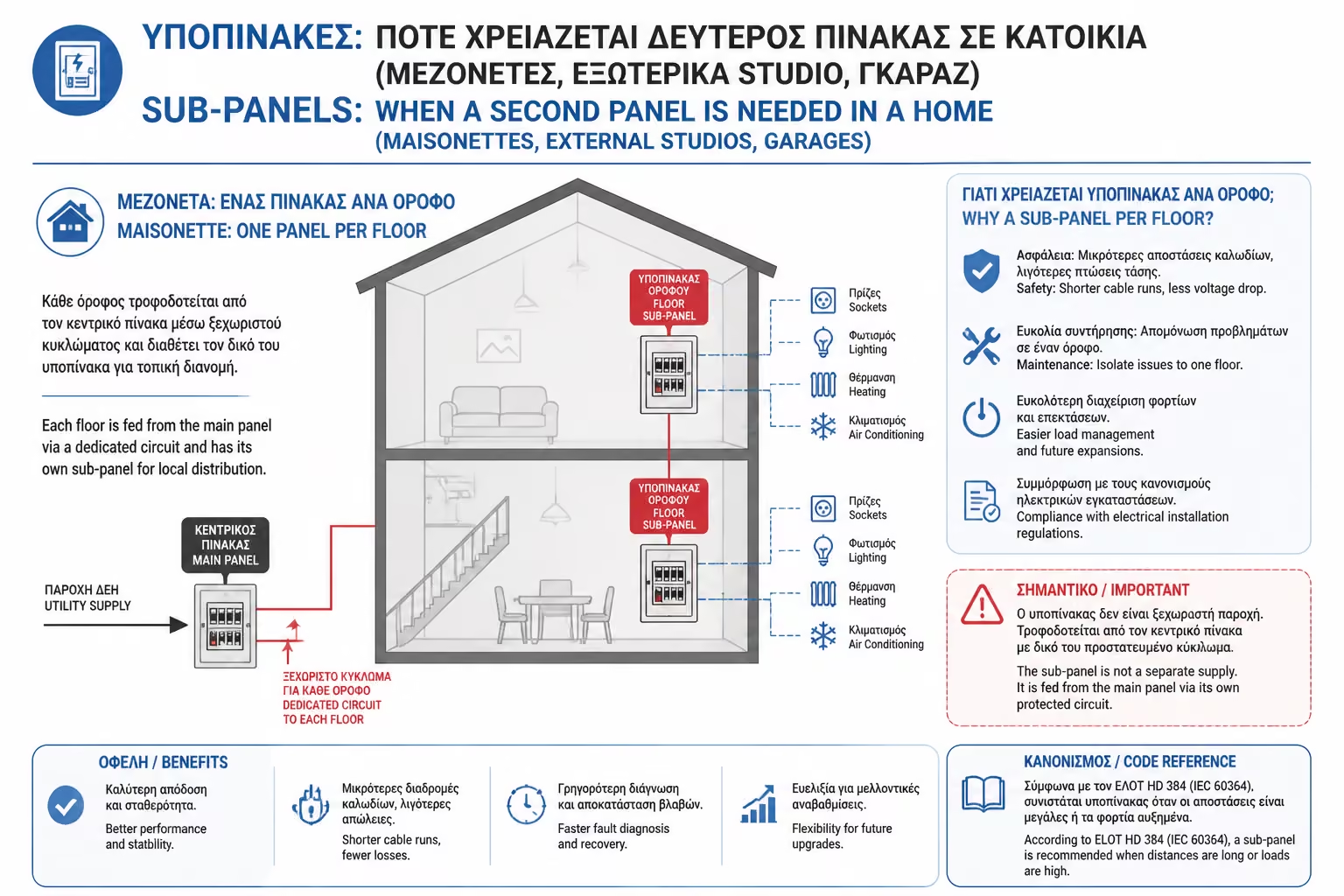
Local distribution near the loads
Grouping local circuits in a dedicated point improves the overall organisation of the system.
Once an area moves far from the main panel or starts gathering many local electrical needs, the idea of running multiple separate circuits all the way from the house quickly becomes expensive, awkward and technically messy. That is where the sub-panel becomes an organisational tool rather than an unnecessary luxury.
The basic logic is simple: one properly protected and correctly sized feeder leaves the main panel and arrives at a smaller local board. Distribution then happens near the loads, with a cleaner architecture and much less copper wasted over long distances.
The issue is not only economic. A sub-panel changes the level of control, maintenance access, fault isolation and overall installation quality. That is why we need to know exactly when it is worth using and how it should be connected.
A sub-panel is not a second box added to make the installation look more serious. It is a distribution solution. When many local circuits need to serve a remote or functionally distinct area, local distribution is almost always cleaner than dragging every individual circuit back to the main board.
That approach reduces congestion in the main panel and limits the chaos of long-distance routing. It also makes troubleshooting easier and allows one area to be isolated without unnecessarily affecting the rest of the property.
In other words, a sub-panel is an architectural tool within the installation. It makes the system more logical, not simply larger.
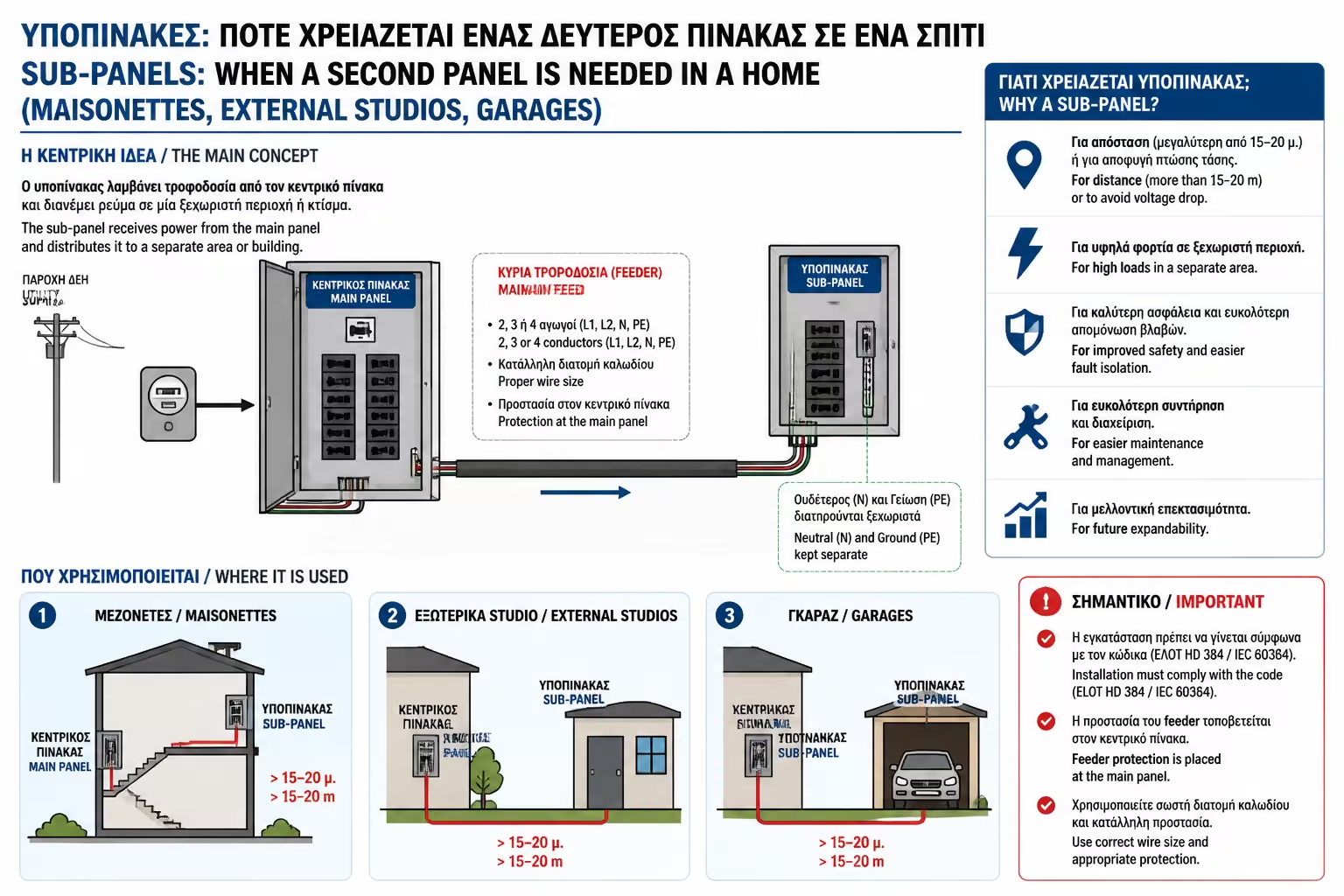
Grouping local circuits in a dedicated point improves the overall organisation of the system.
The main panel remains cleaner and easier to manage.
A space can be handled separately without disturbing the entire dwelling.
In the right scenarios a sub-panel is not excess complexity but better design.
In a multi-level maisonette, bringing every circuit from every floor back to one single panel may be possible, but it is often not the most functional approach. A local sub-panel per level or per functional zone can improve control dramatically and reduce the need for many long routes.
In garages, swimming-pool zones, detached studios or auxiliary buildings, the logic becomes even stronger. Instead of multiple long circuits, you send one correctly sized feeder and distribute locally to lighting, socket groups, equipment and future additions.
In plant rooms the case is even clearer. Heat pumps, pumps, automation equipment, photovoltaics and related plant benefit from a dedicated point of control close to the actual technical field in which they operate.
In multi-storey homes, local logic improves both usability and maintenance.
Remote spaces with multiple needs benefit strongly from a local sub-panel.
Technical loads gain their own organised point of control.
If the space evolves, the sub-panel provides a cleaner base for extra circuits.
A sub-panel should never be fed through some arbitrary available cable. It requires its own outgoing feeder from the main panel, with protection chosen correctly for current, route length and installation method.
Once the feeder reaches the sub-panel, it should not be broken down chaotically into branch breakers without structure. The local panel needs its own internal architecture, often including a local main switch, so the whole area can be isolated for maintenance or fault work.
From that point onward, the same seriousness applies as in any other board: clean distribution, proper busbars, correct neutral and earth logic and clear labelling of every served circuit.
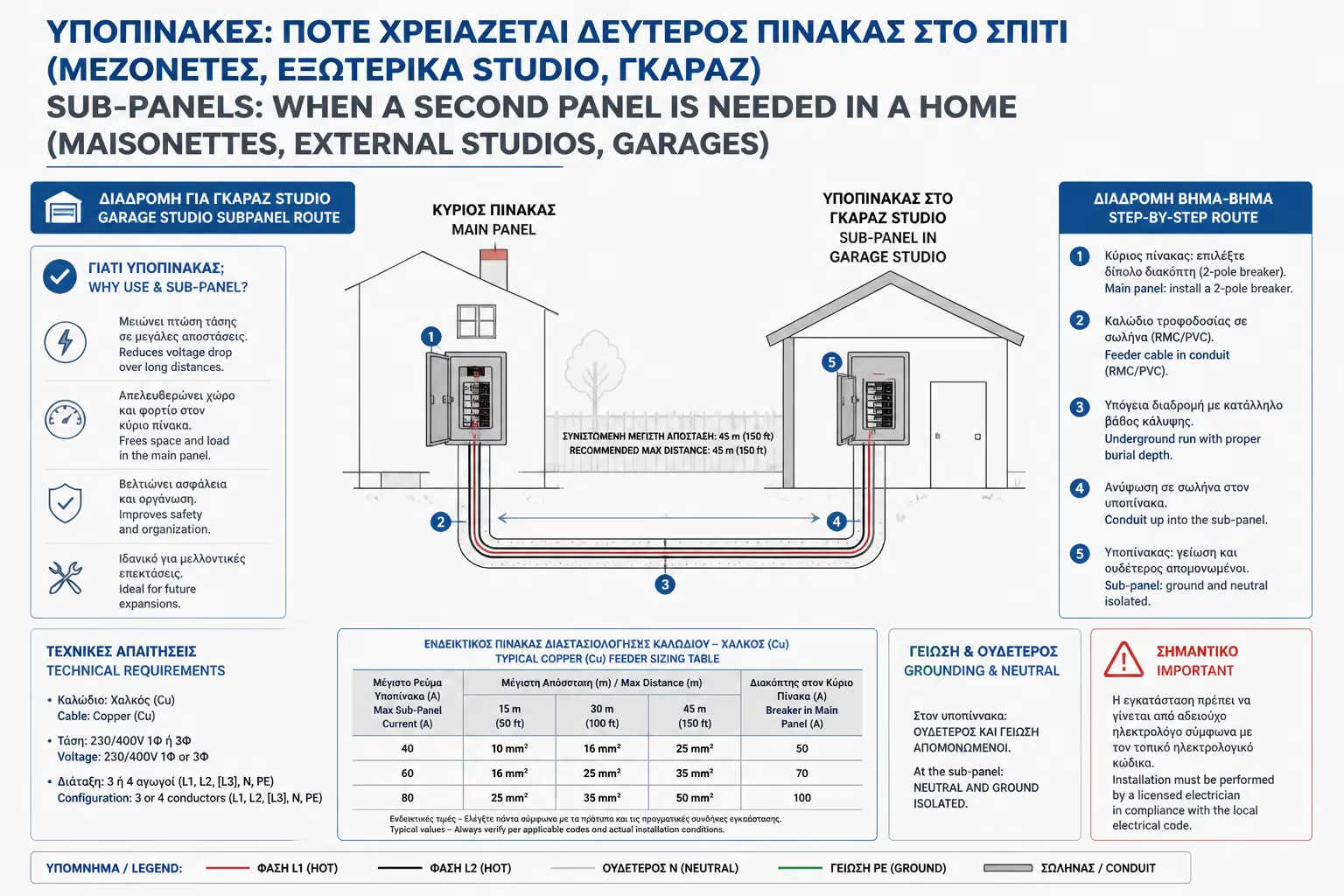
It is not an improvised feed but a correctly protected outgoing circuit from the main panel.
Being able to isolate the area locally is essential for service and safety.
It needs the same quality of internal organisation as any main board.
Once boards multiply, clear circuit identification becomes critical.
Many poor installations end up tripping the main RCD because a fault in a remote area has not been isolated correctly. If a sub-panel serves outdoor or demanding loads, the protection strategy must be arranged so that a local fault does not unnecessarily black out the whole house.
This is where the architecture of the RCDs, any required selectivity and the clear logic of which circuits are protected where become vital. Not every line is the same, and not every line should depend on one central protection point in a way that creates nuisance-wide outages.
A sub-panel is therefore not only about copper and distance. It is also about the philosophy of protection. When that is designed properly, the result is safer, more controllable and far more civilised in everyday use.
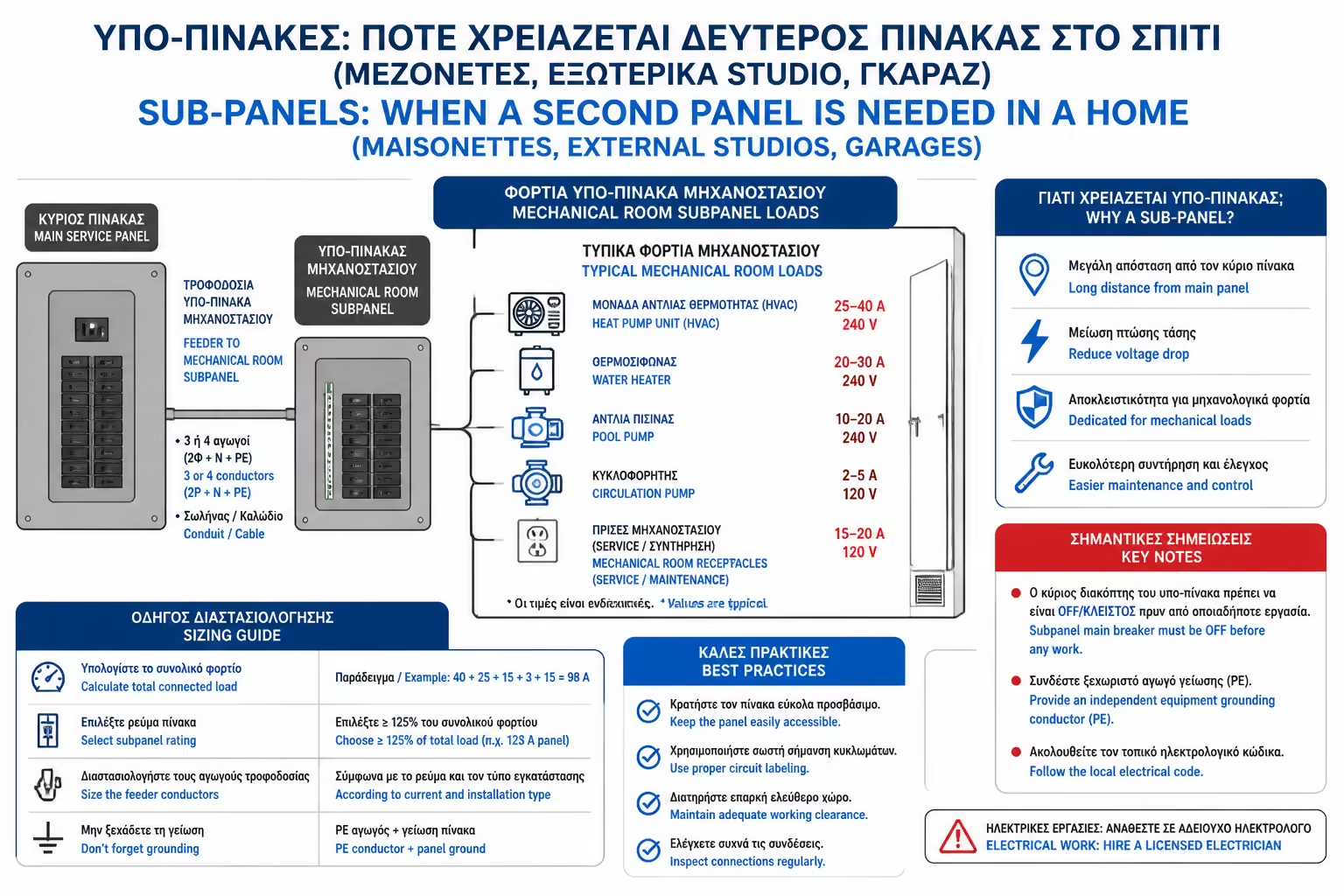
The protection architecture should isolate the problem as locally as possible.
Their placement and separation directly affect the quality of everyday operation.
In more complex projects, correct hierarchy avoids cascading blackouts.
Their true value depends as much on electrical logic as on routing and copper.
A correct sub-panel is not merely a second board. It is the transition from improvised distribution to an installation that thinks in zones.
Return to category.
Go to categoryReturn to the central guide.
Go to guide