
Plumbing & Electrical Bathroom Infrastructure
Return to category.
Go to categoryAutomatic sensor faucets, also known as touchless or sensor faucets, have moved from commercial spaces to homes. We used to see them mainly in airports, restaurants, hotels, offices and healthcare facilities. Today they are also starting to appear in home renovations, especially in guest WCs, children's bathrooms, higher class rentals and homes where the owner wants more hygiene and less water wastage.
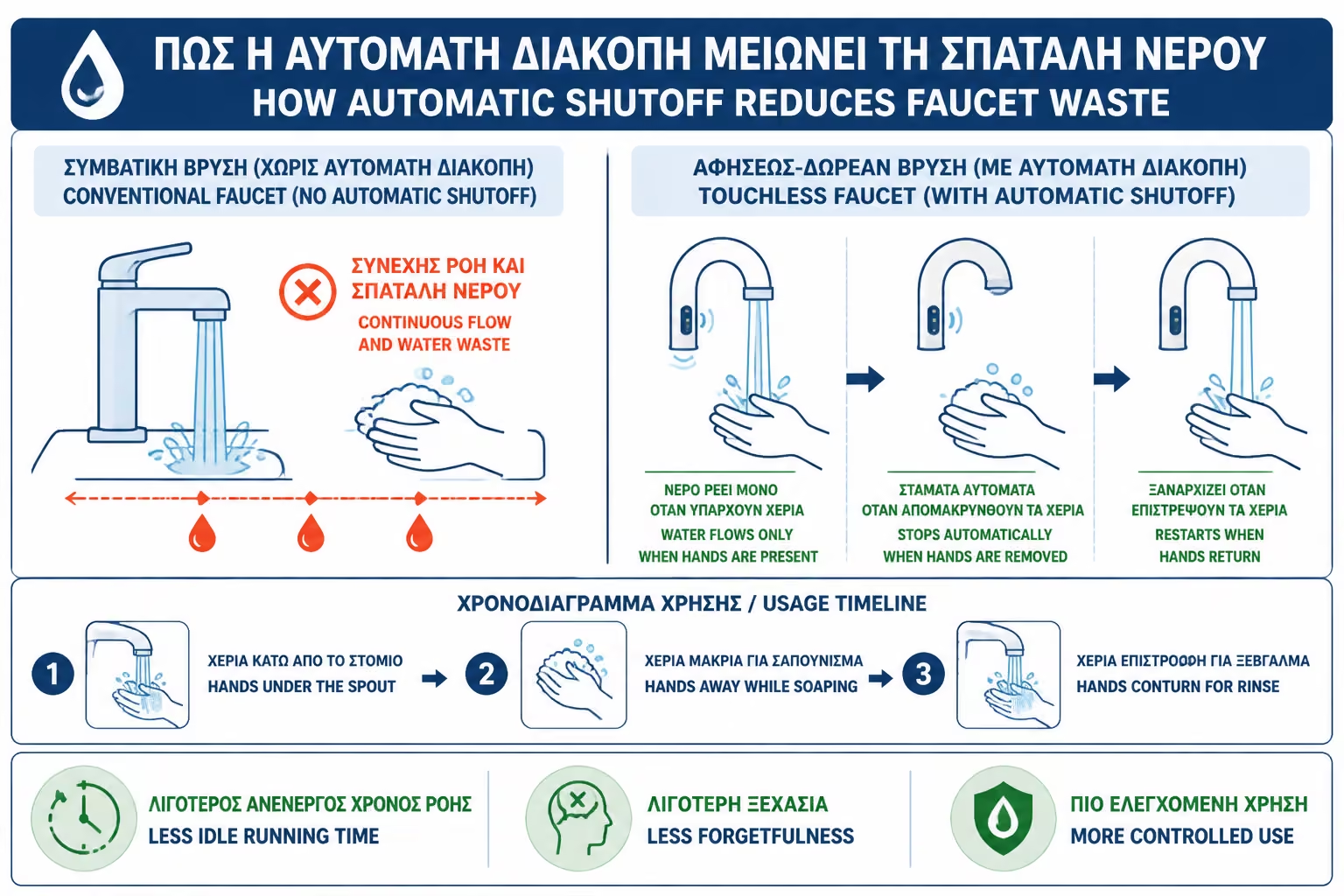
Their logic is simple: you don't turn on the faucet by hand. You bring your hands to the sensor, the battery opens automatically and when you move them away, it closes. This solves two everyday problems. First, it reduces contact with the battery when hands are dirty. Second, it stops the habit of leaving the water running while we soap our hands, brush our teeth or do something else at the sink.
But the word "absolute solution" needs some attention. A good touchless faucet can indeed be an excellent solution for savings and hygiene, especially in areas with frequent use. But it is not magic. If it has a bad sensor, if it's set up wrong, if the supply is too much, if the battery is constantly dying, if the filter is clogged with salt, or if the installation is done sloppily, it can become annoying. Technology helps, but it must be chosen and installed correctly.
Saving water does not only result from the sensor. It results from the combination of automatic shut-off, limited supply and correct operating time. The EPA states that WaterSense faucets and bathroom fixtures with a maximum flow of 1.5 gallons per minute can reduce flow by 30% or more over the standard limit of 2.2 gallons per minute without loss of efficiency. This shows that the real savings come when the sensor is combined with properly controlled flow.
In this guide we will see how automatic batteries work, how battery power is different from mains power, what to look out for in Greek baths with hard water, why they are very useful for hygiene, where they make more sense and when a simple battery with a good aerator can be a more practical solution.
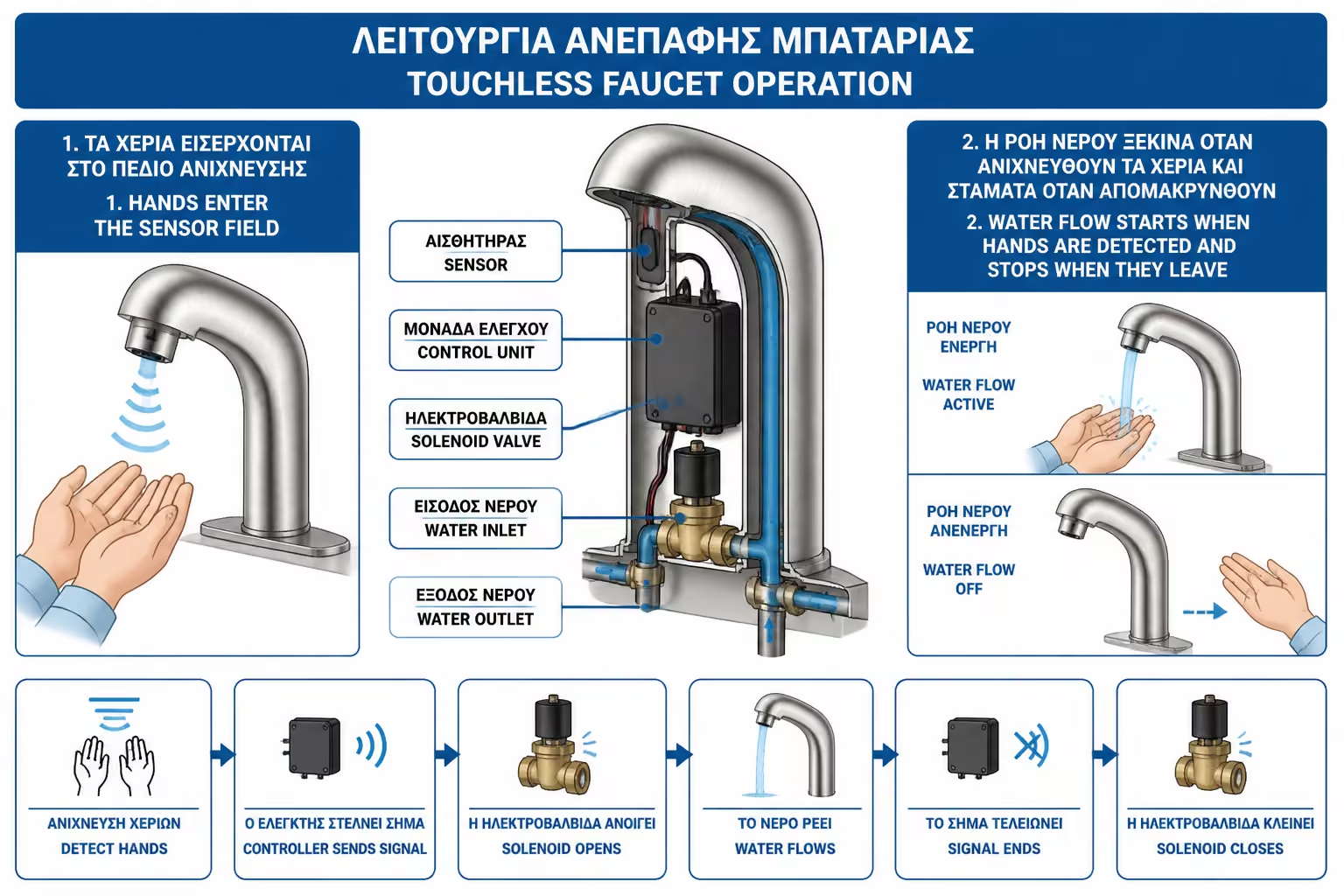
An automatic sensor faucet opens and closes without the user turning a lever or switch. On its body there is usually an infrared sensor that detects the presence of hands. When hands enter the sensing area, the solenoid valve opens and water flows. When the hands are removed, the valve closes.
In simpler versions, the water temperature is preset either with a small lever or with a mixer under the sink. In more sophisticated versions, there may be temperature control on the faucet body, thermostatic limitation, run-time settings, activation delay, anti-vandal protection, or automatic safety shut-off after a few seconds.
Unlike a conventional faucet, a touchless faucet is not just a plumbing component. It combines plumbing and electronics. It has a sensor, cable, battery pack or power supply, solenoid valve, filter, and often a control unit. That means installation and maintenance need more attention.
A practical example: in a guest WC, an automatic faucet can significantly reduce water around the sink, because the user does not have to reach for the faucet with wet hands to close it. In a children's bathroom, the classic "they left the faucet open" problem can be stopped. In a master bathroom, however, if the user often wants to fill basins or wash objects, a model with proper handling or manual override is needed, otherwise the use can become tiring.
The sensor creates a detection area in front of or below the spout. When hands enter this area, the control unit commands the solenoid valve to open. When the hands leave, the valve closes. This happens in fractions of a second if the product is good quality and correctly adjusted.
Sensor quality is critical. If it is too sensitive, it may activate when someone walks past, when strong light hits it, or when reflections bounce off shiny surfaces. If it is too strict, the user has to search for the exact hand position to start the water. Both cases are annoying.
The location of the sensor must match the sink. In a very small sink, if the beam falls the wrong way, it can turn on the water when it shouldn't or splash. In a very deep sink, the detection area may not be convenient. On glossy or black washbasins, some sensors may behave differently, depending on their technology.
A common mistake is to buy a touchless faucet without checking the size and shape of the sink. If the spout is too short or too high, the flow can land in the wrong place and splash. Automatic control does not fix poor geometry.
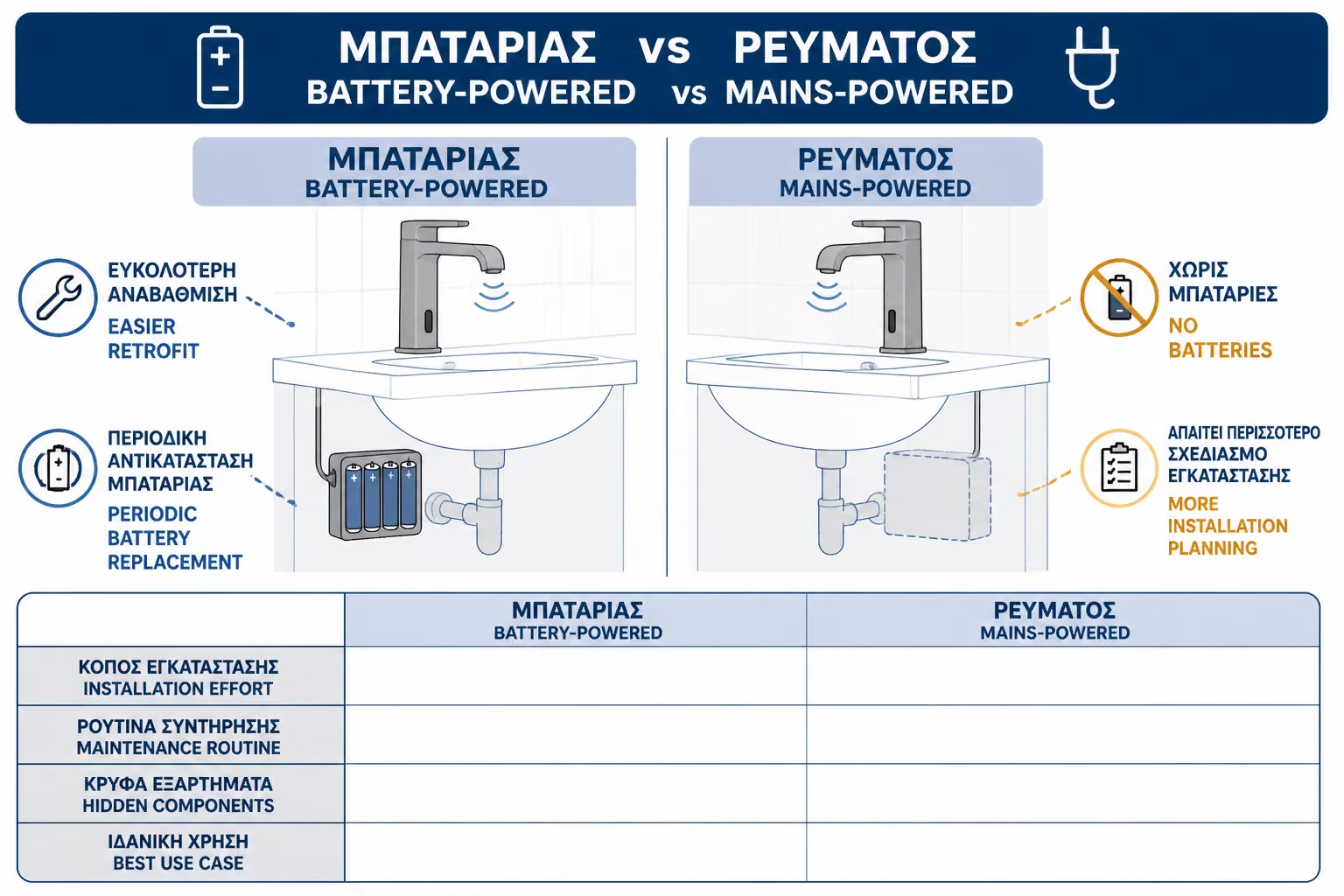
Automatic faucets need power for the sensor and solenoid valve. There are two main solutions: battery-powered or mains-powered through a low-voltage power supply. Some models also combine the two, with mains power and battery backup.
Battery-powered solutions are easier to install, because they do not need an electrical supply near the sink. They are useful in renovations where we don't want to break tiles or in WCs where use is limited. The downside is that at some point the batteries die. If the user forgets it, or if the spot is hard to reach, the battery can stop working just when you need it.
Mains-powered solutions are more stable for frequent use, especially in commercial or high-use settings. But they require an electrical provision, moisture protection, RCD protection, and the correct location for the driver or power unit. The power supply should not be hidden casually under the sink next to the siphon or in a place where it can get wet.
Manufacturers and technical guides explain that battery-powered touchless faucets are easier to install and do not require a power supply, while hardwired solutions offer more stable operation in high-use areas but require electrical installation.
The battery-powered touchless faucet is practical when we want to upgrade without electrical work. In a guest WC, in a small bathroom that already has finished tiles or in a rental where we don't want interventions, it can be a good solution. The placement is more like a classic faucet, with the addition of the battery box and control unit under the sink.
The key is access. The battery box must be located in a place where it can be easily opened, without emptying the entire piece of furniture, without being next to a siphon that can drip and without touching liquid cleaners. If the batteries are difficult to change, the user will delay maintenance.
At home, battery life can be quite good, depending on usage and model. But in a place with a lot of use, such as a commercial WC, the batteries may need to be changed more often. That's where the power solution might be worth it.
A practical example: in a guest WC that is used a few times a day, a battery-operated battery can be an excellent solution. In a children's bathroom of a family of four, where the faucet is turned on dozens of times a day, it may be worth considering a better quality model or power supply.
Power supply is preferred when use is frequent, when we want to avoid battery maintenance, or when the bathroom is undergoing renovation and we can predict a proper supply. In business premises, hotels, offices or shared WCs, it is often a more stable solution.
At home, it makes sense when we are completely renovating and want to leave a clean installation. But it needs proper planning. The power supply must be protected by an RCD, the power supply must be in a dry and accessible place, and the connections must not be under a possible siphon or water supply leak.
If the power supply goes inside the sink unit, it must be high, protected and not where the bucket, cleaners or siphon come into contact. If it goes behind a mirror or inside a closed box without access, future maintenance becomes difficult.
Power supply is a clean solution when designed from scratch. It is not a good solution when it is retrofitted with a rough cable inside the furniture.
The most obvious advantage of touchless faucets is hygiene. When we wash our hands, especially after using the toilet, our hands touch fewer surfaces. We don't have to hold the lever to open the water and again to close it after washing. This reduces recontamination from surfaces.
This is more important in public spaces, but it also makes sense at home. In a children's bathroom, in a guest WC or in homes with the elderly, less contact with the battery helps with cleanliness. It also reduces marks from soaps and wet hands on the faucet, so the sink stays cleaner.
In the hand hygiene literature, avoiding recontamination after washing is an important issue. NCBI/StatPearls, for example, states that at the end of washing, recontamination of hands by touching the sink or faucet handles to turn off the water should be avoided.
This does not mean that a touchless faucet replaces proper hand washing. If someone does not soap properly or washes their hands for a few seconds, the sensor does not solve the problem. It simply removes a point of contact and makes proper use easier.
The biggest practical advantage in saving is that the water stops by itself. In a conventional faucet, the user can leave the faucet on while they soap their hands, while they brush their teeth, or while they do something else. In a touchless faucet, if the hands leave, the water stops.
This is especially useful with children, visitors, or in commercial spaces where we cannot control everyone's habits. The faucet enforces a more economical pattern of use. There is no need for reminders or a "turn off the tap" sign. The system does it automatically.
However, the savings also depend on the supply. If a touchless faucet gives too much flow while it is running, the savings are reduced. That is why good models combine a sensor with a flow limiter or aerator. The EPA notes that WaterSense low-flow faucets and fittings can reduce flow by 30% or more compared to the standard 2.2 gpm.
A practical example: in a business WC, a conventional tap can be left open for 20–30 seconds per use, even when hands are not under water. A properly configured touchless faucet can limit the flow to only the actual time it is needed. There the difference is big.
If we are talking about the problem "the user leaves the tap open", then yes, the touchless faucet is one of the most effective solutions. It is not based on user behavior. He doesn't have to remember to turn off the faucet. The water stops when there is no hand in front of the sensor.
But it is not an absolute solution for every kind of waste. If the sensor is poorly set and activates on its own, it can waste water. If the supply is too large, each activation consumes more than necessary. If there is a leak in the solenoid valve, the water may run quietly. If the batteries are low, operation may become unstable.
It is also not always the most practical solution in every bathroom. In a main sink where the user often wants to fill containers, wash small items or have a continuous flow for a longer time, a touchless faucet without a manual function can be annoying. In such cases, a sensor faucet with a manual override, or even a conventional faucet with a good aerator, may be better.
The correct wording is: the touchless faucet is an excellent solution to reduce unnecessary water running, especially in frequent use and areas where user behavior is not controlled. But that's no excuse for poor quality, wrong setup or sloppy installation.
Flow rate is critical. A touchless faucet for a sink does not need to deliver a lot of water. For hand washing, a flow of about 4–6 liters per minute is usually enough. In stricter water-saving applications, even less may work, but it should not become annoying to use.
If the faucet gives too little flow, the user may hold their hands under the tap for longer or become impatient. If it gives too much flow, savings fall and splashing increases. The right balance depends on the sink, pressure, use, and setting.
The choice should be made based on the L/min or gpm quoted by the manufacturer, not just on appearance. If the product does not clearly state its flow rate, it is hard to assess the likely savings. In commercial spaces, flow and reliability matter even more because the usage rate is much higher.
A good model should have a steady, comfortable flow, not water splashing everywhere. A so-called water-saving solution that creates mess and extra cleaning around the sink is not really a good solution.
In a conventional faucet, the user adjusts the temperature with the lever. In an automatic faucet, there are different solutions. Some have a small lever or regulator on the body. Others have a pre-set temperature under the sink, via a mixer. Others provide only cold water, especially in commercial WCs where the purpose is to wash hands quickly.
For a residence, the ability to adjust the temperature is important. If the battery only gives cold water, it may not be comfortable to use in winter. If it gives excessively hot water without control, there is a risk of scalding, especially for children or the elderly. In such cases a thermostatic mixer or temperature limitation may be needed.
Temperature also affects energy consumption. If a touchless faucet frequently calls for lukewarm or hot water, it may trigger a water heater or pull hot water unnecessarily through the pipework. In WCs with very short uses, the hot water often does not even reach the sink before the tap is closed again.
A practical scenario: in a guest WC far from the water heater, the touchless faucet is also connected to the hot line. Each use draws some water from the pipe, but the user still ends up washing hands in cold water because the hot never arrives in time. In that case, a different setup or more careful planning may make more sense.
In Greece, hard water is an important factor. Auto batteries have filters, solenoid valves and small diodes. If there is a lot of salt, the flow can be affected, the valve can stick or start to drip. Also, the sensor can get dirty from salts, soaps or cleaners and not read correctly.
Maintenance is not difficult, but it must be done. The aerator must be cleaned. Inlet filters should be checked according to the manufacturer's instructions. The sensor must be cleaned properly, without harsh chemicals that will cloud the cover. If the model has batteries, they should be changed before the problems start.
A common mistake is to clean the battery with aggressive scale cleaners that run on the sensor. Over time, the sensor window can become cloudy or moisture can get through. The battery is an electronic product, not a simple metal body.
If the water is very hard, it is worth choosing a branded model with available spare parts and easy to clean filters. The cheap solution can become expensive if the solenoid valve fails quickly.
Touchless faucets are particularly suitable for guest WCs, children's bathrooms, professional spaces within a residence, small Airbnbs or rentals, and generally in sinks where the use is mainly hand washing. That's where automatic opening and closing is ideal: quick use, less contact, less waste.
In a master bathroom, they are worth it when the owner prioritizes hygiene and wants clean use. But they want a more careful choice, because the sink can be used for more things: shaving, washing the face, cleaning, filling small containers. There you need a model with a correct operating time, perhaps a manual override or an easy temperature setting.
In a bathroom with very low pressure, poor supply or old pipes, the installation must be checked first. A touchless faucet will not fix a plumbing problem. It may even make it more obvious if her filters clog quickly.
In very small bathrooms where the sink gets wet from the shower, the installation must be strictly controlled. The battery may be designed for the bathroom, but the battery unit or power supply under the sink must be protected from water.
There are touchless faucets and touch batteries. Touchless work without contact, with a sensor. The touch works by touching some part of the battery body. They are different technologies and do not have the same hygiene advantages.
The touch battery can be convenient when our hands are dirty, because we touch it with our wrist or forearm. But there is still contact. The touchless faucet reduces contact more, because it does not need to be touched. For areas where hygiene is a key criterion, the touchless solution has an advantage.
In terms of savings, both can help if they close easily. But touchless has the important advantage that it closes itself when the hands are removed. This is the element that reduces wastage due to open tap.
In product selection, pay attention to the description. Some stores use the terms confusingly. Ask to see if there is a real presence sensor or just touch mode.
If the battery is battery powered, the electrical risk is lower in terms of the 230V supply, but the need for correct placement does not disappear. The battery box and control unit must be protected from leaks and moisture. If the battery is powered by electricity, an electrical installation with all the requirements of the bathroom is needed.
A circuit supplying equipment in a bath or shower room must be protected by a 30mA RCD in accordance with the modern logic of Section 701. The IET states that all circuits in such spaces, including lighting and associated equipment, require protection by an RCD not exceeding 30mA.
The power supply must not be placed where it can get wet from siphoning, cleaning or leakage. It must be accessible for replacement. It should not be hidden behind tiles or in closed furniture without access. If there is an outlet under the sink, its location should be evaluated by an electrician.
In simple words: the touchless faucet can make the water more "smart", but the electricity in the bathroom remains a serious matter.
In the Greek market of 2026, simple touchless washbasin faucets can start around €70–150 for basic models, while more quality solutions, branded products, models with a better sensor, temperature regulation, better materials or professional durability can move around €180–500 or more. Commercial or hotel products may cost even more, but usually offer better durability, parts and adjustments.
Installing a battery-powered battery, if the supplies are correct and the replacement is in place of an old battery, can have relatively limited plumbing costs. But if you need a new supply, power supply, socket, power supply, moving pipes or changing a sink, the cost increases. An electrical provision under the sink in a renovation phase can be economical, but after tiling it becomes more difficult.
Prices depend on region, product quality, VAT, condition of existing battery, access under the sink, if there is hard water, if filters or adapters are needed and if an electrician is required. A very cheap touchless faucet with no spare parts may seem economical, but if a sensor or solenoid valve fails, it may need to be replaced entirely.
The right choice is not necessarily the most expensive. It is the one that has good technical support, suitable supply, easy maintenance and suits the use of the bathroom.
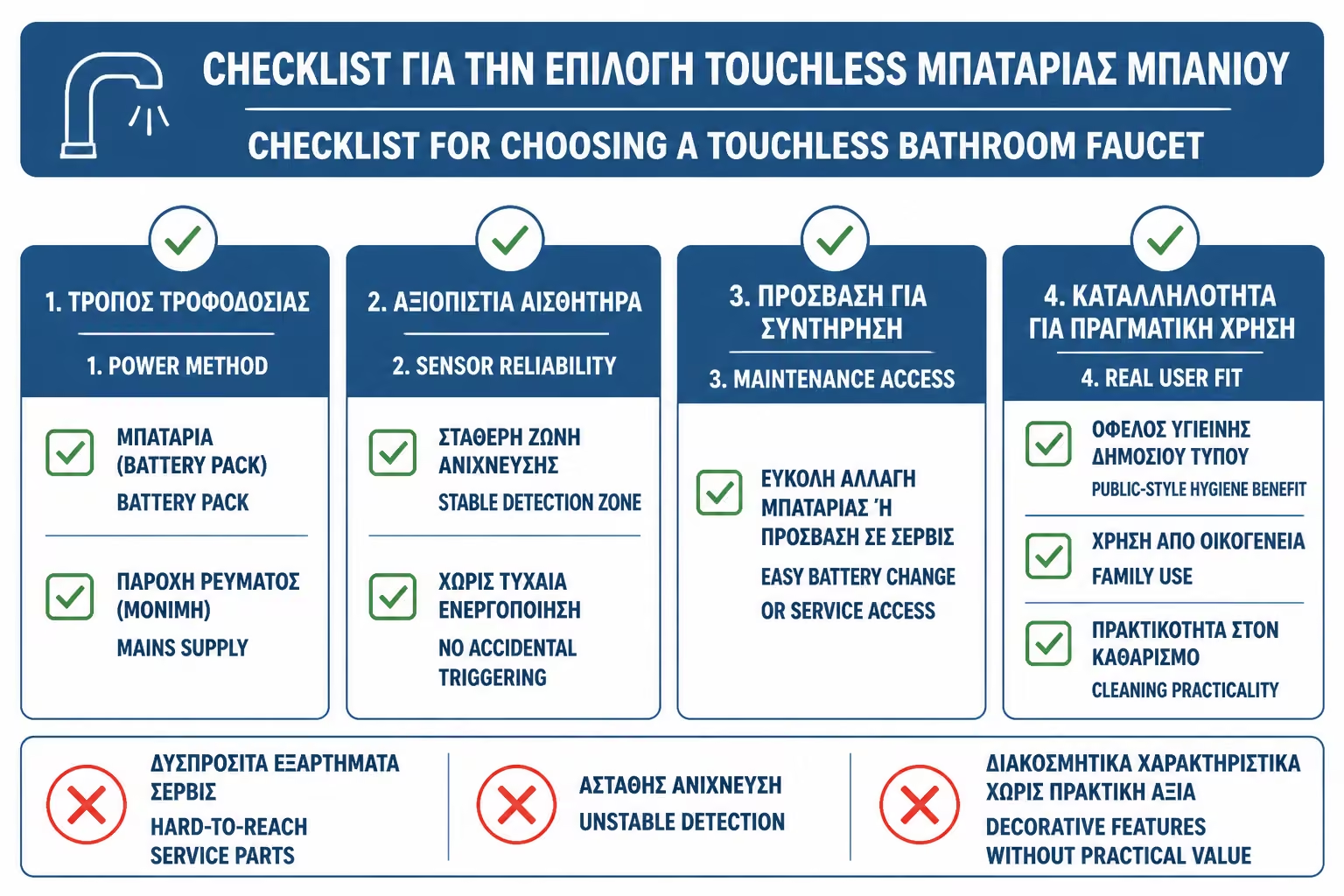
Before buying a touchless faucet, check the sink first. The height of the spout, the length of the spout and the point where the water falls must match. If the flow falls too close to the back or too far in front, it will splash. If the sensor is looking at the wrong place, it will be annoying to use.
Check the power supply: batteries, power or both. If it's battery powered, where does the box go? If it's powered, where does the power supply go? Is there a secure supply? Is it RCD protected? Is it accessible? These questions must be answered before purchase.
Check the flow in liters per minute. If the battery is too strong, it will splash and waste. If it is too restrictive, it will be annoying. Check if it has inlet filters and if they are easy to clean. In areas with a lot of salt, this is very important.
Finally, check the spare parts. A touchless faucet has more parts than a conventional one. Sensor, solenoid valve, battery box, power supply, filters. If spare parts are not available, future failure may mean a complete replacement.
The first mistake is to buy a touchless faucet just for the design, without sink and sensor control. If it splashes or opens incorrectly, it will become a nuisance.
The second mistake is to assume that all touchless faucets save the same. Savings depend on supply, run time and sensor quality.
The third mistake is placing a power supply under the sink where it can get wet. This is especially problematic in bathrooms with dripping faucets or furniture that holds moisture.
The fourth mistake is choosing a cheap model without filters or spare parts in a hard water area. Salts can cause problems quickly.
The fifth mistake is the lack of manual operation to the point where the sink is used for many things besides washing hands. Use can become tiresome.
The sixth mistake is jumping into hot water without thinking. If the hot is slow to arrive, you may be unnecessarily drawing water from the line with no real benefit.
The seventh mistake is not cleaning the sensor. Soaps, salts and cleaning agents can affect its operation.
Before you finalize the choice or installation, review the following points first:
| Question | Yes / No |
|---|---|
| Does the sink match the height and length of the faucet? | Yes / No |
| Does the flow fall in the right spot without splashing? | Yes / No |
| Does the faucet have a clearly stated flow rate in L/min or gpm? | Yes / No |
| Is it powered by batteries, mains or a combination? | Yes / No |
| Is the battery box or power supply accessible and protected from water? | Yes / No |
| If mains power is present, is the circuit protected by a 30mA RCD? | Yes / No |
| Is there a temperature setting or safe preset? | Yes / No |
| Are there easy-to-clean inlet filters? | Yes / No |
| Are there spare parts for sensor, solenoid valve or battery case? | Yes / No |
| The use of the sink is mainly hand washing, so does the touchless function really fit? | Yes / No |
If the answers aren't clear, don't buy based on looks alone. The touchless faucet is a technical product. It must match the sink, installation and use.
If you keep only one point from this guide, make it this: a touchless faucet works well when the goal is less contact and less pointless water, but only if it is selected properly. Do not choose by design alone. Check the supply conditions, sensor quality, power-supply position, filters, and access for maintenance. If it is mains-powered, it needs proper electrical protection. If it is battery-powered, it needs easy access. In both cases, the savings come from proper flow and reliable automatic shut-off, not from the word “sensor” on the box.
Automatic sensor faucets can genuinely upgrade a bathroom. They offer better hygiene because they reduce contact with the faucet after using the toilet or before washing hands. They can also offer meaningful savings, because the water runs only when needed and stops automatically when hands move away.
Their greatest value is seen in guest WCs, children's bathrooms, areas with frequent use and homes where we want to reduce waste without relying on the behavior of each user. When combined with the right aerator and reasonable flow, they can significantly reduce consumption without making use unpleasant.
However, not all touchless faucets are the same. The right choice must take into account the sink, pressure, flow rate, temperature control, power supply, limescale conditions, and maintenance. A good battery-powered model can be ideal for an easy upgrade. A mains-powered model may be better for frequent use, as long as it is installed properly and safely protected.
For the owner, the practical direction is simple: if you want less waste and better hygiene, the touchless faucet is one of the most effective solutions for the sink. But choose it as a technical component, not a gadget. Then it will work properly, save water and not become another "smart" device that annoys instead of helping.
Return to category.
Go to categoryReturn to the central guide.
Go to guide