
Plumbing & Electrical Bathroom Infrastructure
Return to category.
Go to categoryBathroom lighting is one of the points that most affect the daily experience, but it is often planned casually. A ceiling light, an LED mirror and maybe a spot in the shower seems enough at first. But then the small problems start: the light is too strong at night, insufficient for make-up, too cold for relaxation, full of shadows on the face or difficult to use when entering with wet hands.
Smart bathroom lighting tries to solve these problems in a more flexible way. Instead of having a single “on/off”, we can have different scenes: low night light for visiting the WC, bright neutral light for shaving or make-up, warm low light for a relaxing bath, mirror lighting for facial care and automatic activation when someone enters the room. In a more complete installation, all of this can be controlled by a switch, sensor, app, voice command or automation.
But the word "smart" can be confusing. It doesn't necessarily mean that we have to fill the bathroom with Wi-Fi lamps and complex applications. In a bathroom, the first thing to ask is still security, the right IP, protection zones, leakage relay, the right wiring and the right lighting for real use. ЕЛОТ HD 60364-7-701:2024 specifically concerns areas containing a shower or sprinkler and is a critical framework for electrical installations in bathrooms.
The second issue is reliability. A bathroom switch should always work, even if the Wi-Fi drops, the router changes or the app crashes. Smart lighting has value when it makes the bathroom more comfortable and safer, not when it performs a basic app-dependent function. That's why the right design starts with circuits and lighting zones and then moves to ecosystems, scenes and sensors.
In this guide we will see how to properly design smart bathroom lighting, when motion sensors make sense, how to create scenes for night, relaxation and makeup, what is the difference between Wi-Fi, Zigbee, Thread and Matter, what to look out for in dimmers and LED strips, and why in the bathroom electrical safety should never be sacrificed for the sake of "smart" operation.
Smart bathroom lighting means that lighting is not just controlled by a simple mechanical switch, but can be regulated, automated and adapted to use. This can be done with smart lamps, smart dimmers, LED drivers, motion sensors, presence sensors, schedules, lighting scenes or connection to a smart home ecosystem.
In its simplest form, smart lighting can be a motion sensor that turns on a dim light at night. In a more advanced form, it can be a system with different zones: ceiling, mirror, hidden lighting, shower, night light under the furniture and all change according to time, presence and scenario of use.
The important difference is that the lighting becomes "behavioral". It doesn't always light up the same way. We need another light at 7 in the morning, another at 2 in the night, another when we clean the bathroom, another when we apply makeup and another when we want to relax. The smart system allows these needs to be stored in scenes.
But smart should not replace practical. If you have to open an app to turn on the bathroom, the system has failed. The app is complementary. Basic control should be simple: switch, sensor or physical control.
The bathroom is a space with many different uses. In the morning we may need clear, bright light to wake up and get ready. Make-up or shaving requires face lighting without strong shadows. For a night visit to the WC, a minimum of light is needed, so that we can see without fully waking up. For a relaxed bath or shower, a warm and lower light is more pleasant.
A simple switch cannot serve all these well. If the light is strong, it disturbs the night. If it is low, it does not help the makeup. If it is too cold, it makes the space "hospital". If it's too warm, it doesn't render face colors correctly.
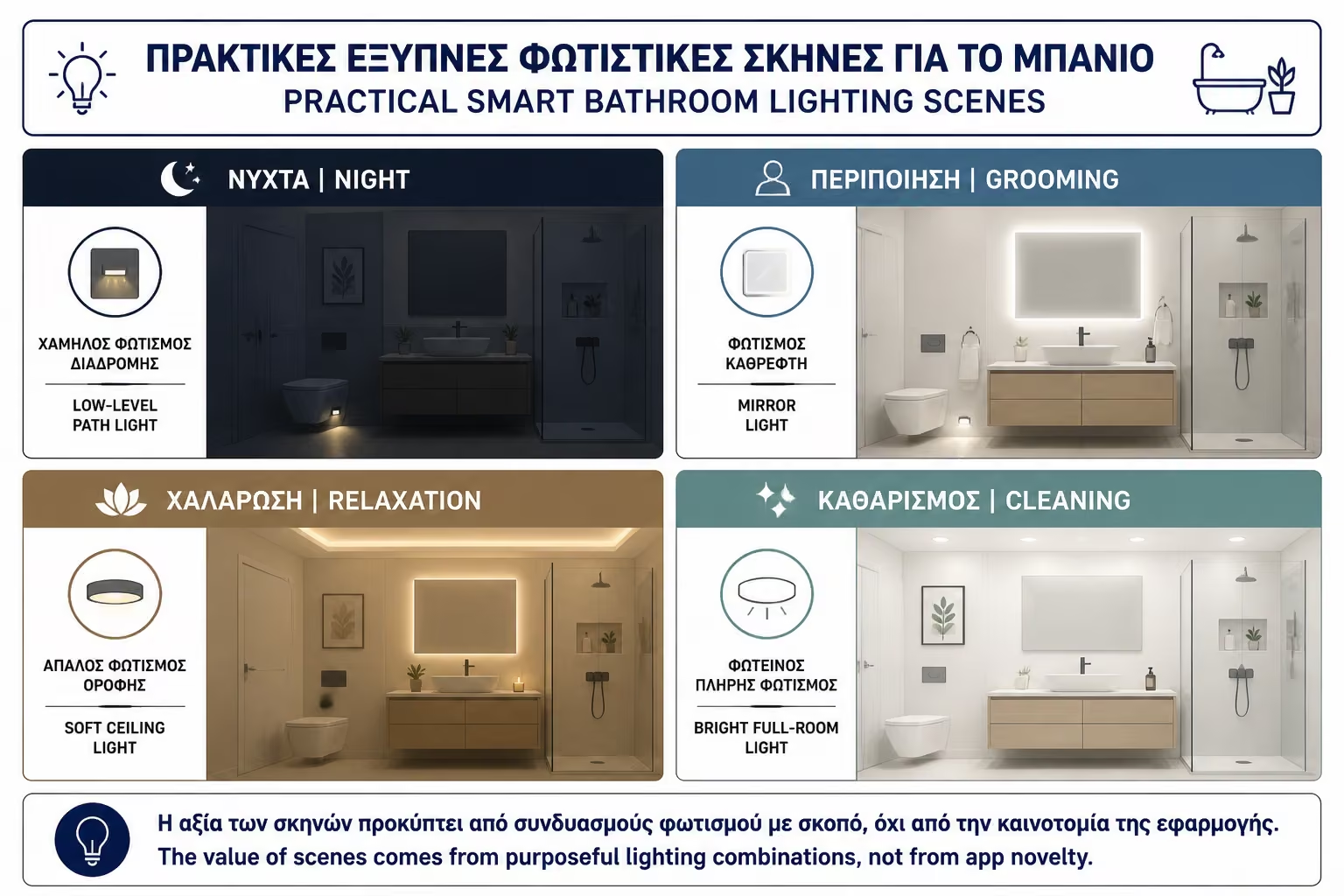
Smart lighting allows us to have different levels of intensity and color temperature. We can make a “Night” scene with 5–10% lighting, a “Morning” scene with neutral light, a “Makeup” scene with stronger mirror lighting, a “Relax” scene with warmer light, and a “Cleaning” scene with all lights at maximum.
This logic is particularly useful in small bathrooms, where there is no space for many lamps, but there is a need for different atmospheres. With the right design, a few lighting zones can make the space much more functional.
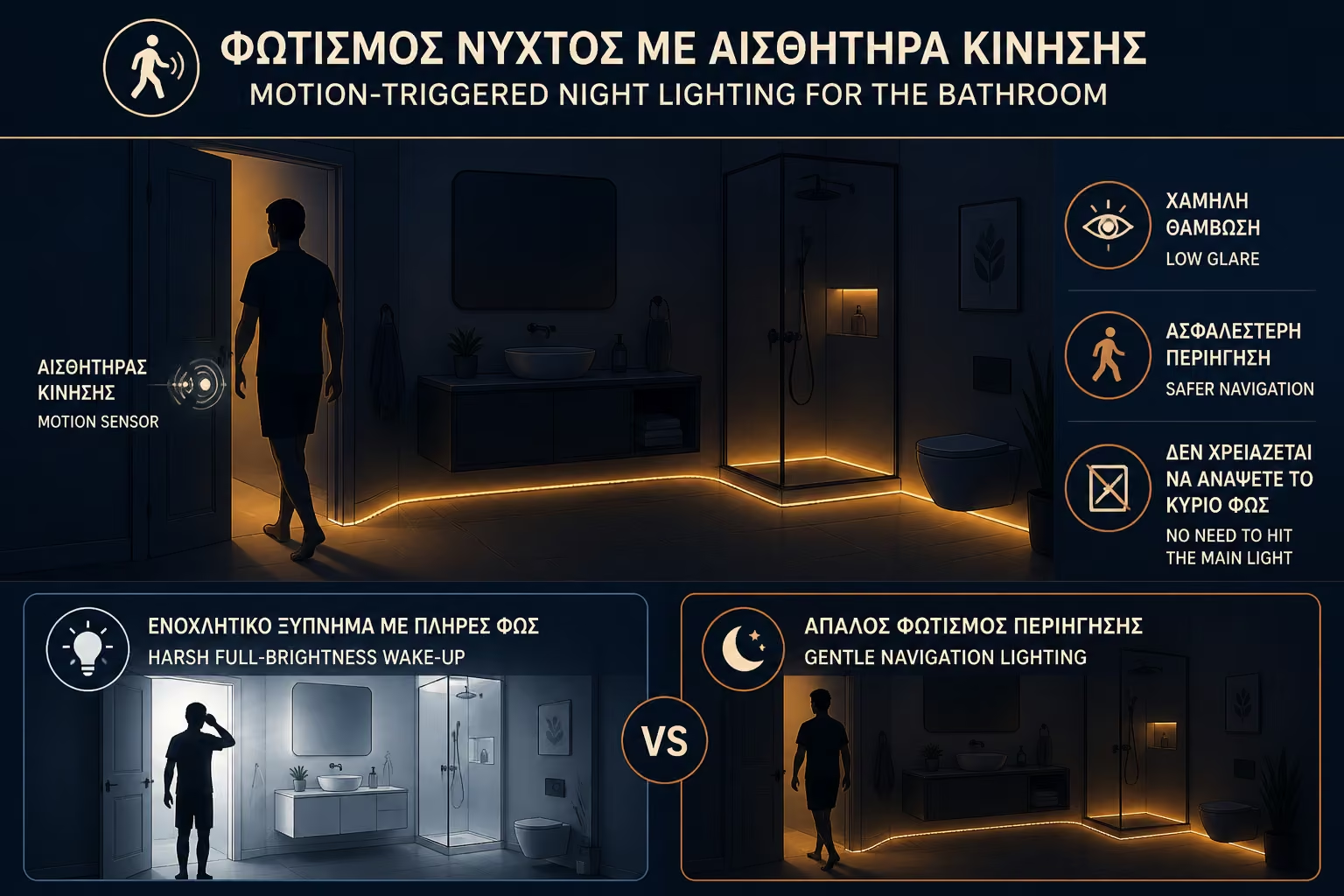
The most practical application of smart lighting in the bathroom is the night motion sensor. When someone enters the bathroom at night, the bright central lighting does not come on. Instead, a dim light is turned on, usually under the sink unit, behind the mirror, low on the wall or in an LED strip with a very low intensity.
This is especially useful for children, the elderly and generally anyone who wakes up at night. Bright white lighting can irritate the eyes and make it difficult to return to sleep. A low warm light, or even a very low amber/red tone where color is possible, helps to move safely without a strong wake.
Philips Hue describes the use of motion sensors to automatically activate smart lights with movement, to illuminate spaces without manually opening a switch. In a bathroom, this must be combined with time planning. The same sensor can during the day turn on a normal light, but at night only turn on a low stage.
The crucial thing is not to put the sensor in a point where it is activated unnecessarily. If it sees a corridor, it can light up every time someone passes by outside. If it is in the shower or too close to water vapor, it may not be suitable. If he is behind a door, he may not see the entrance in time. The location of the sensor is as important as the device itself.
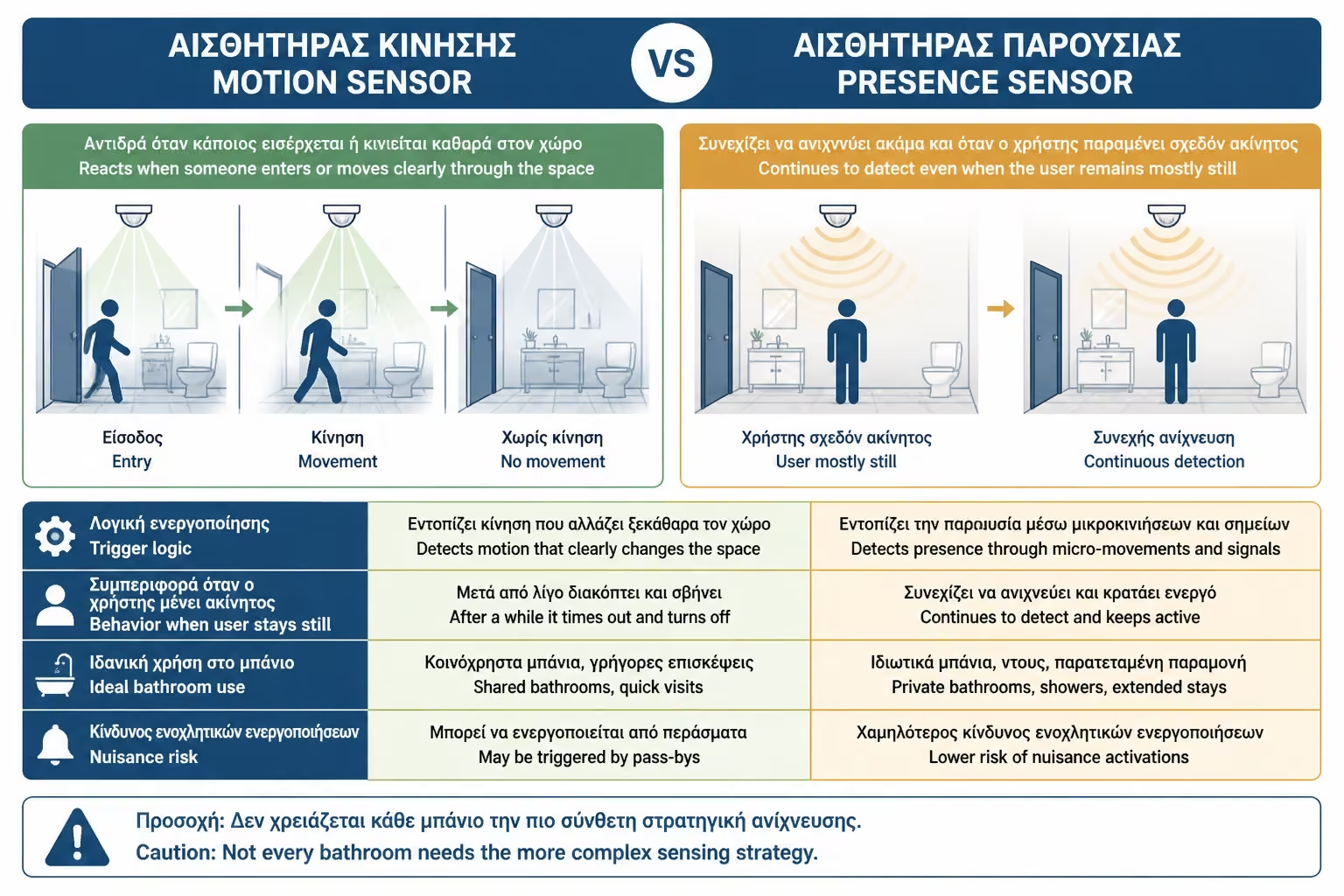
Motion sensors primarily detect motion. If the user enters the bathroom and remains still, the lights may turn off after a while. This is a problem in a WC or bathroom, where someone can sit without much movement. That's why a proper delay time or a more sophisticated presence sensor is needed.
Presence sensors, especially the more modern mmWave ones, can detect smaller movements or presence more consistently. They are more expensive and require better adjustment, but can be more reliable in the bathroom. On the other hand, they can be overly sensitive and keep the lights on when they don't need to be, if not adjusted properly.
For simple night lighting, a good motion sensor is enough. For full bathroom automation, where we want the lighting to turn on and off without switches, the presence sensor might be better. But there must always be a manual override. No one wants a light to turn off while showering or turn itself on for no reason.
The practical solution in many bathrooms is a combination: the sensor takes over the low night light and the basic lighting is controlled by a switch or scene button. This avoids over-reliance on automation.
The "Night" scene should be very low, stable and predictable. It doesn't need to light up the whole bathroom. It needs to show the path, the toilet, the sink, and any obstacles. Hidden lighting under the furniture, a low LED strip, a very low mirror backlight or a small floor/wall lamp suitable for a bathroom is usually sufficient.
The intensity can be 5–15%, depending on the space and the fixture. The color temperature should be warm, around 2200–2700K, or especially amber in systems that allow it. We don't want cold white light at 3am. We want safe orientation without intense stimulation.
The scene must also have a proper fade time. If it goes off in 20 seconds, it will be annoying. If it stays on for 20 minutes, it wastes energy and can be annoying. A practical range for a night visit is about 2–5 minutes, but it depends on the usage.
A common mistake is to use the same motion scene all day. During the day we may want 70% light. At night 7%. The smart system has value precisely because it can differentiate behavior based on time.
The “Makeup” or “Shaving” scene should not just be “all lights on full”. It must illuminate the face properly. Ideally, the light comes from the front and sides, not just from above. Vertical light zones to the right and left of the mirror or a very good illuminated mirror give a better effect than a central spot on the ceiling.
Color temperature should be neutral, often around 4000K, for colors to look natural. For make-up, the CRI color rendering index is also important. An LED with a low CRI can make skin look weird or distort hues. If the manufacturer does not give a CRI, it is an indication that they are not treating the product as a serious work light.
This scene can light up the mirror to 90–100%, keep the ceiling at medium intensity, and turn off very warm decorative lights. It doesn't have to be atmospheric. It must be clean and functional.
Smart lighting helps because it stores this setting. No need to change dimmers, Kelvin and zones every time. Press "Makeup" and the space becomes a grooming tool.
The "Relax" scene has another logic. We don't want surgical precision here. We want warmer, softer light, fewer shadows, lower intensity and possibly hidden lighting. It can be used in an evening shower, bath or a relaxed skincare routine.
Usually suitable lighting 2700–3000K, low or medium intensity, mirror backlight, LED strip in a recess or lighting under furniture. If there is RGB or tunable white, it should be used sparingly. Bright colors may look impressive in photos, but in everyday use they are tiring.
In a shower room, the lighting must have a suitable IP and a correct position. We do not put any LED strip in a wet zone because it is "low voltage". The power supply and connections are critical points. The IEC explains that IP ratings measure the protection of enclosures against dust/solids and liquids, which is particularly important for electrical products in wet areas.
The relaxation scene is one of the most enjoyable functions of smart lighting, but it must be designed safely. The atmosphere does not justify a sketchy LED installation near water.
One scene that is often forgotten is "Cleaning". When we clean the bathroom, we don't want low ambient light. We want strong, even light so that salt, joints, corners, siphons, mirror and moisture spots can be seen. This tent can turn all the lights on max and at a more neutral/cooler temperature.
The same logic applies to maintenance. If someone is checking for a leak under a sink, changing a filter, cleaning a siphon, or adjusting a vent, they need bright light. A smart bathroom should also serve practical tasks, not just relaxation.
The “Cleaning” scene can only be activated by a switch or app, not by a motion sensor. It is not necessary every time someone enters the bathroom. But it is very useful when cleaning or technical inspection is done.
This also shows a general principle: scenes should be based on usage. No marketing names. If a scene does not correspond to a real need, it will not be used.
Smartphone control is convenient for settings, scenes, schedules, updates and behavior changes. You can change the night scene, adjust the sensor, reduce the volume, make a schedule or see if any light was left on. But the smartphone should not be the main way to turn on the bathroom light.
The bathroom is a space for immediate use. You enter, press a switch or the sensor activates the right light. If a phone is needed, especially with wet hands or at night, the system becomes unwieldy. We also don't want to encourage using a phone in the bathroom when it might get dropped or wet.
The app is more valuable to set up than to use. The electrician or owner uses it to set up scenes, set hours, change colors and connect sensors. Then, daily use must be done by a switch, button, sensor or physical control.
A good smart system must have "family acceptance". It can be used by a guest without instructions. If only the owner knows which app turns on which light, the system is impractical.
Smart lighting devices do not all communicate in the same way. Wi-Fi lamps connect directly to the router. They are easy for small installations, but if the house is filled with many Wi-Fi devices, it can strain the network. Zigbee solutions, like many smart lighting systems, use a hub and usually have better behavior for many lamps and sensors. Thread is newer mesh technology for smart home, often associated with Matter.
Matter is an important development because it tries to make devices from different manufacturers work more easily with ecosystems like Apple Home, Google Home, Amazon Alexa and Samsung SmartThings. The standard is supported by the Connectivity Standards Alliance and aims at the interoperability of smart home devices. Recent coverage of Matter 1.6 mentions new features like Joint Fabric, aimed at easier sharing of devices between ecosystems.
For bathing, however, the most important thing is not to chase the newest protocol. It is to have stable operation, physical control, safe electrical installation and compatibility with the rest of the home's systems. If you already have Philips Hue, IKEA Dirigera, Aqara, Home Assistant, Apple Home or Google Home, it makes sense to stay in an ecosystem that works together.
Don't make a bathroom with 5 apps: one for mirror, one for lamps, one for LED strip, one for sensor and one for switch. Complexity will tire you. Better fewer functions in a single ecosystem than many disjointed gadgets.
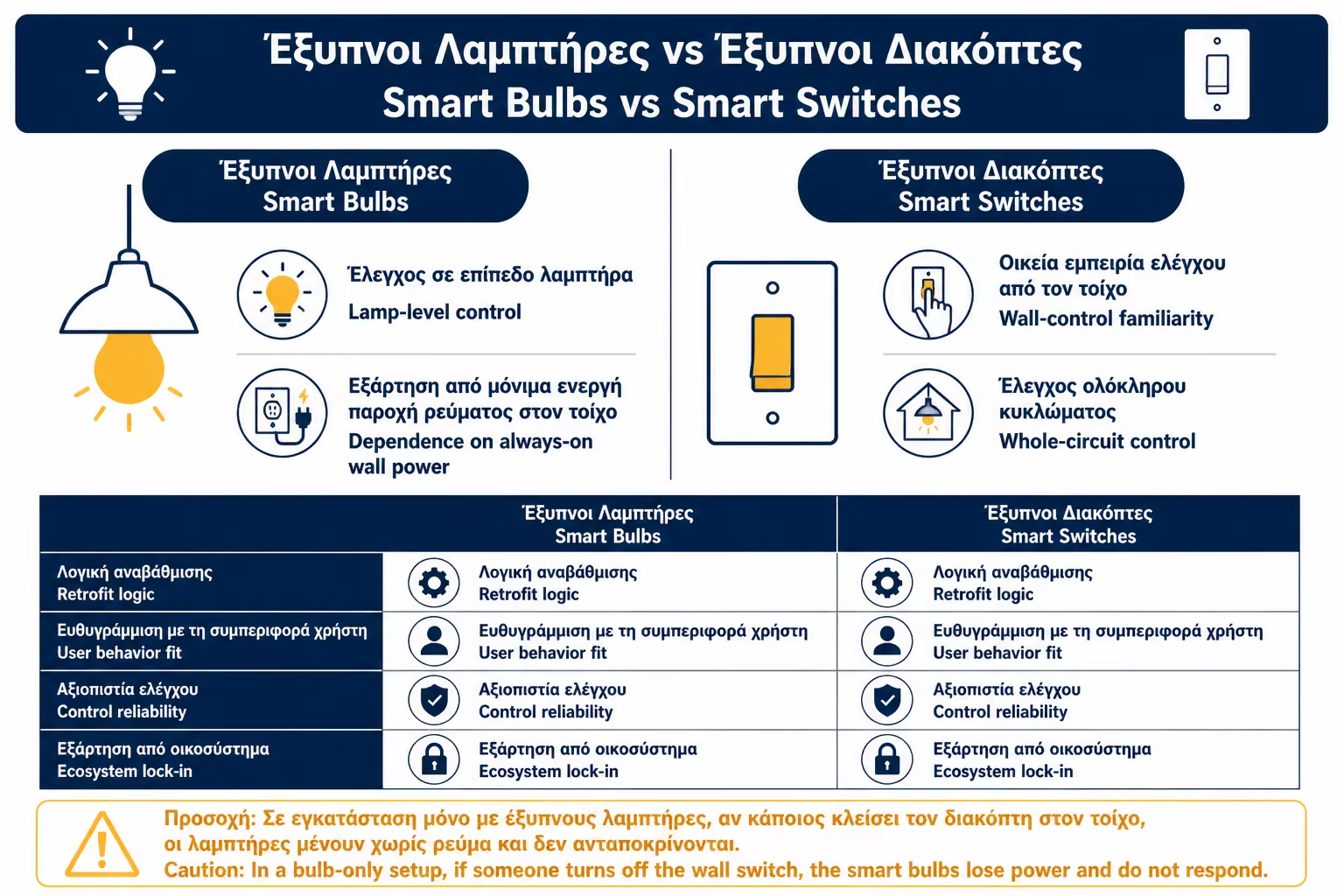
There are two basic strategies. The first is to put smart bulbs or smart LED modules. Then the "intelligence" is in the lamp itself. The second is to put a smart switch or smart dimmer on the wall. Then the "intelligence" is in the switch and the lights can be more conventional.
Smart bulbs are easy when talking about a lamp with a replaceable bulb. But in the bathroom, many lighting fixtures are integrated LEDs, mirrors, strips or spots with drivers. There, the solution with a smart driver or smart dimmer can be more correct. Also, if someone closes the simple switch that powers the smart bulb, the bulb loses power and is not controlled by an app or sensor.
Smart switches maintain the logic of the wall. You press a switch and it works. They may send commands to scenes or control circuits. But they must be suitable for the load, installed by an electrician and properly wired. In many Greek switch boxes there may not be a neutral, which affects the smart switch option.
In a renovation, it is best to design the belts and switches from scratch. If you do it after the fact, you might be limited to smart bulbs or wireless buttons.
A proper smart bathroom doesn't just have a lot of lights. It has correct belts. Typically the main zones are: general ceiling lighting, mirror lighting, shower lighting, recessed/mood lighting and night dimming. Not all of them are needed in every bathroom, but the distinction helps a lot.
General lighting gives overall visibility. Mirror lighting serves face and detail. Shower lighting is useful if the cabin is dark, but needs strict IP and zone control. Hidden lighting gives atmosphere. Night lighting gives safety with low intensity.
If all these are in the same circuit, you can't make good scenes. That is why the wiring must be provided before the tiles. If you want the mirror to light up separately from the ceiling, it must have a separate supply/control. If you want night LED strip, there must be power supply in right place.
The smart system can unify the control, but it cannot completely correct bad electrical division. A good scene starts with proper circuits.
LED strips are very popular for hidden lighting in furniture, mirrors, false ceilings and showers. In smart lighting, they can be tunable white or RGB/RGBW and participate in scenes. But in the bathroom they need special attention.
The movie must have an appropriate IP for the location. Cuts, joins and finishes must be properly protected. The aluminum profile helps in heat dissipation and protection. The power supply must be located in a dry, ventilated and accessible place. It must not be buried in a false ceiling without a hatch or placed under a siphon.
Low voltage, such as 12V or 24V, does not mean that the installation is safe or DIY. The power supply takes 230V, the connections can get wet and the electrical in the bathroom needs an electrician. The low voltage reduces some risks at the tape point, but does not eliminate safety requirements.
A common mistake is to use RGB tape in the shower without a serious need. If you want color, use it in safer places, like under a piece of furniture or behind a mirror. In the shower, priority is safety and tightness.
In the bathroom, every light fixture, sensor, LED strip, switch or driver must be evaluated based on its location. Other requirements include a ceiling light away from the shower and others a spot in or above the shower area. Having a smart mode doesn't change the rules. Instead, it usually adds electronics that need even more attention.
The IP rating should not be a vague "waterproof" promise. It must be clearly stated. The IEC IP code exists precisely to give specific information about protection against solids and liquids. In a bathroom, the IP option must be combined with the protection zones and the manufacturer's instructions.
If a product is smart but not suitable for the bathroom, it doesn't go in the bathroom. If a motion sensor is for an indoor dry area, we don't put it next to the shower because it "won't get too wet". If an LED driver does not have a protected and accessible location, we do not hide it behind a tile.
Security is the filter through which all smart features pass. First IP, zones, RCD, wiring. Then scenes and app.
Smart bathroom lighting must be installed by a licensed electrician. This is especially true when we talk about smart switches, dimmers, drivers, LED power supplies, shower lighting, LED mirrors or sensors with 230V. The electrical installation in a bathroom is not a place for experimentation.
The circuit must be protected by leakage relays/RCDs where required, have proper earthing, proper connections and proper isolation. If the smart dimmer or switch needs a neutral, it must be there. If it doesn't exist, we don't make rough bridges. If the LED load is small, the compatibility with the dimmer should be checked, because many LEDs flicker or do not turn off completely with unsuitable dimmers.
In smart systems, the electrician must also predict what happens in the event of a fault. If the smart controller breaks, is there a way to turn on the main light? If the hub drops, does the switch work? If the app crashes, can the light be turned off? These questions are not excessive. It's basic usability.
The best installation is one that works like a normal electrical system and just has smart features on top. Not the one that crashes when the internet is disconnected.
Voice control can be handy in some cases. For example, you can say "turn on relaxation scene" before entering the bathroom or "turn off the bathroom lights" when you leave. It can also help people with limited mobility.
But in the bathroom, with water, ventilator, steam and privacy, voice control is not always ideal. Many people don't want microphones near personal areas. Also, the voice command may not sound good when the shower is running. And if the system relies solely on cloud assistants, reliability drops when the internet is down.
For this, voice control should be complementary. Daily operation must be done by a switch, sensor or scene button. Voice is a nice convenience, not a basic infrastructure.
In a Greek bathroom, more useful than voice control is usually a properly placed wireless scene button outside or near the door: "Night", "Mirror", "Relax", "All off". It is simple, understandable and does not depend on whether the assistant understood the command.
Lighting seems harmless compared to cameras or microphones, but smart home systems collect usage data. They may know when the light is on, when there is movement, when the bathroom is used, and which routines are activated. For most users this isn't a big deal, but it's worth being aware of.
Avoid unknown products with dubious apps and no updates. Opt for familiar ecosystems, local control where possible, and products with serious support. Use strong passwords, firmware updates and, where available, two-factor authentication for accounts.
Especially if the bathroom has a motion or presence sensor, think about where the data is stored. There is no need to panic, but a conscious choice is needed. A system with a hub that works locally may be preferable for those who want less reliance on the cloud.
Smart home security is not just about hacking. It is also a matter of long-term operation. If a company stops the app, will the light still work? That's why the physical switch and open standards have value.
The cost depends on the level you want. A simple solution with a motion sensor and a smart bulb or smart LED strip for night lighting can start from around €40–120 in equipment, without major electrical work if everything is plug-in or low intervention. A more serious solution with a smart dimmer, hub, sensor, mirror lighting and LED strip can be around €200–600 in equipment.
In a complete renovation, where lighting zones, drivers, dimmers, IP lights, hidden LED strips, sensors and scene buttons are designed, the cost can reach 600–1,500€ or more, depending on the quality of materials and complexity. If we are talking about a premium system with KNX, DALI, Home Assistant integration or a branded smart lighting ecosystem throughout the house, the cost can become part of a wider electrical study.
Electrician work depends on whether the bathroom is open or finished. Before tiles, it is much easier to run separate lines, waits and pipes. After that, each change becomes more difficult and expensive.
Don't invest the whole budget in smart bulbs if the basic lighting is wrong. Better right mirror lighting, right spots and safe installation, then smart automations.
It is well worth it in bathrooms that are used frequently and by many people, especially if you want different scenes for morning, evening, make-up, night visit and relaxation. It is worth it in families with children, in homes with the elderly, in master bathrooms, in premium renovations and in homes that already have a smart home ecosystem.
It is also worth it in small bathrooms where with a few lighting zones you can completely change the feeling of the space. A dim lighting under the furniture, a good LED mirror and a motion sensor can make the bathroom much more comfortable without exaggeration.
It's not worth it unless the basics are sorted out first: proper ventilation, safe sockets, IP lights, RCD, good mirror lighting and proper electrical infrastructure. It's also not worth it if you end up with lots of disconnected gadgets that want different apps.
The best strategy is staggered: first correct lighting zones, then dimming/CCT, then night sensor, then ecosystem and scenes. Not the other way around.
Before the renovation begins, ask for separate lighting zones to be designed: ceiling, mirror, shower where needed, recessed lighting and night lighting. Ask that correct positions be provided for drivers, without hiding in places without access. Also ask for IP, zones, RCD and dimmer compatibility with LEDs to be checked.
If you want smart switches, ask if there is a neutral in the switch boxes. If not, a suitable solution must be selected or new wiring must be done. If you want LED strips, ask for aluminum profiles, proper cooling, suitable IP and accessible power supplies. If you want a motion sensor, ask for correct position and manual override.
If you use a specific ecosystem, say so from the start. Another design needs a simple Wi-Fi installation, another Zigbee with a hub, another KNX, another Home Assistant. The electrician should not learn at the end that "we want everything to go into an app".
A proper quote should list fixtures, drivers, dimmers, sensors, switches, protocol/ecosystem, IP, cabling and commissioning. Commissioning, i.e. the final setting of scenes and automations, is important. Without it, you just have installed products, not an operating smart system.
The first mistake is to buy smart lamps without proper lighting design. smart does not correct bad lighting position.
The second fault is the motion sensor that turns on a strong light at night. Night automation should light a low scene.
The third mistake is all the lights in one circuit. Without belts, scenes are limited.
The fourth mistake is LED strips without a suitable IP, without a profile and with power supplies hidden without access.
The fifth mistake is smart switch without neutral and load control. Many flicker problems come from poor compatibility.
The sixth mistake is app dependency. The bathroom must also work without a mobile phone.
The seventh mistake is different applications for each device. Complexity kills usability.
The eighth mistake is putting sensors or drivers in inappropriate bathroom zones. The smart home does not abolish the electrical regulation.
Before you finalize the choice or installation, review the following points first:
| Question | Yes / No |
|---|---|
| Are separate lighting zones designed? | Yes / No |
| Is there a dim night light with motion sensor? | Yes / No |
| Is the night scene really low intensity? | Yes / No |
| Is there a proper makeup/shave scene with good face lighting? | Yes / No |
| Is there a warmer chill scene? | Yes / No |
| Do the fixtures have an appropriate IP for their location? | Yes / No |
| Are the LED drivers and power supplies accessible? | Yes / No |
| Is the circuit protected by RCDs where required? | Yes / No |
| Does the system also work without Wi-Fi/app? | Yes / No |
| Do all devices belong to a single or compatible ecosystem? | Yes / No |
If the answers are not clear, start from the lighting and electrical design. Smart features come next.
If you have to keep only one thing, keep this: smart bathroom lighting is not about buying “smart lamps”. It's about designing proper lighting zones and then making them flexible. The motion sensor for night low light is probably the most useful feature. The makeup, relaxation and cleaning scenes have real value. But everything must be based on safe electrical installation, correct IP, RCD, accessible power supplies and physical control. The app is a setting tool, not the master bathroom switch.
Smart bathroom lighting can make the space much more comfortable, practical and pleasant. Its greatest value is not that it turns on from the mobile. It is that it can adapt to the moment: low light at night, clear light for the face in the morning, warm light for relaxation, strong light for cleaning and automations that reduce everyday minor annoyances.
To work properly, it must be designed from the ground up. They need lighting zones, correct positions, suitable fixtures, IP protection, safe wiring, RCD, compatible dimmers and accessible power supplies. If all this is done right, the smart ecosystem can provide real value. If they're sketchy, you'll have a lot of gadgets and little substance.
For the owner, the best start is simple: first design the scenes you will actually use. “Night”, “Makeup/Shaving”, “Relax”, “Cleansing”. Then decide which fixtures are needed for each scene. And finally select ecosystem, sensors and app.
The smart bathroom is not the one with the most automations. It's the one that turns on the right light, at the right time, without even thinking about it.
Return to category.
Go to categoryReturn to the central guide.
Go to guide