Low Water Pressure in the Shower or Sink: Causes, Diagnosis, and How to
Restore Proper Flow
Low water pressure in the bathroom is one of the most common and
frustrating problems in a home. The shower feels weak, the sink
trickles, hot water takes too long to arrive, or the tap starts
“spitting” instead of giving a steady flow.
Most homeowners describe all of this as “low pressure”, but in reality
two different things may be happening: either the property genuinely has
low supply pressure, or the flow is being restricted locally by a
filter, tap, hose, valve or fitting. Those are not the same problem and
they should not be treated the same way.
The house pressure may be perfectly normal while the sink runs weakly
because the tap aerator is clogged. The shower may feel underpowered
because the head is full of limescale. An angle valve may be half shut.
Or the real cause may be older pipework, blocked lines, a booster-pump
issue or generally low pressure in the building.
Good diagnosis always starts with the simple checks and then moves
methodically toward the more complex causes.
1. Pressure and Flow: They Are Not the Same Thing
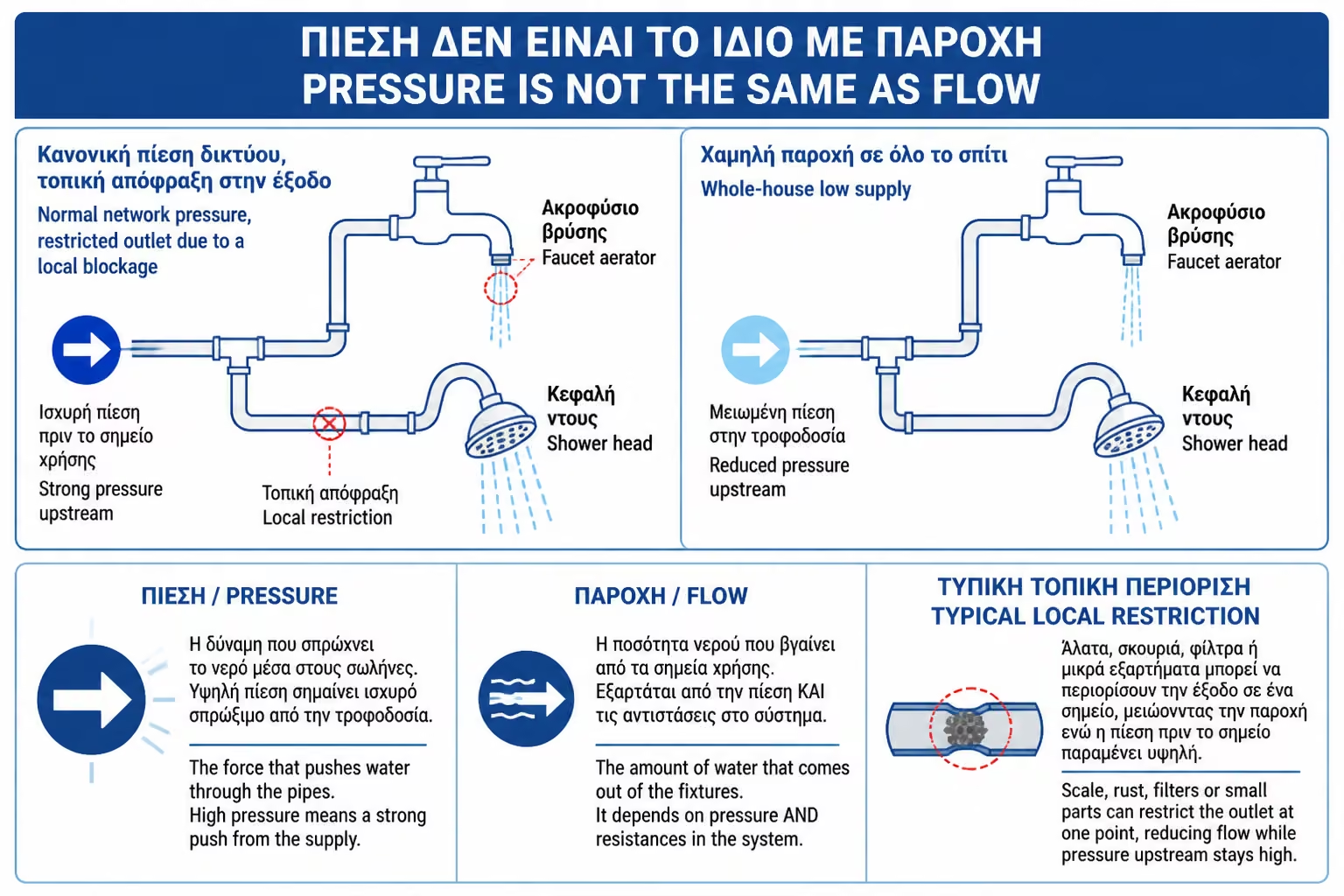
Pressure is the force available inside the water supply system. Flow
is the amount of water actually coming out of the tap or shower over a
given period of time.
You can have decent pressure but poor flow if something is narrowing
or blocking the water path. If every outlet in the home feels weak,
however, the issue is more likely to involve the main supply or
overall pressure conditions.
The core distinction between the two can be summed up as follows:
A local restriction, not a whole-house pressure issue
If the sink tap aerator is packed with limescale, water may come out
weakly even though the rest of the house is fine. That does not mean
the whole property has low pressure. It means there is a local
restriction at that outlet.
2. First Check: Is It a Problem in One Spot or Everywhere?
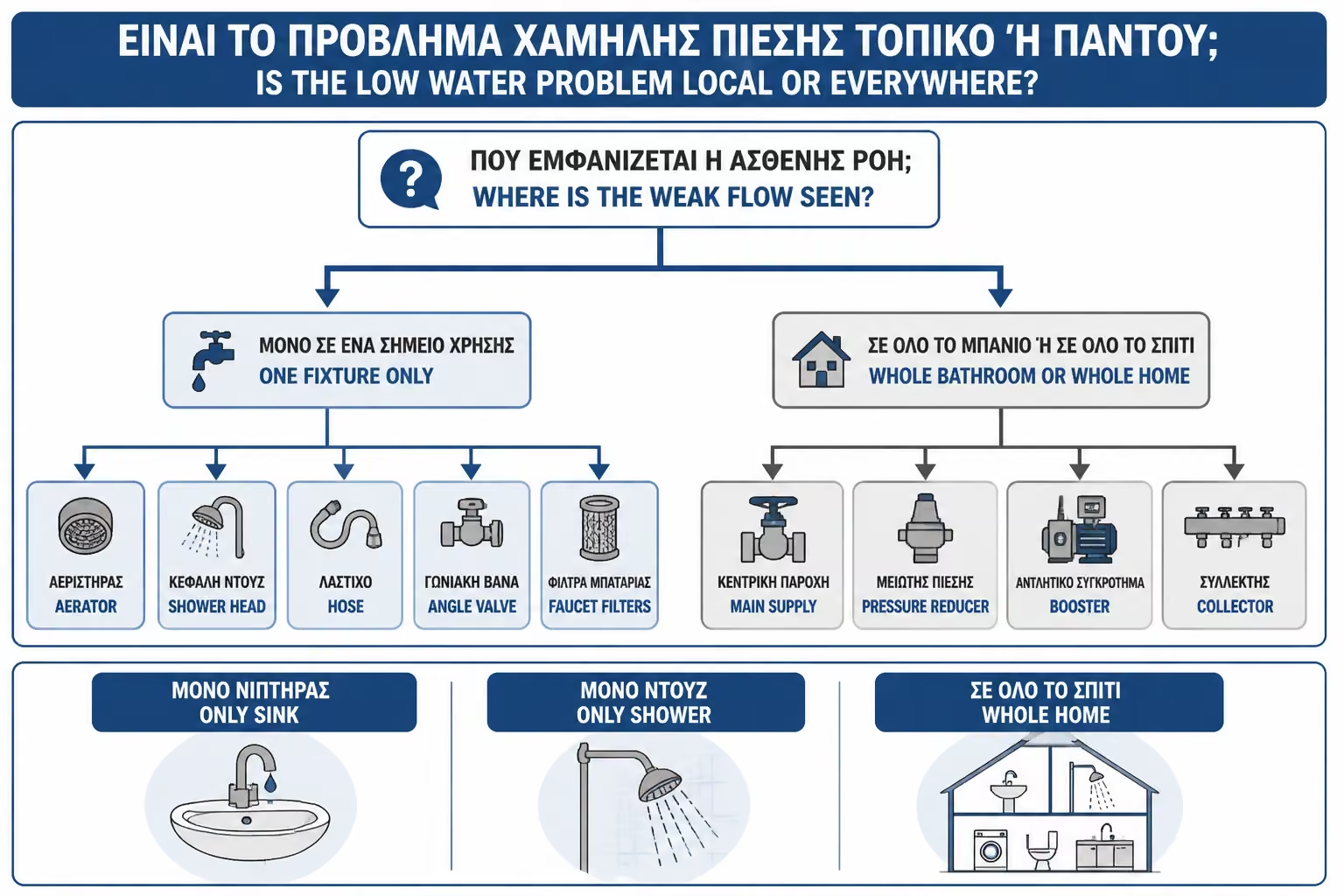
Before you call a plumber, do one simple but very useful check. The
key question is not only whether the flow is low, but where exactly
the problem shows up.
Check whether it happens only at the sink, only in the shower, only on
hot water, only on cold water, throughout the bathroom, throughout the
whole house, or only at certain times of day. That first map of the
problem usually points you toward the right diagnosis.
The table below helps separate a local cause from a general supply
issue:
Where it appears
Likely cause
Only at the sink
Tap aerator, angle valve, hose or the tap itself
Only in the shower
Limescale in the shower head, shower mixer, handset or hose
Only on hot water
Water heater, boiler, filter, valve or hot-water line
Only on cold water
Angle valve, filter or cold-water line
Throughout the bathroom
Main bathroom valve, manifold or local pipework
Throughout the house
Main supply, pressure reducing valve, booster pump or area
network
Only at certain hours
High network demand, neighbourhood pressure drop or building
issue
3. Clogged Tap Filter or Aerator
The most common reason for weak flow at a sink is a clogged tap filter,
also known as an aerator. It sits at the end of the tap where the water
comes out.
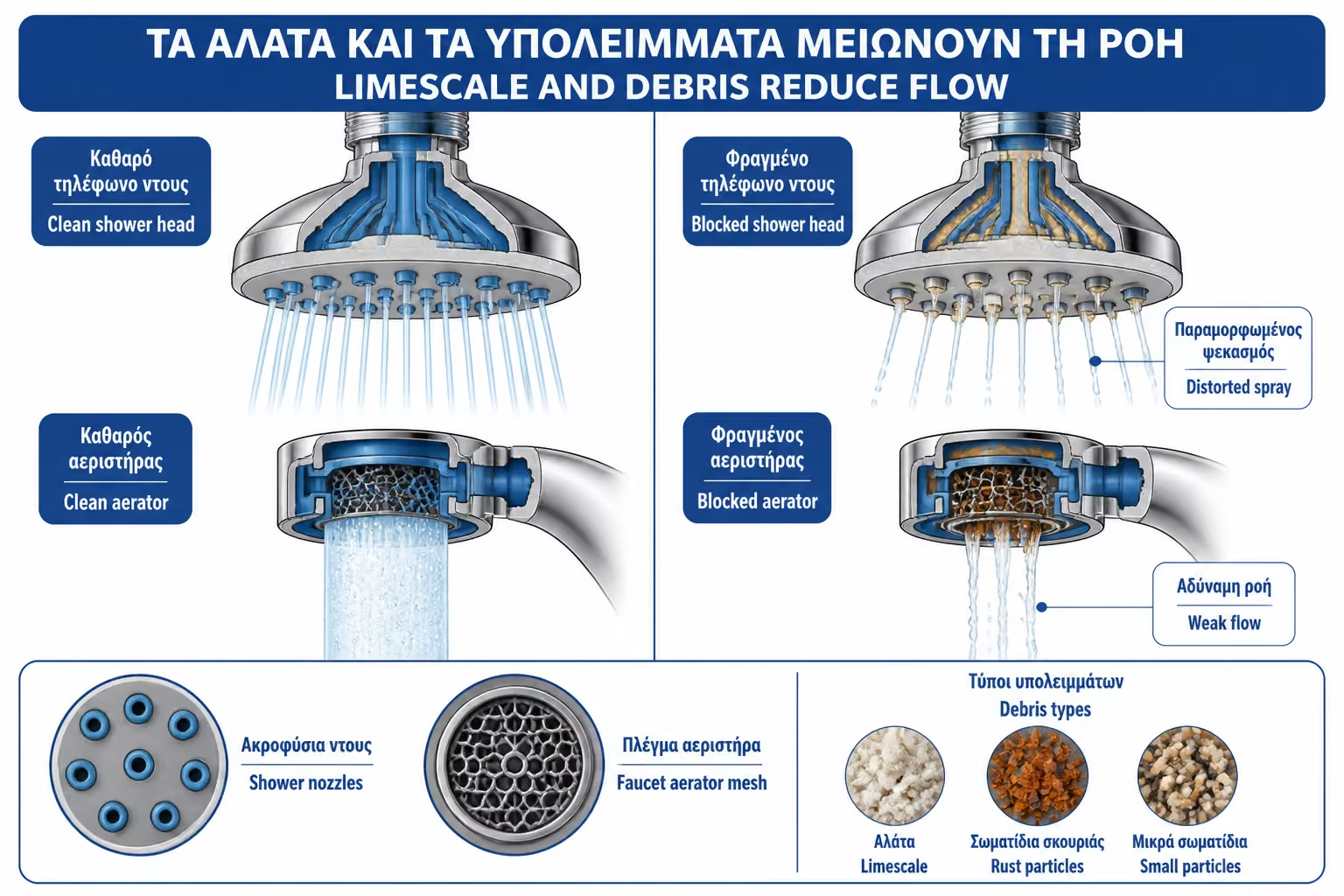
The aerator mixes water with air, catches tiny particles and helps the
stream feel smoother. Over time, though, it can fill up with limescale,
rust and other debris from the network.
Limescale
Build-up gradually narrows the outlet and weakens the flow.
Small stones
Tiny hard particles can lodge in the outlet and block it.
Rust from older pipework
This suggests the restriction may be part of a wider ageing-pipe
issue.
Debris after works
Plumbing work often sends loose material toward the tightest outlet
points.
Sand from the mains
Fine grit from the network can collect quickly in small outlet
fittings.
PTFE or sealing residue
Small fragments are enough to make a local outlet feel underpowered.
Once it clogs, flow drops quickly. In many cases the fix is
straightforward: unscrew the aerator, rinse it, remove the debris, soak
it in vinegar if limescale is heavy, and replace it only if it is worn
out.
If you want to reduce that to one short practical rule, keep this in
mind:
How to confirm it
If the flow comes back after cleaning, the issue was local, simple
and not caused by the overall pressure in the house.
4. Limescale in the Shower Head
In showers, the most common cause of weak flow is limescale inside the
shower head. The tiny nozzles gradually clog, especially in hard-water
areas.
The problem usually shows up in the spray pattern first: the water no
longer comes out evenly, some holes stop working properly, and the
shower starts feeling thin or messy rather than full and steady.
Irregular spray pattern
Water sprays in odd directions instead of forming a consistent
stream.
Blocked nozzles
Some nozzles stop flowing altogether and the overall output becomes
weak.
Dripping after use
The shower head may keep dripping even after use.
Vinegar soak
Soak the head in vinegar and clean the spray holes carefully.
Check the inlet filter
Rinse it well and check whether there is a small inlet filter that
also needs cleaning.
Replace if needed
If it is old or permanently blocked, replace it.
If the flow improves as soon as the shower head is removed, then the
restriction is in the head itself and not in the home’s water supply.
5. Clogged Hose or Hose Filter
In showers and sinks, the restriction may be hiding in the flexible
hose. It is not the first part most people think to inspect, but it
often causes exactly this kind of local flow loss.
Hoses can restrict flow when they are kinked internally, filled with
limescale, worn on the inside, blocked by a small filter, made to a poor
standard or simply too narrow internally.
If the flow is already weak before the hose, then the issue lies further
upstream, usually in the mixer tap or the supply itself.
In practice, the quick check works like this:
Check by removing the hose
If you remove the hose and the flow from the mixer is good, the
problem is very likely in the hose or in the shower head attached to
it.
6. Angle Valves Half Closed or Clogged
Under the sink there are usually two angle valves, one for hot and one
for cold. If either of them is partly closed or internally blocked, the
flow drops noticeably.
This often happens after bathroom works, a tap replacement, cleaning,
moving furniture, long periods without use, or because limescale and
rust have built up inside the valve.
If the valves are old and stiff, do not force them. They can start
leaking or snap, which turns a simple check into a bigger repair.
The main points to watch around these valves are the following:
Full opening and valve condition
Make sure the valves are fully open. They are small components, but
they can dramatically restrict flow when something is wrong.
7. Filters in Mixer Taps and Thermostatic Units
Many mixer taps, especially thermostatic or more complex models, have
small inlet filters. Their job is to protect the mechanism from sand,
rust and tiny particles.
Over time those filters can clog, and the result does not always look
like classic “low pressure”. You may see weak flow only on hot water,
weak flow only on cold water, temperature fluctuations or unstable mixer
behaviour.
Some typical signs that point in that direction are the following:
Unstable temperature or flow
If the shower no longer holds a steady temperature or the mixer
behaves erratically, those internal filters should be checked by a
technician, especially with concealed or thermostatic systems.
8. Hot Water Only Problem
If the low flow appears only on the hot side, the diagnosis changes
completely. The cause may be linked to the water heater, boiler, solar
system, check valve, inlet filter or the hot-water line itself.
Water heater
Its inlet, outlet, or related fittings may be restricting the
supply.
Boiler
Scale or blocked components can reduce hot-water delivery.
Solar hot-water system
More components mean more possible restriction points.
Check valve
If it sticks or clogs, it can choke the hot-water line.
Inlet filter
A small loaded filter can be enough to produce a major drop in flow.
Limescale in the hot-water network
The hot side usually accumulates deposits faster than the cold side.
Hot-water line
The pipe itself may be narrowed or blocked somewhere along the
route.
Hot-side angle valve
A local fitting can easily imitate a bigger system failure.
Thermostatic mixer
Its mechanism often affects only the hot-water path.
Older pipework
Age-related restriction often shows up first on the hot side.
In older homes, the hot-water side often collects more limescale and
deposits, especially if the system includes an older water heater or
neglected pipework.
The most common explanations in that case are the following:
If cold is fine, inspect the hot side
If cold water at the sink runs normally but hot water is weak, the
house supply pressure is not automatically to blame. The hot-water
line needs to be checked specifically.
9. Cold Water Only Problem
If hot water runs well but cold water does not, the issue is usually
somewhere along the cold-water path or in a local fitting on that side.
Cold-side angle valve
It may be partly shut or internally restricted.
Tap filter
If only the cold side is loading up, the flow drop looks local.
Local cold-water pipe
The restriction may be limited to that one branch.
Blocked line
Carried debris or older deposits can cut the supply dramatically.
Manifold issue
The branch may not be getting full supply from the distribution
point.
Partly closed valve
A simple setting error can cause a major reduction in flow.
In systems with a plumbing manifold, the valve for that specific branch
may have been left partly closed without anyone noticing.
That is why easy access to the manifold and clear labelling of the lines
are so useful. They make troubleshooting faster and prevent blind trial
and error.
10. Old Galvanized or Iron Pipe
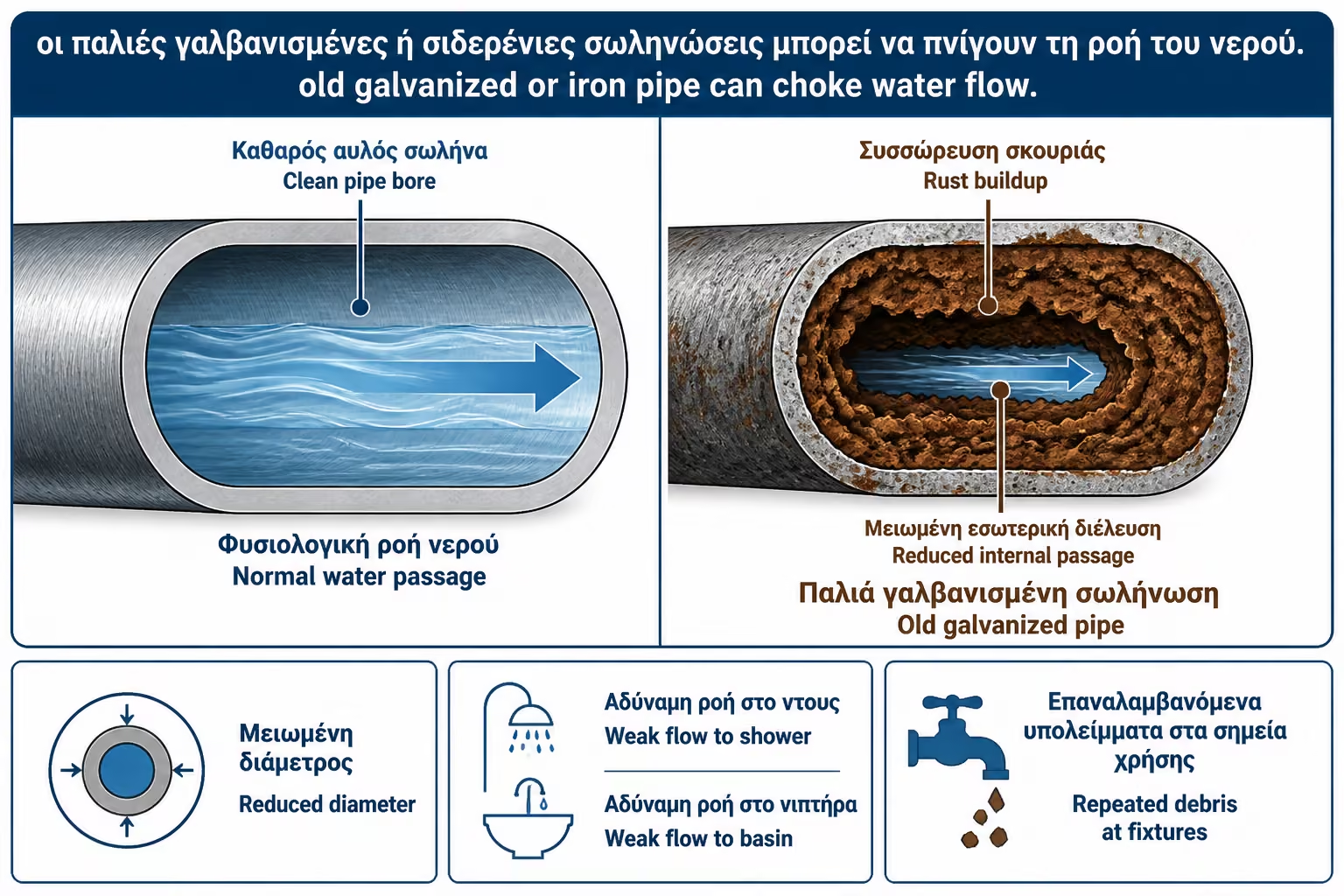
In older flats, weak flow is often not the tap’s fault at all. The
real issue may be the pipework itself. Old galvanised or iron pipes
corrode internally and build up deposits over time.
As that happens, the internal diameter shrinks. A pipe can look
perfectly acceptable from the outside while being badly narrowed on
the inside and severely restricting water flow.
Weak flow on older branches
Weak flow throughout the bathroom or on specific older branches.
Rust and recurring clogging
Rust-coloured water after an outage or filters that keep clogging
again and again.
Better performance on newer lines
Better flow elsewhere in the home, especially where newer pipework
has been installed.
In these cases, cleaning filters only gives temporary relief. If
internal pipe restriction is the root cause, proper pipe replacement may
be the only lasting fix.
11. Issue After Plumbing Work
After plumbing works, fitting replacements or a water interruption, it
is very common for flow to drop at taps and showers. That does not
automatically mean a new fault has appeared.
Limescale, rust, sand, small plastic fragments, sealing residues and
dirt from old pipes often get dislodged and travel through the system.
They usually end up stuck at the tightest points in the path.
At the sink outlet
In the sink aerator and the tap’s own inlet filters.
In shower fittings
In the shower head, thermostatic filters or inside the flexible
hose.
First move
After works, check those points first before assuming the whole
property has lost pressure.
A tap may appear to have “no pressure” when in fact it has simply
trapped debris that moved through the pipework during the works.
12. Pressure Reducer or Booster Pump
In apartment buildings or homes with a booster pump, low pressure may
come from the supply system itself rather than from anything inside the
bathroom.
Incorrect PRV setting
A bad setting lowers the available pressure throughout the property.
Booster pump fault
The pump or its controls may no longer be maintaining proper supply.
Clogged booster filter
A dirty filter ahead of the system can cut flow everywhere.
Expansion vessel issue
The system becomes unstable and pressure drops under use.
Low incoming mains pressure
The problem may already exist before water reaches the home.
Pump failure
The booster may no longer cover the actual demand of the property.
Closed valve
Even a simple shutoff point can produce a major reduction in supply.
Building central supply issue
In shared systems, the fault may affect the whole building rather
than one flat.
If the same problem appears in other flats or across multiple outlets in
the home, the inspection should shift toward the main supply,
pressure-reducing valve or booster set.
As a short diagnostic direction, keep the following in mind:
What it usually looks like
When the whole property feels weak and not just the bathroom, the
central supply arrangement becomes the main suspect.
13. Problem from Central Valves
Sometimes the cause is as simple as a valve that is not fully open. This
happens more often than homeowners expect, especially after works or
test shut-offs.
Main flat shut-off
If it is not fully open, the whole property can feel weak.
Bathroom isolation valve
It may reduce flow only in that room.
Manifold valve
The affected branch may be only partly supplied.
Water-heater valve
It especially affects hot water and can easily mislead the
diagnosis.
Building supply valve
In shared systems, one valve may hold back more than one outlet.
Angle valve
Small and local, but still capable of cutting flow sharply at one
fixture.
If one of these has been left half closed, flow may drop sharply even
though there is no fault in the tap or pipe itself.
Before moving on to more complex explanations, it is always worth
checking every valve calmly and systematically.
14. Undersized Pipes or Poor Hydraulic Design
In some cases, low flow is not a fault at all. It is the result of poor
design or a compromised installation from day one, and it simply becomes
more obvious over time.
Undersized pipe diameters
The system may never have been capable of the required flow.
Too many bends
Each change in direction adds losses to the line.
Long pipe runs
Distance alone can reduce useful flow at the fixture.
Too many restrictions
Several small losses can combine into one large performance problem.
Incorrect manifold selection
The branch distribution may have been designed badly from the start.
Insufficient supply
The available feed may simply be too low for the actual demand.
Poorly chosen fittings
Bad component choices can throttle the system before it is even
used.
In situations like this, cleaning filters will do little or nothing
because the root cause is built into the system.
A plumber needs to assess the installation as a whole and decide whether
the issue can be improved locally or requires a more substantial rework.
15. Low Flow in a Built-In Mixer
Concealed mixers are harder to diagnose because the main body is inside
the wall and not directly accessible.
If low flow appears here, the cause may be an inlet filter, the
thermostatic cartridge, limescale, an incorrect connection, a blocked
fitting, a supply issue or even an installation error.
This is not an area for guesswork. It needs a technician who understands
the specific system, because a bad intervention can turn a flow issue
into wall damage or a much more expensive repair.
That is why it is worth keeping the technical sheets and exact model
details for concealed products. On this kind of fitting, that
information saves both time and unnecessary opening-up work.
16. How to Do a Simple Flow Check
You can do a quick practical flow check with a bucket and a timer, just
to understand whether the difference you are seeing is local or general.
Place a bucket under the tap or shower.
Open the water fully.
Measure how many litres fill in one minute.
Compare that result with another outlet in the house.
If the sink delivers far less water than another point, the issue is
probably local. If every outlet gives poor results, the problem is more
general.
Do not treat this as an engineering test. It is simply a fast
practical check to show which direction the diagnosis should follow.
17. What You Can Do Alone
With reasonable care, there are a few basic checks you can do yourself
without putting the installation at risk.
The safest first actions for an owner are the following:
Clean the aerator
This is usually the first and cheapest local check.
Descale the shower head
Limescale there often creates a false impression of low pressure.
Check the valves
Make sure they are genuinely fully open.
Inspect the hose
A kink or blocked internal filter can be enough to reduce flow
sharply.
Compare hot and cold
This quickly shows whether the problem belongs to one side only.
Check other outlets
That is the fastest way to separate a local issue from a general
one.
By contrast, the following should usually not be attempted without a
plumber:
Do not open a built-in mixer
A rough intervention can easily turn into wall damage.
Do not interfere with a water heater
Water, pressure, and often electricity are involved together.
Do not work on the booster or central supply
Those parts need proper technical knowledge and safe handling.
Do not replace pipework yourself
That is a proper plumbing job, not a homeowner test.
If you are not sure what you are looking at, stop. A rushed intervention
usually costs more than a proper diagnosis.
18. When You Need a Plumber
Some situations clearly move beyond simple cleaning and into the
territory of proper technical diagnosis.
Whole bathroom affected
That usually points beyond one small outlet fitting.
Hot water only
The investigation shifts toward the heater, valves, and hot-water
line.
Older pipework present
Age-related internal restriction needs a wider system review.
Valves no longer turn
One wrong move can create a leak or breakage.
There is a leak
The issue is no longer only about flow but also about damage
control.
Started after works
The cause may be debris or a bad adjustment somewhere in the system.
Filters were cleaned with no change
The restriction usually sits farther back than the visible fitting.
Booster or PRV involved
The central supply arrangement needs to be checked properly.
Sudden drop in flow
An abrupt change often signals a new blockage or component failure.
Rust or dirt visible in the water
That usually points to a deeper problem in the pipework or supply
network.
Weak flow can be something as simple as a clogged filter, but it can
also be the first sign of a more serious system fault. The important
thing is not to waste time chasing the wrong cause.
19. Typical Inspection and Repair Cost
Cost depends on the actual cause and on whether the issue is a small
local restriction or a wider installation problem.
Work
Realistic cost
Cleaning / replacing an aerator
€5 – €30
Cleaning a shower head
€0 – €30, if it is a simple job
Replacing a shower hose
€10 – €50+
Replacing an angle valve
€40 – €120+, depending on access
Plumber inspection
€40 – €100+
Cleaning or replacing thermostatic filters
€60 – €180+
Booster / PRV inspection
€80 – €200+
Replacing old pipework
Depends on the extent of the work
Many problems are inexpensive to solve when they are local. Costs rise
sharply when the cause sits in the pipework, the supply equipment or the
building’s central network.
20. Common Diagnosis Pitfalls
Some of the most common mistakes that confuse the diagnosis are the
following:
1. Replacing the tap without cleaning the filter first
Very often the real issue is only the aerator, not the whole tap.
2. Blaming the pressure when the shower head is the culprit
Limescale can cut flow dramatically and create a false impression of
a wider supply problem.
3. Not checking hot and cold separately
That throws away the key clue that distinguishes a local issue from
a broader one.
4. Forcing old valves
They may start leaking or fail completely, turning a simple check
into a bigger repair.
5. Ignoring old pipework
If the pipe has narrowed internally, the problem will keep returning
no matter how often the outlet filters are cleaned.
6. Forgetting to inspect the booster system
In flats and pumped systems, the real cause may be central rather
than local to the bathroom.
7. Cleaning only the obvious visible part
There may also be filters inside the mixer, the thermostatic unit or
even the hose itself.
21. Low Pressure Diagnosis Checklist
Use the checklist below to see whether you have covered the basic steps
before jumping to conclusions:
Question
Yes / No
Is the problem limited to one outlet only?
Yes / No
Does it affect the whole bathroom?
Yes / No
Does it affect the whole house?
Yes / No
Has the sink aerator been cleaned?
Yes / No
Has the shower head been cleaned?
Yes / No
Has the hose been checked?
Yes / No
Are the angle valves fully open?
Yes / No
Do hot and cold show the same issue?
Yes / No
Is there a booster pump or PRV in the system?
Yes / No
Is there older pipework in the property?
Yes / No
Did the problem begin after plumbing works?
Yes / No
Has a plumber checked it if it still persists?
Yes / No
If the basic checks are complete and the problem still remains, the next
step is a technical diagnosis, not more guesswork.
22. Example of a Simple Local Cause
A homeowner notices that the sink is running very weakly and assumes the
house pressure has dropped.
But the kitchen tap runs normally and so does the shower, which
immediately suggests the issue is not general.
When the sink aerator is removed, it turns out to be full of limescale
and small particles. After cleaning it, normal flow returns straight
away.
The problem was not low house pressure. It was a clogged aerator.
23. Example of a Deeper System Problem
In an older flat, the owner has weak flow at the sink, shower and
washing machine. Filters are cleaned, but they quickly clog again with
rust.
The plumber checks the system and finds that the old pipework has
internal corrosion and a reduced internal diameter.
In this case, the filters are only the symptom. The real solution is to
replace the pipework rather than keep repeating the same cleaning cycle.
💡 The Engineer's Advice
When people say “I have no pressure”, it does not automatically mean
the mains supply is at fault. Very often the real cause is a clogged
filter, limescale in the shower head or a half-closed angle valve.
Always start with the simple checks: clean the aerator, inspect the
shower head, compare hot and cold, and see whether the problem exists
elsewhere in the home.
If the issue affects the whole bathroom or the whole house, then the
pipework, manifold, booster set, pressure-reducing valve and main
supply should all be investigated.
Do not replace taps or pipework blindly. Diagnose first, intervene
second.
Conclusion
Low pressure or, more precisely, low flow at the shower and sink can be
caused by something very simple or by a deeper problem in the
installation.
In many cases, the cause is local: a clogged tap aerator, limescale in
the shower head, a blocked hose, a partly closed angle valve or a
clogged thermostatic filter.
In other cases, the root cause is more serious: older pipework,
undersized lines, a hot-water-side fault, a manifold issue, a
booster-pump problem, a pressure-reducing valve problem or a fault in
the building’s central supply.
The right approach is to start with local checks and then move
methodically toward the more central parts of the system, without
unnecessary replacements and without spending money too early.
Before paying for a new tap or pipework rebuild, make sure the cause is
not something simple and inexpensive. With water systems, good diagnosis
really is half the repair.