
Plumbing & Electrical Bathroom Infrastructure
Return to category.
Go to categorySaving water in the bathroom doesn't always need a major renovation. Many times it starts with small components that cost little, are easy to install and change the daily consumption without changing the use of the space. Faucet filters, known as aerators or flow reducers, and low-flow shower phones, known as eco-flow or low-flow showerheads, are among the simplest interventions with an immediate effect.
The interesting thing is that these parts don't just "cut" the water in an annoying way. Good aerators mix air with the water or shape the flow so that the user feels a full and constant supply, when in fact less water is passing through per minute. Good low-flow showerheads use internal restrictors, pressure chambers, special nozzles, or ventilation to maintain a satisfying shower feel with less flow.
The phrase "reduction of up to 50%" may be realistic in many cases, but needs proper interpretation. It does not mean that every bath, every tap and every shower will necessarily cut the consumption in half without any difference. It means that when we replace old, free-flowing or worn components with properly selected low-flow products, the reduction can be very large. If, for example, an old shower telephone gives 12–15 liters per minute and a new eco-flow gives 6–8 liters per minute, the difference is indeed close to 40–50%.
International experience shows that such changes have a substantial effect. The EPA reports that an average family can save about 2,700 gallons of water a year by installing WaterSense showerheads, while replacing old inefficient faucets and aerators with WaterSense models can save an average family about 700 gallons a year. Also, since much of the water in the bathroom is hot, reducing consumption also reduces the energy needed to heat water.
In this guide we'll look at how aerators and low-flow shower phones work, how to choose the right flow in liters per minute, when the savings are real and when it comes at the expense of comfort, what to look out for in homes with low pressure, hard water or old pipes, and when it's worth asking for a plumbing check instead of just changing parts.
The bathroom is one of the places in the house where water is used many times during the day, often without realizing it. Faucet opening for washing hands, shaving, washing face, brushing teeth, showering, filling basin, cleaning, flush. Small uses are repeated daily and at the end of the month they become a large volume of water.
Showering is usually the biggest consumption factor, especially in families. An 8-minute shower with an old high-flow phone can use a lot more water than we think. If the flow rate is 12 liters per minute, we are talking about 96 liters in one shower. If the flow drops to 7 liters per minute, the same 8-minute shower consumes about 56 liters. The difference is 40 liters in one use.
Sink faucets seem like a smaller deal, but since they are turned on several times a day, the overall savings can be significant. WaterSense reports that replacing old, inefficient faucets and aerators with certified models can save an average family hundreds of gallons of water annually.
The important thing is that the entire battery does not always need to be changed. In many cases, a proper faucet aerator and a good low-flow showerhead give most of the savings at little cost.
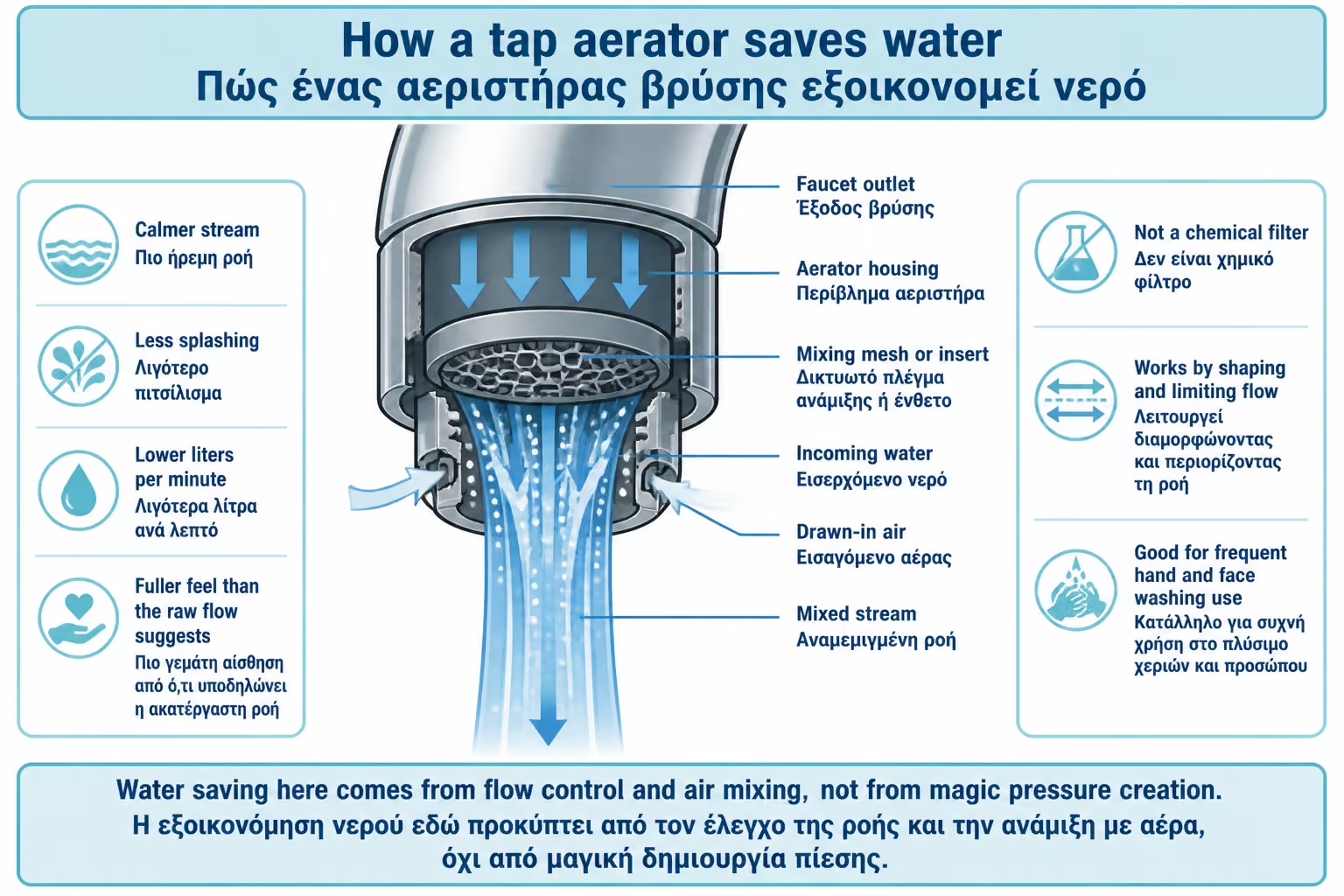
The aerator is the small fitting that screws onto the end of the faucet. Many people call it a “filter”, although technically it is not a water purification filter in the sense of removing chemicals or microbes. Its main job is to shape the flow, reduce splashing and, in the saving models, limit the amount of water that passes per minute.
An aerator can mix air with the water, creating a fuller flow sensation. It can also have a flow limiter so that the faucet gives a specific liter per minute regardless of how much the user opens the battery. So when we wash our hands or face, we don't need the full flow that the faucet would give without restriction.
In practice, the difference is especially noticeable in old batteries. An old faucet without a good aerator can give strong, messy water that splashes and consumes a lot. With a proper aerator, the flow becomes calmer, fuller and more controlled. The user often feels that the pressure is good, even though the actual amount of water has decreased.
A simple example: in a bathroom sink, the faucet is turned on to wash hands 15–20 times a day. If more water is running each time than is needed, the waste is continuous. A low-flow aerator does not change the user's habit, but reduces the water lost at each opening.
The flow of a faucet is usually measured in liters per minute. The smaller the supply, the less water is consumed for the same time of use. But the choice should not be made blindly. If the aerator is too restrictive, the user may become annoyed, turn on the faucet longer, or remove it.
In many cases, for a bathroom sink, a flow of around 4–6 liters per minute is practical and comfortable. Lower flows, such as 2–3 liters per minute, can work in WCs or areas where we only want to wash hands, but may seem inconvenient for more general use. Higher benefits may be more comfortable, but reduce savings.
The US WaterSense specification has used gallons per minute limits for efficient faucets and aerators, with the goal of reducing flow without losing performance. Newer discussions surrounding the specification refer to a reduction of the maximum limit for WaterSense labeled faucets/accessories from 1.5 gpm to 1.2 gpm, that is, from approximately 5.7 to 4.5 liters per minute.
For Greek bathrooms, the practical choice must combine savings and comfort. If the house has low pressure, if the faucet is old or if there is scale, an excessively low flow aerator may not give a good experience. That's why you need to test and make the right choice.
The low flow shower faucet is designed to deliver less water per minute than a conventional or old faucet without making the shower look weak. This can be achieved in different ways: by aerating the flow, with special nozzles, with a flow restrictor, with an internal pressure chamber or with more targeted spraying.
Old shower phones can use 12–15 liters per minute or more, especially if they do not have a limiter or if the limiter has been removed. A good eco-flow model can run around 6–9 liters per minute, depending on type and pressure. In such cases, the savings can actually be closer to 40–50%, especially if it is replacing a very old or high-flow phone.
The EPA reports that WaterSense showerheads can save about 2,700 gallons of water per year for an average family, and WaterSense devices are independently certified to use less water and perform well.
What matters is quality. A bad low-flow phone simply "chokes" the flow and makes the shower unpleasant. A good model shapes the flow so that there is a sense of pressure and coverage, even though less water is passing through.
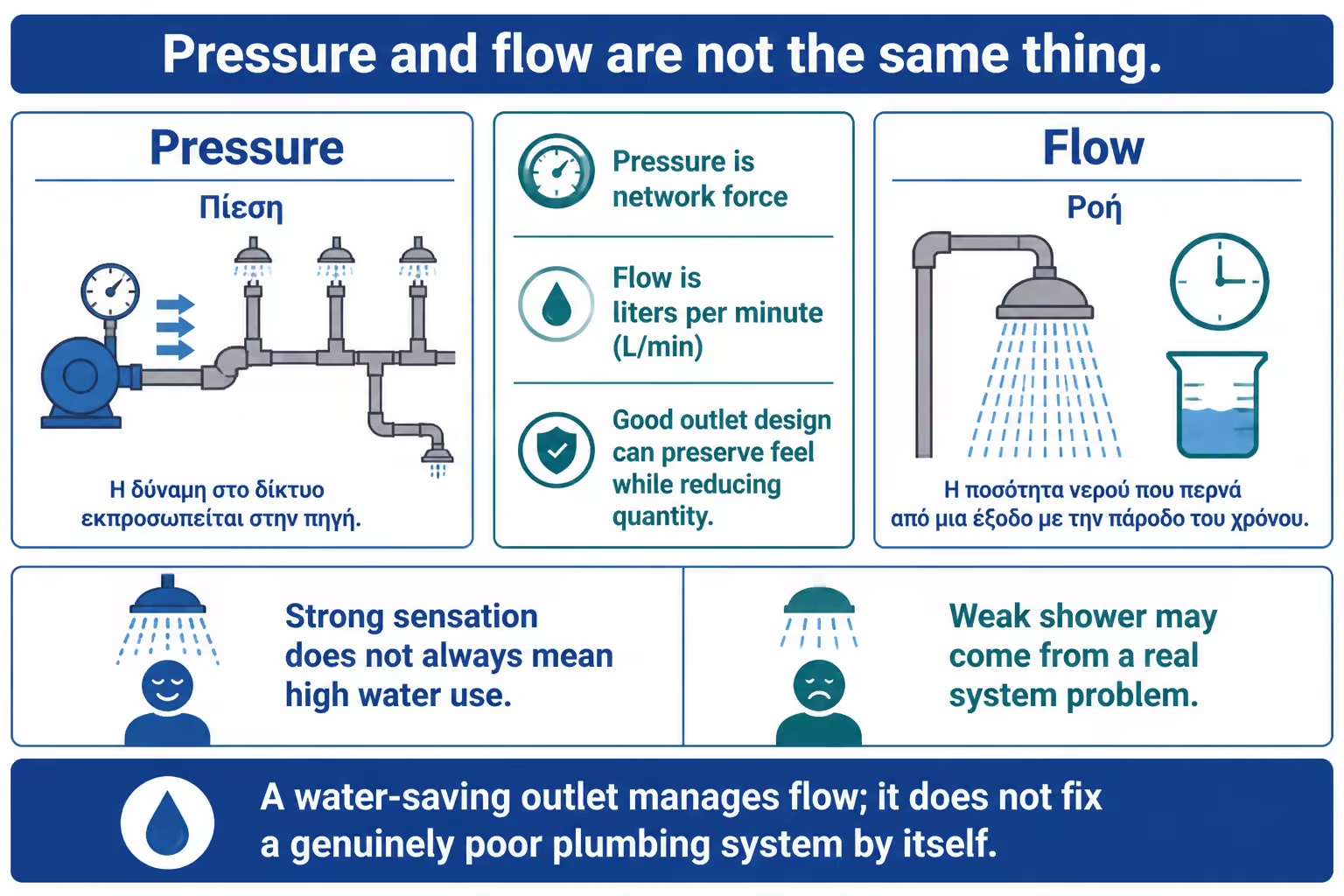
Many say "I don't want the pressure to drop". In fact, they often mean that they don't want the feeling of strong water to be lost. Pressure and supply are different things. Pressure is the force with which the water is in the network. The flow rate is how many liters pass per minute.
A good aerator or eco-flow phone does not magically increase the mains pressure. What it does is manage the flow so that less water feels better. It can mix air, break water into finer jets, or increase exit velocity from smaller nozzles. So the user feels a satisfactory flow, while the actual consumption is lower.
But if the house really has very low pressure, a low-flow fitting can make the situation worse. In such cases, before we buy saving products, it should be checked if there is a pressure problem, blocked filters, salts, old pipes, pressure reducer, closed valve or a problem with the hot water.
A practical example: the owner says he has "no pressure in the shower" and buys a high-pressure eco showerhead. If the real problem is a clogged filter in the battery or an old hot pipe full of salts, the new phone will not solve the cause. It might improve the feel a bit, but the basic problem remains.
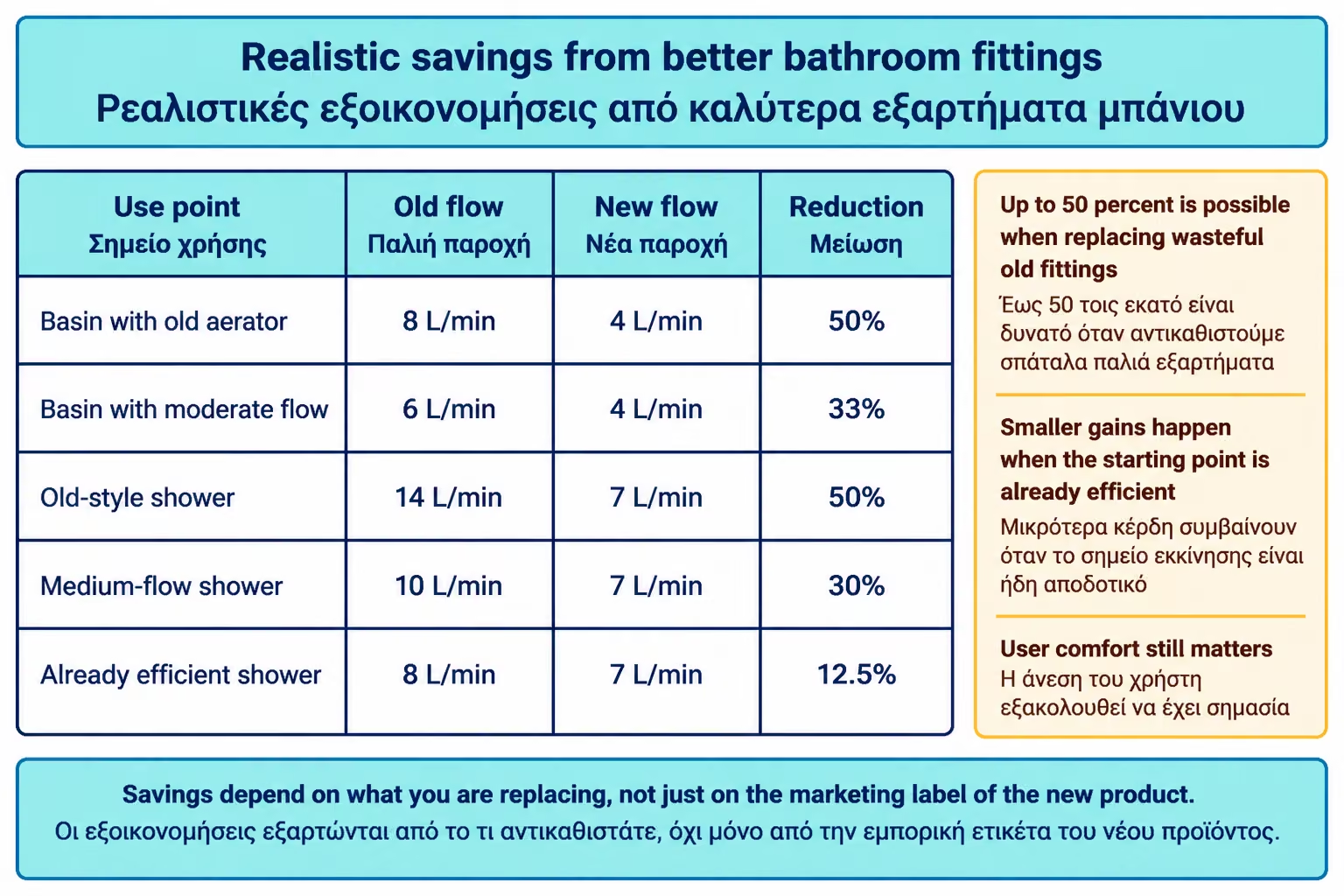
The savings depend on what you're replacing. If the existing faucet already has a good low-flow aerator, the difference will be less. But if it has an old or removed aerator, the reduction can be large. If the old shower faucet gives 14 liters per minute and the new one gives 7, the flow is reduced by 50%. If the old gives 9 and the new 7, the reduction is about 22%.
The table below shows practical examples:
| Point of use | Old supply | New supply | Reduction |
|---|---|---|---|
| Washbasin with old aerator | 8 L/min | 4 L/min | 50% |
| Washbasin with medium flow | 6 L/min | 4 L/min | 33% |
| Old style shower | 14 L/min | 7 L/min | 50% |
| Medium flow shower | 10 L/min | 7 L/min | 30% |
| Already an efficient shower | 8 L/min | 7 L/min | 12.5% |
This is the correct way to read "up to 50%". It's not fake, but it's not a guarantee. It depends on the initial state, the new provision and the usage behavior.
There is one more factor: time. If someone feels that the new shower phone is weaker and takes longer to shower, some of the savings are lost. So comfort matters. A product that the user accepts every day saves more than an overly restrictive product that is eventually removed.
In the bathroom, much of the water we use is hot. So when we reduce the flow in the shower or sink, we don't just reduce the water bill. We also reduce the energy needed to heat the water, either with an electric water heater, or with natural gas, or with a heat pump, or with an electrically assisted solar system.
The EPA notes that WaterSense showerheads, in addition to water, can also save energy, citing an average household saving more than 330 kWh of electricity annually due to reduced demand from water heaters.
In Greek reality, this is of particular importance in homes with an electric water heater. If a shower uses less hot water, the water heater empties more slowly and takes less energy to recharge. In families, the difference can also be seen in comfort: hot water is sufficient for more people.
A practical example: two people take continuous showers with an old high-flow telephone and the water heater "runs out" quickly. With a good eco-flow phone, the same amount of hot water can last longer, without necessarily reducing the quality of the shower.
Aerators are very useful, but they do not solve all problems. If the faucet already has low flow due to a clogged filter, scale, or low pressure, an even more restrictive aerator can make it uncomfortable to use. If the water is too hard, the aerators may clog frequently and require cleaning.
Also, not all aerators are compatible with all batteries. There are different threads, sizes and types: male, female, small, large, hidden, adjustable. If you buy the wrong part, it may not screw in properly, leak, or blow away from the pressure.
In batteries with a special design, built-in solutions or very old faucets, a special adapter may be needed. If the faucet has a worn thread, replacing the aerator may not solve the problem. In such cases, the battery may need to be replaced.
A common mistake is to remove the aerator because it is clogged with scale and not replace it. The faucet then gives an erratic, strong flow, splashes and consumes more water. The correct solution is cleaning or replacement, not permanent removal.
A low flow shower head can be disappointing when chosen incorrectly for the home. If the mains is already low pressure, if the battery has salts, if the coil is blocked, if the water heater does not give a good supply, or if there is only a problem with the hot, the new phone may not perform.
Also, there are different types of eco-flow. Aerating showerheads mix air with water and give a fuller, softer feel. Laminar-flow gives cleaner, stable airless beams. The high-pressure low-flow models try to maintain a powerful feel with an interior design. Commercial guides often report that low-flow showerheads run at around 6–9 liters per minute, depending on the type.
The choice should be made based on usage. If someone wants a very strong massage, maybe a very low flow 6 L/min phone will seem weak to them. But if he prefers a calm and full shower, it can be satisfactory. For a family, often a middle solution of 7–9 L/min is a better balance than the absolute lowest model.
The important thing is not to associate saving with suffering. If the experience is bad, the user will revert to the old component.
In many areas of Greece, the water is hard. This means it contains salts that collect in aerators, shower phones, batteries and coils. Economizers have smaller flow passages, so they can be more easily affected by scale if not cleaned.
An aerator that initially gives a nice flow may after months start to throw water sideways, reduce the flow too much or splash. So does a showerhead: the nozzles can clog, causing the flow to become uneven. Many good phones have rubber nozzles that are easy to clean by scrubbing.
Maintenance is simple but important. The aerators can be unscrewed and cleaned of scale. Shower phones can be cleaned periodically, depending on the manufacturer's instructions. If there is a very severe scale problem, a plant-level filter or softener may be needed, but that is a separate cost and maintenance decision.
A practical mistake is to accuse the eco-flow component of having "no pressure", when in fact it is clogged with salts. Before replacing it, clean it or have it checked.
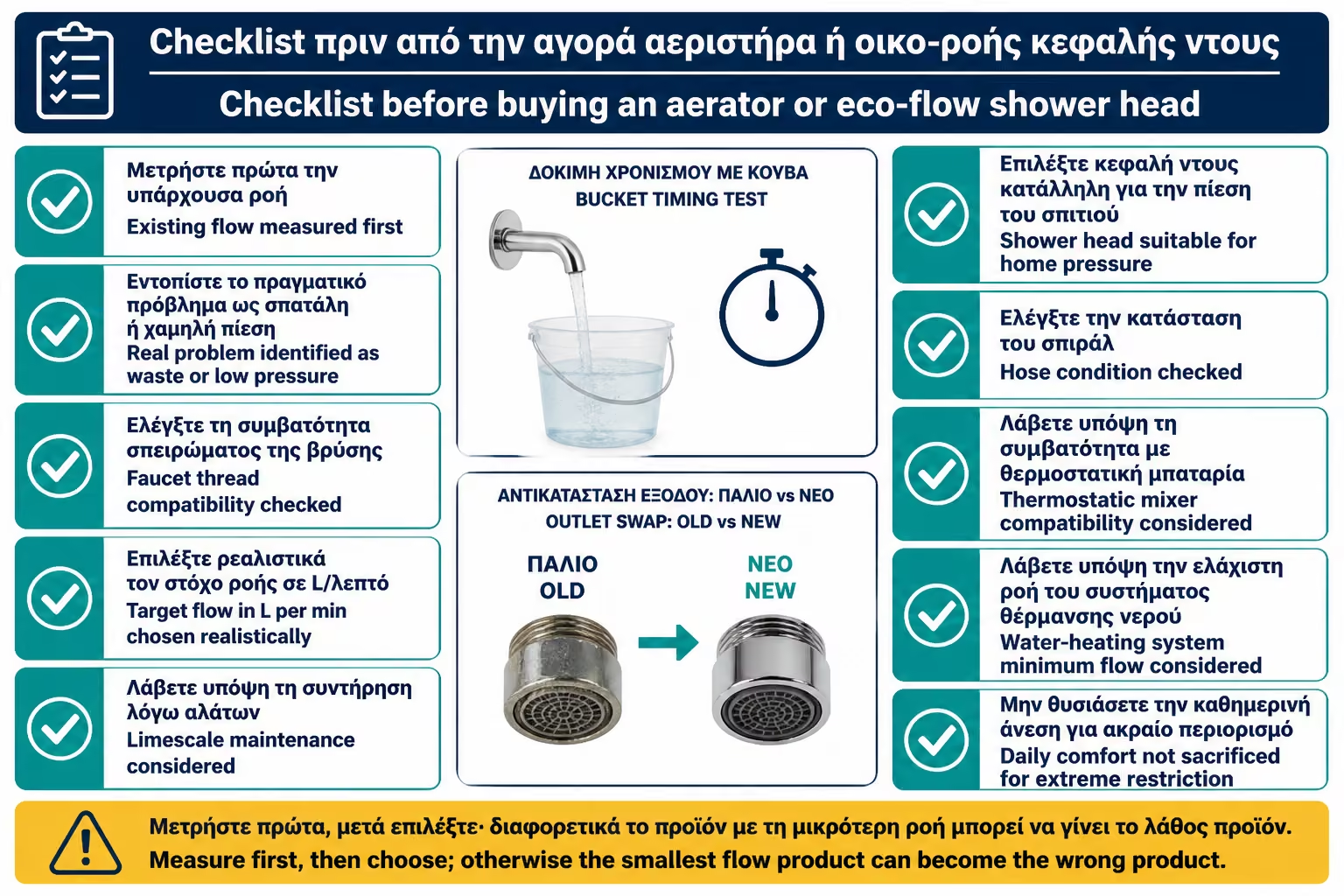
Before buying a new part, you can roughly measure the supply. No special instrument is needed for a first image. You take a bucket or container of known capacity, turn on the faucet or shower in the usual position, and count how many seconds it takes to fill. From there you calculate roughly the liters per minute.
For example, if a 5 liter container is filled in 30 seconds, the flow rate is approximately 10 liters per minute. If it fills up in 45 seconds, that's about 6.7 liters per minute. This metric helps you understand if your existing facility is too wasteful or already relatively efficient.
The measurement should be done both hot and cold, especially in the shower. If the cold has a good supply but the hot is weak, the problem may be in the water heater, the battery, salts or hot pipes. In this case, changing the shower phone is not enough.
Measurement also helps in product selection. If you already have 8 L/min and you go to 7 L/min, the difference will be small. If you have 14 L/min and go to 7 L/min, the savings will be big.
For bathroom sink, start from usage. If it's a family bathroom, you want comfortable flow for hand washing, face washing and everyday use. If it is a small guest WC, you can choose a lower flow, because the use is mainly for hand washing. If the faucet is used for filling containers or cleaning, too low a flow can be annoying.
Check the battery thread. There are aerators with internal or external thread and different dimensions. If you are not sure, remove the old part and take it with you to the shop. Beware of batteries with hidden aerators, because they need a special key.
Prefer products with clear delivery in L/min or gpm. Don't generally buy an "economy filter" without knowing how much it limits. For a typical bath, a balanced selection of around 4–6 L/min is often more acceptable than an excessively low flow.
If you have hard water, prefer an aerator that is easy to clean and avoid very complex models that clog quickly. The savings must be maintained over time.
In the shower, the choice is more personal. Some want a strong feel, others soft water, others a wide range of coverage. The right eco-flow phone should reduce throughput without making the experience unpleasant.
Check the flow in liters per minute. For many homes, a model around 7–9 L/min is a good balance. If you want maximum savings, you can consider 6 L/min, but at low pressure it might not satisfy you. If the house is already low pressure, look for a model specifically designed to feel good at a lower flow, not just the smallest restrictor.
Pay attention to the weight and quality. Very cheap phones may have poor flow distribution, break easily or get clogged. Silicone nozzles help clean scale. If you have children or the elderly, a phone with different settings may be more practical.
Also check the spiral. An old, cracked or clogged coil can spoil the performance of the new phone. Sometimes it's worth changing together.
Thermostatic shower mixers regulate water temperature and help with comfort and safety. Combined with an eco-flow phone, they can reduce waste, because the user does not let the water run for a long time until it reaches the right temperature. But compatibility needs attention.
Some thermostatic batteries need a minimum supply to work properly. If you put in too restrictive a phone or flow reducer, temperature stability may be affected. This is not always the case, but should be checked against the battery and installation instructions.
In homes with a gas heater or boiler, too low flow can also affect activation or temperature stability. If the water heating system needs minimal flow to operate, an excessively low-flow shower can create annoying fluctuations.
So when there is a thermostatic coil or special hot water production system, don't choose a component just by the savings rate. Check compatibility.
Aerators are among the most economical interventions. In the Greek market of 2026, a simple aerator can cost around €3–10, while better models, special sizes, hidden aerators or adjustable solutions can move around €10–25 per piece. If adapters or special keys are needed, the cost increases slightly.
Low-flow shower phones have more variation. Basic models can start around €15–30, while better eco-flow phones with multiple settings, better nozzles, salt resistance or better quality construction can run around €35–90. Premium models can cost more.
If simple aerators and shower phones are installed, the job can often be simple. But if there are old batteries, stuck aerators, worn threads, low pressure, hot problems or the need to change the battery, then hydraulic control is needed. A plumber's visit may cost more than the parts, but if he detects scale, bad pressure or worn connections, he can save on wrong purchases.
The main advantage is that the cost of these solutions is small compared to the potential savings in water and hot water. Especially in families, payback can be quick.
If the faucet has a regular thread, the old aerator unscrews easily and there are no leaks, the replacement is simple. But if the part is stuck with salt, if the battery is old, if there is rust, if it drips, or if you don't know what type you need, it's best to ask for help.
In the shower, changing the phone is often simple, but if the coil is old, if the battery is leaking, if the hot has a low supply or if there are temperature fluctuations, it needs to be checked. There is no point in buying an expensive eco-flow phone if the problem is elsewhere.
A plumber is also needed if you want a total solution: pressure control, battery replacement, thermostatic battery, pressure reducer, filter, softener or replacement of old pipes. Water conservation is most effective when the facility is healthy.
A practical sign that a check is needed is when the pressure is bad only in the hot. This often indicates a water heater, hot pipe, scale or battery problem, not a shower phone issue.
The first mistake is buying too restrictive components. If the flow becomes troublesome, the user will leave the water longer or remove the attachment.
The second mistake is choosing without measuring the existing supply. If you don't know where to start, you don't know what savings you'll get.
The third mistake is to ignore salts. A clogged aerator does not economize properly. It just breaks the flow.
The fourth mistake is removing flow restrictors from shower phones because we "want pressure". Often the problem is choosing the wrong product or low mains pressure, not the restrictor as an idea.
The fifth mistake is not checking the compatibility with a thermostatic battery or rapid heater. Too low a flow can create fluctuations in some systems.
The sixth mistake is to expect that the savings will come only from parts, while the usage time remains excessive. An eco-flow phone helps, but a very long shower remains high consumption.
Before buying anything, check the following points first:
| Question | Yes / No |
|---|---|
| Have you roughly measured the flow of your existing faucet or shower? | Yes / No |
| Do you know if the problem is consumption or really low pressure? | Yes / No |
| Does the aerator fit the battery thread? | Yes / No |
| Is the new flow in L/min realistic for bathroom use? | Yes / No |
| Have you considered the salts and the need for cleaning? | Yes / No |
| Is the eco-flow phone suitable for home pressure? | Yes / No |
| Has the shower coil been checked for wear or clogging? | Yes / No |
| If there is a thermostatic coil, has it been tested for low flow compatibility? | Yes / No |
| If there is a gas heater or boiler, has the minimum required flow been checked? | Yes / No |
| Is the choice aimed at comfortable daily use and not only at the highest percentage of savings? | Yes / No |
If the answers are not clear, start by measuring and cleaning the existing parts. Many times the best solution is simple, but we need to know first what is really going on.
If you keep only one thing from this guide, keep this: proper water saving does not mean "choking" the flow until daily use becomes annoying. It means reducing the litres per minute without ruining comfort. Measure the existing flow first, choose aerators and eco-flow shower heads with a sensible output, clean scale regularly, and check whether low pressure is actually an installation problem. “Up to 50%” savings are realistic when we replace old wasteful fittings, not when we randomly install the smallest possible restrictor.
Saving water in the bathroom can start from very small changes. A proper faucet aerator and a good low-flow shower head can significantly reduce consumption, especially when replacing old, wasteful or worn parts. In many cases, the reduction can reach close to 40–50%, without the user feeling that the pressure is "lost", as long as the products are correctly selected.
The secret lies in the difference between the feeling of pressure and the actual delivery. Good fittings do not eliminate water. They organize it better. They mix air, shape the beam, reduce wastage and give a more controlled flow. But if the house has a real pressure problem, salts or old pipes, then it needs an installation check and not just a phone change.
For the owner, the right approach is practical: measure the flow first, clean the existing filters, choose aerator and eco-flow shower with a reasonable flow, and don't just chase the biggest percentage of savings. The best product is the one that reduces consumption and remains enjoyable every day.
In the bathroom, the real economy is not only visible in the water bill. It is also seen in the less hot water that needs to be produced, in the less strain on the water heater and in the conscious use of a resource that we should not take for granted.
Return to category.
Go to categoryReturn to the central guide.
Go to guide